)
Melbourne-based sustainable packaging company Little Green Panda has struck a transformative deal with Canada’s largest specialty coffee equipment distributor, taking the business to international markets for the first time as growth continues to accelerate in Australia.
The deal with Eight Ounce Coffee also marks a first for the Canadian group, which until now has refused to sell paper coffee cups to its clients because they are difficult to recycle.
However, Little Green Panda founder Manon Beauchamp-Tardieu says a shared passion for sustainable consumer goods has set the partnership on track to significantly impact the Canadian market for disposable coffee cups.
“Canada is a very big market with a strong sustainability culture, but until now we haven’t had a distributor there,” Beauchamp-Tardieu tells Business News Australia.
“Together, we’re not just launching a cup, we’re launching a movement. Eight Ounce Coffee are known for sustainability, innovation and curating the best.
“They don’t just move products, they help shape culture. From barista comps to industry events, they’re trusted by the very people who influence cafe standards across the country.”
The Calgary-based Eight Ounce, which was founded in 2011 by Jennifer and Wesley Farnell, sells specialty coffee equipment to almost 4,000 cafes, roasters, hotels, kitchen and lifestyle stores in Canada and the US.
The company approached Beauchamp-Tardieu almost a year ago about a potential distribution deal after becoming aware of the company’s unique product range through Little Green Panda’s viral social media posts.
Little Green Panda last month revealed that several TikTok and Instagram videos went viral, reaching more than four million views and a total of almost 100,000 likes.
The company’s product range has grown to include fully compostable and durable disposable cups and cutlery for cafes. The forks, knives and spoons in the range have a feel like plastic but are made from discarded coffee grounds.
Related story: ‘Plastic' that decomposes as quickly as fruit: Little Green Panda’s step change for café culture
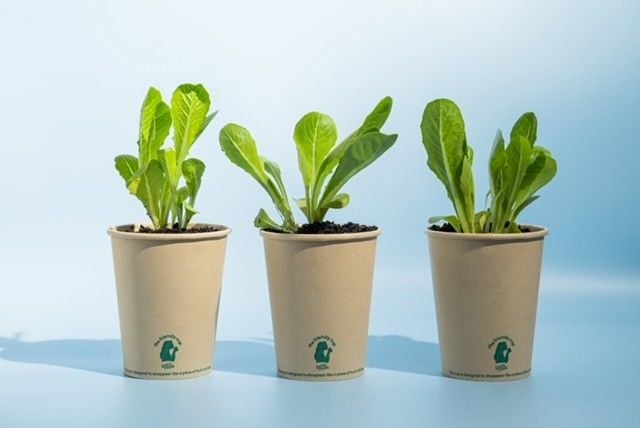
The home compostable disposable coffee cups, known as The Friendly Cups and launched in 2023, are made from plant puree and do not use plastics for the inner lining.
“You can safely put our cups in any bin – the recycling bin, the general bin or in your compost bin at home and they will literally break down like a piece of fruit,” says Beauchamp-Tardieu.
“That is why it has been so important for us to enter the Canada market because it’s going to solve a really big problem there.
“Canadian composting infrastructure is patchy at best, and most municipal programs won’t even accept certified compostable cups.
“Our mission is to close that gap and make it easy for cafés and consumers to do the right thing without needing perfect infrastructure.”
Eight Ounce is not taking any half measures with its first order from Little Green Panda, signing up for one million Friendly Cups.
The order, the largest ever received by Little Green Panda since inception in 2019, is currently in transit to Canada.
“This was just their trial order, and definitely our biggest ever order, and it should last them a few months,” says Beauchamp-Tardieu.
“Canada currently goes through about 1.5 billion disposable coffee cups each year and most of them go to landfill.
“Most composting facilities in the country don’t accept the types of cups that are on the market now. That can be very confusing for consumers who think they are doing the right thing as the term ‘compostable cups’ is widely misunderstood.”
Beauchamp-Tardieu points out that there are two types of compostable products – industrial and home compostables, with the former requiring higher temperatures in a factory setting to be broken down.
However, Little Green Panda’s products – which also include straws made from sugar cane – break down completely within four weeks to 90 days of being discarded when in contact with moisture and 25-degree heat.
Beauchamp-Tardieu says that prior to the distribution deal with Little Green Panda, Eight Ounce never offered takeaway coffee cups in its product range “because they were aware that you can’t really dispose of them properly”.
“Eight Ounce are ahead of the curve in terms of innovation and sustainability so when we met and they discovered a cup with no plastic lining that you could put into any bin, they were amazed,” she says.
“That’s how the partnership came about because they were looking for someone like us.
“What we’re really excited about working with Eight Ounces is that they are already champions of sustainability and through this distribution deal we hope that awareness of home compostable products will continue to grow.
“I feel as though we could be making a really big impact there, even more than we are doing here in Australia which is really great.”
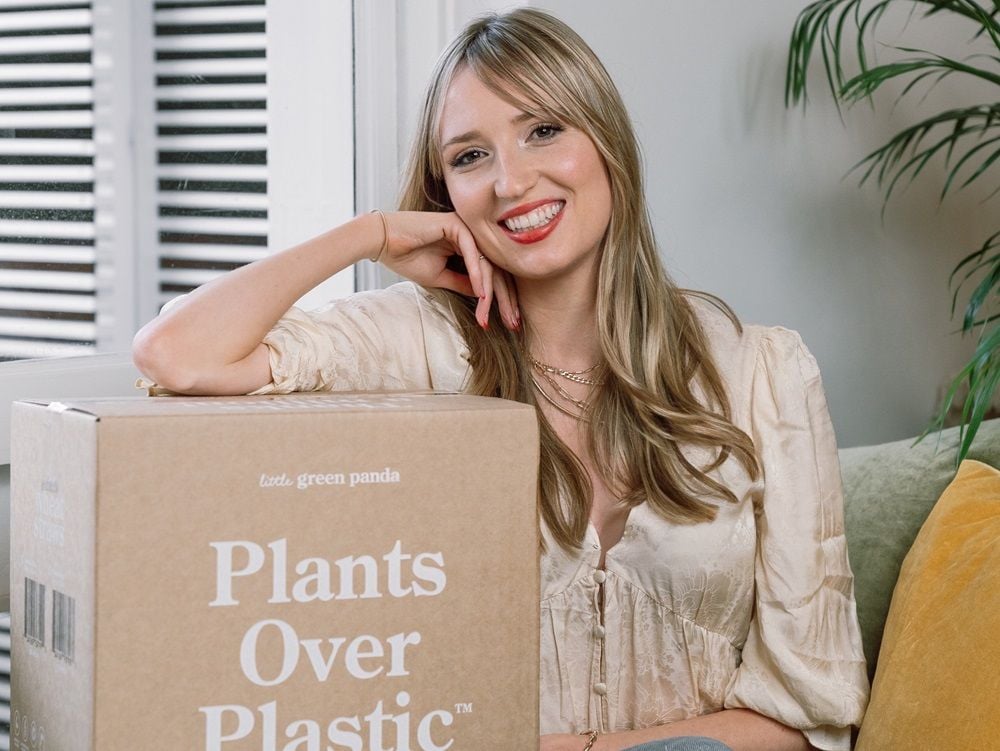
Eight Ounce is potentially looking to include Little Green Panda’s range of sustainable straws and cutlery as it grows the brand’s footprint in the Canadian market.
Beauchamp-Tardieu says Little Green Panda’s offshore expansion is occurring in tandem with a widening reach by the business in Australia.
“The business has grown in the past six months and we’ve had some really big wins lately,” she says.
“We’ve had a few fast-food chains come on board and we are also about to launch into retail with supermarkets.”
Little Green Panda has not disclosed the identities of the fast-food chains or supermarket retailer involved.
“Our business until now has generated 99 per cent of sales from the food service industry but with our social media posts we have been getting demand from consumers who want to use our products for picnics and birthday parties – for use in their homes,” says Beauchamp-Tardieu.
“That’s why we are now going down the path into retail.”
Little Green Panda also has ambitions to expand into other international markets, but Beauchamp-Tardieu says Canada will be the testing ground for now.
“It’s a country that is open to innovation and sustainability in terms of packaging, so it makes sense to go to a country aligned with the same principles that we have in Australia around single-use plastics,” she says.
“We definitely have plans to export into other countries but we want to see how Canada goes first.”
)