)
A Melbourne-based startup that has developed green technology which allows carbon emissions to be sucked up from stationary diesel generators has made significant headway after promising trial results show its product can successfully sequester CO2 during concrete production.
Founded in 2021 by Raj Bagri, Kapture has developed technology that can be retrofitted to generators. As emissions pass through the system's filter they interact with a specially designed solvent - described as the "secret sauce" - to capture carbon emissions.
The design achieves carbon capture without using any additional energy in the process.
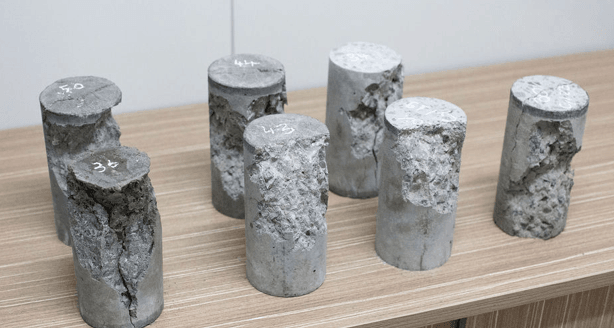
Kapture has partnered with Western Australia’s leading concrete supplier, PERMAcast, to trial a new carbon-infused material designed to make concrete production more sustainable. The by-product, which embeds carbon into concrete, has been tested for its strength, durability and performance in real-world conditions.
Early lab results have exceeded expectations, suggesting the material could help reduce the environmental impact of concrete while maintaining its quality for major infrastructure projects. The process uses a solvent to capture CO2 from diesel generators, offsetting 0.7 to 1.2 tons of CO2 for every ton of solvent used, while also reducing emissions from the generators themselves.
Kapture will also trial its capture technology with an electricity utility in Q1 2025.
Bagri is optimistic that the benefits offer a promising step toward more sustainable construction practices.
“Our successful trials sequestering CO2 in concrete are a pivotal step forward in transforming one of the most carbon-intensive industries,” Kapture CEO Raj Bagri says.
“The trials have validated that Kapture has developed an innovative solution for the concrete industry without sacrificing performance or cost - no green premium. The by-product will be available for use in the concrete industry in 2025.”
According to the global think tank World Economic Forum, cement production is one of the largest industrial sources of CO2 emissions worldwide, producing 1.6 billion metric tons of CO2 into the atmosphere in 2022 – reflecting about eight per cent of global carbon dioxide emissions.
The majority of these emissions come from the chemical process involved in making cement, specifically during the production of clinker - the primary component of cement.
In April 2023, Kapture revealed it had secured its first pilot customer for its innovative carbon emission-sucking product, with the Victorian Government coming on board in collaboration with Johns Lyng Group (ASX: JLG). However, Bagri now clarifies that a trial of Kapture’s carbon capture technology is scheduled for the first quarter of the 2025 calendar year with an electricity utility in Australia.
It took around 18 months of research and development for Bagri to develop a shell technology for the idea, which was initially bootstrapped until she received pre-seed funding support from accelerator Startmate.
)