)
The move to liquidate Barbeques Galore announced this week marks the latest in a devastating succession of iconic Australian retail brand collapses that has erased names enduring for the better part of a century from shopping strips and suburban malls across the country.
The barbecue retailer's 62 company-owned stores will shut their doors after a Deed of Company Arrangement (DOCA) with creditors fell through, putting about 500 jobs at risk across the company-owned network and a further 27 franchise locations.
Even a proposed $5 million contribution from Gordon Brothers, the US-based global asset manager that acquired the barbecue retailer in December, was not enough to save the chain.
Barbeques Galore joins a growing roll call of household names that have buckled under a combination of cost-of-living pressures, rising operational costs, intensified competition and shifting consumer behaviour.
In the space of barely two years, Australia has lost Godfreys - a vacuum cleaner retailer that traded for 93 years - and the entire Mosaic Brands stable, which at its peak operated 1,400 stores across nine fashion labels, several of them with roots stretching back to the early 20th century.
The pattern is grimly consistent. Brands that survived world wars, recessions, the arrival of online retail and a global pandemic have finally succumbed to a pincer movement squeezing margins from both sides: consumers spending less on discretionary goods while the cost of running physical stores climbs relentlessly.
Deloitte Access Economics partner David Rumbens has described the dynamic as a "pincer movement" of rising costs and weakening demand that is crushing retailers caught in the middle.
In an analysis of the retail sector released last month, Deloitte forecasts discretionary spending growth slowing sharply from 2.5 per cent in the year to December 2025 to just 0.7 per cent in the year to December 2026, with overall retail turnover growth moderating to 1.8 per cent.
A 2.1 per cent increase to the retail cost base driven in part by Middle East conflict effects on supply chains is compounding the pressure, arriving at a time when real wages have fallen 1.3 per cent in the year to March and consumer sentiment sits at record lows.
It is an environment in which even brands with deep wells of customer loyalty and decades of brand recognition have found no refuge.
Godfreys, founded in 1931, was among the most painful losses.
The Melbourne-based vacuum and cleaning equipment retailer had been a fixture of Australian retail for 93 years when administrators from PwC were called in.
At the time of its collapse, Godfreys operated 169 outlets and employed 600 staff. Despite attracting 55 expressions of interest during the administration process, not a single viable offer to acquire the business emerged.

PwC administrator Craig Crosbie said at the time that the outcome was not the result hoped for and pointed to the challenging economic environment as a key factor.
The stores were closed and the brand wound down in May 2024, ending an era that had begun when the business started selling vacuum cleaners during the Great Depression.
The Mosaic Brands collapse last year was larger in scale and more complex in its causes, taking down a portfolio of fashion labels that collectively represented close to a century of Australian retailing history.
Rockmans, founded in 1930 as a single Melbourne store, was the oldest brand in the stable.
It had traded continuously for more than 90 years - through the Depression, wartime rationing, the rise of shopping centres and the digital revolution - before being swept up in the Mosaic implosion.
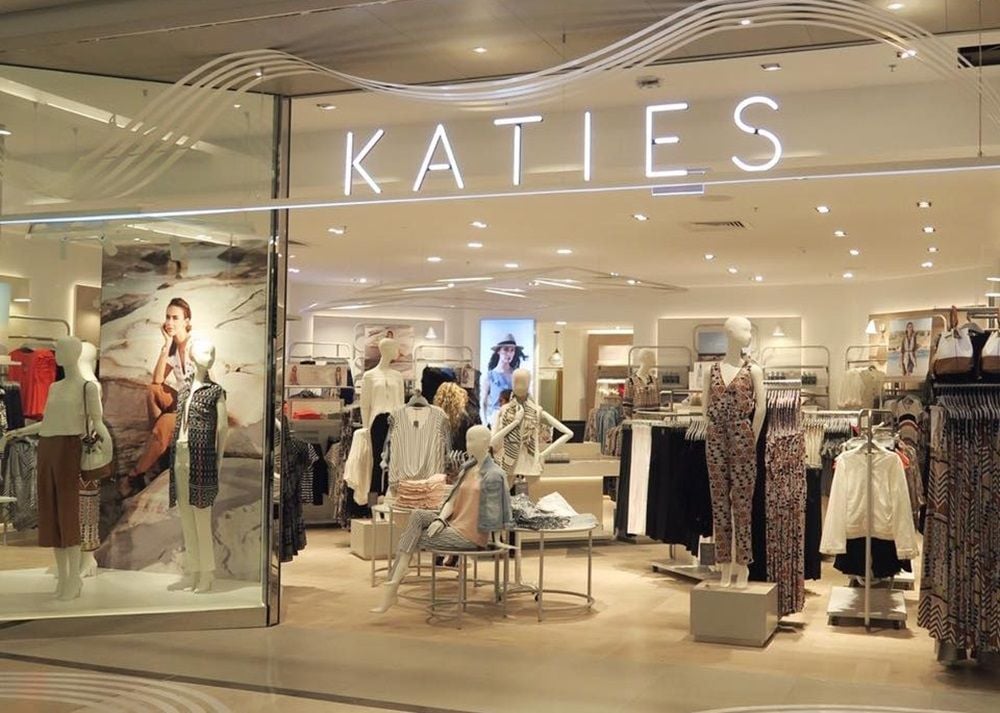
Katies, established in 1956, had dressed generations of Australian women across nearly seven decades.
Rivers, whose origins trace to 1863 and which was reborn as a retail brand in 1979, carried more than 40 years of trading history in its modern incarnation.
These brands sat alongside Noni B, Millers, Autograph, Crossroads, W.Lane and BeMe under the Mosaic umbrella - a group that had been assembled through aggressive acquisition over the preceding decade.
While the acquisitive strategy of Mosaic Brands proved to be the company’s undoing with all of its brands competing among themselves for a shrinking market, Barbecues Galore struggled as a narrow category specialist competing against mass-market giants such as Bunnings and online retailers at one side of the scale and high-end boutique outdoor retailers on the other.
Barbecues Galore was placed into administration in February this year with CEO David White citing “ongoing liquidity challenges” leading to a restructure of the business.
There was hope for a capital restructure that would have kept the business afloat, but those hopes were dashed earlier this week when voluntary administrators from Grant Thornton announced they would wind up the group after the collapse of the DOCA.
The administrators will become liquidators of the BBQG Group, owner of the Barbecues Galore brand, from 16 June 2026.
Despite the original DOCA proposal “overwhelmingly” supported by creditors and approved for implementation, the administrators say conditions of the agreement were unable to be met due to an “inability to reach commercial trading terms with suppliers”.
The BBQG Group currently trades 89 retail stores, comprising 62 that are company owned and 27 that are owned and operated by franchisees.
“The receivers will implement a controlled closure process for the company stores only in the coming weeks and will concurrently work through suitable transitional arrangements with the 27 franchise stores,” say the administrators in a statement.
“With the DOCA Proposal not being implemented, the BBQG Group will be wound up.
“During that interim period, the receivers will remain in control of the BBQG Group, which will continue to trade the business and explore sale transactions for the remaining stores and assets, including the BBQG Group intellectual property, alongside a stock disposition (liquidation) strategy through the company stores.”
The administrators say that all employee entitlements and benefits in the BBQG Group will be paid in full.
The common threads binding the collapse of so many iconic Australian brands are difficult to ignore.
Each brand operated large physical store networks carrying high fixed costs in rent, wages and fitout.
Each faced intensifying competition from online-only retailers, international fast-fashion entrants and marketplace platforms that eroded the pricing power and product differentiation that had sustained them for decades.
Each was caught by the post-pandemic squeeze on discretionary spending as inflation outpaced wage growth and household budgets contracted.
Deloitte's has warned that the pressure on Australian retail is far from over, with the combination of subdued consumer demand and rising input costs creating conditions in which more brands - particularly those reliant on large physical footprints and discretionary consumer spending - remain acutely vulnerable.
The closures of Barbeques Galore, Godfreys, Rockmans, Katies, Rivers and their Mosaic stablemates do not simply represent commercial failures.
They represent the disappearance of brands that were woven into the fabric of Australian suburban life for generations - names that once seemed as permanent as the shopping centres they occupied, now reduced to liquidation notices and closing-down sales.
)