)
Sydney-based drone manufacturer Carbonix has achieved what it describes as Australia's first Safety Assurance Integrity Level (SAIL) III certification for an uncrewed aircraft, unlocking beyond visual line of sight (BVLOS) approvals across the Surat Basin in southern Queensland for gas infrastructure inspection.
The certification, completed in collaboration with the Civil Aviation Safety Authority (CASA), clears the way for Carbonix's fixed-wing drones to operate autonomously across an area the size of Belgium without requiring a human pilot to maintain visual contact with the aircraft.
In practical terms, the certification moves long-range drones closer to being treated like trusted aviation systems rather than experimental technology requiring repeated case-by-case approvals.
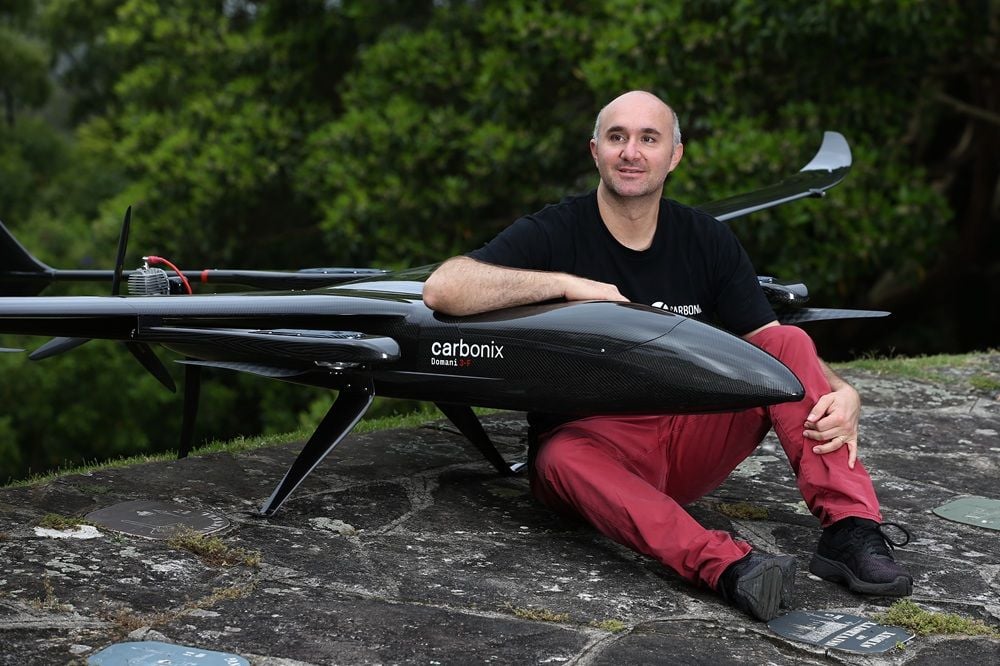
Carbonix founder and CEO Dario Valenza says the SAIL III certification is a turning point for the domestic industry.
“Australia has developed some of the world’s most advanced drone technology and this milestone shows what can be achieved when industry and regulators work closely together," says Valenza.
"It creates an important pathway toward safe, scalable autonomous aviation operations in Australia.”
SAIL III sits within the Specific Operations Risk Assessment (SORA) framework, an internationally recognised methodology for evaluating the risk of drone operations in unsegregated airspace.
Achieving the certification requires operators to demonstrate multiple layers of safety assurance covering both ground and air risk, with independent verification of mitigations.
Carbonix, which designs and manufactures fixed-wing vertical take-off and landing (VTOL) drones for industrial applications, will deploy the aircraft for gas pipeline and infrastructure inspection across the Surat Basin, one of Queensland's most significant gas production regions.
Among the company's flagship products is the Carbonix Ottano, a long-range, fixed-wing VTOL drone designed for large-scale aerial surveys, infrastructure inspections, and remote monitoring
The company says the CASA certification creates a pathway toward scalable commercial drone operations across multiple industries including mining, energy transmission, gas infrastructure, remote surveying and critical infrastructure monitoring.
“Replacing crewed aircraft with long-range autonomous drones significantly improves safety, reduces fuel burn and delivers faster, higher-quality data for infrastructure operators.” says Valenza.
CASA published a regulatory update in October last year outlining multiple parallel workstreams aimed at maturing the framework for commercial drone operations nationally.
)