Advertisement
Staying informed is more important than ever as the situation unfolds with Covid-19. Stay tuned here for our live updates, and be sure to let us know what your business is doing to face this unprecedented challenge.
Covid-19 News Updates
Retail Food Group dairy facility closed after workers test positive for COVID-19
 "Retail Food Group dairy facility closed after workers test positive for COVID-19")
A dairy processing plant in Tullamarine, Melbourne that supports Retail Food Group's (ASX: RFG) operations has been shut down after three workers tested positive for COVID-19.
The Dairy Country facility's entire staff will now be sent to get tested and the premises will only reopen once deep-cleaning has been completed.
"The health and safety of our staff and customers is our priority," says RFG executive chairman Peter George.
"Dairy Country's Tullamarine facility will reopen once it has been deep-cleaned and pending the availability of staff.
"Dairy Country's Campbellfield facility has not been impacted by these events, and continues to operate as normal, subject to the various measures implemented to date in response to the Coronavirus pandemic."
RFG does not expect the closure of the Tullamarine facility to have a material financial or operational impact on the broader company.
Yesterday Ingham's (ASX: ING) was forced to close one of its poultry processing plants in Melbourne after five workers returned positive tests for COVID-19.
Ingham's says it is working with its customers to minimise supply chain disruptions and to ensure that its products will remain available to Australian consumers.
The closures come as Victoria has reported 403 new cases of COVID-19 and five more deaths today.
It brings the total number of active cases in the state to 3,630 and the number of deaths since the beginning of the pandemic to 49.
Of the 403 cases, 69 can be traced to known or contained outbreaks with the rest currently under investigation. In total, there are approximately 2,579 cases still under investigation in Victoria.
The Victorian government also announced today that they will give out an extra $300 to anybody who has taken a test for COVID-19 and is required to isolate at home but does not have access to sick leave.
The new measure is in response to data analysis released yesterday by the Victorian government showing that 53 per cent of people waiting on COVID-19 test results are not following isolation orders.
Cases currently linked to key outbreaks in Victoria are as follows:
- 182 cases have been linked to Al-Taqwa College
- 73 cases have been linked to St Basil's Homes for the Aged in Fawkner
- 67 cases have been linked to Estia Health in Ardeer
- 55 cases have been linked to Menarock Life Aged care in Essendon
- 34 cases have been linked to Estia Health in Heidelberg
- 33 cases have been linked to Arcare Aged Care in Craigieburn
- 21 cases have been linked to Baptcare Wyndham Lodge in Werribee
- 20 cases have been linked to Embracia Aged Care Moonee Valley in Avondale Heights
- 72 cases have been linked to Somerville Retail Services in Tottenham
- 58 cases have been linked to JBS in Brooklyn
- 29 cases have been linked to Australian Lamb Company in Colac
- 21 cases have been linked to Clever Kids Childcare in Ashburton
- 10 cases have been linked to Bertocchi Smallgoods in Thomastown
In New South Wales 19 new cases of COVID-19 were diagnosed overnight, bringing the total number of cases in NSW to 3,444 since the pandemic began.
Of the 19 cases, three are associated with the Crossroads Hotel cluster, nine associated with the Thai Rock cluster, three under investigation, one is a Western Sydney resident who returned from Victoria, and three are travellers in hotel quarantine.
Victorian economy takes a beating from COVID-19 pandemic
New modelling from the Victorian government demonstrates that the State's economy has been significantly impacted by the coronavirus pandemic, after Victoria invested more than $9 billion in fighting the pandemic on the health and financial fronts.
In a statement from the Victorian Treasury the State's Gross State Product (GSP) is forecast to fall by 5.25 per cent this calendar year.
Further, Treasurer Tim Pallas expects GST revenue to be around $8.5 billion lower over the 2019/20 and 2020/21 financial years compared with pre-pandemic forecasts.
Reduced revenue also means the Victorian budget will now likely return an operating deficit of $7.5 billion in 2019/20.
More than 23,000 businesses have had liquor licences and application fees refunded, totalling $22.61 million.
The Victorian unemployment rate climbed to 7.5 per cent in June, and is expected to peak at 9 per cent in the September quarter.
"The global coronavirus recession is one of the biggest economic challenges our state and country has ever faced and we are not immune from its impacts," says Treasurer Pallas.
"We're doing everything we can to support the tens of thousands of businesses, workers and families doing it tough.
"Victoria's economy is robust and will make it through to the other side, but we all need to follow the rules and slow the spread the sooner we can get on top of this virus, the sooner we can repair the economic damage it's caused."
Updated at 11:38am AEST on 23 July 2020.
Ingham's Victorian processing plant closed after employees test positive for COVID-19
 "Ingham's Victorian processing plant closed after employees test positive for COVID-19")
An Ingham's (ASX: ING) processing plant in Melbourne has been shut down after five employees returned positive tests for COVID-19.
The site, which engages in 'further processing' (turning poultry into products like nuggets, burgers, etc.), has been temporarily closed and all other employees have been requested to self-isolate at home.
Ingham's says it is working with its customers to minimise supply chain disruptions and to ensure that its products will remain available to Australian consumers.
The temporary closure of the Thomastown plant is not expected to materially impact the business results of the company considering the further processing facility is one of five in Australia.
"It is imperative that we continue to do everything possible to ensure the health and safety of our people, communities and to assist in controlling the spread of the Coronavirus," says Ingham's CEO and managing director Jim Leighton.
"Ingham's has worked diligently throughout the COVID-19 pandemic to maintain the highest standards of health and safety for our people, whilst maintaining flexibility to ensure we service our customers through this period of uncertainty.
"The closure of Thomastown is a proactive step taken on our part, and we are well prepared to manage through this disruption."
Today, Premier of Victoria Daniel Andrews, announced the state had recorded 484 new cases of COVID-19 the highest daily tally on record since the pandemic began.
The Premier also urged Victorians to self-isolate if symptoms present, and to stay at home after being tested for COVID-19.
Updated at 3:58pm AEST on 22 July 2020.
9 in 10 with symptoms don't self-isolate: Victoria reports 484 new cases
 "9 in 10 with symptoms don't self-isolate: Victoria reports 484 new cases")
Victorian Premier Daniel Andrews says cases will continue to go "up and up" if behaviours don't change as the state records a record-breaking 484 new cases of COVID-19 today.
Data analysis has revealed more than one in two people waiting for test results are ignoring isolation orders and going to places like work and the shops.
Additionally, the majority of people displaying symptoms are not self isolating before going out to get a test.
"Nobody should wait for a test at the supermarket, or at their place of work, or anywhere else other than their home," says Andrews.
The Premier has revealed that of the 3,810 cases confirmed since 7 July, nearly 9 in 10, or 3,400 people, did not isolate between when they first felt sick and got tested.
"There's no reason for you to be going to work when you're sick. That's unacceptable," says Andrews,
"If your bank balance is driving you to make bad decisions, we'll make sure that $1,500 is there," he says referring those in financial distress to call 1800 675 398 to receive an emergency Worker Support Payment.
According to the Premier 53 per cent of people waiting on COVID-19 test results are not following isolation orders, which is definitely contributing to the rising numbers.
"It's not about blame, it's not about criticism, it's about confronting the problem, and if you're not prepared to confront that problem then you've got very little chance of fixing it," says Andrews.
"The only thing you can and must do when you feel sick is to go and get tested. Nothing else is acceptable."
Andrews' plea follows the publication of research commissioned by cleaning services company Cleancorp earlier this week, showing that approximately 70 per cent of Australians would still go to work with cold or flu symptoms.
"There is a large proportion of these people who are making those choices because in their judgement, they'll look at their bank balance, they'll look at the fact that if they don't work the shift they won't get paid for the shift, they don't have sick leave," says Andrews.
"This is a commentary on insecure work. It is a commentary on this as a feature of the Victorian economy and our national economy.
"That debate though can wait. We can have that debate, it's a very important debate to have, but we can have that debate another time."
According to Chief Health Officer Brett Sutton the effective reproduction rate has come down from 1.5 to something more like 1.2, but he is still expecting daily case numbers to rise to somewhere between 500 and 600.
"Other models show that it might be even lower. My suspicion is it's still above 1, and we can't necessarily expect numbers to go down. I think that will be an even greater challenge in days ahead. That means that we're going to look at 500, 600 cases per day," says Sutton.
"We're all a bit immune to the numbers. If we had a number close to 500 in March or April, we would have been sitting in our bedrooms and not leaving the house. But some of the challenges in this phase as well relate to the complex environments where cases are occurring that issue of insecure work."
Sutton says getting tested early on and isolating as soon as symptoms arise is key to slowing the spread of the virus.
"You're actually most infectious in the first couple of days of your illness, so the very beginning of that runny nose or sore throat or cough or low-grade fever is when you're most infectious," says Sutton.
"Getting tested early on and isolating right at the beginning is a really key action, and I think they're things that are not being done so well through this wave."
Of the 484 new cases, 97 are connected to known and contained outbreaks, and 387 are under investigation.
There were two more deaths overnight, bringing the total death tally since the pandemic began to 44.
Of the 3,408 total active cases, 3,305 are based in metropolitan Melbourne or Mitchell Shire and 103 are in regional Victoria including eight new regional confirmed cases today.
It comes as New South Wales records 16 new cases of COVID-19 today, and Queensland confirms one new case of the coronavirus.
Globally there are now more than 15 million confirmed cases of COVID-19, and more than 600,000 deaths.
Updated at 12:53pm AEST on 22 July 2020.
16 new COVID-19 cases in NSW, Thai Rock cluster grows to 37
 "16 new COVID-19 cases in NSW, Thai Rock cluster grows to 37")
NSW Premier Gladys Berejiklian says businesses should act like they expect the next customer who walks through their doors could have the virus.
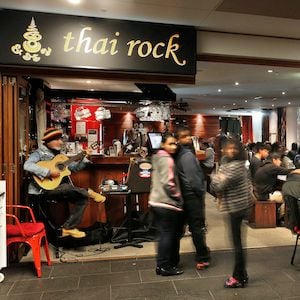
The COVID-19 cluster linked to the Thai Rock restaurant in Sydney continues to grow with New South Wales reporting 16 new cases of the coronavirus today.
Of the new cases, 11 can be traced back to Thai Rock, three to the Crossroads Hotel, one to a previously known case, and finally a returning traveller in hotel quarantine.
There are now 91 cases of COVID-19 being treated by NSW Health, with two patients in intensive care.
The Thai Rock restaurant cluster has now reached 37, while there are now 54 connected to the Crossroads Hotel.
There were no new cases reported today connected to the Batemans Bay outbreak, with the total confirmed from the Soldiers Club stable at eight.
Yesterday Hunter New England Health (HNEH) confirmed a man in Port Stephens had tested positive to COVID-19.
The source of the man's infection was a visitor from Sydney, with HNEH asking any symptomatic visitors to a pub called the Windsor Castle Hotel and the Salamander Shopping Centre to isolate and seek testing.
When asked about the new restrictions imposed on venues in NSW, Premier Gladys Berejiklian said the state government has given businesses ample time to prepare.
"Against my better judgment we gave businesses a whole week to gear up for this, and it's not very onerous," Berejiklian said.
"All of us have had to make adjustments in our life, this allows us to continue hiring staff, to continue operating, which is what we want. But at the same time, we need everybody to respect that the health advice is, to keep to the COVID-safe plans, and we know in theory what works.
"That balance can only be met if everybody does the right thing, including individuals and including businesses. And my expectation is that if you don't do the right thing from Friday you'll be found out, you'll be fined, and if you breach again you will be shut down."
Berejiklian has also urged all New South Wales citizens and businesses to not be complacent with the virus still active in the state.
"The best way we can we can live with this pandemic is for people not to cut corners, not to turn a blind eye, not to pretend they're immune, but really to expect that the next customer that walks into their premises could have the virus," Berejiklian said.
NSW chief health officer Dr Kerry Chant has asked for those in areas where there is community transmission to be on high alert and get tested if symptomatic.
"We're asking the community to work with us; this is a critical point. We're concerned that we've had potentially introductions into multiple settings - that's pleasing to see with the detected cases in Batemans Bay and I was actually pleased that we picked up that case in the Hunter area," Chant said.
"And it was interesting that for a few hours we didn't actually know...we went 'Oh my God, there's been another case!' and that person was linked back to the Thai Rock cluster.
"I just think this highlights how rapidly the virus can move. And so what we're suggesting over this next period of time is can everyone reflect on their travel arrangements, their non-essential travel? Can we just leave it - non-essential travel - for the next two weeks?"
Elsewhere there is speculation Victoria will record another 484 new cases today, while Queensland has reported one new case - a returning ADF officer who is in quarantine. This means there are now just three active cases in the Sunshine State, with 7,800 tests undertaken in the past 24 hours.
Queensland Premier Annastacia Palaszczuk emphasised she was concerned that NSW was on heightened alert over COVID-19.
"That means I'm on heightened alert," she said.
"There is nothing more important to me than the safety of Queenslanders and the wellbeing of Queenslanders...I am monitoring the situation every day constantly."
Updated at 11:12am AEST on 22 July 2020.
AMA calls for national consistency on mask wearing and stronger state borders
 "AMA calls for national consistency on mask wearing and stronger state borders")
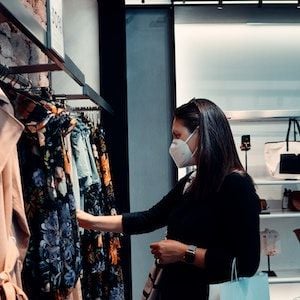
The Australian Medical Association (AMA) has called on the National Cabinet to meet, discuss and adopt a nationwide position on mask wearing and the strengthening of state borders to slow the spread of COVID-19.
In a statement AMA President Dr Tony Bartone says the adoption of mask wearing in areas of community transmission is essential, but the National Cabinet should adopt a consistent national approach to the use of masks.
It comes as the wearing of face coverings will be made mandatory in metropolitan Melbourne and Mitchell Shire from 11:59pm tonight, with those caught flouting the rules to be hit with a $200 fine.
The AMA has asked the Prime Minister and the National Cabinet to commit to a unified national approach to mask wearing and a number of other proposals including:
- Releasing community transmission modelling to inform the community about virus spread patterns;
- Developing a national network of contact tracing to allow targeting of resources to areas of high need during community transmission outbreaks;
- And zero health worker deaths.
"Masks add another layer of protection to the other significant measures of physical distancing, hand hygiene, and cough etiquette," says Dr Bartone.
"The Victorian and NSW Governments are to be commended for encouraging mask use, but a consistent National Cabinet-backed approach is now needed should outbreaks occur elsewhere.
"Every Australian in current areas of community transmission must make mask use part of their daily routines."
Dr Bartone says there is already strong evidence that international and domestic border closures have been successful in curbing the spread of COVID-19, but strengthening of state borders is still required.
"Border closure works. If existing border closures were relaxed, it would create a risk of the virus returning.
"We may need to accept that continued border closures will be needed for months ahead. The international border must remain closed, and State and Territory borders also need to be managed.
"There are also very practical issues to resolve for border communities. The Albury-Wodonga and Coolangatta-Tweed Heads communities should not be disadvantaged."
Further, Dr Bartone says he is concerned that Australians are complacent and are not following public health directions with regard to social distancing.
"Physical distancing is not always being followed in many areas," Dr Bartone said.
"The uptake of mask use will need community education and nationwide product supply, and misinformation must be challenged and corrected.
"It is time for the National Cabinet to reassert its leadership with strong and decisive policies and messaging on mask use, border management, mobilising national contact tracing resources, and commitment to zero health worker deaths," Dr Bartone said.
Updated at 10:13am AEST on 22 July 2020.
JobKeeper 2.0 details revealed, extended by six months
 "JobKeeper 2.0 details revealed, extended by six months")
The Federal Government has today affirmed it will maintain current JobKeeper arrangements until the end of September, before introducing JobKeeper 2.0 with staged reductions until 31 March 2021.
The new two-tiered payment support scheme is expected to lift the total cost of the initiative by $16 billion.
From October, businesses that continue to meet the revenue reduction requirements will be entitled to $1,200 per fortnight for employees who were working 20 hours or more weekly prior to the outbreak, followed by a reduction to $1,000 starting in 2021.
For employees who worked less than 20 hours per week in the pre-COVID environment, their supports will drop to $750 per fortnight as of October and $650 from the start of next year.
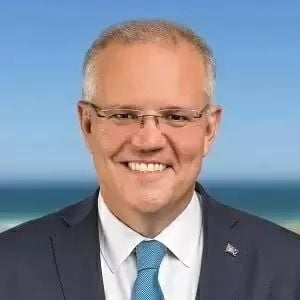
Prime Minister Scott Morrison (pictured) told a press conference this morning more than $30 billion had been provided through the JobKeeper program to around 960,000 businesses and 3.5 million employees. The total cost of the adjusted program has been tabled at $86 billion.
"It has been effective in stemming the loss of business closures and job losses," he said.
"It has saved businesses and it has saved livelihoods. That is the feedback I've been getting direct as I've spoken Australians - employees, employers - all around the country. It has been the game changer for them.
"Their businesses would not be here, their jobs would not be here were it not for the intervention and the way it was undertaken so quickly and so effectively."
While JobKeeper has drawn some criticism for giving many casual workers higher incomes than before the pandemic, the PM emphasised a conscious decision was made to have a flat rate payment to avoid "crushing" Centrelink while recognising many people worked two or three jobs.
"The report [Treasury's JobKeeper review] points out some 39 per cent loss of income from other jobs, and JobKeeper was designed to only be provided through one employer, so you couldn't go and get it from all your other employers if you had multiple jobs," the PM said.
"This also had important aggregate demand impact of ensuring that we were channeling those payments at a flat rate right across the labour force.
"A key part of the design was to ensure that we leveraged private payrolls to ensure that we did not crush the Centrelink system."
To help buffer the blow from the phased reduction of JobKeeper, the government will increase income-free area that is available to those on JobSeeker unemployment benefits to $300.
"Where you may have been getting $550 before, you can earn $300 and and then there's the $250 supplement that will come through the COVID- supplement and that will run out till the end of this year," he said, later clarifying a review will be undertaken and there will likely be a need to continue those supplements next year.
"We will be reintroducing mutual obligation in two phases - from the 4th of August we will be requiring people to connect again to employment services and to undertake four job searches a month, and the penalties regime will kick in if people refuse a job that has been provided and offered through that process.
For the second phase of mutual obligation requirements at the end of September there will be a higher rate of job search, and the assets test will be reintroduced for eligibility.
These measures come at a time when the headline unemployment rate has reached 7.4 per cent, but the effective unemployment rate stands at 11.3 per cent.
Treasurer Josh Frydenberg said around 30 per cent of the pre-COVID private sector workforce was on JobKeeper, and Treasury's review found it had met its three primary objectives: to save jobs and businesses; to maintain a formal connection between employers and employees; and to provide income support.
"It cited ABS (Australian Bureau of Statistics) data that 44 per cent of businesses on JobKeeper said that JobKeeper influenced their decision to keep their staff on," he said.
The Treasurer added revenue reduction tests would remain the same although reapplied at 30 per cent for most businesses, 50 per cent for businesses with turnover of $1 billion or more, and 15 per cent for charities.
"Treasury expects that the number of JobKeeper recipients will reduce substantially, with around 1.4 million people remaining eligible in the December quarter 2020, and one million in the March quarter 2021.
"We know that the economic pain caused by COVID will end, and that many businesses now struggling will be viable once again. This is why we're extending the payment to buy time to get businesses and their employees to the other side."
This sentiment was shared by the Prime Minister, who said the government looked forward to a time when businesses would not need JobKeeper.
"When JobKeeper is not necessary that'll be a good day for Australia, because that will mean our economy is getting back to a much higher level of performance, and businesses are able to support their employees," the PM said.
"Australia is a country that just doesn't look to survive these things. We don't go through challenges with our heads looking down, overwhelmed by the circumstances - that is not who we are.
"Who we are is an innovative, adaptive people, supporting each other, reaching out to each other, drawing us all through not for survival but to be on the other side in a position where we can emerge strong."
Updated at 11:56am AEST on 21 July 2020.
Majority of Australians would present at work with cold and flu symptoms
 "Majority of Australians would present at work with cold and flu symptoms")
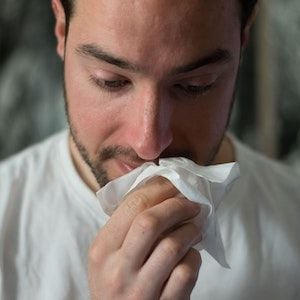
Approximately 70 per cent of Australians would go to work with cold or flu symptoms, despite extensive public health communication telling people to stay home if sick.
These findings, from an independent survey commissioned by cleaning services company Cleancorp, raise alarm bells for employers as many Australians head back to the office once COVID-19 restrictions ease in some states and territories.
More than half (54 per cent) of Aussies would present to work with a headache, and 38 per cent would head into the office with early signs of COVID-19 infection including symptoms like a stuffy/runny nose, sore throat, or fatigue.
Around 58 per cent of respondents say they would head into the office with these symptoms because they do not believe them to be serious enough to take time off work.
However, 42 per cent say it's because they have too much work to do to justify taking time off, and 29 per cent said they believe their employer would not regard the symptoms as serious enough.
"Now that we are facing the genuine threat of a virus 'double whammy' COVID-19 and the flu it is more important than ever not to go to work when feeling unwell," says co-founder and director of Cleancorp Lisa Macqueen.
"Our findings reveal that many employees come to work when sick because of feelings of guilt or a fear of being judged by their bosses.
"However, now that we're in a pandemic, going to work sick because you feel obliged to is no longer acceptable."
Under-30s would be more likely to present to work with cold or flu symptoms with the survey showing 47 per cent would do so with a sore or tingly throat, 46 per cent with a runny or stuffy nose, 40 per cent with a cough, 27 per with a stomach ache, and 18 per cent with nausea all higher proportions than the total respondent average.
Cleancorp says the survey results highlight an issue with casual and contract workers, who do not receive payment for sick or annual leave.
21 per cent of casual/contract worker survey respondents said they would present to work with cold or flu symptoms because they could not afford to not get paid. Cleancorp says this means around 546,000 casual workers in Australia would still present to work with symptoms.
"As a significant proportion of employees re-enter their workplaces either partially or fully organisations must do everything they can to minimise the risks of viruses spreading among their employees, customers, and visitors," says Macqueen.
"Employers need to understand that shared desks, meeting rooms, and breakout spaces may no longer be safe to use and occupy, and those old spray-and-wipe principles will also be inadequate for keeping surfaces virus-free."
"While it is encouraging to see that many of our clients are asking for heavy-duty anti-viral cleans, we need to see a strong shift towards a 'stay at home if you're unwell' mentality to contain the coronavirus successfully."
Updated at 10:10am AEST on 21 July 2020.
JobKeeper lifeline will remain open for business
 "JobKeeper lifeline will remain open for business")
Since JobKeeper was announced on March 30 it has provided a massive economic and psychological boost to the nation.
At a cost of $70 billion it is supporting 960,000 businesses and 3.5 million workers, or about 30 per cent of the pre-COVID private sector workforce. It is the single largest fiscal measure in Australia's history.
It was legislated for six months, and Treasury has now completed a review at the midway point of the program.
The review concludes JobKeeper is a ''proven delivery mechanism to deliver widespread support at scale", and that it has met its objectives to save businesses and jobs, maintain the formal connection between employer and employee, and provide necessary income support.
With the labour market remaining weak, Treasury suggests there is a ''strong case" for continuing the program with some modifications. This is what the government will do.
The report details how the COVID-19 crisis is expected to see employment levels decline by 5 per cent between the March and September quarters, which is a faster and higher rate than that experienced in the recessions of the 1980s and 1990s.
Between February and May, more than 2 million people went from employment to either being out of work or working fewerand in some cases zero hours. In this deteriorating economic environment, JobKeeper's flat fortnightly $1500 payment has been a lifeline for many.
In the words of one small construction business, ''JobKeeper ensured we stayed breathing", while a business in the food services sector says ''JobKeeper is the only reason we are open today".
Using a range of data, including singletouch payroll information collected by the Australian Taxation Office and highfrequency Australian Bureau of Statistics surveys conducted during COVID-19, Treasury found businesses receiving the payment had on average a decline in turnover in April of 37 per cent compared with the same month last year.
Job separations between employers and employees in these businesses had doubled as restrictions were implemented in the period prior to JobKeeper. Following the introduction of JobKeeper, payroll jobs started to stabilise after an 8.1 per cent fall over the four weeks to mid-April.
The sectors with the largest number of JobKeeper recipients were professional services, construction, and healthcare and social assistance. Women, who make up 44.9 per cent of private sector employees, comprised 47.1 per cent of JobKeeper recipients.
Sole traders represented 40 per cent of the organisations receiving the payment but only 12 per cent of individual recipients.
The program was demand driven and, while some eligible businesses chose not to apply, only one in 10 of these businesses cited complexity and insufficient cash flow as the reason for not doing so.
ABS data found 44 per cent of businesses surveyed said JobKeeper, consistent with its core objective, influenced their decision to keep on staff, even if hours were reduced.
The flat $1500 fortnightly payment was a conscious decision, as it enabled the money to be distributed quickly using existing systems. However, one of the consequences of the flat payment equivalent to the minimum wage was that some people were receiving more under JobKeeper than they did pre-COVID-19. The Treasury review finds that about a quarter of JobKeeper recipients saw their income increase by an average of about $550. This is the same amount as the additional coronavirus supplement paid to JobSeeker recipients.
While the income increase of $550 is significant, it's important to acknowledge that this is calculated on the basis of the income a person was receiving from their JobKeeper employer and does not take into account any income they may have lost through losing a second job.
The review found secondary jobs comprised 39 per cent of all jobs lost since March, and a number of those receiving JobKeeper, particularly part-timers or longterm casuals, may have had second jobs.
The government is introducing a second-tier payment as part of JobKeeper 2.0 to better reflect the pre-COVID-19 incomes of recipients.
In recommending that JobKeeper be continued, Treasury said it should remain a time-limited program, as it can create disincentives that become more acute as the economy opens up.
While JobKeeper does not inhibit an employer from making an employee redundant, it could restrict labour mobility and people switching jobs. As the payment does not move with the staff member, it can discourage employees from moving to another firm that is doing better.
Under the JobKeeper extension to March 2021, only businesses whose turnover remains below the threshold will be eligible for continued support. This will ensure it remains targeted to those who need it most.
While not all these businesses will necessarily make it to the other side, by tapering the payment and extending the JobKeeper program, we give them the best chance of remaining viable.
JobKeeper has been an enormously successful program. It has helped keep people in jobs and businesses in business. Given the scale and size of the economic shock hitting the Australian economy, the JobKeeper program will be continued, providing critical support for those who need it most.
Josh Frydenberg is the federal Treasurer.
NSW border restrictions to tighten with Victoria
 "NSW border restrictions to tighten with Victoria")
The NSW Government will make it even harder for people travelling from Victoria to enter the state as of midnight, while Premier Gladys Berejiklian (pictured) urges the public to wear masks when social distancing isn't possible.
The state government has established a strict new border zone, tightened permit conditions and stronger enforcement powers.
With permits, NSW border residents will be restricted in their reasons for travelling into the Victorian side of the border zone, and if they venture further into the neighbouring state they will need to self-isolate for a fortnight upon their return.
Any other NSW resident who crosses the Murray River, or otherwise enters Victoria or has been there in the last 14 days, will be required to self-isolate for 14 days on their return to NSW.
"From midnight Tuesday 21 July, border zone residents with a permit will only be able to cross into the other side of the NSW-Victorian border zone to go to work or attend an education institution if they can't work or learn from home, or to obtain medical care, supplies or health services," NSW Health Minister Brad Hazzard said.
"On top of that, we're strengthening the rules so the fewer people granted permits to enter NSW must now carry a copy of their permit and produce it when directed by enforcement officers."
NSW reported 20 new COVID-19 cases over the past 24 hours, all linked to known cases: eight to the Thai Rock restaurant cluster, four to the newly emerging Batemans Bay Soldiers Club cluster, three to the Crossroads Hotel, four from overseas and one from Victoria.
"There's currently 96 people being treated by New South Wales Health and two are in intensive care - one is requiring a ventilator," NSW Chief Health Officer Dr Kerry Chant said.
"I'd also like to highlight that one of those cases in intensive care is actually a person in their 30s...often we tend to say this disease affects the elderly, and it does on average, but there still will be young people that are impacted."
Victoria has also reported 275 new cases in the past 24 hours, following a rollercoaster weekend after the state's record daily numbers of 428 on Friday. There are now 2,913 active cases in Victoria, and there have been 39 deaths to date.
NSW Premier Berejiklian urged people to follow the health advice and avoid crowded places.
"We have an opportunity to isolate the cases that we have; to clamp down and to make sure we reduce the incidence of the virus spreading. We have that chance in New South Wales. Unfortunately other places don't have that opportunity," she said.
"As the advice has been provided in NSW, is if you cannot guarantee social distancing where you're going, if you cannot guarantee that people will around you respect that social distancing, you must consider wearing a mask."
For doctors and nurses on the frontline, sources close to Business News Australia have reported incidences of health departments in NSW not allowing staff to get their personal protective equipment (PPE) masks properly fitted - as is supposed to be the standard procedure - to protect against the virus.
Some who purchase their own PPE have also been told not to wear it at work, potentially putting health staff at further risk.
Updated at 12:00pm AEST on 20 July 2020.
National SME loan scheme extended for business recovery
 "National SME loan scheme extended for business recovery")
A Federal Government SME loan scheme will be extended, giving Australian businesses access to more funding during the COVID-19 recovery phase.
Under the existing 'Coronavirus SME Guarantee Scheme' the Government has been partnering with 44 approved lenders to guarantee 50 per cent of new unsecured loans to SMEs.
The next phase of the scheme is intended to assist business to move out of hibernation and adapt to the new economic reality.
Key changes to the SME Guarantee Scheme include:
- Extending the purpose of loans able to be provided beyond working capital, such that a wider range of investment can be funded;
- Permitting secured lending (excluding commercial or residential property);
- Increasing the maximum loan size to $1 million (from $250,000) per borrower;
- Increasing the maximum loan term to five years (from three years); and
- Allowing lenders the discretion to offer a repayment holiday period.
The initial phase of the Scheme remains available for new loans issued by eligible lenders until 30 September 2020. The second phase will start on 1 October 2020 and will be available until 30 June 2021.
"The extended terms of the Scheme will enable lenders to continue supporting Australian small businesses when they need it most," says the Federal Government.
"The expanded Scheme will shift from providing access to working capital to helping businesses stay afloat during the crisis to now also enabling them to access more affordable and longer term credit so that they can invest for their future."
Up to $70 billion in income support on its way
Over the weekend, Federal Treasurer Josh Frydenberg (pictured) promised to spend $70 billion to extend JobKeeper payments ahead of a review of the program to be delivered later this week.
In an interview with The Age and The Sydney Morning Herald Frydenberg said the new funding will ensure Government support will be forthcoming as infections of COVID-19 continue to impact the economy.
"There's a lot of uncertainty in the economic environment and the Victorian situation is a significant setback," Frydenberg told The Age and The Sydney Morning Herald.
"It's diminished confidence beyond the Victorian border and the recovery is a confidence game."
Speaking to Sky News on Sunday Finance Minister Mathias Cormann said further support will be delivered to employers that have been particularly impacted by the COVID-19 crisis.
It is expected that the government will adjust eligibility criteria for JobKeeper, with companies with up to $1 billion in turnover eligible if they suffered a 30 per cent fall in business, and companies with more than $1 billion eligible if they suffered a 50 per cent fall.
"As we get to the end of the six months, towards the end of September, it is going to be important to reassess which businesses still should be receiving this support," Senator Cormann said to Sky News.
The extension of these support programs for Australian businesses comes as Australia's unemployment rate hit its highest levels in more than two decades in June at 7.4 per cent.
Close to a quarter of a million people entered part-time employment in June, according to the latest figures from the Australian Bureau of Statistics (ABS).
The number of people employed in full-time jobs decreased by 38,100, but on the balance there was a rise of 210,800 in employment overall.
The underemployment rate decreased by 1.4 percentage points to 11.7 per cent, but remained 2.9 percentage points above March.
Updated at 9:40am AEST on 20 July 2020.
Advertisement
Latest News
From $13,000 to $20 million: how a PCOS diagnosis and a pair of scissors built Xali Organics
Inspired by a medical diagnosis and driven by innovative marketing,...
Cedar Woods secures $63.4m in new land acquisitions as record presales underpin pipeline push
Perth-headquartered residential developer Cedar Woods Properties (A...
Australia's long-term beer decline hits home as Lion plans to close Boag's brewery in Launceston
Australia's decades-long decline in beer consumption has claime...
Downer EDI seals $310m Transurban contract to maintain Sydney motorway network
Infrastructure services group Downer EDI (ASX: DOW) has secured con...
Propel Funeral Partners expands New Zealand footprint with trio of acquisitions worth $9.1m
Sydney-based death care provider Propel Funeral Partners (ASX: PFP)...
Advertisement