Advertisement
Staying informed is more important than ever as the situation unfolds with Covid-19. Stay tuned here for our live updates, and be sure to let us know what your business is doing to face this unprecedented challenge.
Covid-19 News Updates
Masks to be mandatory in Melbourne, COVID-19 outbreak in Batemans Bay
 "Masks to be mandatory in Melbourne, COVID-19 outbreak in Batemans Bay")
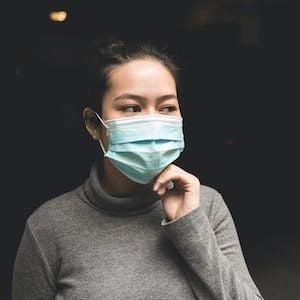
The ongoing COVID-19 crisis in greater metropolitan Melbourne has forced Premier Daniel Andrews to impose the mandatory wearing of masks.
From 11.59pm on Wednesday 22 July, citizens of metropolitan Melbourne and Mitchell Shire must wear a face covering when leaving the home.
Those caught flouting the rule will be hit with a $200 fine.
The latest restriction comes as Victoria reported 363 new confirmed cases of COVID-19 yesterday and 217 on Saturday.
The 580 new cases over the weekend came off the back of Victoria's worst day of new COVID-19 cases on Friday 17 July when the state recorded 428 new cases.
Elsewhere in Australia there were 18 new confirmed cases of COVID-19 in New South Wales on Sunday and 15 on Saturday.
A club in Batemans Bay on NSW's South Coast has been linked to at least eight cases of COVID-19 leading to the closure of the Batemans Bay Soldiers Club.
All those who worked at or visited the Batemans Bay Soldiers Club on the 13, 15, 16 and 17 June have been directed to immediately get tested for COVID-19 and self-isolate.
The health direction for the Soldiers Club joins a number of other business in NSW that have been impacted by confirmed cases of COVID-19 including Plus Fitness in Campbelltown, Crossroads Hotel in Casula, Planet Fitness in Casula, Picton Hotel in Picton, and Thai Rock Restaurant in Wetherill Park.
Next Federal Parliament sitting cancelled
The next fortnightly sitting of Federal Parliament will not go ahead due to the ongoing COVID-19 crisis and community transmission in Victoria and regional New South Wales.
Chief Medical Officer Paul Kelly said the next sitting of Federal Parliament, initially planned to go ahead over the first two weeks of August, posed an unnecessary risk to parliamentarians.
"The entry of a high-risk group of individuals could jeopardise the health situation in the ACT and place residents at unnecessary risk of infection," said Kelly.
Parliament is now due to return on 24 August.
Updated at 10:18am AEST on 20 July 2020.
Local film association questions preferential treatment for foreign studios
 "Local film association questions preferential treatment for foreign studios")
Screen Producers Australia (SPA) has today welcomed the Federal Government's $400 million injection to attract film production from overseas, but has called for clarity on local content quota removals which could force more than 10,000 people out of work.
The association has sounded a note of caution, urging a balance in support is needed for imported productions with assistance for the making of Australian stories told by Australian voices.
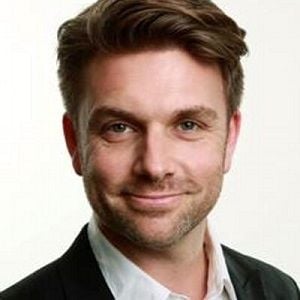
SPA, led by CEO Matthew Deaner (pictured), said the local sector had been hit hard by the coronavirus and the effects of certain government decisions.
"Significant gains in employment, investment and creative output could also be achieved through an extension of the tax incentive for domestic television content, the Producer Offset, which should be increased from 20 per cent to 40 per cent," the association said.
"This would also address the anomaly whereby international productions are able to access higher levels of support than local productions, which create local IP, employ local creatives and create great Australian cultural content."
But SPA claims the biggest threat facing the local industry is the effective suspension of the drama, documentary and children's content quota requirements that apply to commercial free-to-air television, and the drama requirements that apply to subscription television.
"Whilst the Government's announcement of support for international productions is forecast to deliver 8000 roles for Australians, if it's not made immediately clear to all market participants that the television quotas will apply in 2021, 10000-15000 full time equivalent jobs will be lost next year creating a massive problem for our sector," the association said.
"Whilst the decision not to enforce the quotas in 2020 was ostensibly to do with COVID-19 related interruptions to supply, as the Government's investment of $400 million demonstrates, our industry is innovative and adaptive and is already back at work.
"However, the lack of certainty regarding the application of the quotas in 2021 is heavily distorting the market, and throwing doubt over projects which were well developed and ready to be greenlit."
The association explained with the the finalisation of COVID Safe working guidelines and the announcement of a $50 million fund to get productions going again, there was no justification for further blanket suspensions and the "ongoing lack of clarity is affecting shovel-ready projects".
"We urgently need the Government to release the demand hand-brake imposed by the uncertainty regarding 2021 quotas," SPA said.
"Given the lead times for production, the market needs a signal regarding 2021 quotas immediately, to allow for delivery in 2021.
"A failure to make a decision in the coming weeks will effectively result in an inability to supply, despite the industry's readiness and capacity to deliver the content broadcasters need to meet their quota requirements."
Updated at 3:47pm AEST on 17 July 2020.
"No mingling": Group bookings limited to 10 at all NSW indoor hospitality venues
 "\"No mingling\": Group bookings limited to 10 at all NSW indoor hospitality venues")
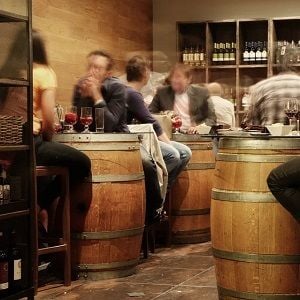
Earlier this week the NSW Government announced group bookings at pubs would be capped at 10 starting today, but those measures have now been extended to all indoor hospitality venues with one week of leeway to comply.
After eight new cases were reported in the state overnight, Premier Gladys Berejiklian noted 24,500 people were tested in the past 24 hours and commended the "Herculean" detective work to contain the Crossroads Hotel outbreak with some 5,000-6,000 people contacted and their contacts traced.
The Premier highlighted advice from health experts that indoor activities were the "greatest threat of spreading the disease", which is why the measures applied to pubs have been extended to clubs, restaurants, cafes, and other indoor hospitality venues.
"I'm announcing further tightening and restrictions. This is to give us every opportunity to keep New South Wales as open as possible," she said.
"But we say this in the context that we have to be flexible, we have to appreciate that once this disease gets into the community it moves very, very quickly, and in ways in which we can't always predict."
The measures will come into effect Friday next week, but the Premier hopes people will take on the advice from today.
"We're giving businesses the next few days to get themselves organised," she said.
"We absolutely need everybody seated when they're in a venue no mingling...when you have smaller groups there's less chance of people getting up and mingling."
For weddings and corporate events the maximum number of people is 150, but guests must remain seated. The cap on people allowed in private homes remains at 20, although Premier Berejiklian asked the public to try to limit the number to 10.
Meanwhile, the limit on funerals and places of worship is at 100, as the emotional nature of exchanges in these scenarios increases the probability of transmission.
The Premier's press conference was heavy on themes of personal responsibility, and she made a call to everyone to help get on top of any potential hotspots or community transmission that might be "bubbling away under the surface".
"All of us need to limit our activity, all of us need to think about what we are doing, all of us need to think about how we're keeping ourselves safe, our families safe and our loved ones safe," she said.
NSW Deputy Premier John Barilaro said he would be doubling down on compliance on businesses.
"We don't want to lock down sectors, industries or businesses. We do not want to lock down the economy, but we do need to put in place those measures that allow us to operate safely," he said.
"There is a burden on businesses in this state to do the right thing to become compliant, COVID Safe, and to of course be following the protocols."
Minister for Customer Service Victor Dominello said the government wanted businesses to be part of the solution, and not the problem.
"Quite frankly, if businesses do not take public health concerns seriously, then seriously they should not be in business," he said.
"Today's announcement takes us another step forward in that journey. We are calling out on the good businesses to keep up the great work that they are doing, and overwhelmingly we have great businesses around the state doing the right thing.
"But there are always gonna be those businesses that think that they live beyond the law."
Today's announcement is aimed at stamping that up, with Dominello reiterating businesses "must comply with the law".
"I'm asking the businesses in today's announcement that you must do a couple of things immediately: download your safety plan, register that safety plan, and make sure that you comply with that safety plan including digital attendance records, including keeping the COVID Safe hygiene measures in place," he said.
"We want businesses to survive, and indeed thrive, and but it can only be done in a COVID Safe way."
Chief Health Officer Dr Kerry Chant confirmed there were now 42 cases linked to the Crossroads Hotel cluster.
Dr Chant added there were five recent cases of people who reported spending time at the Stockland Mall at Wetherill Park while infectious, so she urged people who had visited that shopping centre over the last two weeks to be vigilant about symptoms.
The same is true of those who attended the Thai Rock Restaurant from July 10-14.
Updated at 12:01pm AEST on 17 July 2020.
Victoria reports worst day on record with 428 confirmed COVID-19 cases
 "Victoria reports worst day on record with 428 confirmed COVID-19 cases")
Victoria has witnessed its worst day on record for confirmed COVID-19 cases, reporting 428 more infections overnight.
The figure is well above yesterday's previous highest daily tally of 317 new cases, and marks the state's 12th day in a row of triple-digit increases of COVID-19 infections.
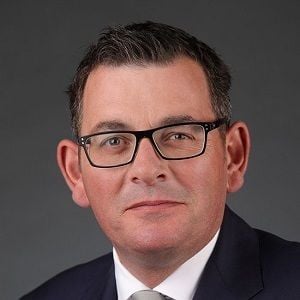
Victorian Premier Daniel Andrews (pictured) also reported that three people have died from COVID-19 since yesterday's press conference, bringing the death tally since the pandemic began in Victoria to 32.
Of the 428 new cases, 57 relate to known outbreaks, one is in hotel quarantine, and 370 are under investigation.
112 people in Victoria are now in hospital because of COVID-19 complications, and 31 people are in intensive care.
The state conducted 24,409 tests yesterday, bringing the total number of tests completed in Victoria to 1,250,408.
"Certainly 428 new cases is both disappointing and concerning," says chief health officer Brett Sutton.
"We have not turned the corner here."
Andrews says because of small spikes of infection in regional Victoria there will be new testing clinics established in some regions.
"Additional test sites and expanded test sites are critically important," says Andrews.
"We're also setting up dedicated regional public health teams, local squads who can really bring that intensive intervention to even the smallest number of cases to really sit on those cases to make sure that they get the best public health response."
The ongoing COVID-19 crisis in Victoria has forced Melbourne into a state of lockdown for six weeks under Stage 3 'Stay at Home' restrictions, and Andrews says unless people follow the rules that period of time could be extended.
"These are sacrifices - I know that no one is enjoying being in a six week lockdown," says Andrews.
"Stay at Home orders are deeply frustrating, but at the same time, they are the only tool that we have. We don't want to extend this any longer than the six weeks, we don't want to have to put in any additional rules, and that's why we're so grateful to those who are doing the right thing.
"This is simple in many respects, they're small things for many people, but they do make a really big difference in the number of people who will be infected, the length of time that we will be locked down, and the likelihood or otherwise of having to add to these rules with further restrictions."
Updated at 11:49am AEST on 17 July 2020.
$400 million injection for Australia's screen industry to attract international studios
 "$400 million injection for Australia's screen industry to attract international studios")
The film and television industry is set to receive a $400 million boost from the Federal Government as part of a plan to attract overseas productions to Australia.
Dubbed the 'Location Incentive', the $400 million injection is designed to complement the Federal Government's existing 'Location Offset', and provide an effective increase in the tax offset rate from 16.5 per cent to 30 per cent.
Prime Minister Scott Morrison told a press conference this afternoon the Hollywood production companies of Ron Howard and Jerry Bruckheimer had already reached out on the basis of the announcement.
"There is serious interest in basing films here in Australia," he said.
"We've already got Disney making films here, we've got the Marvel syndicate, we've got Paramount Studios - all these big studios know our potential and capability here in Australia and they've known it for many years.
"Earlier today I was able to meet with Baz Luhrmann over at the Village Roadshow studios where they're filming Elvis, and I was so encouraged by Baz's great passion for Australia which is well known, and great passion for the Australian film industry."
The PM emphasised Australia was known as a safe and productive place to make a film.
"This is an industry that can be drawn upon here in Australia to produce world-class productions, and whether it's Hollywood or Bollywood, wherever they're coming from, they know they can come here and create the films that will create great success," he said.
The funding will extend the screen incentives over seven years to ensure that international studios can commit to multiple productions over a number of years, guaranteeing local jobs both now and into the future.
The 'Location Incentive' is estimated to attract around $3 billion in foreign expenditure and should create 8,000 new employment opportunities for Australians each year.
"This investment is key to our JobMaker plan to create jobs, boost local business activity, and provide training and skills," Morrison said.
"Behind these projects are thousands of workers that build and light the stages, that feed, house and cater for the huge cast and crew and that bring the productions to life.
"This is backing thousands of Australians who make their living working in front of the camera and behind the scenes in the creative economy."
Minister for Communications, Cyber Safety and the Arts Paul Fletcher said the expanded program meant Australia's film and television industry would be firing on all cylinders as COVID-19 restrictions ease.
"The Location Incentive is an economic multiplier. It will sustain the vitality of Australian screen production and support jobs and local businesses," Minister Fletcher said.
"Through this additional commitment, the Government is telling the world that Australia is a desirable destination for screen production with great locations, skilled crews, world-class talent, post-production expertise and state of the art facilities."
To date, the Government has announced funding of $123 million for 10 productions through the existing Location Incentive including Thor: Love and Thunder and Shang-Chi and the Legend of the Ten Rings in Sydney, Godzilla vs Kong on the Gold Coast, Shantaram and The Alchemyst in Melbourne. These 10 projects are estimated to generate spending of around $1 billion, support 8,500 local jobs over multiple years and engage more than 9,000 Australian businesses.
However, the additional $400 million boost for international filmmakers comes as the Federal Government is cutting $5 million in funding per year for ABC independent productions, equating to a roughly $35 million blow over the same seven year period.
The extra funding comes as the Queensland film industry is back on set, with two productions restarting including Baz Luhrmann's Elvis biopic and rom-com feature film This Little Love of Mine.
Queensland Premier Gladys Berejiklian noted in June that the film and television industry had been hit hard by COVID-19.
"While the global pandemic may have forced productions into hiatus, the Queensland Screen industry has still been active - doing what they do best, creating and developing until productions can recommence," Berejiklian said.
"Screen Queensland established a Queensland Screen Industry Task Force and announced a $3.3 million COVID-19 support package to support Queensland writers and producers and businesses.
"I look forward to announcing the start of more productions in our State soon, that are getting people back to work and our economy recovering."
The expansion of the Location Incentive comes on top of $250 million over the next 12 months to help restart the creative economy, including $50 million for a Temporary Interruption Fund that will support local film and television producers to secure finance and recommence filming for productions that have largely been halted due to the challenges in accessing insurance coverage for COVID-19.
Originally published at 11:31am, updated at 3:22pm AEST on 17 July 2020.
More than 210,000 Australians returned to work in June
 "More than 210,000 Australians returned to work in June")
Australia's unemployment rate reached its highest levels in more than two decades in June at 7.4 per cent, but a relaxing of COVID-19 restrictions meant more people were actually employed or looking for work.
Close to a quarter of a million people entered part-time employment in June, according to the latest figures from the Australian Bureau of Statistics (ABS).
The number of people employed in full-time jobs decreased by 38,100, but on the balance there was a rise of 210,800 in employment overall.
The underemployment rate decreased by 1.4 percentage points to 11.7 per cent, but remained 2.9 percentage points above March.
"The easing of COVID-19 restrictions in June saw an extra 280,000 people in the labour force, with more people in employment, and more actively looking and available for work," ABS head of labour statistics Bjorn Jarvis said.
"Overall, the percentage of people employed in Australia increased 1.0 percentage point to 59.2 per cent, up from a low of 58.2 per cent in May.
"In June, around 24 per cent of the fall in employment through to May had been regained."
The nation's hours worked increased by 4 per cent, which is still 6.8 per cent short of March levels.
Hours worked increased more for females (5.0 per cent) than males (3.3 per cent) over the month, although the differential compared to pre-coronavirus circumstances is greater for women by almost one percentage point.
Unemployment increased by 69,300 people to 992,300, and around 70 per cent of newly unemployed people in June were not in the labour force in May.
The underutilisation rate, which combines the unemployment and underemployment rates, fell 1.0 percentage point, to 19.1 per cent.
Updated at 10:02am AEST on 17 July 2020.
Rapid COVID-19 detection test sends AnteoTech shares soaring
 "Rapid COVID-19 detection test sends AnteoTech shares soaring")
Technologies developed in Brisbane and Melbourne may contribute to a new 15-minute test for COVID-19, harnessing nanocoating to speed up results for saliva and blood tests.
Brisbane-based AnteoTech (ASX: ADO) has successfully developed a proof-of-concept in-house for two types of tests - one for antigens with swab samples from the nose, throat or mouth, and the other with antibodies from blood samples.
The proof of concept was conducted with AnteoTech's proprietary AnteoBind activated Europium particle technology, with Melbourne-based diagnostics products company Axxin providing the reading device.
Combined with the Axxin reader the AnteoTech test is designed to deliver higher sensitivity than the gold particle-based antibody tests that are commonly used in point of care platforms today.
ADO shares rose 87 per cent to 4.1 cents each after the announcement of this development, which if taken further could prove an alternative to current swab testing that takes hours to deliver results.
Another ASX-listed company Cellmid (ASX: CDY) also has a 15-minute test, courtesy of its status as an exclusive distributor in Australia for the Wondfo SARS-CoV-2 antibody, developed by China's Guangzhou Wondfo Biotech Co.
The next phase of development for AnteoTech over the next six to nine months will aim to optimise tests, further improve the lower limit of detection, and verify and validate the design before clinical studies.
If those studies take place and prove successful, the company would need to gain regulatory approvals and prepare for outsourced scaled manufacturing.
"This is another important milestone for AnteoTech as we further leverage AnteoBind activated Europium and our Assay Development competency with the aim to deliver an end user product in the Lateral Flow Point of Care market," says AnteoTech CEO Derek Thomson (pictured).
"All the company including myself are immensely proud to have made the decision to develop this test as we believe our competency and product is unique and can make a substantial difference in the global fight against the COVID-19 virus."
In other COVID-19 news, Victoria has reported 317 new cases overnight, representing the highest number of daily cases in any Australian jurisdiction since the pandemic began. There were also two deaths in the state, while New South Wales reported 10 new cases of the virus.
Updated at 12:29pm AEST on 16 July 2020.
Helloworld plans $50m raise to ride out COVID-19 turbulence
 "Helloworld plans $50m raise to ride out COVID-19 turbulence")
Travel agency Helloworld (ASX: HLO) has today announced a $50 million equity raising to help cope with industry disruption, as bookings are expected to remain at 10-12 per cent of pre-coronavirus levels.
CEO Andrew Burnes and executive director Cinzia Burnes will throw $5 million into the bargain, with the raising aimed at providing balance sheet flexibility at a time when monthly cash burn is at around the $2 million mark.
The company's monthly operating costs stood at $22.9 million before the pandemic, but cost saving initiatives including the closure of offshore offices in Manila and Mumbai have helped reduce outlays to $4 million post-JobKeeper and the New Zealand wage subsidy.
The group continues to generate income of $2 million per month, mostly from transaction fees and commissions, and is seeing domestic total transaction volume (TTV) increase week by week as borders open up. Currently around 70 per cent of that TTV comes from Helloworld's corporate business.
But the company only had $31 million in cash as at the end of June, compared to $147.8 million for the same date in 2019. Lenders have extended maturity dates for short-term facilities out to April and September in 2022, but Helloworld could still use the extra liquidity.
That is why it is raising funds at $1.65 per share, representing a 16 per cent discount to the last trading price.
The equity raising comprises a 27.1 million institutional placement and a $22.9 million non-renounceable entitlement offer, in total representing almost a quarter of existing Helloworld shares on issue.
After the raising Helloworld is expected to have a pro forma liquidity position of $187.1 million.
The company added it was still owed $3.7 million by Virgin Australia (ASX: VAH), whose administrators Deloitte have indicated won't have enough recoveries to pay creditors in full.
"At this stage, it is unclear what recovery may be realised. Helloworld has not experienced material debtor defaults," Helloworld stated in a presentation.
"Debtor provisioning at 30 June 2020 is expected to increase from historical levels reflecting slower collections than achieved historically.
"Suppliers, particularly airlines and cruise companies, introduced unilateral changes to their refund policies including some businesses refusing to refund at all, imposing additional cancellation and refund charges, insisting on bookings being paid for in full when it was unlikely for the aircraft or cruise to depart before they would consider a refund (rather than just refunding the deposit) and significant delays (3 months) in receiving refunds."
Never miss a news update, subscribe here. Follow us on Facebook, LinkedIn, Instagram and Twitter.
Business News Australia
NT won't "roll the dice" on visitors from Sydney, travellers to be quarantined
 "NT won't \"roll the dice\" on visitors from Sydney, travellers to be quarantined")
Visitors arriving in the Northern Territory from Sydney will need to enter quarantine at their own expense for two weeks, as the Territory Government responds to an emerging COVID-19 cluster in the NSW capital.
The tough decision has been made ahead of the NT's scheduled reopening to much of the country this Friday, for which Victorians are also exempt due to a surge in cases.
The announcement comes after NSW reported 13 new cases today, with the total number of cases linked to the Crossroads Hotel in Southwest Sydney now at 34.
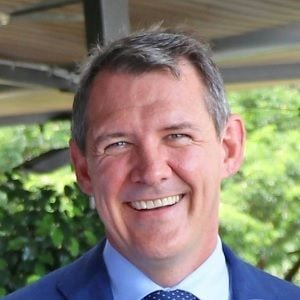
NT Chief Minister Michael Gunner (pictured) said 30 local government areas (LGAs) in Greater Metropolitan Sydney were now considered hotspots by the Territory Government.
People arriving from Sydney will need to spend $2,500 on quarantine at the Howard Springs Quarantine Facility. Chief Minister Gunner has previously indicated those who lie could face up to three years in prison.
"You don't make a decision based solely on what today's numbers are. You look at today's numbers and you map out how bad it could get," he said.
"Another factor in our decision is that New South Wales is not currently considering a localised lockdown. While there are good reasons for that, we accept that, it does increase the risk for us and it's not a risk we are prepared to accept.
"To open the door to Sydney right now when we don't know the full extent of this cluster would be a roll of the dice, and I don't gamble with the lives of Territorians."
For NSW travellers from outside Sydney flying into NT from Sydney Airport, the airport will be considered a quarantined exemption as is the case in Melbourne, so long as those travellers have not spent time in any hotspot area.
Chief Minister Gunner emphasised the Sydney hotspot declarations would be reviewed in two weeks, after a full replication cycle of the virus has taken place.
"I don't anticipate this declaration being in place for as long as Victoria's, but I will not make any promises about a date," he said.
"I know that this is a big response to a smalller outbreak, but the outbreaks in Melbourne started small too.
"I'd rather be overly cautious now and accept in a few weeks that we were too cautious, than take a risk now and discover in a few weeks that we were reckless."
Victoria reported 238 new cases overnight, of which 209 were still under investigation. There are now 27 people in the state in intensive care units (ICUs), and there was one death overnight.
Australia currently has 2,096 active cases in total, of which the vast majority are in Victoria.
Updated at 12:36pm AEST on 15 July 2020.
New COVID-19 restrictions for NSW venues, SA to maintain border closure
 "New COVID-19 restrictions for NSW venues, SA to maintain border closure")
Venues in NSW will have to comply with more stringent COVID-19 restrictions in the wake of the Crossroads Hotel outbreak, including capacity limits and the employment of a COVID-safe marshal.
It comes as the outbreak of COVID-19 from the Crossroads Hotel worsens, with 10 of today's 13 new confirmed cases in NSW connected to that outbreak.
In total, there are now 28 cases linked to the Crossroads Hotel outbreak, with 14 directly connected to the hotel itself, and the remainder being close contacts of those infected patrons.
That outbreak has also forced South Australia Premier Steven Marshall to delay the reopening of his state's border with NSW and the ACT.
The new rules will limit the amount of people in venues in NSW and include:
- A cap of 300 people on all venues,
- Group bookings will be capped at 10 people,
- A full-time COVID-safe marshal must be employed to monitor social distancing at venues with a capacity of 250 people or more,
- Smaller venues must employ a COVID-safe marshal during peak times,
- And details of every single attendee must be recorded.
Venues must also download a COVID-safe plan and register that plan with the NSW Government from 12:01am on Friday in order to open.
NSW Premier Gladys Berejiklian says the new measures are intended to clamp down on community transmission of COVID-19 which she says could have been "bubbling below the surface" undetected for a period of time.
"This is the time that we are more concerned because we are still tracing what level of transmission has occurred in the last few months, that may be bubbling below the surface that we're not aware of," says Berejiklian.
"But the reason why we are especially in high alert in New South Wales is also, of course, because of what's happened in Victoria, the proximity of our states, the fact that there was some challenges with quarantine potentially going back some months, means that we have that risk that there's been that level of community transmission in New South Wales for some time."
The State's health authorities have also asked any person who attended the Crossroads Hotel between 3 and 10 July to isolate for 14 days and get tested if any symptoms present.
The news comes as Victoria has today recorded 270 new cases of COVID-19; the third largest day of new cases since the pandemic began. These new cases mean Australia has officially clocked over 10,000 confirmed cases since 25 January when the first locally recorded case of COVID-19 landed in the country.
Globally there are now more than 13 million confirmed cases of COVID-19, with the USA reporting 65,488 new cases just yesterday.
SA to maintain border restrictions with NSW and ACT
South Australian Premier Steven Marshall has today announced that the state will not be lifting border restrictions with NSW and ACT because of the outbreak at the Crossroads Hotel.
Marshall had initially planned to reopen South Australia's border with NSW and the ACT on Monday 20 July, however that date has now been canned and will be reassessed on Friday.
"The 'super spreader' event, which has occurred at the Crossroads Hotel on the Hume Highway is really of great concern," says Marshall.
"There are now many hundreds, in fact probably in excess of 1,000 people that are now in isolation as part of that super spreader event.
"Obviously, there's a 14 day incubation period, and the transition committee have made a decision that we really need to see those results before we lift the borders with New South Wales and the ACT."
LIVE: Providing an update on border restrictions following today's Transition Committee meeting
Posted by Steven Marshall on Monday, July 13, 2020
Advertisement
Latest News
From $13,000 to $20 million: how a PCOS diagnosis and a pair of scissors built Xali Organics
Inspired by a medical diagnosis and driven by innovative marketing,...
Cedar Woods secures $63.4m in new land acquisitions as record presales underpin pipeline push
Perth-headquartered residential developer Cedar Woods Properties (A...
Australia's long-term beer decline hits home as Lion plans to close Boag's brewery in Launceston
Australia's decades-long decline in beer consumption has claime...
Downer EDI seals $310m Transurban contract to maintain Sydney motorway network
Infrastructure services group Downer EDI (ASX: DOW) has secured con...
Propel Funeral Partners expands New Zealand footprint with trio of acquisitions worth $9.1m
Sydney-based death care provider Propel Funeral Partners (ASX: PFP)...
Advertisement