Advertisement
Staying informed is more important than ever as the situation unfolds with Covid-19. Stay tuned here for our live updates, and be sure to let us know what your business is doing to face this unprecedented challenge.
Covid-19 News Updates
QLD names two NSW locations COVID-19 'hotspots', proposes jail time for breaching health directions
 "QLD names two NSW locations COVID-19 'hotspots', proposes jail time for breaching health directions")
Two areas in NSW have been named COVID-19 'hotspots' by Queensland Health this morning as the outbreak from the Crossroads Hotel begins to cause concern.
The town of Campbelltown and the Sydney suburb of Liverpool have been declared as COVID-19 hotspots, meaning from midday today any person returning to Queensland that has been to one of those locations must quarantine in a hotel for two weeks.
The Crossroads Hotel is located in Casula, just south from Liverpool and north from Campbelltown, a town on the fringe of greater Sydney.
Queensland Chief Health Officer Jeanette Young has also confirmed that there are 18 people in Queensland who have visited the Crossroads Hotel.
All 18 have been tested and are awaiting the results of the tests.
Yesterday, NSW confirmed that there are 21 confirmed cases of COVID-19 connected to the Crossroads Hotel.
Further, the Queensland Government has proposed stronger punishments for those breaching public health directions like self-isolating, hotel quarantine and other restrictions.
The new proposed maximum penalty will be $4,003 or up to six months imprisonment.
"I hope that will demonstrate to the public just how serious we are about enforcing these measures," says Queensland Minister for Health Dr Steven Miles.
Queensland has recorded no new cases of COVID-19 today.This week, we will move an amendment to give on-the-spot fines of more than $4,000 or up to six months imprisonment to anyone breaching public health directions, including making false border declarations. #covid19aus
Annastacia Palaszczuk (@AnnastaciaMP) July 14, 2020
Updated at 10:20am AEST on 14 July 2020.
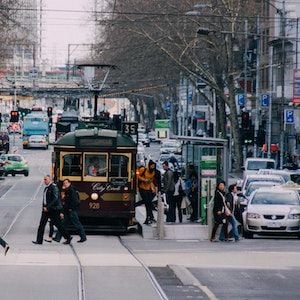
Victoria - are you up for elimination?
 "Victoria - are you up for elimination?")
Victoria is the unlucky state in a very lucky country, where all other states and territories (with the possible exception of NSW) have achieved COVID-19 elimination. A great achievement.
It means those states and territories can go about life near normally, with an economy ticking along nicely. But Victoria is stuck in suppression land, dealing with the current outbreak and more outbreaks in the future if we don't eliminate the virus.
The new Melbourne lockdown is for six weeks. This is enough time to make good progress towards elimination.
Is going for gold and having a crack at eliminating the virus in Victoria worth it? I argue "yes". The advantages would be that Victoria could rejoin the rest of Australia, New Zealand and other virus-free countries in an open travel bubble.
If we don't eliminate, then Victoria will be the pariah state till a vaccine hopefully arrives. The rest of Australia will just keeping moving ahead without us.
Is elimination achievable? Yes. If at least six other Australian states and territories, along with New Zealand can do it, so can Victoria.
But what are the downsides of going for elimination? Probably more pain now, for long term gain.
Victoria's Premier Daniel Andrews should declare "elimination" as our goal. You may recall that Prime Minister Scott Morrison was indifferent about Australia's goal two months or so ago, saying as a country we were following a "suppression/elimination" strategy. That worked pretty well. But now we need to be clear about our goal.
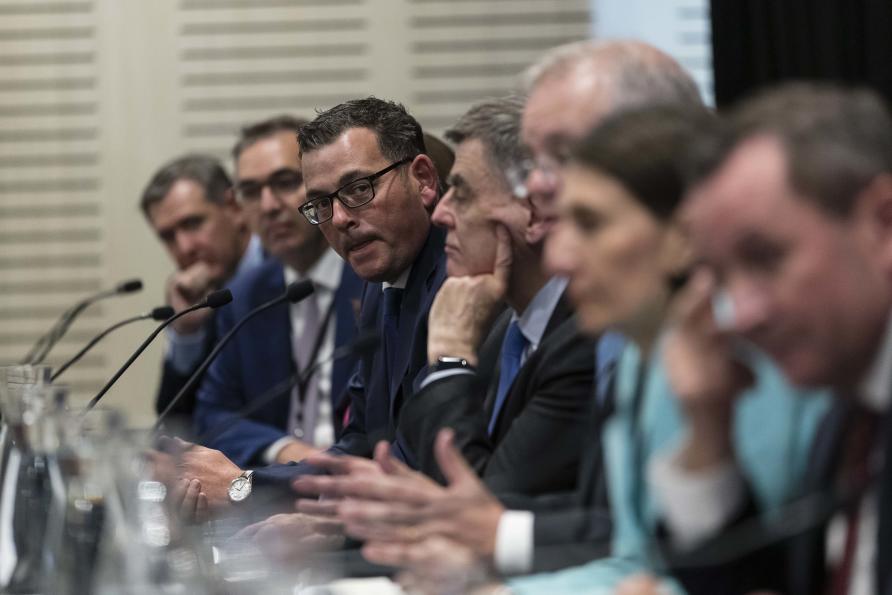
Australia's suppression/elimination strategy worked well but Victoria now needs to be clear on pursuing elimination. Picture: Getty Images
This will change the dialogue and zeitgeist. For example, when we get down to ten cases per day, rather than clamouring for opening up, Victorians should be excitedly saying "we are getting close, let's keep going in lockdown and knock it on the head."
Is our current stay at home for six weeks enough? The honest answer is "I don't know", as so much about the spread of COVID-19 can come down to chance. However, I suspect there's a less than 50:50 chance of achieving elimination.
So, what else would we need to do to increase our chances of eliminating COVID-19? Essentially, embrace the lockdown and go really hard. Specifically, do these extra things.
First, tighten the definition of essential workers. Unlike during the last lockdown, there shouldn't be builders working on residential projects two houses up my street.
Second, don't reopen schools. I am apologetic in saying this I know how hard this is for parents. But while kids don't usually get too sick from COVID-19, they still transmit the virus from one family to the next. We need to stop this.
If as a society we decide that Years 11 and 12 still need to be in school, then how about all our boarding schools coming together so that Year 11 and 12 students can go into a boarding arrangement rather than risking transmitting the virus between families. Last time around the private hospitals agreed to give over their facilities to the public health sector, so this time the private school sectors needs to do the same.
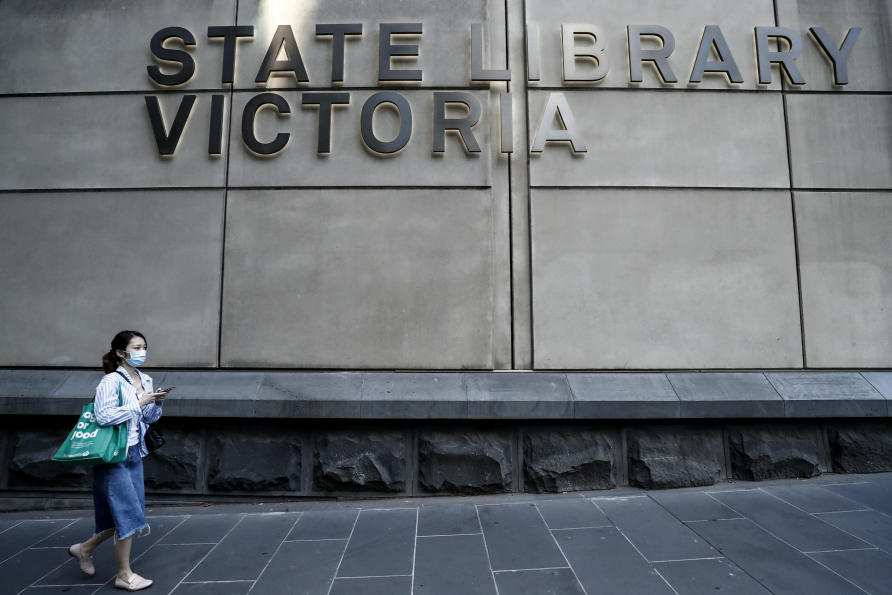
Victoria's new lockdown measures need to be stricter, mandating masks in busy indoor environments, closing schools and tightening the definition of essential workers. Picture: Getty Images
Third, all Melbourne households should have masks delivered to them in the next ten days. We need to mobilise the national stockpile now. All Melburnians should then be required to wear masks in busy indoor environments like supermarkets, and on public transport. The evidence is in masks reduce the risk of transmitting the virus by 80 per cent or so, as shown in a Lancet paper last week.
While not a silver bullet on its own, combined with everything else it may be enough to get us over the line to eliminate the virus.
Fourth, all essential workers must wear masks. Your Uber eats delivery person, and the paramedic, are out there going from one locked down family to the next. An obvious potential vector to transfer the virus around. That risk needs to be minimised.
Fifth, the closing of shops should be more widespread. Department stores, hardware stores and the like. They need to close now. And stay closed at least until all staff, and all patrons, are wearing masks with mandatory hand sanitiser on the way in and the way out. And, of course, strong enforcement of physical distancing.
Sixth, let's convene an advisory group of experts who have pulled off an elimination strategy. For example, experts from NZ which had such an explicit goal of elimination and succeeded. I know them, I know their phone numbers Premier Andrews and Chief Health Officer Brett Sutton, just call me.
Seventh, the rest of Australia wins too if Victoria eliminates the virus. Victoria needs federal support in terms of staff, facilities, and yes extensions to programmes like Job-Keeper to help Victoria through the pain. Also, essential staff in supermarkets and security staff patrolling the streets need good training, reimbursement and recognition. They are our frontline.
The above sounds tough. And it is. But what are the alternatives? Do we want to live in a pariah state, segregated off from the rest of Australasia, experiencing outbreak after outbreak till a treatment or vaccine arrives, enduring social and economic hardship all along the way? Or do we want to have a go at something better?
There is no guarantee that such an elimination strategy will work, but it has a good chance.
Victorians love their sport and like to bet on it too. Imagine I told you that I guarantee you this horse has at least a 50:50 odds of winning, and that if you bet $10 on it I will pay you out $100 if it wins.
You would be a fool not to jump at these good odds of a handsome pay-off.
This article was first published on Pursuit. Read the original article.

Estia Health confirms COVID-19 outbreak at Melbourne aged care facility
 "Estia Health confirms COVID-19 outbreak at Melbourne aged care facility")
Aged care operator Estia Health (ASX: EHE) has confirmed 13 residents at its facility in Ardeer, Melbourne have tested positive for COVID-19.
The company says it is working closely with the Victorian Department of Health to manage and monitor the situation.
The outbreak makes up a fraction of the 177 new cases of COVID-19 confirmed in Victoria overnight.
The news comes as the company has announced a significant non-cash impairment of between $124 million and $148 million for FY20 due issues arising from the pandemic and historical acquisitions.
The company says the impairment charge is provisional in nature and will have no impact on the company's debt facilities, compliance with banking covenants or its ability to undertake capital management initiatives.
"As a result of ongoing uncertainty of future sector funding and financing, exacerbated by the issues arising from the COVID-19 pandemic, the company expects to report a non-cash impairment charge, primarily on goodwill arising from historical acquisitions," says Estia.
Under Estia's $330 million bank facility, net bank debt at 30 June 2020 was $99.4 million.
The news of the 13 confirmed cases in Estia's Ardeer facility came as a shock to the market; the company initially reported that there were no known cases of COVID-19 in any of its aged care facilities earlier this morning, but later in the day it updated the market with the announcement of the confirmed cases.
In its ASX announcement this morning Estia said testing and monitoring were key to the company's response to the COVID-19 pandemic currently sweeping through Melbourne.
"Strict protocols and testing remain in place at all homes and will do so for the foreseeable future, including testing of all new admissions," says Estia Health.
Part of the company's response included the reintroduction of visitor restrictions to its facilities on 29 June.
The 13 residents in Ardeer join two staff members at Estia Health who have who previously tested positive for COVID-19.
"Neither employee worked while showing symptoms of the illness," Estia Health said.
"All infection control precautions were put in place immediately upon notification and we are working with the Victorian Health Public Health Unit and the Commonwealth Department of Health to monitor this situation."
Shares in Estia Health are down 3.87 per cent to $1.44 per share at 13 July 2020.
Updated at 4:10pm AEST on 13 July 2020.
The Star Sydney confirms patron tested positive for COVID-19
 "The Star Sydney confirms patron tested positive for COVID-19")
A patron who visited The Star Sydney on Saturday 4 July has returned a positive test for COVID-19, but the casino will remain open.
The operator of the casino and resort The Star Entertainment Group (ASX: SGR) confirmed the positive test this afternoon, explaining that the person attended The Star Sydney on 4 July from around 7:30pm to 10:30pm.
"The Star is working closely with NSW Health to respond to this information, including the conduct of contact tracing (which includes staff members)," says SGR.
"Since its restricted opening on 1 June 2020, The Star Sydney continues to operate in accordance with its COVID-Safe Plan.
"The Plan incorporates spatial distancing measures, and hygiene and cleaning measures across the property including extensive intra-day cleaning and a daily comprehensive clean during a property shutdown between 6am and 10am."
The news comes as NSW recorded 14 new cases of COVID-19 overnight, bringing the total number of cases in NSW to 3,303.
Of today's new cases, four are returned travellers in hotel quarantine, two are NSW residents who acquired the infection in Victoria and are now in isolation.
Eight cases counted today include five who attended the Crossroads Hotel, and three are close contacts of cases who were at the hotel. They are all currently isolating. The new cases bring the total number of cases that can be traced to the Crossroads Hotel to 21.
One confirmed case of COVID-19 linked to the Crossroads Hotel also attended Planet Fitness Casula. The gym is closed for cleaning.
Another case linked to the outbreak attended Picton Hotel during their infectious period, attending on 4, 9, and 10 July in the gaming room. The hotel is closed for cleaning.
NSW Health is urging anyone who attended the Crossroads Hotel at Casula between Friday, 3 July and Friday, 10 July to immediately self-isolate until 14 days after they were last there, attend a clinic for testing even if they have no symptoms, watch for respiratory symptoms and get retested should any occur.
The Victoria Department of Health has also reported two Victorian cases separately attended several venues in NSW, including:
- 5 July lunch at Cook @ Kurnell
- 5 July dinner at Highfield, Caringbah
- 6 July dinner at the Merimbula RSL
- 7 July breakfast at the Waterfront Café Merimbula
- 4 and 5 July Murray Downs Golf Club.
While investigations are underway, NSW Health urges anyone who attended these venues at these times must watch for respiratory symptoms or fever, and if they occur, isolate and get tested for COVID-19 right away.
The majority of Australia's 192 new cases of COVID-19 are in Victoria, with the state recording 177 new cases today.
NSW situation places a question mark over SA border reopening
The ongoing situation of local transmission of COVID-19 in NSW has forced South Australian Premier Steven Marshall to rethink his state's border opening up to citizens from NSW and ACT.
Currently, SA is expected to open its borders to NSW and the ACT on 20 July, but this date may change if the COVID-19 situation in NSW worsens.
"At this stage we have to put a question mark around lifting the border on Monday the 20th with both NSW and ACT," says Marshall.
"We are going to be looking at their new infections tomorrow very carefully at our transition committee meeting and if it is not safe to lift our border restrictions then we won't be doing so.
"We just have to see if there is a significant escalation between now and 20 July. I think that that date will come under some further consideration."
Marshall's comments come alongside the state announcing that it will be asking returning travellers from overseas into South Australia to foot the bill for their hotel quarantine stay.
As of Saturday morning (18 July) returning travellers coming into SA will be hit with a $3,000 charge for the first individual, a partner with be a further $1,000, and children will cost $500 each.
"The reality is that people have had plenty of time to get back to Australia," says Marshall.
"There are some real stragglers at the moment and they will need to be paying for the costs that are incurred by the taxpayers.
"They won't be getting that free of charge going forward."
Updated at 1:55pm AEST on 13 July 2020.
Human trials for UQ's COVID-19 vaccine commence
 "Human trials for UQ's COVID-19 vaccine commence")
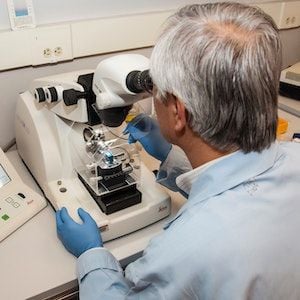
The University of Queensland (UQ) has reached a milestone in the development of a "promising" COVID-19 vaccine with human trials to commence today.
Volunteers will receive the first vaccine dose today in Brisbane as part of a trial of UQ's vaccine run by early phase clinical trial specialist Nucleus Network.
In April, early pre-clinical trials of the vaccine demonstrated that it was able to raise high levels of antibodies that can neutralise the virus.
UQ was tasked by the Coalition for Epidemic Preparedness Innovations (CEPI) to develop a vaccine against the novel coronavirus, supported by an initial investment of up to US$4.5 million, and is collaborating with the Peter Doherty Institute to demonstrate and understand its immune response.
Queensland Innovation Minister Kate Jones says the state has now joined a small group of vaccine developers around the world who are moving out of the lab and into human trials.
"Queensland boasts one of the most promising vaccine candidates on the planet," says Jones.
"We asked Queenslanders to roll up their sleeves to save lives and they've answered the call in droves.
"We needed up to 120 volunteers for the first stage. More than 4000 people have put up their hands to volunteer."
One of the UQ COVID-19 vaccine research leaders Professor Paul Young says the first human trial was about evaluating the safety and immune response of the vaccine in a group of healthy volunteers.
"The green light to move into this human trial follows extensive pre-clinical testing that the team has been conducting since first selecting the lead vaccine candidate on 14 February," Professor Young said.
"This testing showed that the vaccine was effective in the lab in neutralising the virus and safe to give to humans."
Professor Young says once human testing was under way, researchers expect to have preliminary results after about three months.
"We'll hold a collective breath while we wait to see how the trial goes," he said.
"But if all goes well, we can move to the next stage in the vaccine's development a larger trial with a much bigger group of people from a range of ages to see if the vaccine works across the board."
The clinical batch of vaccine for use in the trial was a manufactured by a close partnership between UQ and CSIRO with technical assistance by Australian biotech company CSL, Brisbane based Thermo Fisher and Swedish company Cytiva.
The news comes as Australia records 192 new cases of COVID-19 overnight.
The majority of the cases are in Victoria, with 177 new cases including 151 under investigation.
There have also been 14 new cases in New South Wales, with four of those tracing back to the Crossroads Hotel outbreak.
Updated at 1:30pm AEST on 13 July 2020.
More about the Univertisty of Queensland
Leadership is learnable', says doctor on the COVID-19 frontline
Accessible online courses pave path to pandemic recovery
In tomorrow's economy, leaders who innovate service and CX will have the upper hand
WA delays Phase 5 easing of restrictions
 "WA delays Phase 5 easing of restrictions")
Western Australia will delay its decision to enter phase 5 on its road to recovery, pushing back plans that would have removed the current 2sqm rule and 50 per cent capacity limits at major venues on 18 July.
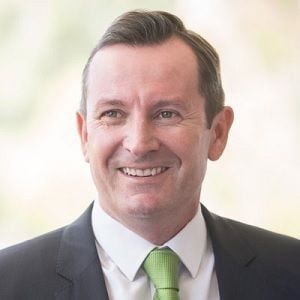
WA Premier Mark McGowan told a press conference this new phase would now be set to start a fortnight later on 1 August, as a tentative date.
The decision was made in light of the worsening situation in Victoria, as well as hotel quarantine capacity constraints that will be alleviated somewhat by the National Cabinet decision today to cut weekly international flight arrivals in half starting Monday.
"Given the growing level of community spread over East and around the world, the risk of the virus returning with a vengeance is greater than ever before," he said.
"There is a real possibility that the virus could return to Western Australia. Believe me, I don't want to see that happen.
"I don't want to be reimposing restrictions. That's why we have put in place a series of new measures in recent days to reduce that risk as much as possible - by slowing the flow of arrivals, by making border controls even tougher, and imposing a mandatory testing regime, we're giving ourselves the best chance to prevent the virus from reemerging."
Additionally, further to indications made by Prime Minister Scott Morrison after today's National Cabinet meeting, Premier McGowan said all international arrivals would need to pay for their own 14 days of quarantine as of 17 July.
The Premier stood by the state government's stance to maintain its hard border, emphasising the policy had worked for the state just as the country's strong borders had helped keep Australia safer than other countries around the world.
"With the fastest asing of restrictions in the country, our lives have effectively got back to normal and our economy is recovering, however our success in Western Australia has created new challenges and new risks," he said.
"In recent days and weeks we have seen a gradual increase in people seeking to come to Western Australia from overseas and interstate.
"To highlight the increase in interstate arrivals, in a 10-day period in June we had 2,705 arrivals by air for a range of reasons; more recently in the last 10 days we have seen 4,995 people from interstate arrive in Perth by air. The majority of these arrivals are from Melbourne and Sydney."
When asked whether the Federal Government had responded to his calls not to back Clive Palmer's High Court case against Western Australia's hard borders, Premier McGowan said he coudl not comment on matters discussed in National Cabinet.
Tasmania delays border reopening
Premier of Tasmania Peter Gutwein has deferred the reopening of the state's border by at least a week until 31 July.
The state will review the decision on 24 July, but in the meantime its borders to the rest of the country will be closed.
"We will only open up when we are confident the safety of Tasmanians ... that they aren't put at risk," says Gutwein.
Updated at 1pm AWST on 10 July 2020.
Victorian Premier urges Melburnians to use masks as new cases surge towards 300
 "Victorian Premier urges Melburnians to use masks as new cases surge towards 300")
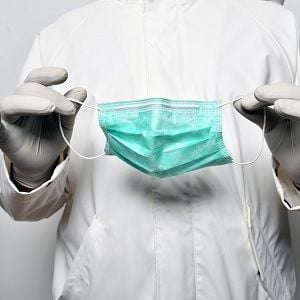
Victorian Premier Daniel Andrews has today called on residents in lockdown areas to wear masks if social distancing isn't possible, after a further 288 new cases of COVID-19 were reported today.
The State Government is currently in the process of getting two million reusable masks made for the public, and will also provide an additional one million single-use masks.
While Melburnians and Mitchell Shire residents have been requested to wear masks, their use is still not compulsory.
The Premier said the recommendation was made out of an abundance of caution and the fact it was a fairly easy step to take, especially in light of the rise in daily cases.
"Whether you're in an Uber or a taxi, or if you're on public transport or many other examples,even shopping for the basics when you need them...we're simply asking that if you can wear a mask where you can't distance, that's exactly what we would like you to do," he said.
Premier Andrews added even home masks would do for now, and the wearing of masks would be a feature of Victoria's response to the pandemic for the foreseeable future, potentially for many months.
"Now's the time to do that common sense thing," he said.
There are now 47 people in hospital in Victoria with the virus, of whom 12 are in intensive care. The vast majority of new cases are under investigation by health authorities, but 26 are connected to contained and known outbreaks.
"It was always going to get worse before it got better," Premier Andrews said, adding 37,588 tests were undertaken yesterday.
"We're doing more testing than has ever been done, and not by a small margin - a massive margin. I'm very grateful to everybody who has participated in that testing program, and I would urge all Victorians to follow the rules."
Chief Health Officer Drew Sutton noted the recommendation had also been made in light of a recent meta-analysis published in the medical journal Lancet demonstrating the benefits of wearing masks as one form of preventative measure.
"Really up until the last couple of weeks there was ambivalent evidence and they weren't really strong recommendations coming out in Australia in relation to them [masks]," he said.
"A big Lancet meta-analysis...is really showing that masks do make a significant difference potentially, even understanding that people don't always wear them perfectly, that they don't provide perfect protection."
But he clarified wearing a mask was no substitute for keeping a distance from people, and isolating when you're feeling unwell and getting tested.
"The numbers that we're seeing at the moment are of concern, but we do expect them to plateau in the next week," Sutton said.
"But it requires everyone to follow the stay-at home directions; those four reasons to leave home are really the only reason to leave home," he said, with those reasons being work or study; care or caregiving; daily exercise; or food and other essentials.
The World Health Organisation (WHO) has recently been considering whether the aerosol pathway - meaning tiny droplets that remain in the air from people's breathing - could be more serious in spreading COVID-19 than previously thought.
On 6 July, 239 scientists from around the world appealed to health authorities to recognise overwhelming research finding that an infected person exhales airborne virus droplets when breathing and talking that can travel further than the current 1.5-metre social distancing requirement.
Advocacy for this recognition has been led by QUT Professor Lidia Morawska, who is also director of the International Air Quality and Health Laboratory.
"Studies by the signatories and other scientists have demonstrated beyond any reasonable doubt that viruses are exhaled in microdroplets small enough to remain aloft in the air and pose a risk of exposure beyond one to two metres by an infected person," she said.
"At typical indoor air velocities, a 5-micron droplet will travel tens of metres, much greater than the scale of a typical room while settling from a height of 1.5m above the floor."
Potential solutions to this problem include sufficient and effective ventilation, supplementing ventilation with airborne infection controls, and avoiding overcrowding.
More to come....
Updated at 1:58pm AEST on 10 July 2020.
International arrivals into Australia to be slashed in half
 "International arrivals into Australia to be slashed in half")
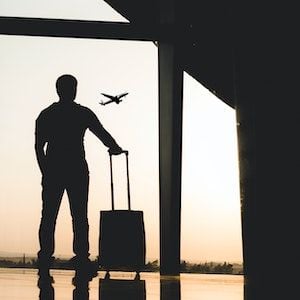
From Monday, 4,000 fewer people will be reentering Australia each week as the Prime Minister caps international arrivals by half.
In addition, those returning may have to pay for their own stays in hotel quarantine to reduce the financial burden on Australian states and territories.
"Some states already have it, some states are moving towards it, and I will leave that to them to make the announcements at the appropriate time," says Prime Minister Scott Morrison.
The plan is to have national uniformity across pricings of hotel quarantine for returning residents and citizens.
A hotel quarantine program review will be undertaken by the former health secretary Jane Halton, which Morrison says will look into how hotel quarantine is being managed in each state and territory.
"This is an important step in providing reassurance and making sure that as we look into each of the states and territories and how they're managing their quarantine that is meeting the standards that the AHPPC had advised upon," says Morrison.
"And as our country opens up again, with the exception of Victoria, that we can ensure we've had even greater confidence in those quarantine arrangements."
Chief Medical Officer Professor Paul Kelly says the review will look into hotel quarantine programs around the country in more detail.
"Various states have done their own internal reviews, and just to be clear that the quarantine is with the states, but this is just a way of looking at that quarantine in a more detailed fashion," says Kelly.
"To be clear there have been a lot of people that have come into hotel quarantine, there have been very few breaches, but we've seen, as has been reported in Victoria, a single breach, even it it's low risk, can lead to catastrophic outcomes.
"So we absolutely need to know that this is working as best as it can."
Morrison says the review will look at number of areas including:
- Into infection prevention control training for clinical hotel and security staff;
- Compliance with infection prevention and control requirements of security staff;
- Evidence of community cases attributed to international travellers in hotel quarantine including cases in hotel and security staff;
- Rates of compliance with testing;
- A legislative or contractual basis for mandatory testing;
- Management of suspected or confirmed cases;
- Provision and effectiveness of support services;
- Medical, mental health, social services and financial support;
- Management of vulnerable people;
- Management of cultural diveristy;
- Logistic arrangements;
- Administrative arrangements; and
- Changing capacity requirements to changes in border restrictions.
In a sign of things to come, the Prime Minsiter will be having a discussion this afternoon with New Zealand Prime Minister Jacinta Ardern about the proposed Trans-Tasman Safe Travel Zone, but there is no imminent starting date in the works just yet.
"There is still a lot more work to be done to get to a point of having a trans-Tasman safe travel zone," Morrison said.
"We discussed that today at National Cabinet about what states and territories could or would participate in that so there is a bit more work to do there, obviously the Victorian situation, although it is isolated from the rest of the country's seven states and territories, would be potentially in a position to be involved in that.
"We will hear further from the New Zealanders. It is an issue of interest in terms of how we can engage again with the rest of the world, but I think we will have to be very patient about that."
Professor Kelly was also asked about the current advice on wearing masks in Victoria. He says Melburnians should remain at home where possible, but if they do need to go into public it would be a good idea to wear a mask.
"The advice is for places where there is ongoing community transmission, so this for the moment is greater Melbourne and the Mitchell shire, is that the overarching advice is people should stay at home unless they need to go out," says Kelly.
"Assuming that people do need to go out, what has not changed is if people have symptoms and they need to go for a test, for example, which we would definitely encourage, they should wear a mask.
"Other people, where physical distancing cannot be guaranteed, they should also wear a mask in Melbourne and Mitchell shire."
Updated at 1:26pm AEST on 10 July 2020.
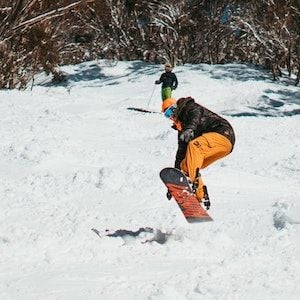
Victorian ski season freezes over as Mt Hotham and Falls Creek resorts suspend operations
 "Victorian ski season freezes over as Mt Hotham and Falls Creek resorts suspend operations")
COVID-19 restrictions in Victoria and border closures to the State have forced the operator of Mt Hotham and Falls Creek ski resorts to suspend operations, just over two weeks after the season commenced.
Vail Resorts, the company that operates ski-lifting operations at Falls Creek and Hotham Ski Resorts says it made the tough decision to close after assessing the new COVID-19 restrictions in Victoria.
Ski-lifting operations at Falls Creek and Mt Hotham will be suspended effective today until at least 19 August, consistent with current Victorian stay at home directions.
Vail Resorts says it will continue to assess the situation and will follow state health authority guidelines in evaluating if it is advisable of feasible to reopen.
"We did not make this decision lightly as we know our employees, guests and the communities where we operate have already endured so much hardship this year," says Vail Resorts senior vice president and COO Pete Brulisauer.
"However, we are focused first and foremost on health and safety, following local health guidelines and doing our part to support efforts across Victoria to address the recent rise in coronavirus cases.
"We recognise this is incredibly disappointing to our guests and pass holders, including those who have made reservations at Hotham and Falls Creek this season. We thank them for their patience and understanding as we continue to navigate this incredibly challenging time."
Perisher, also operated by Vail Resorts, is unaffected by this decision and will remain open in accordance with COVID-19 restrictions in NSW.
All reservations for lift tickets, ski and ride lessons and rental bookings will be cancelled and fully refunded. Guests will be contacted with information on processing refunds and have been asked by Vail Resorts to refrain from contacting the call centres at this time.
The news comes as Victoria has announced a $534 million support package, including a $40 million capped fund for regional tourism, in the wake of reimposed COVID-19 restrictions.
The package also includes $5,000 grants to businesses that have been forced to close due to COVID-19, and around 80,000 eligible businesses with payrolls of up to $10 million will be able to defer their payroll tax liabilities for the first half of FY21.
Updated at 1:06pm AEST on 10 July 2020.
Victoria releases $534m support package with cash grants, payroll tax deferral
 "Victoria releases $534m support package with cash grants, payroll tax deferral")
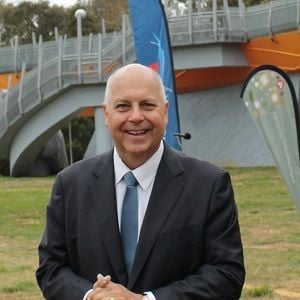
The lockdown of greater Melbourne has today led the state government to announce $534 million worth of wide-reaching support measures, including $5,000 grants to businesses that are forced to close.
Around 80,000 eligible businesses with payrolls of up to $10 million will be able to defer their payroll tax liabilities for the first half of FY21, while targeted measures have been slated for hospitality operators and businesses in the CBD.
Treasurer Tim Pallas (pictured) says the package includes $30 million dedicated fund for the nighttime and hospitality sectors, drafted in conjunction with the Australian Hotels Association (AHA), a $20 million fund for the CBD, and $36 million towards a business advisory and wellbeing program including mental health and mentoring aid.
Marketing support will also be given to tourism operators when the time comes to promote more movement around the state, but in the meantime support measures previously slated for tourism will now be expanded to include operators hit by cancellations from residents in new lockdown areas.
The package includes a $40 million capped fund for regional tourism.
Minister for Jobs Martin Pakula said there were some large restaurants, pubs and hospitality venues that did not benefit from the initial tranche of support from the government, which was why an industry-specific package was put forward.
"In terms of CBD support, I had a conversation this morning with the Lord Mayor - the fact is that the CBD has been in some respects uniquely hit by that stay-at-home directives have particularly kept people away from the CBD," Minister Pakula said.
"The absence of foot traffic in the CBD has meant that many of the businesses in the city and Docklands and South Bank have been particularly affected by the restrictions that have been imposed on Victorians.
Today's package includes a $36 million business advisory and wellbeing program, of which $10 million will be worked on collaboratively between the Small Business Commission and the Victorian Chamber. The balance will go towards mental health support.
Treasurer Pallas said the unemployment rate was likely to peak at 11 per cent, up from the current 6.9 per cent, and gross state product (GSP) will likely fall by 14 per cent on previous forecast.
"That is a profound reduction and it will take some years before we see that level of economic activity come back," he said.
The Treasurer said it was important to do more than simply "provide platitudes of support" to the community, but rather offer real, tangible efforts which will be ongoing.
"I assure you this will not be the last that you hear of support from this government as we go through these difficult times," he said.
"We will of course, wait to see what comes out of the federal government's efforts on the 23rd of July when they indicate what will happen to the refinements to the JobKeeper program.
"That of course will inform us going forward as to what further additional support might be required."
Pallas took stock of the traumatic and very difficult time people are facing, and apologised on behalf of the state government.
"As a Treasurer, we don't normally take great joy in providing funds that essentially go directly to our capacity to manage efficient budgets, but what's more important, what's critically important, is that the wellbeing of Victorians and Victorian industry and business is first and foremost in our thinking in dealing with these difficult times."
Updated at 11:07am AEST on 10 July 2020.
Advertisement
Latest News
From $13,000 to $20 million: how a PCOS diagnosis and a pair of scissors built Xali Organics
Inspired by a medical diagnosis and driven by innovative marketing,...
Cedar Woods secures $63.4m in new land acquisitions as record presales underpin pipeline push
Perth-headquartered residential developer Cedar Woods Properties (A...
Australia's long-term beer decline hits home as Lion plans to close Boag's brewery in Launceston
Australia's decades-long decline in beer consumption has claime...
Downer EDI seals $310m Transurban contract to maintain Sydney motorway network
Infrastructure services group Downer EDI (ASX: DOW) has secured con...
Propel Funeral Partners expands New Zealand footprint with trio of acquisitions worth $9.1m
Sydney-based death care provider Propel Funeral Partners (ASX: PFP)...
Advertisement