Advertisement
Staying informed is more important than ever as the situation unfolds with Covid-19. Stay tuned here for our live updates, and be sure to let us know what your business is doing to face this unprecedented challenge.
Covid-19 News Updates
Premier Investments closes Melbourne stores as city enters lockdown
 "Premier Investments closes Melbourne stores as city enters lockdown")
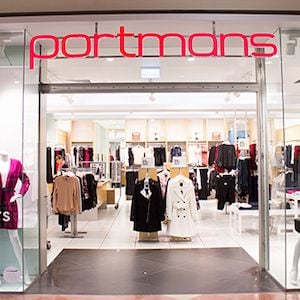
With metropolitan Melbourne re-entering lockdown overnight for a minimum of six weeks Premier Investments (ASX: PMV) has made the decision to close down stores.
The closures will impact stores operated by Premier Investments like Just Jeans, Jay Jays, Portmans, Smiggle and more in 36 shopping centres and seven strip mall locations, but regional Victorian stores will not be impacted.
The company has stressed that it does not intend to pay rent in relation to any of the stores affected by the lockdown for its duration, mirroring the approach the company took during nationwide COVID-19 restrictions earlier this year.
In a statement Premier Investments says the decision was made to protect the health and safety of staff and customers.
"The Premier [Daniel Andrews] has made clear that the livelihoods of all Victorians relies on everyone doing the right thing," says Premier Investments.
"As loved as our brands are by our customers, they are clearly not an essential service.
"Therefore to ensure we adhere with the State Government's direction and protect the health and safety of our staff and customers, we have made the decision to close all of our Melbourne metropolitan stores in line with the Government's direction at 11.59pm tonight for the foreseeable future."
Melbourne-based customers can continue to shop online across all of Premier Investments brands.
All affected staff members eligible for JobKeeper will be stood down, and team members will be able to access their annual leave or long service leave entitlements.
Updated at 1:51pm AEST on 9 July 2020.
Australia welcomes Hong Kong businesses to relocate, opens doors for talent
 "Australia welcomes Hong Kong businesses to relocate, opens doors for talent")
The Australian Government aims to attract "exceptionally talented people" and businesses from Hong Kong to relocate to our shores, along with extended permanent residency pathways for current visa holders and future applicants.
An emphasis will be placed on bringing export-oriented businesses to Australia, including visa packages for critical staff to come to Australia.
Additionally, Prime Minister Scott Morrison will be speaking with National Cabinet tomorrow about how to prioritise the existing global talent program in Hong Kong.
Acting Minister for Immigration, Citizenship, Migrant Services and Multicultural Affairs, Alan Tudge, said the scheme targeted individuals who were "real job-multiplying people who create businesses, who are entrepreneurs, who have that tech talent that the world is looking for".
The PM told a press conference this afternoon that China's national security law represented a "fundamental change of circumstances", prompting the government to withdraw its extradition agreement with Hong Kong.
The PM said Australia's immigration program provided particular opportunities for Hong Kong citizens as well as around 10,000 Hong Kongers who were currently in Australia on student or temporary work visas.
"We've agreed to adjust the policy settings to ensure that for skilled and graduate visa holders, we'll be extending visas by five years from today with a pathway to permanent residency at the end of those five years," he said.
"That means if you're a current or future student, you will be able to stay for a total of five years once you've graduated with a pathway to permanent residency at the end of that period."
Temporary graduate or school visa holders will also have their visas extended by an additional five years from today.
"We will also provide a five year visa with a pathway to permanent residency for future Hong Kong applicants for temporary skilled visas, subject to meeting an updated skills list and appropriate labour market testing," the PM said. That list is however expected to significantly reduced.
Given the gravity of making migration decisions and the time the visa applications take, the Prime Minister does not expect a sudden surge in arrivals. He noted the decline in applications due to COVID-19 meant there were "ample" spots available under existing quotas.
There is also already a system in place that allows a three-year pathway to permanent residency if Hong Kong applicants study or work in regional areas.
Minister Tudge highlighted Hong Kong had "immense global talent and great businesses".
"We want to attract more of them to Australia, because that will generate more wealth and more jobs for Australians," he said.
"We already do very well in terms of attracting people from Hong Kong, but today, we're outlining some further opportunities for skilled people, for entrepreneurs, for significant investors, and for businesses to come to our country.
"Of course, there will need to be labour market testing as well from the sponsoring employer to prove that they are unable to find an Australian to do the job," Tudge said.
Tudge also elaborated further on the global talent temporary visa scheme, targeting "exceptionally talented people, particularly in the IT field" on a temporary basis if the employer is willing to pay above the high-income threshhold.
"These future temporary skilled visa holders will also have a pathway to permanent residency after five years," he said.
"In relation to what I call the 'super talent' of which there is many in Hong Kong, we started the global talent scheme visa not that long ago with the idea of providing a permanent residency visa for the absolute super global talent," he said.
"We certainly know that there is some of that talent in Hong Kong, and we will be continuing with our program there but we'll be prioritising applicants from Hong Kong for that scheme and providing some additional resources there as well."
Minister Tudge said new incentives would be created to bring export-oriented businesses to the country as well.
"We know that there are over 1000 international businesses who have their regional headquarters presently in Hong Kong, and we also kow that many have already signalled that they're looking to relocate elsewhere in the world," he said.
"This includes medium businesses, financial services businesses large consulting businesses, which have already signalled they're looking elsewhere, and we want them to look to Australia.
PM Morrison noted most of the changes would impact people who were already in Australia, although there were around 3,500 existing visa holders from Hong Kong who were currently outside of Australia and would be able to return under normal arrangements.
Minister Tudge mentioned there were normally 4,000 visa applications from Hong Kong citizens every year, of whom around 3,000 are students and 1,000 are in the temporary skilled categories.
Updated at 2:23pm AEST on 9 July 2020.
Cellmid pens agreement to ramp up COVID-19 research
 "Cellmid pens agreement to ramp up COVID-19 research")
An exclusive distribution agreement between Australian life science company Cellmid (ASX: CDY) and Immunodiagnostics Limited, Hong Kong (IMD) will beef up the company's response to the COVID-19 crisis.
The deal will see Cellmid acquire commercial quantities of two essential tests for Australia and New Zealand, including for laboratory based, quantitative Enzyme Linked Immunosorbent Assays (ELISA's) and a point of care test for COVID-19.
ELISA systems are essential in vaccine trials, used when monitoring the population after vaccine roll outs begin and, in tandem with point of care screening, in serological surveys.
The new agreement comes on the back of Cellmid having already secured two agreements to access point of care and laboratory COVID-19 testing devices. Cellmid shares skyrocketed in March on the back of the company announcing it had secured a supply agreement for a rapid diagnostic test for COVID-19.
However, this latest agreement provides Cellmid with access to the ELISA systems that can quantify the level and identify the type of antibodies against different COVID-19 antigens.
"The key advantage of the ELISA technology is that it can measure absolute levels of antibodies against different SARS-CoV-2 antigens," says Cellmid.
"In addition, ELISA's normally have lower level of detection limits compared to point of care devices increasing their accuracy."
The tests will be acquired from IMD, a spin off company from Hong Kong University, and is dedicated to the discovery, manufacture and distribution of in vitro diagnostics for chronic and infectious diseases.
Cellmid says IMD manufactures its tests in facilities in Taiwan and China, adhering to strict quality control and validation.
In addition to the ELISA's, Cellmid will acquire a high-quality point of care serology device that detects both Immunoglobulin M (IgM) and Immunoglobulin G (IgG) specific to COVID-19, differentiating it from the viral spike protein detecting kits already accessed by Cellmid.
Evaluation of the tests done by IMD and Hong Kong University, using a dataset comprising 273 confirmed COVID-19 patients and 542 per-COVID-19 control samples, showed an IgG sensitivity of 96.1 per cent and specificity of 96.1 per cent, and an IgM sensitivity of 91 per cent and a specificity of 87.4 per cent.
The company will likely seek Therapeutic Goods Administration (TGA) approval for the point of care serology device, but because ELISA's are used for research only, and thus do not require TGA approval, Cellmid will initially seek regulatory approval and import permits for just a small selection of the ELISA devices.
Shares in Cellmid are up 10 per cent to $0.16 per share at 11:25am AEST.
Updated at 11:49am at 9 July 2020.
Loan deferrals extended by four months
 "Loan deferrals extended by four months")
The Australian Banking Association (ABA) has announced a new phase of support to avoid a "cliff" for customers in September, with those facing hardship due to COVID-19 able to apply for loan deferral extensions of up to four months.
The initiative is backed by the Australian Prudential Regulation Authority (APRA), which will give regulatory relief by extending its temporary capital treatment for bank loans with repayment deferrals.
The ABA estimates there are more than 800,000 loans that have been deferred worth over $260 billion.
Customers who are able to restart paying their loans will be required to do so at the end of their six-month deferral period, but debtors with reduced income and ongoing financial difficulty will be able to restructure or vary their loans.
The deferral option will be available if none of those outcomes can be achieved.
"Those who are able to repay their loans will resume doing so, which is in the best interests of those customers and allows support to be directed to those who need it," says ABA CEO Anna Bligh.
"This next phase of bank support will avoid a 'cliff' for customers in September and give them the breathing space they need to work with their bank and get back on their feet financially.
"To meet demand, banks have deployed over 5,000 extra frontline staff who will proactively contact and work with customers to find the right solution, but please be patient with bank staff as we enter this next phase."
The ABA explains credit reports will not be impacted for customers who recommence repayments on their existing loan or enter into a new repayment arrangement, so long as those arrangements are met.
Treasurer Josh Frydenberg says the Federal Government welcomes the ABA's announcement to support customers.
"APRA has also provided relief to encourage the banks to restructure loans where possible as a way of helping these customers," he says.
"This restructuring could include extending the term of the loan or moving from principal and interest repayments to interest-only for a period of time.
"It is important that customers that can afford to make repayments continue to do so. Borrowers that are facing considerable financial difficulty as a result of this pandemic, should talk to their banks and work with them to find a more sustainable approach."
Response from the banks
At the time of writing, ANZ (ASX: ANZ), Commonwealth Bank (ASX: CBA), Westpac (ASX: WBC) and Bendigo and Adelaide Bank (ASX: BEN) have made announcements about how they would be implementing the new measures.
ANZ chief executive officer Shayne Elliott says the bank's primary focus through COVID-19 has been to do all it can to help customers manage the economic impact of the pandemic, and while this is now "clearly more difficult with the recent developments in Victoria" that support will continue.
"For customers who have not taken advantage of the six-month deferral that option is still open to them," Elliott says.
"I would strongly encourage anybody uncertain about what the future holds or those who have been hanging on up until this point to get in contact with the bank.
"We have already deferred more than 100,000 home and business loans and we are checking in with those customers to work with them to get them back on track."
He notes many customers are already back making their repayments as they weren't as impacted as initially thought.
"There are however many customers on deferrals that remain in a difficult situation and we will work through a range of measures including restructuring loans and in some circumstances extending deferral periods," he says.
CBA confirms many retail and business customers have resumed paying deferred loans back in full or in part, but the bank will target its support to those people who most need it.
"We are committed to continuing our industry leading support for customers and businesses to help them get back on their feet and inject vital financial stimulus into the Australian economy," says CBA chief executive officer Matt Comyn.
"To date, our coronavirus measures since March 2020 have provided about $15 billion in direct financial support to customers and stimulus for the economy.
"Supporting customers who continue to experience financial difficulty is a priority and we are tailoring our support to make sure each customer gets the advice and assistance that suits them."
So far CBA has provided loan repayment deferrals to almost 130,000 home loans and supported 100,000 business customers.
CBA has also more than doubled the size of its Financial Assistance Solutions team to about 1,500 frontline staff to have conversations with our retail customers experiencing hardship. The bank is also using its unique machine learning technology to identify individual customers in hardship and direct its support where it is most needed.
"This next phase of our support reinforces the strong collaboration and effective cooperation between federal and state governments, regulators and the banking industry which has allowed so much to be achieved in such a short time," says Comyn.
Westpac acting chief financial officer Gary Thursby highlights the pandemic will have a longer term impact on some customers and financial support will be required. The bank has helped more than 23,000 small business customers since the start of COVID-19.
"In discussion with the industry and regulators, we will be making changes to allow more time and breathing space for customers who aren't in a position to return to full payments again from October," says Thursby.
"This includes access to tailored support through our customer assistance program, where our specialist team will work with customers to review their financial circumstances.
"For customers who remain under stress but can still contribute towards their loan repayments, we will provide support where we can help work through options that may be available to adjust their loan," he says, adding there is an expectation a significant number of customers will be able to resume regular repayments come September.
Bendigo and Adelaide Bank has also emphasised its consumer, business and agribusiness customers who are experiencing reduced incomes or extended financial difficulty may be eligible for the four-month deferral extension.
"Ultimately, we want to support customers to make full, regular loan repayments and it's in their best interests to do so as soon as possible, so they can strengthen their financial wellbeing," says the bank's managing director Marnie Baker.
"We are currently undertaking a check-in process with consumer customers that have accessed a repayment arrangement due to COVID-19 to assess what further support they need and to better understand their current circumstances given the impact of the pandemic.
"We know that a tailored approach with each customer achieves more meaningful results for their specific circumstances."
Baker highlights it is a difficult time for many of Bendigo and Adelaide Bank's customers, but she hopes to minimise the impact that comes with unexpected events such as COVID-19.
"In the same way we have provided and continue to provide support to those affected by natural disasters, the Bank and its Community Bank partners will continue to support the recovery of customers and communities and adapt, where required, how we invest profits into communities to meet new and evolving local needs as a result of COVID-19," she says.
"We said at the start of this pandemic that we're here for our customers and their communities and this longstanding commitment continues."
Updated at 10:19am AEST on 8 July 2020.
Three things government can do to save Melbourne small businesses from lockdown death
 "Three things government can do to save Melbourne small businesses from lockdown death")
The reimposition of stage 3 restrictions on metropolitan Melbourne is, as Victorian premier Daniel Andrews says, a matter of life or death. That's also true for small businesses.
A further six weeks of stay-at-home orders for the city's 5 million residents will kill off many small and medium sized businesses unless there are critical changes to federal and state government assistance policies.
Even with assistance many will not survive. But ensuring those that are viable are not lost is crucial to the recovery of both the Victorian and national economies.
Small businesses are the engine of economic growth. They are typically the first to innovate and respond to economic changes. The abnormal economic shock wrought by the necessary public health response to the COVID-19 pandemic means they have generally been hit hardest. Without policies and money to address their core needs, this second wave of restrictions will be a killer blow.
Three fundamentals
These fundamentals are absolute to the success of small business.
First, and most obviously, they need customers. Those providing essential local goods and services, such as groceries or health services, may cope. But those offering discretionary goods and services, such as hospitality, will suffer both from loss of foot traffic and suppressed consumer spending, as people save more in uncertain times.
Second, they need access to credit. This is much harder for small businesses to obtain than large businesses with assets. Small businesses are typically started by entrepreneurs who finance their endeavours with their own savings, through mortgaging their homes, or taking out personal loans.
They typically have extremely limited cash reserves to ride out tough times. Many juggle their bills from month to month to stay afloat.
Third, they rely on momentum. They grow by acquiring both customers and knowledge of their market. When repeat business stop, they lose that momentum. If they have to shed employees, they lose "business knowledge", which sets them back even further in their recovery.
Calamitous damage
All economic slowdowns typically reduce demand, but this health/economic crisis has calamitously damaged all three aspects.
The federal government's Job Keeper program and subsidies being provided through the Australian Taxation Ofice to boost business cash flow has enabled business to hold on to employees for now. But without customers or credit, even extending these measures beyond their scheduled September 30 end won't be enough.
It's my view it will take three to five years for consumer confidence and spending to return to pre-COVID levels. This assessment is based on past recessions where high unemployment prevailed compounded by the novel problem that health fears will suppress consumer confidence long after the coronavirus is contained and things return to "normal" (or at least a new normal).
The Melbourne outbreak of COVID-19 underlines there is no quick fix to the COVID-19 crisis. The only light at the end of tunnel is a possible a vaccine, which might take years, or never be found. The economy must therefore adjust. Not all businesses are viable. To continue indefinitely to pump public money into direct grants to prop them up is unsustainable.
To do so will lead to "perverse" consequences providing windfalls to businesses that would have failed anyway as many small business ventures do while providing inadequate support to those that are important and would have survived but for the crisis.
Three suggestions
Therefore I offer three suggestions.
First, continue JobKeeper and the tax office's cashflow boost for as long as COVID-19 restrictions are in place. Businesses would need to apply for this on a month-by-month basis, and need to meet set criteria.
Second, the government should ensure easy access to low-interest loans for the next two to three years. Loans are more efficient than direct grants or subsidies. The fact the loans have to be repaid will encourage only those businesses with a good chance of being sustainable of seeking them.
Getting a loan is slow and hard for small businesses because banks scrutinise them due to the risk. Few small business have the skills to prepare the extensive documentation banks require. Banks will be motivated to lend faster and to more businesses if governments remove the risk by buying those loans.
To speed up the lending application process, there should also be subsidies to licensed financial advisers to prepare those applications.
Third, a system of subsidised vouchers for financial management advice from accountants and financial advisers (who are also mostly small businesses).
Financial services are critical for small businesses. In tough times it might be tempting to dispense with these services. But sound financial advice will be critical to business owners making the right decision including whether they should be borrowing money to sustain their businesses or making the hard decision to cut their losses and move on.
John Vaz, Senior Lecturer, Department of Banking and Finance, Monash University
This article is republished from The Conversation under a Creative Commons license. Read the original article.
Melbourne to enter lockdown from midnight tomorrow
 "Melbourne to enter lockdown from midnight tomorrow")
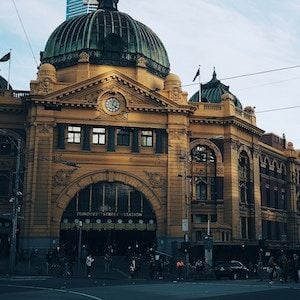
All residents of metropolitan local government areas (LGAs) in Melbourne and Mitchell Shire will face Stage 3 stay-at-home restrictions as of midnight tomorrow for six weeks, as authorities scramble to prevent COVID-19 outbreaks from spiralling out of control.
After recording 191 new cases today, Victorian Premier Daniel Andrews said new infections were recorded in postcodes currently covered by the orders, but contamination was also "leaking" into other parts of the capital.
There are now 772 active cases in the state, including 35 people in hospital of whom nine are in intensive care.
"These are unsustainably high numbers of new cases," he said, noting it was now impossible to have the contact tracing staff and resources to tackle the virus at current rates without taking significant steps.
"Let's not say this is simply an inconvenience; it's much more than that. This is a pandemic, and it will kill thousands of people if it gets completely away from us."
Once the restrictions are in force, residents in the affected area will only be able to leave their homes for four reasons: work or study; care (including elective surgery) or caregiving; daily exercise; food and other essentials.
Unfortunately, the new measures mean food and beverage venues that were cautiously opening up will have to go back to takeaway service only.
"Other businesses that had opened will have to close. I know and understand how significant that will be, I know and understand there'll be a big job for us to continue providing support," he said.
"Tim Pallas and Martin Pakula as the responsible ministers will have more to say quite soon about further business support, and I'll be having further conversations with the Prime Minister about some of the very special needs that Victorian businesses are going to need met over these coming weeks and months."
Premier Andrews said people would not be allowed to leave Melbourne for exercise, emphasising there were still very few COVID-19 cases in regional Victoria and his intention was to keep it that way.
"You can't be going on a four-hour bush walk hundreds of kilometres away from Melbourne, you can't be going fishing again outside the metropolitan area down into regional Victoria," the Premier said.
"Regional Victoria has very, very few cases and vast parts of regional Victoria have no cases. This is designed to keep it that way, and I hope very soon to be able to be before you again talking about further easing of restrictions in original Victoria."
He added Melburnians needed to stay in their principal place of residence, so holiday homes or second homes were off the cards.
"Don't for a moment think that you could flout these rules and travel into country Victoria - there'd be every chance that you would be stopped, you will be asked and if you don't have a lawful excuse then there are significant penalties that will apply."
Andrews said a sense of complacency had crept up on Victoria, but no matter how challenging this period will be people cannot let their frustrations get the better of them.
"We have to be clear with each other that this is not over, and pretending that it is because we all want it to be over is not the answer - it is indeed the problem, a very big part of the problem," he said.
"We do have a chance to change that in the decisions we make, in the way we conduct ourselves, in the way we reset.
"I think that each of us know someone who has not been following the rules as well as they should have. I think each of us know that we've got no choice but to take these very, very difficult steps."
Key restrictions for all of metropolitan Melbourne and Mitchell Shire:
- Cannot leave primary residence except for four reasons: work or study; care (including elective surgery) or caregiving; daily exercise; food and other essentials.
- Restaurants, cafés and bars will need to either close or return to takeaway-only operations.
- Exercise not permitted outside of Melbourne for residents in stay-at-home areas.
- Beauty therapy, tanning, waxing, nail salons, spas, tattoo parlours and massage parlours must not operate.
- Auction houses are only permitted to conduct auctions remotely.
- The closure of: Galleries, museums, national institutions and historic sites, zoos, wildlife parks, petting zoos, aquariums and animal farms, outdoor amusement parks and outdoor arcades, indoor cinemas and drive-in cinemas, concert venues, theatres and auditoriums.
List of restricted LGAs:
Banyule, Bayside, Boroondara, Brimbank, Cardinia, Casey, Darebin, Frankston, Glen Eira, Greater Dandenong, Hobsons Bay, Hume, Kingston, Knox, Manningham, Maribyrnong, Maroondah, Melbourne, Melton, Monash, Moonee Valley, Mitchell Shire, Moreland, Mornington Peninsula, Nillumbik, Port Phillip, Stonnington, Whitehorse, Whittlesea, Wyndham, Yarra, Yarra Ranges.
Victoria's Chief Health Minister Brett Sutton said there was a unanimous view that these measures were required to avoid "absolutely catastrophic outcomes".
"I know that we will already see deaths from the cases that we have occurring every day. What I do not want to see is any more deaths than are already predicted," he said.
"We have to drive our daily numbers down. What's happened has been a very significant upturn in the last few days."
Sutton put his support behind the Australian Health Protection Principal Committee's (AHPPC) position that where community transmission isn't negligible, masks are a "reasonable thing to wear where we can't physically distance".
There are now 69 cases that can be linked to the high rise towers in North Melbourne and Flemington, up from 53. There have also been 12 new cases linked to the Al-Taqwa College outbreak, with the total now at 90.
Some 438 cases may indicate community transmission, and by the end of today it is likely more than one million tests will have been conducted.
The LGA of Hume has the highest number of active cases at 145, followed Wyndham (105), Melbourne (97), Brimbank (77), Moonee Valley (50), Moreland (38) and Whittlesea (36).
Updated at 3:39pm AEST on 7 July 2020.
SA takes a tougher stance on VIC border, shuts down nightclubs
 "SA takes a tougher stance on VIC border, shuts down nightclubs")
It has now been a week since South Australian Premier Steven Marshall announced the state's border with Victoria would not be relaxed on 20 July due to concerns over high levels of community transmission of COVID-19 in Melbourne.
But today the state government is taking an even stricter approach.
As of midnight tomorrow night the SA border will close to anyone coming in from Victoria, except returning residents who must go into quarantine and essential travel permitholders who will need to wear personal protective equipment (PPE).
Speaking at a press conference this afternoon, SA Police Commissioner Grant Stevens said the decision was made based on health advice received today which determined the outbreak in Melbourne was a significant risk.
"Most jurisdictions are now reconsidering their attitude in terms of Victorians travelling from Victoria into other jurisdictions. We're no different," he said.
"We are concerned about the impact of COVID-19 on the South Australian community, given that we have provided as much latitude as possible within our own community and relaxed restrictions so that businesses can get back to trading and people can start to enjoy life as close to normal as possible."
Commissioner Stevens also announced nightclubs would be shut down following a "total disregard for social distancing" in Adelaide. Now venues need to prepare COVID Safe plans in order to reopen.
"We were quite concerned about some of the activities we saw in the CBD over the course of the weekend," he said.
"In some respects there was a total disregard for social distancing, and given the nature of this virus and the ease with which it spreads in that type of context, the decision to restrict nightclub activity until they have a management plan I think is a very sound one."
He said footage from crowd behaviour in nightclubs showed "no efforts" to socially distance and "no control or management" of significant crowds converging outside venues.
"There were some venues who did certainly exhibit best endeavours to comply, but the reality is the nature of the cohort that are attending these venues are making it very difficult for these venues to operate without some strict management plan in place," he added.
As for SA's border restrictions to travellers from New South Wales and the ACT, Stevens says the Transition Committee is still looking at the 20 July date for reopening to those states.
"New South Wales and ACT will still be able to travel to South Australia and undertake a 14-day quarantine period, given the level of risk associated with the community of New South Wales and ACT, and we'll be continuing to monitor the potential for any seeding of the COVID-19 virus in New South Wales or ACT as a result of the current activities in Victoria," says Stevens.
"Our goal is to relax the border restrictions for the New South Wales and ACT communities on July 20, and we'll continue to monitor that as we move forward."
Updated at 3:12pm AEST on 7 July 2020.
WA will cap international arrivals
 "WA will cap international arrivals")
The Federal Government has reacted "favourably" to Western Australia's request to limit international flights into Perth Airport, as the state seeks to slow down the flow of arrivals and the potential burden on quarantine hotels.
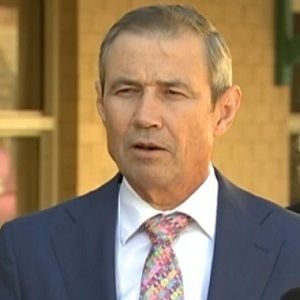
WA chief health officer Roger Cook (pictured) told a press conference late morning AWST the Federal Government has agreed to cap the number of international arrivals into Perth at 525 a week, or about 75 per day.
"To give you an idea of what that means for WA and our hotel quarantine operation, today we have two international flights arriving into Perth from Singapore and Doha with a total of 245 people on board, and that is just the one day," Cook said.
"We're currently working with the Federal Government and the airlines to finalise the implementation of this new arrangements."
In yesterday's announcement, the WA Government also announced return travellers would have to foot the bill for their own 14-day hotel quarantine, and Premier Mark McGowan urged the Commonwealth Government to withdraw support for Clive Palmer's legal challenge to hard borders.
The state reported zero COVID-19 cases overnight, with its total remaining at 621. There are currently 12 active cases in WA, 10 of whom are Western Australians and two who are from interstate.
"They are all in the hotel quarantine and they represent a very low public health risk," Cook said.
"Yesterday we had 1,326 people in hotel quarantine."
Updated at 1:52pm AEST on 7 July 2020.
Gold Coast tourism bookings return to 2019 levels
 "Gold Coast tourism bookings return to 2019 levels")
The Gold Coast tourism industry is showing signs of recovery following the slump of COVID19 restrictions, with Queensland Premier Annastacia Palaszczuk claiming bookings are back on track.
"My information is that Gold Coast bookings are basically the same as this time last year, which is great news for our small businesses - everyone who's involved in tourism and hospitality here on the Gold Coast," the Premier told a press conference in Burleigh Heads.
The update comes just days out from June 10 when Queensland will reopen to visitors from all states and territories except Victoria, as the "Queensland, You're Good to Go" tourism campaign enters stage two to market in the southern states.
"From today we'll be out in the market and encouraging all Australians except Victorians to come up to Queensland during the school holidays," said Minister for Tourism Industry Development, Kate Jones.
"Our target with this campaign is to get to $1 billion worth of value for Queensland businesses and the tourism industry in our state."
Around 93 per cent of Queenslanders over the age of 18 have been reached by the campaign so far.
"We know this is tough time for the tourism industry, but our "Good to Go" campaign has seen a record number of Queenslanders hitting the road and visiting wonderful places across our state," Jones said.
Following a request yesterday to the Federal Government yesterday from Western Australian Premier Mark McGowan to set a flight quota for international arrivals in Perth, Premier Palaszczuk has expressed her view that the number of international flights coming in ought to be slowed down.
"The international borders are the domain of the Federal Government - that is their decision about how many flights they allow in, but I think we need to be very cautious, and I think a slowing down of those flights would be a good thing at this stage," she said.
"Of course we're prepared to help out. We've taken a large number of international flights - they've gone directly into quarantine and we've had police at those quarantine hotels, and we've had no problems from quarantine hotels."
The Premier emphasised the continued importance of State and Federal Governments working together with a spirit of cooperation, and "backed" New South Wales Premier Gladys Berejiklian in the decision to close her border to Victorians due to high levels of community transmission.
"We need to do everything we can to help Victoria," she added.
"It is a national issue. It's not just a state-based issue. It's a national issue because it impacts on all of us."
Updated at 11:20am AEST on 7 July 2020.
4000 people sign up for WA COVID-19 vaccine trial, doses begin
 "4000 people sign up for WA COVID-19 vaccine trial, doses begin")
The trial is one of just 15 worldwide that have gone beyond the pre-clinical stage.
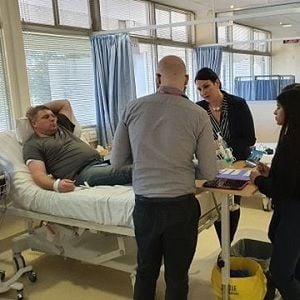
More than 4,000 people have registered for a Phase 1 COVID-19 vaccine trial in Perth, where Linear Clinical Research has already dosed 10 participants with expectations a further 140 will take part in the coming months.
The clinical trial involves the COVID-19 S-Trimer vaccine developed by Chinese company Clover Biopharmaceutical, along with collaboration from the UK's GlaxoSmithKline (GSK), US-based Dynavax and China's Xiamen Innovax.
Funding for the trial is coming from the Coalition for Epidemic Preparedness Innovations (CEPI), which is involved in trials including with the CSIRO, the University of Queensland (UQ) and CSL (ASX: CSL).
Linear chief executive officer Jayden Rogers said the start of the human trial is an important milestone in the global effort to find a vaccine for COVID-19, and a major coup for Western Australia.
"It usually takes years to get to this stage, but vaccine experts have been working hard around the world to fast-track this promising vaccine candidate," says Rogers.
"We were overwhelmed by the support we received from the WA public to trial this vaccine.
"The participants are doing really well and we are collecting valuable data which will inform this study and many more around the world."
He says this is one of the most prominent trials globally, and now that WA is in the unique position of having successfully suppressed COVID-19, focus can turn to prevention.
"I applaud the thousands of people who registered to take part in this trial - it further demonstrates how members of our community are willing to play their part in helping fight COVID-19," he says.
One of the trial participants is Perth doctor Chris Rynn, who volunteered because he wanted to help in the quest to find a successful vaccine.
"I understand the implications COVID-19 has for the medical profession, so I felt this is an important way I can help in speeding up the process of finding a vaccine," says Dr Ryan.
"I encouraged my friends to also register for the COVID-19 vaccine trial.
"I have participated in clinical trials at Linear before and am proud to contribute towards medical research."
The COVID-19 vaccine trial is randomised and double-blind, with some participants receiving the vaccine candidate and others receiving a placebo. Participants receive two injections in the arm 21 days apart and are monitored for an hour in the ward and then from their homes.
Preliminary safety and immunogenicity results are expected starting from August. If successful, it is expected the "COVID-19 S-Trimer" vaccine will be given to thousands of people around the world (as part of the global phase 2b/3 study) by the end of this year.
Rogers says Clover was one of the first companies to develop a protein-based vaccine based on the coronavirus Spike (S) protein that the virus needs to enter host cells.
Clover's Timer-Tag technology platform - which has been safely used in vaccine development for developing influenza, RSV and HIV vaccines - mimics the Spike protein with the aim of producing an immune response specific to the coronavirus
"We remain focused on developing a safe, effective and accessible COVID-19 vaccine at a scale that can potentially impact the course of the pandemic globally," says Clover Biopharmaceuticals chief executive officer Joshua Liang, who co-invented the S-Trimer vaccine.
According to the Regulatory Affairs Professionals Society there are currently 38 COVID-19 vaccine trials underway worldwide. The Perth trial is one of six that are Phase 1, while a further nine are more advanced than that.
Updated at 9:42am AEST on 7 July 2020.
Advertisement
Latest News
From $13,000 to $20 million: how a PCOS diagnosis and a pair of scissors built Xali Organics
Inspired by a medical diagnosis and driven by innovative marketing,...
Cedar Woods secures $63.4m in new land acquisitions as record presales underpin pipeline push
Perth-headquartered residential developer Cedar Woods Properties (A...
Australia's long-term beer decline hits home as Lion plans to close Boag's brewery in Launceston
Australia's decades-long decline in beer consumption has claime...
Downer EDI seals $310m Transurban contract to maintain Sydney motorway network
Infrastructure services group Downer EDI (ASX: DOW) has secured con...
Propel Funeral Partners expands New Zealand footprint with trio of acquisitions worth $9.1m
Sydney-based death care provider Propel Funeral Partners (ASX: PFP)...
Advertisement