Advertisement
Staying informed is more important than ever as the situation unfolds with Covid-19. Stay tuned here for our live updates, and be sure to let us know what your business is doing to face this unprecedented challenge.
Covid-19 News Updates
Brisbane car engineering firm changes gear to develop ventilator
 "Brisbane car engineering firm changes gear to develop ventilator")
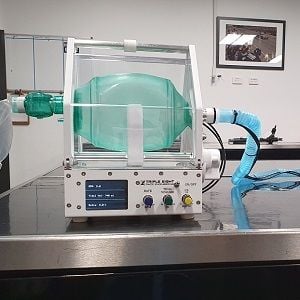
Brisbane-based Triple Eight Race Engineering is steering its manufacturing skills in a new direction in response to the increased strain on the health sector due to the Covid-19 pandemic.
The company's engineering team has developed a low-cost ventilator prototype with input from medical professionals, local intensive care unit experts and the Queensland Department of State Development.
"We were able to utilise in-house 3D printing services provided by our team partner HP and we believe the ventilator could be put into production within a short space of time but we are now continuing development with the help of the Department to improve our unit further," says team principal Roland Dane.
"The Department of State Development have helped us identify and build supply chains for required componentry and ventilator accessories such as alarm circuitry, tubing and masks.
"This is very early days, and we have to make sure all regulatory requirements are met, but we stand ready to help in whatever way we can."
Minister for State Development, Manufacturing, Infrastructure and Planning Cameron Dick says the local race car company has been working around the clock for the past two weeks to develop the prototype.
"This is what Queensland manufacturing is all about. Hard work, ingenuity and solving problems," says Dick.
"It's so impressive that, within just a few weeks, this company has transitioned their capability, intellect and resources to a product that could ultimately save lives."
The minister says it is also fantastic to hear Triple Eight has focused on using readily available, local materials.
"Triple Eight suspended its usual operation following the cancellation of the Australian Grand Prix, and the positive, forward-looking approach of this company has been heartening to see," he says.
"I'm so proud of the innovation and agility of my team, and what we can do when we put our minds to it," adds Dane.
Leanne Linard, Member for Nudgee says the prototype is a wonderful initiative by a great local company.
"While there is still a long way to go, I know the engineering capability at Triple Eight is second to none," she says.
"It's great to see so many local companies stepping up at this time."
Deputy Chief Medical Officer Dr Nick Coatsworth says the country currently has 2,200 ventilated beds and is aiming for 7,500. Companies like ResMed (ASX: RMD) have also risen to the challenge.
Updated at 1:32pm AEDT on 1 April 2020.
Agri-exporters receive $110m air freight boost
 "Agri-exporters receive $110m air freight boost")
An explosion of freight costs for agricultural goods and limited capacity have prompted the Federal Government to put forward $110 million to help agricultural and fishing exporters reach export markets.
Deputy Prime Minister Michael McCormack says the International Freight Assistance Mechanism will help secure freight flights into Australia's key export markets, with an initial focus on China, Japan, Hong Kong, Singapore and the UAE.
The package will apply to freight leaving Melbourne, Sydney, Brisbane and Perth, with flights to return loaded with vital medical supplies, medicines and equipment.
In parallel, the government will inject an extra $49.8 million into the Export Market Development Grants (EMDG) program for the remainder of this financial year - a scheme that applies to exporters generally as well as the tourism sector.
Meanwhile, fisheries will have around $10 million in levies waived for the remainder of 2020.
"We are doing everything possible to help our high-value agricultural and fisheries exporters get their produce on airplanes and into overseas markets," says McCormack.
"This will help restore key freight routes for our farmers until commercial capacity can be restored again.
"Everything we are doing as a Government in response to this pandemic is focused on saving lives and saving livelihoods and we know our agriculture industry is key to this."
Federal Trade Minister Simon Birmingham says the Covid-19 pandemic has led to major air freight shortages and had disrupted supply chains around the world.
"This temporary action will help Australian producers to protect the jobs of those who rely upon Australia's export of safe, quality food into the world," says Birmingham.
"Getting our export sector back on its feet is crucial to reduce job losses through the crisis and a critical part of the ultimate economic recovery.
"By getting flights off the ground, full of Australian produce, we're supporting our farmers and fishers who have been hit hard by this crisis."
Federal Agriculture Minister David Littleproud says this initiative will focus on high-demand agricultural and fisheries exports that have been hit hard by the Covid-19 crisis.
"We're backing our farmers by making sure they can get more of their high-quality product into overseas markets," says Littleproud.
"The more agricultural exports we can secure, the more regional jobs we can protect.
"We've seen an explosion in costs of exporting agricultural goods under the belly of planes because of the sheer lack of numbers. The reality is this is a subsidisation; it will not pay for all of it."
He adds Australians should take comfort in knowing the country can not only produce enough food for ourselves here through this crisis, but we can continue to supply the rest of the world.
"This is about showcasing Australian agriculture as not just having the best produce in the world, but also being one of the most reliable suppliers in the world," he says.
"There's a calm confidence out there. The Australian agriculture sector is just getting on the job calmly and methodically producing the best food and fibre in the world - we've got to continue to make sure that supply chains are kept open.
"Farmers still need to make a living. We're a nation of 25 million people who produce enough food for 75 million, so our farmers can't stop exporting. People shouldn't panic about the fact that Australian produce is going around the world - it's a good thing."
Assistant Minister for Forestry and Fisheries Jonno Duniam explains the fishing industry was one of the first hit when access to China was cut off in January, bringing many in the industry to their knees.
"Unlocking key international markets will get thousands of fishers, divers, deckhands and processors back on the job, and the levy relief will help to keep fishers financially afloat," says Duniam.
"Our seafood industry has been built on the back of some of the toughest and most resilient Australians, and this assistance will ensure that the sector can build a bridge to recovery."
The $110 million package will come from the Federal Government's $1 billion Relief and Recovery Fund.
Market Development
It is one thing to get agricultural products to market, but cultural differences and supply chain structures mean Australian produce won't necessarily be top of mind for foreign nations grappling with their own health crises due to the pandemic.
This means marketing will be essential.
The additional $49.8 million for the market development program will allow exporters and tourism businesses to get additional reimbursements for costs incurred in marketing their products and services around the world.
"We recognise the current COVID-19 crisis is placing immense pressure on Australian exporters and tourism businesses, many of whom felt the earliest and deepest aspects of the economic downturn," says Trade and Tourism Minister Simon Birmingham.
"This funding injection will put more cash in the pockets of thousands of Australian businesses when they need it most.
"The EMDG scheme has been a popular vehicle to support the costs associated in reaching new markets, and this additional funding will give Australian exporters and tourism businesses extra help in these tough times."
The minister explains businesses who have spent their own money to market and grow Australian exports get back up to 50 per cent of their total eligible marketing expenses.
"This investment addresses the reality that businesses invested in good faith to lift Australia's exports, but are unlikely to see immediate return on those investments. These entrepreneurial and outward looking businesses will be crucial to our future economic recovery," he says.
"This extra $49.8 million to supplement the additional $60 million already committed by the Morrison Government will bring EMDG funding to its highest level in more than 20 years at $207.7 million for the 2019-20 financial year.
"This support is in addition to other measures our Government has announced to help small and medium businesses manage cash flow challenges and retain employees such as increasing the instant asset write-off, cash payments of up to $100 000 and supporting apprentices."
Any business which has incurred eligible EMDG expenses for promotional activities in 2019-20 financial year will be able to seek reimbursement for 50 per cent of these expenses without the Export Performance Test applying, when they apply from July 1.
This is in recognition that many exporters would have spent more on marketing expenses with the expectation they would see export income high enough to meet the export performance test.
More than 200 businesses that will benefit from this change are in the tourism sector, one of the hardest hit sectors of the economy.
Additionally, applications lodged in the 2020-21 financial year can claim expenses even if events have been cancelled due to circumstances beyond a company's control.
Photo: Australian Table Grape Association
Updated at 12:00pm AEDT on 1 April 2020.
R.M.Williams shuts down Adelaide workshop
 "R.M.Williams shuts down Adelaide workshop")
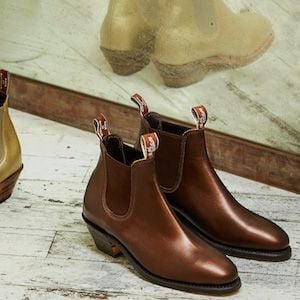
Iconic Australian apparel brand R.M.Williams has been "stopped in its tracks" by the Covid-19 crisis and forced to shut down all production at its South Australian workshop.
Effective today its workshop in Salisbury, Adelaide, will be closed until further notice, resulting in the standing down of 709 employees.
The company says it is working closely with the South Australian Government to navigate through the financial crisis to ensure it comes out the other end.
R.M.Williams, famous for its leather boots and majority owned by Singapore-based private equity firm L Catterton backed by luxury retail conglomerate LVMG, closed all of its stores and Boot Rooms in Australia, the US, UK and New Zealand on 28 March.
To support its staff the company will be offering all 709 permanent and part-time Australian team members two weeks salary, as well as encashment of accrued annual leave.
Founded in Adelaide in 1932 R.M.Williams has survived its fair share of crises; it has been through the worst of World War II and has continued to operate ever since.
"Now, 88 years later, the Covid-19 crisis has stopped us in our tracks," says R.M.Williams.
"At this moment in these unprecedented times, it is hard to see past the headlines and understand what lies ahead. Australia, and central to that fabric, R.M.Williams, has shown through the decades and through recent times with the drought and bushfires that we are a people who adapt through tenacity, perseverance and a pioneering spirit."
"We will always represent the Australian bush and the spirit of Australia."
The company's customer service team will remain available to field enquiries regarding boot repairs, online services and Made to Order and R.M.Williams' online store continues to be open for business.
While R.M.Williams has made the decision to close down its workshop, fellow iconic Australian brand Akubra says it will continue to work during the crisis.
"We are proudly still manufacturing the Australian Army Slouch hat in these tough times the world is facing," says an Akubra spokesperson.
Updated 11:31AM AEDT on 1 April 2020.
News Corp to suspend 60 community print publications
 "News Corp to suspend 60 community print publications")
A rapid decline in advertising revenue has forced News Corp to suspend 60 community titles in NSW, Victoria, Queensland and South Australia as of 9 April.
In an announcement yesterday the company said community mastheads would continue to publish digitally, with reporters and photographers expanding News Corp's hyper-local news coverage for consumers across Australia.
News Corp Australasia executive chairman Michael Miller said the decision to suspend printing of its community newspapers was not taken lightly.
"The suspension of our community print editions has been forced on us by the rapid decline in advertising revenues following the restrictions placed on real estate auctions and home inspections, the forced closure of event venues and dine-in restaurants in the wake of the Coronavirus emergency,' he said.
Miller noted as consumers increasingly turned to digital for local news, News would be increasing and developing its community coverage.
He said the impact on community print titles came on top of the toll on media from the refusal of digital platforms to pay publishers to use their content.
For now, the group's top priority is to preserve jobs and best position itself to counter the crisis.
"During this unprecedented time it is imperative that we reduce costs while continuing to keep the community informed and doing all we can to retain jobs," he said.
"The print suspension will allow us to assess the shape of the market itself and future conditions, taking into account how the Coronavirus situation unfolds in the coming period."
The announcement follows Elliott Newspaper Group's decision last week to suspend its traditional newspaper publishing in Mildura, Swan Hill and Kerang in response to the pandemic, as reported by the Sunraysia Daily - one of the mastheads affected along with Sunraysia Life, The Guardian - Swan Hill, Gannawarra Times and Loddon Times.
Elsewhere, News Corp's parent company in the States has reached a deal to sell its News America Marketing business to Charlesbank Capital Partners for US$235 million.
Updated at 11:14am AEDT on 1 April 2020.
Rex returns to Queensland skies after State Government performs a barrel roll
 "Rex returns to Queensland skies after State Government performs a barrel roll")
Regional airline Rex (ASX: REX) will resume services in Queensland after the State Government caved in to the carrier's force majeure declaration.
A last minute intervention from the Queensland Department of Transport and Main Roads (TMR) will allow Rex to resume full services in Queensland from today, with a reduced schedule to come into place from tomorrow.
While a final agreement between the TMR and Rex has not yet been reached, the airline says it will continue to run the reduced schedule in good faith until 8 April.
If a final agreement cannot be reached Rex will once again suspend all of its services in Queensland.
The change of heart from the Queensland Government came after Federal Minister for Agriculture, Drought and Emergency Management David Littleproud called upon the Queensland Premier to "show leadership and sit down with Rex".
"The people in remote towns like Birdsville and Bedourie need access to medicine and medical services," said Littleproud.
"The communities of Charleville and Cunnamulla should have the right to the same essential services as those in Brisbane.
"This is not an inconvenience, this is dangerous. The State Government has got to find some way of keeping Rex in the air and keeping regional and rural Queenslanders safe."
The airline first announced it would be pulling all services from Queensland yesterday morning, blaming a lack of State Government support for the shutdown of all services in the State.
The proposed shutdown was going to take place despite a sizeable $198 million support package for Australia's regional air networks which are struggling to stay airborne because of the Covid-19 crisis.
Because the funding from the Federal Government would only to cover one return weekly flight per route for regional airlines Rex said it would be unable to continue operating in Queensland without State Government support.
Rex will continue to service its remaining network in Australia outside of Queensland on a scaled back basis.
Updated at 10:23AM AEDT on 1 April 2020.
NSW Government calls on manufacturers to re-tool for Covid-19
 "NSW Government calls on manufacturers to re-tool for Covid-19")
With global supply chains more or less kneecapped and exports of essential medical supplies in high-demand, the NSW Government is calling on local manufacturers to re-tool.
The State hopes local manufacturers will redeploy spare capacity to manufacture medical equipment and hygiene products that are urgently needed to help fight Covid-19.
NSW Premier Gladys Berejiklian says the world is running short on hand sanitiser, handwash, soap, gloves, cleaning products, protective clothing, masks, eyewear and paper products.
"This is a call to arms for NSW manufacturers to look at ways to convert production lines into making the items we so desperately need," says Berejiklian.
"We have the ability within NSW to meet our local demand and the Government is moving to help manufacturers re-tool quickly to achieve this.
"Importantly, providing this opportunity to manufacturers will also allow some businesses to keep people in jobs when they may not have been able to do so."
Of particular importance is the urgent need for personal protective equipment and disinfectant, the supply of which will be greatly constrained globally for at least 12 months.
The "call to arms" comes as manufacturers around Australia have re-tooled to manufacture things like masks, gloves and hand sanitiser.
Just yesterday Adelaide food packaging company Detmold announced it will be producing hundreds of millions of respirator and surgical mask for South Australia and the Federal stockpile.
Distilleries nationally have been converting their boozy production lines into high-capacity hand sanitiser factories to meet national demand from hospitals and individuals alike.
Minister for Jobs, Investment, Tourism and Western Sydney Stuart Ayres says the NSW Government has set up an online portal to connect the supply chain so more finished products can be provided where needed.
"This is an opportunity for businesses to not only diversify their supply but produce incredibly important products for our State in a time of need," says Ayres.
"We will work to find solutions to provide our hospitals and our people with the protection they need, while keeping as many workers as possible in a job."
Businesses can register their interest to manufacture urgently needed goods via the NSW Covid-19 Emergency Supplies registration portal here.
The announcement comes as NSW hits 2,032 confirmed cases of Covid-19, with 114 new cases recorded in the state yesterday.
Nationally there are now 4,561 confirmed cases of the coronavirus, with 917 in VIC, 743 in QLD, 364 in WA, 337 in SA, 80 in the ACT, 69 in TAS, and 19 in the NT. 19 people have died of Covid-19 in Australia to date.
Updated at 9:17AM AEDT on 1 April 2020.
Retailers and landlords unite with leasing code of conduct
 "Retailers and landlords unite with leasing code of conduct")
While Australia's banks will be given a $90 billion funding facility from the RBA and the country's Federal and State governments are offering unprecedented stimulus packages, there is still no clear-cut solution as to who foots the bill when retailers struggle to pay rent.
Thousands of retail outlets nationwide have closed in recent weeks including just about any clothing brand you can think of, as well as a raft of discretionary retailers like Michael Hill Jewellers, Adairs and Nick Scali.
In addition, social distancing restrictions have extended restaurant and café bans (except takeaway) to shopping centre food courts.
And while a welcome $130 billion has been pledged to subsidise wages for businesses that are suffering due to the pandemic, this is no panacea to pay the high fixed cost of retail space or the debts of the landlords who own it.
It is an inherently frictional relationship, and one that lends itself to blame game politics.
But the nation's retailers and shopping centre owners have shown goodwill today in an attempt to push through the crisis, following meetings over the past two days to establish a draft Code of Conduct for retail leasing.
The National Retail Association (NRA), Australian Retailers Association (ARA), the Pharmacy Guild of Australia (PGA) and the Shopping Centre Council of Australia (SCCA) have announced their shared commitment to ensuring business continuity.
The groups agreed no two retailers are the same and circumstances needed to be addressed on a case-by-case basis, but in general they agreed to the following leasing principles:
- A short term, temporary moratorium on eviction for non-payment of rent to be applied across commercial tenancies impacted by severe rental distress due to coronavirus;
- Tenants and landlords are encouraged to agree on rent relief or temporary amendments to leases;
- The reduction or waiver of rental payment for a defined period for impacted tenants;
- The ability for tenants to terminate leases and/or seek mediation or conciliation on the grounds of financial distress;
- Commercial property owners should ensure any benefits received in respect of their properties should also benefit their tenants in proportion to the economic impact caused by Covid-19;
- Landlords and tenants not significantly affected by coronavirus are expected to honour their lease and rental agreements; and
- Cost-sharing or deferral of losses between landlords and tenants, with Commonwealth, state and territory governments, local government and financial institutions to consider mechanisms to provide assistance.
A full copy of the joint statement by all major Australian retail groups is attached and was sent to all states and territories today, calling for an implementation of the code.
"We sat down immediately after the Prime Minister's announcement to come together in good faith and continue our ongoing discussions to ensure landlords and tenants are working together," says NRA CEO Dominique Lamb.
"Our industry has a track record of working together, including on challenging issues, and this is about working together and assisting policy makers in the next phase given our group's longstanding engagement on retail leasing issues," adds ARA CEO Russel Zimmerman.
PGA national president George Tambassis notes pharmacies are under "immense pressure" as frontline health resources during the Covid-19 crisis, and they need the certainty and consistency that can be provided by this code.
SCCA executive director Angus Nardi highlights the work retailers and shopping centre owners can do to keep business going.
"Shopping centre owners and retailers have a mutual interest in business continuity and it's positive to have a unanimous and timely approach to tackle the pressing challenges we all confront in the current environment in a way that is fair and balanced to everyone," says Nardi.
Updated at 5:07pm AEDT on 31 March 2020.
Adelaide's Detmold Group to produce millions of respirator and surgical masks
 "Adelaide's Detmold Group to produce millions of respirator and surgical masks")
A South Australian food packaging company famous for its Detpak brand will pivot to manufacturing surgical and respirator masks to assist in the fight against Covid-19.
Up to 160 extra staff will be hired at Detmold's Adelaide factory to produce 100 million masks for the Federal Government's National Medical Stockpile and 45 million for SA Health.
Specialised machinery will soon be installed at Detmold's Brompton-based facility, with production expected to commence in May.
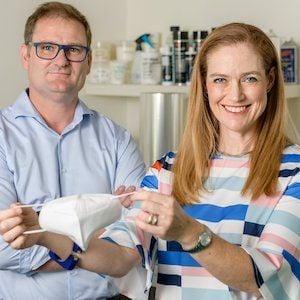
Detmold CEO Alf Ianniello (pictured left) says he is proud that he and Detmold can step up to the plate and help fellow Australians in the fight against the coronavirus.
"Detmold is a South Australian company with a long history of employing locals, so to be able to assist with both flattening the curve in this time of crisis and helping keep South Australians in work is immensely rewarding," says Ianniello.
"We expect to have the capacity to manufacture over 20 million masks per month by June, and the facility will produce both surgical masks and respirator masks."
Detmold's pivot to manufacturing medical equipment is the latest example of private industry working with the public sector to achieve outcomes in the best interests for all Australians.
Minister for Industry, Science and Technology Karen Andrews says the initiative, spearheaded by SA Health, demonstrates the strength of Australian manufacturers.
"This is a fantastic example of how our strong manufacturing base in Australia puts us in a position to be able to make more of the medical supplies we need during the outbreak of this virus," says Andrews.
While Detmold's focus is on supplying SA Health and the Federal Government's National Medical Stockpile the company says it will be looking for ways to support other businesses and the broader community. Those interested in securing future supply should contact Detmold here.
Updated 3:44PM AEDT on 31 March 2020.
Virgin Australia proposes $1.4 billion bailout from Federal Government
 "Virgin Australia proposes $1.4 billion bailout from Federal Government")
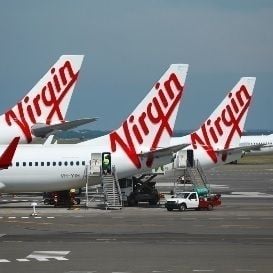
Virgin Australia (ASX: VAH) has proposed a $1.4 billion bailout from the Federal Government so it can position itself to survive the Covid-19 crisis.
The 90 per cent foreign-owned airline confirmed a report in today's edition of The Australian where it was revealed Virgin Australia was considering asking for the sum.
The $1.4 billion would come on top of the $715 million support package for the broader aviation industry already announced by the Federal Government.
The request is a "preliminary proposal" according to VAH and remains subject to approval by the company's board.
VAH also confirmed in its ASX statement that the support "may or may not include conversion to equity in certain circumstances".
This would give the Federal Government a sizeable slice of the company which is currently owned by Singapore Airlines, Etihad Airways, Chinese investment group HNA, Chinese airline Nanshan, and Richard Branson's Virgin Group (through British Virgin Islands-based Corvina Holdings).
"Companies like the Virgin Australia Group are taking a range of measures to respond and manage the financial impact," says VAH.
"However, support will be necessary for the industry if this crisis continues indefinitely, to protect jobs and ensure Australia retains a strong, competitive aviation and tourism sector once this crisis is over."
Updated at 1:01PM AEDT on 31 March 2020.
Economic domino effect takes its toll on advertising giant WWP
 "Economic domino effect takes its toll on advertising giant WWP")
With the Australian economy slowing down, especially with regard to retail and other businesses deemed 'non-essential', work is drying up for those dependant on promoting goods and services.
One of Australia's largest creative advertising agencies WWP AUNZ (ASX: WWP) has felt the impact of the coronavirus financial crisis as dominos tumble nationwide.
While the company says it is still too early to have a conclusive view as to the consequences of Covid-19, WWP has put in place measures to stem the flow of cash.
WWP has already cancelled its 2019 final and special dividends in light of Covid-19 as many of the company's clients have reduced marketing and communications expenditure for the financial year.
"The extent of their reduced expenditure is still unfolding but we draw some confidence from the increased communications work we are undertaking for a select number of our high-quality clients across sectors such as government, financial services, insurance, and FMCG, in response to the immediate demands of consumers and change in consumer behaviours," says WWP.
The company has put certain plans into gear to realise immediate cost reductions including:
- A voluntary reduction in base salaries for paid board directors, the CEO and WWP's leadership team;
- A voluntary program of nine-day fortnights and four-day weeks and utilisation of employee leave balances across the business;
- Management of employee costs through a reduction in the use of freelance resources, limited new hires, a significant restriction in salary increases and a commitment to enhanced intra-group resource sharing;
- A cessation of all international and domestic business travel;
- Minimisation of capital expenditure; and
- Reduction in property footprint through consolidation of lease space.
"These actions may change as we gain further clarity over the depth and timing of the COVID-19 financial impact," says WWP.
The company is also hoping to ensure that it has sufficient liquidity and covenant headroom to manage a variety of possible financial scenarios.
At 31 December 2019 WWP had over $300 million of liquidity in the form of undrawn facilities of $228 million plus $74.8 million in cash.
WWP's term debt facility of $270 million does not mature until June 2021 and the company has a rolling $150 million 364 day working capital facility which was only drawn to $10 million at 31 December 2019.
"Whilst we do not at this stage have clarity on the Company's earnings outlook for FY2020, it is our view that our 2019 year-end conservative leverage position, the pre-emptive and prudent decision to cancel the dividend on 24 March 2020, and the cost control actionsput the company in a sound position to weather the current, known impacts of the COVID-19 crisis," says WWP.
Updated at 12:16PM AEDT on 31 March 2020.
Advertisement
Latest News
From $13,000 to $20 million: how a PCOS diagnosis and a pair of scissors built Xali Organics
Inspired by a medical diagnosis and driven by innovative marketing,...
Cedar Woods secures $63.4m in new land acquisitions as record presales underpin pipeline push
Perth-headquartered residential developer Cedar Woods Properties (A...
Australia's long-term beer decline hits home as Lion plans to close Boag's brewery in Launceston
Australia's decades-long decline in beer consumption has claime...
Downer EDI seals $310m Transurban contract to maintain Sydney motorway network
Infrastructure services group Downer EDI (ASX: DOW) has secured con...
Propel Funeral Partners expands New Zealand footprint with trio of acquisitions worth $9.1m
Sydney-based death care provider Propel Funeral Partners (ASX: PFP)...
Advertisement