Advertisement
Staying informed is more important than ever as the situation unfolds with Covid-19. Stay tuned here for our live updates, and be sure to let us know what your business is doing to face this unprecedented challenge.
Covid-19 News Updates
Foodmach and Med-Con team up for 50 million surgical mask goal
 "Foodmach and Med-Con team up for 50 million surgical mask goal")
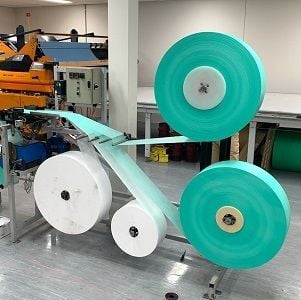
Two companies from rural Victoria have joined forces to produce tens of millions of urgently needed surgical masks in response to the Covid-19 health crisis.
Shepparton-based Med-Con used to be a major player in the production of surgical masks, but competition from China has led its Australian market share to dwindle to just five per cent over the past decade.
With 5,795 cases of the virus now in Australia and some hospitals reportedly unable to provide masks that fit the doctors who are supposed to use them, the government has requested Med-Con to quickly increase annual production from two million to 50 million surgical masks.
One challenge with this request from the Department of Industry, Science and Technology was that only two of Med-Con's three mask-making machines were operational.
The machines were designed and built nearly 40 years ago, and no original drawings were available to reproduce them.
As part of this time-critical innovation challenge, Australian Defence Force (ADF) engineers disassembled and modelled the non-operational Med-Con machine. Several engineering firms were assessed for competency to reverse engineer and manufacture three new machines.
In came Echuca-based packaging automation manufacturer Foodmach, which has been appointed to engineer and build the new machines.
"Building packaging machinery requires strong expertise in mechanical engineering, electrical systems, pneumatics and motion control," says Foodmach director Peter Marks.
"Our pool of talent across all these fields and our one-stop-shop factory set-up means we can quickly build something new and complex like machines that produce surgical masks."
Marks says reverse engineering is usually a lengthy process that involves a lot of testing and adjustments.
"We have 60 days from start to finish to find ways to build a machine that uses parts which have long been obsolete. Although 3D models have been provided by the ADF, these still need to be detailed on a part by part basis, materials identified and checks made that they'll assembly correctly," he says. 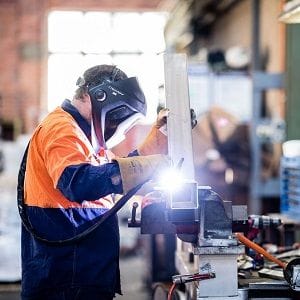
"There will be knowledge gaps around material specifications and possibly tolerances which need to be resolved. The old design will also need to be updated to current safety, controls, and interfacing standards."
Foodmach's 6,600 square metres of factory and machine shop space in Echuca will allow ts 100-strong team of skilled staff to work around the clock while maintaining enough distance from each other to manage Covid-19 risks.
"Keeping our workforce safe and productive in an epidemic that has the potential to threaten 40-70% of the Australian population is clearly a high priority for us," says Foodmach CEO Earle Roberts.
"Staff will be working in shifts 24/7 during the next eight weeks to meet the deadline.
"Normally with a good set of drawings we'd want 16 to 20 weeks to build something new like this, so to try and complete one machine in eight weeks, and three inside 12 weeks, is a stretch to say the least.
"The complexity of the Med-Con machines will provide us with an exciting challenge. We've obviously never built one before - but with all the necessary design, manufacture and assembly expertise under a single roof, we're well equipped for it.
Updated at 4:21pm AEST on 6 April 2020.
Queensland manufacturer Evolve pivots to mask making
 "Queensland manufacturer Evolve pivots to mask making")
Logan-based Evolve Group has been granted $1.2 million in financial assistance by the Queensland Government to begin producing disposable N95 surgical masks in high volume.
Described by Evolve as "the most important move they've made" the company will soon begin producing 60,000 surgical masks per day at the manufacturing plant.
N95 masks are the highest quality surgical masks available for frontline healthcare workers and can help to filter out fine particles.
The pivot to manufacturing masks is not a drastic leap for the company which has produced a large variety of products for a wide range of sectors since its founding in 2006.
Evolve Group owns brands like plastic manufacturing business Marco Engineering, pool and spa equipment company Poolrite, and 4x4 recovery device TRED.
According to Queensland Premier Annastacia Palaszczuk local production of goods like face mask is imperative both now and into the future.
"We can and we must make these lifesaving products in Queensland," says Palaszczuk.
"We are prepared to back our manufacturers with long term offtake agreements to ensure they keep manufacturing them here."
The Government's partnership with Evolve is not just a short term solution either; Queensland Health and the Department of Housing and Public Works have both agreed to purchase masks from Evolve Group for a three-year period to support the health system.
Logan's Evolve Group is no one-trick-pony, and prides itself on flexibility and responsiveness according to managing director Ty Hermans.
"We have always prided ourselves on our ability to design award-winning products and rapidly solve complex engineering challenges, but this is certainly our most important project - something we have been training for since we started our reshoring mission back in 2006," says Hermans.
"We are proud of our ability to apply our Queensland-based advanced plastics manufacturing facility and skills to a mission-critical project like this, supporting our frontline medical teams and others that are sacrificing so much right now.
"Securing supply of critical products like this by reshoring the manufacturing in Australia has to be a priority for all Australians now and into the future. Being Australian-made also ensures the production of high-quality products."
Never miss a news update, subscribe here. Follow us on Facebook, LinkedIn, Instagram and Twitter.
Business News Australia
Reece to raise $600m despite strong sales
 "Reece to raise $600m despite strong sales")
Bathroom supplies distributor Reece (ASX: REH) is launching a pre-emptive $600 million capital raising even though trading has been strong and shares are down 27 per cent since late February.
The equity raising will include $170 million committed by major shareholder group the Wilson family, and will be offered at $7.60 per share.
This represents a 12.5 per cent discount to the trading price on Friday.
Proceeds will go towards balance sheet flexibility, increasing liquidity and reducing net debt, as well as supporting business during the current macro-economic uncertainty.
Reece's branches and distribution centres in Australia and the US remain open as plumbing is considered an essential service in both countries.
The group cites a "solid start to the calendar year with strong March quarter sales", with a shift to investment in home comforts, hot water units and repair and maintenance work.
As a result the company hasn't yet seen any material impact from the Covid-19 pandemic, but it notes it is impossible to forecast the future impacts of this health and economic crisis on trading and the supply chain.
In light of this, dividends have also been suspended, implying further erosion of shareholder value while the company offloads 14.1 per cent of its issued capital for the new share.
"Reece has a 100-year history of strengthening the business through tough times the current crisis is no exception," says chief executive officer Peter Wilson.
"We believe that Reece, and the plumbing and construction trades it supports, has an essential role to play in times of crisis.
"We want to continue to run our business with a long-term view, despite the short-term challenges. A more conservative balance sheet will give us the confidence to continue to act on long term objectives for the benefit of our shareholders."
He says the capital raising sets up Reece for the future.
"It will enable us to navigate through this period of uncertainty from a position of strength, and importantly it provides us with the flexibility to accelerate our growth strategy and pursue opportunities that may emerge," he says.
Updated at 11:36am AEST on 6 April 2020.
McGrath closes offices, slashes executive pay in response to Covid-19 uncertainty
 "McGrath closes offices, slashes executive pay in response to Covid-19 uncertainty")
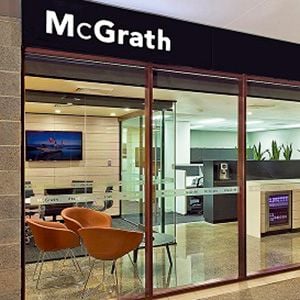
McGrath (ASX: MEA) CEO Geoff Lucas will take a sizeable pay cut as his real estate group embarks on a crisis management plan to save cash.
CEO and board remuneration will be slashed significantly by 40 per cent in May, June and July 2020, while all staff earning above $70,000 per annum will have their salaries cut by 30 per cent.
The company will also be closing certain company offices and immediately ceasing all discretionary expenditure and non-essential spending.
These new measures come in addition previously announced plans to cancel all public auctions and open house inspections.
"As previously announced, McGrath is well equipped to operate in this challenging environment," says McGrath CEO Geoff Lucas.
"We have moved quickly to use the latest technology to conduct online auctions and virtual inspections within the required safety guidelines. The last two weekends has been a good litmus test in terms of illustrating how we can continue to conduct real estate and in many cases multiple bidders participated from the safety of their own homes."
Lucas says McGrath's balance sheet is in a strong position with approximately $10 million in cash and no debt.
"With the support of all our highly valued employees, contractors and agents, we are well equipped to successfully overcome these unprecedented times."
Since early December 2019 McGrath's share price has dived by 51.35 per cent to $0.18 per share.
Updated at 10:56AM AEST on 6 April 2020.
SEEK billings fall 60 per cent
 "SEEK billings fall 60 per cent")
Online job postings provider SEEK (ASX: SEK) saw its billings in Australia, New Zealand and Asia (except China) fall 60 per cent in the last week of March, as government responses to Covid-19 impact revenue across all its businesses and markets.
A $110 million sales cut to SEEK's Chinese business Zhaopin announced in February was a precursor of things to come here in Australia, where billing declines accelerated from 40 per cent in the week prior.
It appears year-on-year declines have stabilised around the 60 per cent mark, as the company takes steps to keep customers on board.
For April and May the group will relieve hirers of their minimum monthly ad spend obligations and will only charge them for ads used, while expiry dates will be extended to allow for longer use periods.
The current year-on-year reduction for SEEK ANZ and SEEK Asia is more or less in line with the drop-off seen for Zhaopin in February.
But the Chinese business - itself a rapidly-growing enterprise until Covid-19 hit - has seen an improvement since then with its billings down just 30 per cent year-on-year in March.
SEEK notes the Chinese market is returning to normal trading conditions and its teams in the country have returned to the office.
"When the pandemic subsides, as it will, job creation will be at the core of economic recovery," says SEEK CEO and co-founder Andrew Bassat.
"This aligns directly with SEEK's Purpose and we are determined to ensure we have the capabilities to help facilitate the economic recovery process in all of our markets."
He highlights staff have been working hard from home to continue rolling out new functionality across the business, while there has been a dual focus on cash preservation and adapting business model to customer needs in this challenging environment.
"The near-term economic challenges will impact SEEK's short-term profitability. They will delay, but not fundamentally change our long-term aspirations.
"Our focus remains on executing against our existing long-term growth strategies and developing new employment and education solutions to meet the needs of our customers in the months and years ahead.
"We expect our long-term focus to unlock large new revenue pools and create significant long-term shareholder value."
The company has deferred its dividend until 23 July and has also released a potential FY20 outcome based on high-level assumptions, which it emphasises is not to be interpreted as guidance.
Under this hypothetical scenario, SEEK would book $1.6 billion in revenue and an EBITDA of $410 million, which would compare to $1.54 billion in revenue in FY19 and $455 million EBITDA in that same period.
Updated at 10:47 AEST on 6 April 2020.
Flight Centre to travel on with $700 million capital raising
 "Flight Centre to travel on with $700 million capital raising")
Travel agency Flight Centre (ASX: FLT) is set for a significant dilution of ownership as it looks to raise $700 million in extra capital.
With total transaction value (TTV) sitting at 20-30 per cent of normal levels in March and further declines expected for the coming weeks due to travel restrictions, the Brisbane-based company is prepared to almost double the amount of shares on offer to stay afloat.
Flight Centre plans to issue around 97.2 million new shares at at $7.20 each, representing a 27.3 per cent discount to the last traded price of $9.91 on 19 March before the shares entered a trading halt.
This compares to 101.14 million shares currently tied up in the company.
Shares have fallen from $39.84 on 25 February, and were trading as high as $65.30 in late July 2018.
The capital raising is fully underwritten by Macquarie Capital and UBS, and will include a $282m institutional placement as well as a $419 million 1 for 1.74 accelerated entitlement offer.
Flight Centre has also secured an extra $200 million in banking facilities, bringing the total up to $450 million.
As revenue streams dry up while the world hunkers down against the Covid-19 pandemic, Flight Centre expects its cost reduction measures - including standing down 6,000 staff and closing half its shops internationally - will result in annualised savings of $1.9 billion.
This translates to anticipated monthly operating cash costs of approximately $65 million, which will be implemented by the end of July. But one-off costs of $210 million will likely be spent to execute the plan.
"Flight Centre has moved to significantly reduce occupancy costs of the remaining retail network, by renegotiating rental agreements with landlords, discussions to date have been positive as FLT has pursued cost savings including rent-free periods and more flexible trading hours," the company said, adding it was also exploring the sale of its Melbourne head office site.
"FLT welcomes stimulus packages that governments throughout the world are delivering to help businesses retain as many workers as possible and overcome the extraordinary trading conditions they are facing.
"Flight Centre welcomes the Federal Government's JobKeeper initiative. The impact of the initiative is still being assessed; however, Flight Centre believes it will receive material support, both in terms of payments and an ability to retain more staff."
FLT says its package of initiatives provides approximately $2.3 billion of liquidity.
Despite travel restrictions and TTV declines, Flight Centre continues to generate some revenues through long-term travel bookings, intra-state and intra-region travel, repatriation services, essential services, government work, aircraft charters and alternative revenue streams.
The company has also continued to win and retain corporate accounts, and has secured contracts with annual spends in the order of $250 million during March 2020.
Managing director Graham Turner (pictured) says government-enforced restrictions are widespread globally and now typically include full bans on international travel, domestic border closures and the forced closures of shops that are not deemed to be providing essential services.
"Together, they mean that our people are currently processing a fraction of the normal volumes at this time of year and the vast proportion of work previously carried out by our people has stopped," he says.
"It is - without question - the most challenging period we have encountered in over 30 years in business and it is inevitable that some businesses across our industry will fail, given the significant loss of revenue that they will be experiencing now and for at least the next few months.
"With this funding in place and additional liquidity, we are in a much stronger position and are well placed to weather a prolonged downturn, which currently seems the likely scenario, and to then take advantage of the significant opportunities that will arise once conditions normalise."
Related story: Grounded Webjet to raise $275 million
Updated at 9:45am AEST on 6 April 2020.
Growers welcome visa extensions to prevent "fruit rotting on trees" during pandemic
 "Growers welcome visa extensions to prevent \"fruit rotting on trees\" during pandemic")
The fresh produce industry has applauded the Federal Government's decision to temporarily extend visas for vital foreign workers in agriculture and food processing.
The government announced this morning that temporary changes would be made to visa arrangements to help farmers access the workforce they need to secure Australia's food supply during Covid-19.
The changes allow those within the Pacific Labour Scheme, the Seasonal Worker Program and working holiday makers to continue to work in these sectors until the coronavirus crisis has passed.
Temporary visa changes announced today include an exemption from the six-month work limitation with one employer for working holiday makers working in agriculture as well as a further extension of their visa if it is due to expire in the next six months.
"We can't afford to see fruit rotting on trees and vines and vegetables left unpicked. It is vital our farmers maximise their hard work and economic returns," said Deputy Prime Minister Michael McCormack.
"We are acting to enable seasonal workers to extend their stay and remain lawfully in Australia until they are able to return to their home countries.
"The agriculture sector relies on an ongoing workforce and we are committed to providing the means for that to continue while ensuring strict health and safety measures are adhered to, including visa holders following self-isolation requirements when they move between regions."
AUSVEG CEO James Whiteside, whose organisation represents Australia's vegetable and potato growers, says the announcement is a sensible and practical solution for fruit and vegetable growers who rely on a combination of local workers and foreign backpackers.
"The decision to temporarily extend the visas of seasonal workers and backpackers already working on farms in Australia will give growers confidence to plant their crops for the coming season, will help keep local businesses open in regional and rural areas that rely on agriculture to survive, and will ensure that locals, seasonal workers and backpackers alike are able to keep their jobs, work and live safely, and keep the economy running," says Whiteside.
"This is an important outcome for the Australian horticulture industry and demonstrates the value in the sector coming together and collectively advocating on behalf of fruit and vegetable growers towards an outcome that benefits growers, workers and the Australian public.
"Fruit and vegetables help Australians have a healthy, strong immune system and fresh produce is essential to a healthy, well-balanced diet Australians need fresh produce and growers need workers to supply this produce to consumers."
The sentiment was similar at the Australian Fresh Produce Alliance (AFPA), highlighting the sector employs around 80,000 people including significant numbers of Australians, seasonal workers from the Pacific and Timor-Leste, and backpackers from around the world.
"The reality is a number of these workers, particularly those from the Pacific and Timor-Leste are unable to return to their home countries due to travel restrictions," says AFPA CEO Michael Rogers.
"The alternative to the extension of their visa arrangements was leaving these people unemployed in regional communities with minimal access to healthcare.
"Enabling their ongoing employment is a great outcome for workers, farmers and their communities."
The National Farmers Federation (NFF) has developed best practice guidance for farmers regarding requirements for the living and working arrangements of farm workers (either domestic or migrant) during the Covid-19 outbreak.
"We have asked the Chief Medical Officer to review these guidelines and it is critical that they are then considered by the Australian Health Protection Principal Committee," says Minister for Agriculture David Littleproud.
"Sadly, there's been a significant number of Australians who've lost their jobs due to the economic impacts of Covid-19.
"I know some farmers have seen strong interest from job ads and we are keeping market testing requirements in place to ensure recruitment of Australians first."
Whiteside says growers will always have a preference to employ a local workforce.
"But the reality is that our industry relies on international workers to supplement the workers they need that cannot be sourced from the local labour pool," he says.
"he extension of Seasonal Worker Program, Pacific Labour Scheme and Working Holiday Maker visas is a much-needed short-term solution to what will become a larger problem as the ongoing COVID-19 pandemic continues to limit the number of foreign workers who can come to Australia."
Rogers says AFPA members have already put policies and procedures in place to safely manage their workforce and reduce risk of Covid-19 transmission on their farms, packing sheds and in the regional communities in which they operate.
"Food security in Australia relies on a healthy and safe workforce, so AFPA members and all growers are taking this seriously to ensure the continued supply of produce," he says.
Updated at 11:46am AEDT on 4 April 2020.
Government to introduce mandatory commercial tenancy code of conduct
 "Government to introduce mandatory commercial tenancy code of conduct")
Update (7 April): The mandatory commercial tenancies code has been formally announced by the PM. Click here for more.
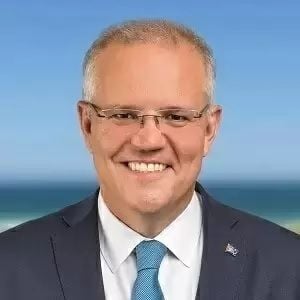
Prime Minister Scott Morrison has today announced a mandatory "give and take" tenancy code will be introduced to help struggling businesses get through the Covid-19 crisis.
Following a tentative draft code that was reached by industry bodies in retail, pharmacy and shopping centres, the National Cabinet has been working on an enforceable code that is close to being finalised.
Companies wishing to apply for the code to come into force will need to meet the similar conditions as those applying for the JobKeeper package, with a prerequisite that they have experienced at least a 30 per cent drop in revenue. The tenant will also need an annual turnover of less than $50 million.
"If you're in that situation and you're a tenant, we'll be working on a mandatory code of practice to ensure the landlord and the tenant can get through this period, and on the other side be able to go back to business as usual," Morrison said.
"What is important as part of this code is that both parties negotiate in good faith," he said.
The PM says the idea is that the code be incorporated in the state and territory legislation. It should not be prescriptive but ought to follow the proportionality principle.
"The turnover reduction of the tenant needs to be reflected in the rental waiver of the landlord," he said.
"How that is done inside the lease is up to the landlord and the tenant. There are many different ways you can achieve this.
"If for example there was a three or a six-month rental waiver because a lessee or a tenant would have had to have closed their doors, and there's just no money coming in, one way to achieve that is to extend the overall lease by six months on the other side."
Another scenario could be that the parties agree to a different level of rent over the entire term of the lease.
"The banks will need to come to the party as well. The banks are not parties to those arrangements, and so that makes it legally a little more difficult.
"The banks are already moving to providing all sorts of new facilities and arrangements to their customers, and we would expect banks to be very supportive of the agreements reached by landlords and tenants who would be working under this mandatory code."
New measures for backpackers
The Prime Minister announced additional containment measures for backpackers on working holiday visas, whereby those wanting to work in a new area will need to undergo 14 days of self-isolation beforehand.
"There are particular places in the agricultural sector that rely on those workers each year as you go into the seasons either planting or for harvesting or for fruit picking and so on. And it's important that those businesses and those producers are able to continue to conduct their business," he said.
"Of course Australians who want to do that work, then please do get out there and do that work. And there'll be opportunities there for working holiday makers who are looking to engage in those occupations as they regularly do.
"They will be required to self-isolate and to go onto Australia.gov.au, and register for self isolation and do that where they are now for a period of 14 days before they transfer to another part of the country out in a rural or regional area."
He said this measure was being taken to ensure there is no lift-up of the virus moving from metropolitan to rural areas.
"This has been done to ensure that those producers can get the work done, but also to ensure that the communities are protected.
"At the same time working through the states and territories and local governments, we will be working to ensure that the workers' accommodation that will be in those places is also respecting strict health requirements.
"You can't have six backpackers in a caravan up out in rural parts of the country. That's not on. Not going to happen."
Update on results of social distancing measures
The Prime Minister started off his speech today highlighting how if it weren't for the actions taken to date and the virus were allowed to keep spreading at the rate of 12 days ago, we'd be looking at more than 10,500 cases in Australia compared to the current level of 5,315.
"In fact, some commentators who are doing the maths were suggesting that we would have had 8,000 cases just as recently as last weekend," he said.
"That is a tribute to the work that has been done by Australians in getting around and supporting the very sensible measures that have been put in place all around the country by the state and territory governments, but we must continue to do this.
"We need to continue to keep the pressure on. We need to continue to suppress the virus. We are now at single digit rates of growth, but we need to do more."
He said discussions are now focused on a six-month period, but that is no guarantee and the situation could be like this for longer.
"We pray it's shorter, but a six-month period should give people a good indication of what they have to ready themselves in terms of the changes they're making in their daily lives," he said.
"We are in what we described today as a National Cabinet as the suppression phase. We are now In a place where we're seeking to put the pressure down on constraining this virus in Australia.
"We then need to look at the recovery phase which is beyond, and I want to assure Australians that the National Cabinet is very focused on those issues as well."
Chief Medical Officer Brendan Murphy added the number of cases internationally is likely five to 10 times the one million-plus figure that is being reported.
"In Australia we're pretty confident that our testing has been the best in the world," he said.
"The growth rate has been falling, it's about five per cent per day at the moment."
In terms of community transmission, there have been 300 cases in Sydney, 60 in Melbourne and 30 in Brisbane.
Starting this afternoon the government will be publishing a daily dashboard on Health.gov.au with all the key statistics and data, including a simple summary of key features from the Chief Medical Officer.
Murphy said the government's modelling for the virus' spread will be released next week.
Updated at 2:20pm AEDT on 3 March 2020.
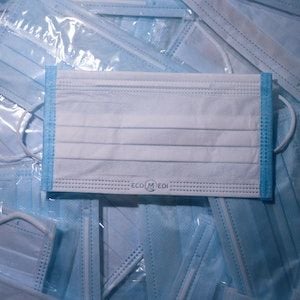
Wearing face masks in public could become new normal in the US
 "Wearing face masks in public could become new normal in the US")
The use of surgical face masks has been the norm in many Asian countries over the last two months, especially in China following the outbreak of Covid-19 in Wuhan.
But for citizens in Western nations like Australia and the United States the concept of leaving the house with a face mask on is still quite an alien concept.
As new information pertaining to how Covid-19 spreads becomes available, the US is considering changing its guidelines around the use of face masks.
According to TIME, The New York Times and the Washington Post, the US Federal Government is expected to advise all Americans to wear cloth masks in public.
Until now US citizens have been told to only wear a face mask in public if they are sick or expressing symptoms of Covid-19. As new concerns arise about Covid-19 spreading by infected people who have no symptoms the Federal Government is considering ramping up its response.
At a White House briefing on Thursday evening US time President Trump told reporters to expect clarification around mask regulations soon.
While the Centres for Disease Control and Prevention is expected to encourage wearing face masks for all citizens Trump says the guidance will be entirely voluntary.
"If people want to wear them, they can," said Trump.
Whether Australia will follow in the footsteps of the US is yet to be clear.
Updated at 12:22PM AEDT on 3 April 2020.
Remote working trend bolsters demand for Superloop
 "Remote working trend bolsters demand for Superloop")
Cloud services connector Superloop (ASX: SLC) has experienced a "significant" increase in traffic across its network in recent weeks as companies take up video conferencing and remote working to ride out the Covid-19 pandemic.
In a letter to shareholders today, chairman and founder Bevan Slattery (pictured) said this rise was particularly the case across Superloop's global IP transit backbone and international networks.
Shares in the company rose 25 per cent to $0.70 this morning by 11:40am AEDT.
Superloop subsidiary SubPartners played a key role in building the INDIGO subsea cable project connecting Australia with Singapore.
"As a result, Superloop expects to realise increased revenues from its wholesale IP transit and international capacity products during this quarter, particularly its Indigo international cable system," Slattery said.
"These new contracts are predominantly multi-year, recurring revenue agreements, structured with high cash contributions, and are able to be provisioned by Superloop within 30-60 days."
The expected increase in revenue has been factored into guidance, which Slattery said was still tracking within the $12-15 million announced on 18 February.
Business hasn't been entirely smooth sailing though, with uncertainty surrounding the company's Guest WiFi and student accomodation clients as a result of social distancing measures and travel restrictions for many international students.
"As foreshadowed in our guidance update on 18 February 2020, for conservatism, we anticipated a potential temporary reduction in Guest WiFi revenues from possible restrictions on international students returning to Australia for their studies and disruptions to international travel," Slattery said.
"With Universities recommencing in late February-early March, Superloop has now been able to quantify the level of that impact to date, which is currently in line with our initial assumptions.
"Since that time, we have seen consistent device activations during the month of March within the student accommodation facilities we service."
He says international student numbers are expected to remain relatively constant, but the number of domestic student numbers using these services may decline as some return to families over the Easter break and decide to undertake distance learning during the next term.
The announcement comes just a day after another Slattery-founded company, NEXTDC (ASX: NXT), embarked on a $672 million capital raising for expansion to support growing demand.
In the early stages of the virus' spread, Slattery's cloud technology company Megaport (ASX: MP1) pre-ordered around six months worth of critical supplies such as optics and transceivers, as well as equipment for planned rollouts for the financial year.
A new subsea cable for Australia
The serial entrepreneur has also recently achieved a milestone for his infrastructure group SUB.CO, which is building a subsea cable to connect Oman to Perth.
Early last month the project entered Contract In Force status (CIF) with its final system connection expected to be completed in December 2021.
At the time, Slattery said the cable manufacturing was expected to begin in April, with installation of the cable and repeaters expected to start in about a year from now.
What makes this project's business case so compelling for him is the fact a lot of internet traffic demand already exists from Europe and the Middle East to Australia.
"This would be the first express route between Australia and Europe," Slattery told Business News Australia, adding it would involve a start-to-finish expenditure of close to US$200 million.
"The real key here is all the cables that come out of Australia to the west, all basically go up through Singapore through the Sunda Straits in Indonesia - it's pretty shallow through there. Singapore is absolutely the right place to go, but there are no cables to avoid that route.
"And because it's quite shallow for about 1300km, the likelihood of impact is higher."
The big difference with the Oman-Perth cable is that it will run through mostly deep ocean water, making it "the fastest, most secure route", according to Slattery.
"But it also provides redundancy and diversity to the existing investments they have made. This isn't about replacing other routes; this is about complementing other routes," he said.
"SUB.CO is obviously different to Superloop. One of the things we've made sure of is we have a certain upfront commitment from certain customers, which we've been able to secure.
"It's not really about external holders, we've got significant pre-sale capacity that we've already done on this and we're prepared to take the longer term view on the remaining investment, primarily because it will be the only express route from Australia to Europe."
He says for any business that is latency sensitive, the SUB.CO route is the one they'll need to be on.
In that interview in early March, Slattery said he was really excited by Superloop despite some of its challenges recently including the collapse of takeover talks with QIC and a general decline in the share price.
"It's been a difficult couple of years, but we really focus incredibly hard for quite a while to get the business fit. It's much fitter now than it's ever been.
"The infrastructure we've got on Superloop for example is 25, 40, 50-year assets, and people are valuing it on how much you can make within a year or two of an asset going live.
"The ASX at times can be your friend in terms of getting investment for longer term projects...but when people talk about the shorter term, I think having infrastructure assets that are in the growing phase of what they do, the ASX is probably not where you want to be.
Updated at 11:40am AEDT on 3 April 2020.
Advertisement
Latest News
From $13,000 to $20 million: how a PCOS diagnosis and a pair of scissors built Xali Organics
Inspired by a medical diagnosis and driven by innovative marketing,...
Cedar Woods secures $63.4m in new land acquisitions as record presales underpin pipeline push
Perth-headquartered residential developer Cedar Woods Properties (A...
Australia's long-term beer decline hits home as Lion plans to close Boag's brewery in Launceston
Australia's decades-long decline in beer consumption has claime...
Downer EDI seals $310m Transurban contract to maintain Sydney motorway network
Infrastructure services group Downer EDI (ASX: DOW) has secured con...
Propel Funeral Partners expands New Zealand footprint with trio of acquisitions worth $9.1m
Sydney-based death care provider Propel Funeral Partners (ASX: PFP)...
Advertisement