Advertisement
Staying informed is more important than ever as the situation unfolds with Covid-19. Stay tuned here for our live updates, and be sure to let us know what your business is doing to face this unprecedented challenge.
Covid-19 News Updates
800,000 businesses register for JobKeeper package
 "800,000 businesses register for JobKeeper package")
Australian businesses have applied en masse for the Federal Government's $130 billion JobKeeper package, keeping the projected unemployment rate much lower than it would have been otherwise.
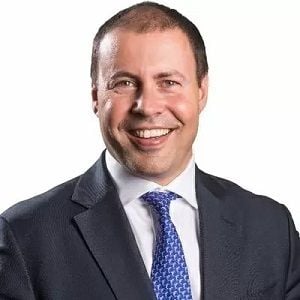
This afternoon Treasurer Josh Frydenberg (pictured) announced more than 800,000 businesses had registered for the scheme so far, while Treasury figures forecast a peak in the unemployment rate at 10 per cent for the June quarter.
"But for the JobKeeper package, unemployment would have peaked at 15 per cent - five percentage points higher," he said.
"The JobKeeper package is providing an economic lifeline to millions of Australians. At $130 billion, it's a wage subsidy the size of and scale and scope of which Australia has never seen before.
"As of today well over 800,000 businesses have registered with the tax office for the JobKeeper payment. So the unemployment rise is very concerning, but it's also a reflection of the economic challenges we face."
The treasurer reiterated the government's message that "we cannot get ahead of the medical advice" and "to do so would be dangerous and unrealistic".
"The medical advice has served Australia well and Australians expect us to be implementing measures that reflect that advice, so over time once we get to the recovery phase and restrictions are eased, at that point you will see more people come back into the workforce.
"Businesses are paying their employees and others are working on getting access to that finance, but we do know once we get to that first week of May the money will continue to flow."
Frydenberg said more than $4.5 billion had so far made its way to people's pockets as a result of the package.
"We've actually seen some of the spending as a result of that money, indicating that people are spending that money, whether it's at the local mechanic or whether it's at the local corner or paying down some other accumulated debts."
Updated at 2:27pm AEST on 14 April 2020.
Funeral operator InvoCare to raise $150 million
 "Funeral operator InvoCare to raise $150 million")
InvoCare (ASX: IVC) is set to raise $150 million to strengthen its balance sheet as social distancing measures impact its memorial services business.
The net proceeds of the raise will be used to reduce net debt and increase liquidity to support the business during the Covid-19 financial crisis.
The placement will be conducted at $10.40 per new share; a 7.8 per cent discount to the last closing price.
Approximately 14.4 million new shares will be issued, representing around 12.3 per cent of InvoCare's existing issued capital.
Following the placement, total cash on hand plus undrawn bank facilities will increase to approximately $258 million.
In addition to paying off debt, which at 31 December 2019 stands at $360 million of drawn down facilities, InvoCare says it will be deploying cash to fund pre-identified acquisitions and a "digital transformation".
The latter is certainly a necessity for the company, which has witnessed a deferral of consumer spend on memorial services and a 2.2 per cent decrease in funeral cases.
As social distancing measures clamp down on the maximum number of attendees at funerals those mourning the loss of loved ones are spending less on memorial services.
According to the funeral operator the group is turning to tech and has built new measures into the business like video steaming.
InvoCare has also been postponing memorial services to reduce the impact of Covid-19 on its case averages.
To further save cash InvoCare will be deferring the payment of a FY19 dividend until the impact and duration of Covid-19 is better understood.
"Our ability to offer a full range of services to our client families is being affected by the current restrictions issued by governments on social distancing in response to the Covid-19 outbreak," says InvoCare CEO Martin Earp.
"We have implemented a series of contingency plans to both reduce the impact of Covid-19 on our business and allow us to continue to meet the needs of our client families during this unprecedented crisis."
"The decisive actions we are taking today will assist the company in being well placed to weather the current market uncertainties from a position of strength."
Following the $150 million placement InvoCare will offer eligible shareholders in Australia and New Zealand to participate in a non-underwritten share purchase plan (SPP) capped at $30,000 per shareholder and up to $50 million in aggregate.
Further details regarding this non-underwritten SPP will be provided to eligible shareholders in due course.
Updated at 11:49am AEST on 14 April 2020.
Shine investigating class action against Ruby Princess
 "Shine investigating class action against Ruby Princess")
The 2,700 passengers who disembarked the cruise ship Ruby Princess in March may receive justice for how an outbreak of Covid-19 onboard was handled by operators.
Australian law firm Shine Lawyers (ASX: SHJ) has commenced an investigation into whether there are legal avenues to hold the Ruby Princess' US-based owner and operator Carnival Corporation accountable for failing to protect the health and safety of passengers.
The law firm will also explore the role state and Commonwealth authorities had to play in the situation, specifically whether the docking and disembarkation of the ship was done in accordance with the law.
To date, 18 passengers from the Ruby Princess have died from Covid-19 and hundreds more passengers have been diagnosed with the virus.
The criticism of the ship's operators and government officials comes down to the fact that passengers on board the Ruby Princess were simply let off the boat and out into Australia without any quarantine or testing.
This is despite the fact that the ship had previously logged 158 cases of illness on a pervious voyage.
Shine Lawyers says all 2,700 passengers on board were not informed of the fact there were people previously infected with the coronavirus on the cruise ship.
"We have received many enquiries from passengers on board the Ruby Princess, and will continue to take enquiries from all passengers, irrespective of whether they contracted COVID-19 or not," says Shine Lawyers.
"If you are one of the 2,700 passengers, we encourage you to register for the Ruby Princess coronavirus legal action investigation so that we may determine the legal avenues that exist to ensure your rights are protected."
Cruise ships are in a sticky situation for our island home as many seek refuge in ports around the country.
Western Australia has effectively closed its borders to not just international arrivals, but those interstate too, because the majority of its confirmed Covid-19 cases are those from cruise ships.
Right now there are seven cruise ships ailing off the coast of WA, but the State's Premier Mark McGowan says he hopes they leave sometime soon.
One of the ships, the Ovation of the Seas, has around 84 cases of Covid-19 confirmed on board.
Cruise ships have been major breeding grounds for Covid-19 since the outbreak began to spread out of China at the beginning of the year.
The Diamond Princess was the first to receive international attention after it experienced a major outbreak on board while quarantined off the coast of Yokohama for around a month.
Over 700 people on the Diamond Princess were infected and 12 people died.
As of 13 April 2020 more than 20 cruise ships have had a confirmed positive case of Covid-19 on board, while nearly 5,000 passengers remain at sea on five cruise ships.
Updated at 10:25am AEST on 14 April 2020.
Virgin Australia enters trading halt over restructuring talks
 "Virgin Australia enters trading halt over restructuring talks")
After announcing the suspension of all domestic passenger flights except a daily Sydney-Melbourne service, Virgin Australia (ASX: VAH) has requested an immediate trading halt today as it explores options to stay aloft.
As most air travel grounds to a standstill due to coronavirus-related restrictions, the airline's last reported available cash balance was $2.95 billion; a figure that is just under its ordinary half-yearly net operating expenses.
Those expenses have been slashed recently though after Virgin Australia stood down around 10,000 staff last month, cutting domestic capacity by 90 per cent and suspending all Tigerair Australia domestic services. International flights have also been suspended until mid-June.
The group has proposed a $1.4 billion bailout from the Federal Government, and over the long weekend Deputy Prime Minister Michael McCormack told the ABC he had been in discussions with the bosses of VAH and Qantas (ASX: QAN) about possible subsidies to ensure vital routes were maintained.
Today the group announced a trading halt would be in place for up to two days or before an announcement is made.
"Virgin Australia requests a trading halt as it continues to consider the issues brought about by the Covid-19 crisis including discussions with respect to financial assistance and restructuring alternatives which are ongoing," company secretary Sharyn Page wrote in a letter to the ASX.
In the airline's announcement last week, Virgin Australia noted a few major flight routes continued to be in place.
"We continue to support the Australian Government with flights between Los Angeles and Hong Kong to help bring Australians home and maintain important freight links in and out of the country," the group said.
"Demand for charter services in the resources sector remains strong and we continue to support our customers with services. We also remain open to charter opportunities or any flying the Australian Government needs support with.
"We stand ready to support Australians flying to their destinations again when travel restrictions ease."
Updated at 10:18am AEST on 14 April 2020.
CSL sees dip in plasma as blood donors stay home
 "CSL sees dip in plasma as blood donors stay home")
The largest listed company on the ASX is a world leader in plasma therapies - a business that depends on the supply of blood from donors worldwide.
But Melbourne-headquartered CSL (ASX: CSL) has seen a drop-off in blood donations over the past six weeks as people stay at home due to the Covid-19 pandemic.
The situation exacerbates an already tight supply of immunoglobins, or antibodies that come from plasma cells, that was present well before the virus outbreak.
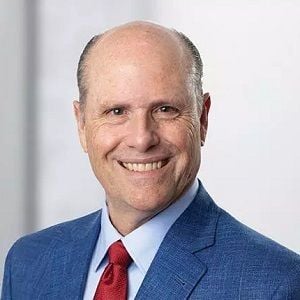
CSL CEO Paul Perreault (pictured) says the company has enough plasma to supply its needs through this year and the circumstances are unlikely to impact FY20 results, but FY21 on the other hand is uncertain.
"That doesn't mean there won't be any impact to next year's numbers. I think it'll be a bit bumpy as time goes on because we just don't know yet," Perreault said in a webcast this morning.
"In the month of March we started to see a dip in collections. We were still above collections from last year, but over the last two weeks we've seen a dip again, where collections have dropped below last year's levels for the same month."
The group has opened 32 plasma collection centres so far this financial year and expects to meet its target of opening another eight by the end of June, but that will still depend on resources in cities where launches are planned and how conditions fare at existing centres.
"Investors may recall that plasma collection activity during the global financial crisis of 2008 and there was also a bit of a slowdown," Perreault said.
"And although this is a completely different environment and a different issue, I do expect that we will see our donors return as they're able to feel like they're safe to come out of their homes and come back."
He says CSL's medical facilities have critical infrastructure designations, and it is able to provide staff, donors and key vendors with letters of safe passage so that operations can continue.
"This provides the mobility needed to travel to the centres," he said.
"Importantly, the document also extends to Mexican citizens allowing them to continue to cross the border of the United States and donate.
"This is not a silver bullet however. We still have to make sure that we're increasing our advertising promotional programs, to encourage new donors to come into a centre and donate plasma."
Tackling Covid-19
The company's chief scientific officer Andrew Cuthbertson also used the webcast to discuss the work CSL was doing to tackle Covid-19.
"Vaccines take time but they are very effective in a public health sense. We've chosen to partner with the University of Queensland and CEPI, an international epidemic preparedness organisation," Cuthbertson said.
"That relationship is very strong and we were already working closely to accelerate that program and we are in a position to manufacture at large scale for that program should be successful in clinical development."
But in the meantime, Cuthbertson emphasised another thing the world needed was treatment.
"Emil von Behring won the Nobel Prize in 1901 for describing a hyperimmune therapy for diphtheria, and CSL has the ability to make hyperimmune medicines," he said.
Cuthbertson said the basis of these medicines was to take antibodies from people who have recovered from Covid-19 infections, take the antibodies from their plasma, purify them into a potent medicine, and deliver that medicine to patients and subjects.
"We were very pleased to announce a an alliance in the Northern Hemisphere with Takeda and other plasma product development companies to a focused powerful hyperimmune effort across sites in the Northern Hemisphere.
"We have mounted a similar effort here in Australia with the Australian Red Cross and the Department of Health."
But the issue of hyperimmune therapy, which can be life-saving, is that you need access to convalescent donors.
"While our clinical colleagues around the world are very excited about producing hyperimmune medicine, it is limited to accessing safe convalescent donors who are willing to donate their plasma," he said.
"We very recently announced an exciting collaboration with a company called SAB Therapeutics based in the United States - they have wonderful technology for effectively transplanting the human antibody repertoire into cattle.
"In this case it's possible to vaccinate cattle, [and] harvest their hyperimmune serum which will contain human immunoglobulin."
Perreault added that in addition to increased requests for immunoglobulins recently, demand for influenza vaccines has also been strong as we enter into the vaccination period in the southern hemisphere.
"Covid-19 has also given rise to an increased demand for influenza vaccine, and unlike Covid-19 there is a vaccine available for influenza," he said.
"People are taking the precautionary measures to vaccinate. At the request of the Australian government we will be manufacturing Additional southern hemisphere influenza vaccine doses to meet the increased demand."
Updated at 11:31am AEST on 9 April 2020.
Preschool will be free for six months in NSW
 "Preschool will be free for six months in NSW")
Parents in New South Wales need not worry about paying preschool fees for the time being as the State Government has made the service free for six months.
As part of a $51 million funding package announced this morning, preschool fees have been waived to support parents during the Covid-19 crisis.
The State Government has also committed $82 million to support 260 council childcare centres that are not eligible for the JobKeeper payments.
"Parents are under a lot of pressure at the moment and it's crucial for them to continue to have access to childcare, particularly those working on the frontline during this crisis," says NSW Premier Gladys Berejiklian.
"This will also provide financial relief to families during the pandemic and ensure childcare centres remain viable into the future."
The funding will be available to 700 state funded community preschools and 38 mobile services that provide care to 45,000 three to five year olds.
Today's announcement follows the Federal Government's plan to make childcare free for working parents and carers.
The Federal Government announced last Thursday it will pay 50 per cent of the sector's fee revenue up to the existing hourly rate cap, which will be based on a point in time before parents started withdrawing their children in large numbers.
The sector would have received an estimated $1.3 billion if current revenues and subsidies had continued, but now that has been lifted to $1.6 billion.
Updated at 9:55AM AEST on 9 April 2020.
Mesoblast secures US stem cell treatment trial for Covid-19
 "Mesoblast secures US stem cell treatment trial for Covid-19")
Australian regenerative medicine company Mesoblast (ASX: MSB) is moving quickly on plans to repurpose its stem cell treatment to help fight Covid-19, securing a multi-center Phase
2/3 trial in the US.
Within days of gaining Investigational New Drug (IND) clearance from the US Food and Drug Administration (FDA) for its product remestemcel-L, Mesoblast has announced a partnership with the Cardiothoracic Surgical Trials Network (CTSN) for a trial with 240 patients.
The aim of the randomised, placebo-controlled trial is to test the treatment's impact on acute respiratory distress syndrome (ARDS) caused by Covid-19.
Using bone marrow aspirate from healthy donors, Mesoblast's proprietary technology is currently used to treat a condition called acute graft versus host disease (aGVHD), which many suffer after receiving a bone marrow transplant (BMT).
"Remestemcel-L has demonstrated safety, efficacy and significant survival benefit in aGVHD where inflammation is at the core, similar to ARDS from Covid-19," says Mesoblast chief medical officer Dr Fred Grossman.
Grossman notes the mortality rate in moderate to severe ARDS due to Covid-19 can be as high as 80 per cent.
"The mechanism of action of remestemcel-L demonstrated in aGVHD supports the evaluation of remestemcel-L to safely tame a similar cytokine storm in the lungs that leads to the high mortality in patients with COVID-19."
Mesoblast chief executive Dr Silviu Itescu is upbeat about the arrangement with CTSN, which was established by the United States National Institutes of Health's National Heart, Lung and Blood Institute (NHLBI) as a flexible platform for conducting collaborative trials.
"This significant public-private partnership is a prime example of how the combined resources of industry and government can be leveraged to evaluate in a most efficient and rigorous manner the potential of innovative therapies to make a meaningful difference to patient outcomes," says Itescu.
CTSN chairman Dr A. Marc Gillinov says the network is excited to work with Mesoblast to make a "real impact on the high mortality associated with Covid-19".
"This randomised controlled trial is in line with our mandate to rigorously evaluate novel therapies for public health imperatives," says Gillinov.
"The Covid-19 pandemic has resulted in very large numbers of people suffering with ARDS requiring ventilation in hospital intensive care units, with dismal outcomes, placing an enormous burden on the United States health system," adds Dr Annetine Gelijns, the Edmond A. Guggenheim Professor of Health Policy at the Icahn School of Medicine at Mount Sinai.
"We are committed to evaluating whether Mesoblast's mesenchymal stem cell product candidate for ARDS has the potential to make an impact on this unprecedented health crisis."
Updated at 9:34am AEST on 9 April 2020.
Parliament passes $130 billion JobKeeper stimulus package
 "Parliament passes $130 billion JobKeeper stimulus package")
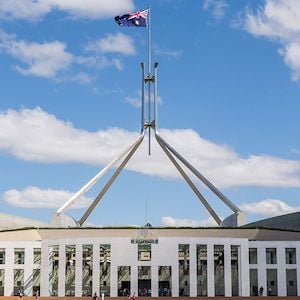
The largest stimulus spend in Australia's history has been passed by the Senate overnight, ensuring millions of Australian workers will be supported during the Covid-19 crisis.
Worth $130 billion the package will see around 6,000,000 workers that have been stood down by their employers eligible for economic relief.
The package comes in the form of a $1,500 fortnightly payment to be distributed by employers to employees.
Those eligible include full-time workers, part-time workers, sole traders, and casuals who have worked with their current employer for 12 months or more.
Since the program was announced more than 730,000 business have registered for JobKeeper.
Eligible businesses include those that can demonstrate a minimum of 30 per cent in turnover downturn because of Covid-19. For businesses turning over more than $1 billion per annum that threshold is set at 50 per cent in revenue downturn.
The passing of the legislation through both the Lower and Upper houses of Parliament is a significant display of bipartisanship, with leader of the opposition Anthony Albanese ensuring the Bill would be passed by his party.
Despite the support for the Bill, the opposition did raise concerns about the package, saying it would leave behind more than one million casual employees.
Albanese ultimately said he would "never let the perfect be the enemy of the good".
"And this is good legislation, it will make a difference to people as a result of what we do in this Parliament here."
The passage of the JobKeeper legislation comes as Australia confirms 6,024 cases of Covid-19.
Of those cases 2,773 are in NSW, 1212 in VIC, 943 in QLD, 481 in WA, 420 in SA, 107 in TAS, 99 in the ACT, and 28 in the NT.
Updated at 9:20am AEST on 9 April 2020.
JobKeeper legislation passes the House of Representatives
 "JobKeeper legislation passes the House of Representatives")
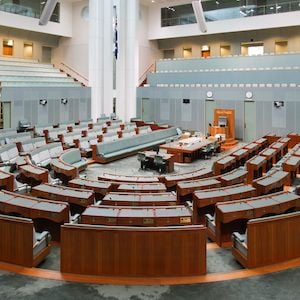
The Federal Government's landmark $130 billion JobKeeper stimulus package has been passed in the Lower House of Parliament.
The Bill will now be handed to the Federal Senate where it is also likely to be passed.
The JobKeeper legislation will guarantee around 6,000,000 Australians out of work because of Covid-19 will receive a fortnightly payment of $1,500.
During today's proceedings in the House of Representatives Opposition Leader Anthony Albanese and Shadow Treasurer Jim Chalmers criticised the Government's proposed Bill for excluding the many Australians left behind by the JobKeeper program.
Namely, the Labor party were concerned that as many as 1.1 million casual employees who had not been working for their current employer for more than 12 months would be left out of the package.
"We want the government to get the policy settings right, our nation simply cannot afford the alternative," said Albanese.
The JobKeeper payments will not begin flowing into employees' pockets until the beginning of May 2020.
Updated at 4:59PM AEST on 8 April 2020.
Zip Co sales rise despite Covid-19 challenges
 "Zip Co sales rise despite Covid-19 challenges")
With thousands of retail stores closed and job losses putting pressure on consumer spending, shares in buy-now-pay-later (BNPL) companies have been battered over the past six months.
But Zip Co (ASX: Z1P) has escaped the March quarter relatively unscathed as far as performance is concerned, against a backdrop of sustained demand despite uncertainty surrounding the virus.
The group's revenue jumped 96 per cent year-on-year in the quarter, with transaction volumes in Australia and New Zealand reaching $2.1 billion.
In April, trading month-to-date for the first seven days of the month was up 6 per cent and was also 15 per cent higher than in February.
The group believes there are a few factors playing in its favour to ride out the crisis, including exposure to online sales and recession-proof sectors including bills, home improvements and office supplies, electronics and gaming, whitegoods and furniture.
Zip Co notes trading in these cateogires has offset a reduction in sales across fashion and apparel, travel and leisure, personal care and hospitality.
The average age of Zip Co customers is 35, representing a slightly older, more financially savvy customer segment that has gone through a fully underwritten application.
Nonetheless, the fast-evolving changes to the economy have led Zip Co to undertake cost-cutting measures to position the business for the possibility of a protracted downturn.
In the last week the company has reduced its staff numbers by 78, representing around 20 per cent of its full-time workforce, thus cutting costs by $8 million.
Planned expenditures have been slashed to $1.2 million for Q4, compared to $3.2 million in Q3.
The group will also delay its UK launch date and put on hold any team increases on the ground. The board, executive team and senior leaders have taken a voluntary 20% reduction in salaries.
Zip Co estimates a total liquidity to meet its corporate and general expense needs of around $30 million, which in combination with the cost-cutting measures gives it "sufficient liquidity to support the growth of the business".
Managing director and CEO Larry Diamond (pictured) says the virus has presented an unexpected and significant challenge to many in the community, and the company's priority remains ensuring the safety of staff and supporting its customers and retail partners.
"Despite the economic impact of Covid-19, the Zip ANZ business continues to perform strongly, with healthy customer growth, transaction volume, and a strong pipeline of new partners in the March quarter," he says.
"Zip is well funded and uniquely positioned to trade through the current environment, given our product differentiation, strong proprietary credit platform, healthy repayment profiles and penetration into defensive, everyday spend categories.
"We continue to believe the credit card model is broken with customers in need of flexible, responsible, interest free alternatives."
The group applauds the government's "bold and decisive action" in response to the coronavirus to keep Australians employed, small business supported, and ensuring a strong banking sector.
"Zip would also like to encourage the Government to broaden the eligibility of the financial sector-specific packages to include Fintechs, who add a vital, competitive and innovative segment to the market," he says.
Updated at 3:03pm AEST on 8 April 2020.
Advertisement
Latest News
From $13,000 to $20 million: how a PCOS diagnosis and a pair of scissors built Xali Organics
Inspired by a medical diagnosis and driven by innovative marketing,...
Cedar Woods secures $63.4m in new land acquisitions as record presales underpin pipeline push
Perth-headquartered residential developer Cedar Woods Properties (A...
Australia's long-term beer decline hits home as Lion plans to close Boag's brewery in Launceston
Australia's decades-long decline in beer consumption has claime...
Downer EDI seals $310m Transurban contract to maintain Sydney motorway network
Infrastructure services group Downer EDI (ASX: DOW) has secured con...
Propel Funeral Partners expands New Zealand footprint with trio of acquisitions worth $9.1m
Sydney-based death care provider Propel Funeral Partners (ASX: PFP)...
Advertisement