Advertisement
Staying informed is more important than ever as the situation unfolds with Covid-19. Stay tuned here for our live updates, and be sure to let us know what your business is doing to face this unprecedented challenge.
Covid-19 News Updates
NSW Government announces $10,000 fast relief for small businesses
 "NSW Government announces $10,000 fast relief for small businesses")
Small businesses impacted by Covid-19 shutdowns will receive grants of up to $10,000 under a new assistance scheme announced by the NSW Government this morning.
The State Government will add $750 million into the Small Business Support Fund as part of a third wave of stimulus measures.
The grants will go to small businesses like restaurants, venues, gyms and bars that have been forced to shut because of social distancing measures imposed by the Federal Government.
To be eligible businesses will need to:
- Have between 1-19 employees and a turnover of more than $75,000;
- Have a payroll below the NSW Government 2019-20 payroll tax threshold of $900,000;
- Have an Australian Business Number as at 1 March 2020, be based in NSW and
- employ staff as at 1 March 2020;
- Be highly impacted by the Public Health (COVID-19 Restrictions on Gathering and
- Movement) Order 2020 issued on 30 March 2020;
- Use the funding for unavoidable business costs such as utilities, overheads, legal
- costs and financial advice;
Applications will be available within a fortnight and remain open until 1 June 2020.
The fund mirrors the approach taken by the NSW Government in the wake of the Australian bushfire crisis earlier this year which provided $42 million to 4,200 businesses within the first ten days of launching.
"This is about getting cash into small businesses when they are struggling right now in the face of an unprecedented situation," says NSW Premier Gladys Berejiklian.
"These grants will provide a big boost, and we will make the application process easy to ensure small businesses can receive some cash-flow as soon as possible to meet pressing needs."
The $750 million grant program adds to a suite of stimulus initiatives announced by the NSW Government over the past fortnight including:
- More than $5 billion in payroll tax waivers, deferrals and other tax deferrals;
- A $1 billion Working for NSW fund to create jobs;
- $700 million in additional funding for the health system;
- $250 million to bring forward capital works and maintenance on public assets;
- $500 million to bring forward capital works, maintenance and shovel ready
- infrastructure projects;
- $80 million to waive a range of fees and charges;
- $80 million to help the vulnerable through a range of measures.
The measures come as Australia records 5,315 confirmed cases of Covid-19.
At the time of writing there are 179 new confirmed cases of the virus. Yesterday there were 272 new confirmed cases, down from 303 on Wednesday.
NSW has the bulk of the total cases with 2,389 confirmed Covid-19 results, followed by VIC with 1,085, QLD with 873, WA with 400, SA with 385, the ACT with 87, TAS with 74 and the NT with 22.
Updated at 11:33AM AEDT on 3 April 2020.
Servcorp stands down staff, suspends market guidance
 "Servcorp stands down staff, suspends market guidance")
More than 100 team members at workspace provider Servcorp have been stood down as the company comes to terms with the Covid-19 economic reality.
In addition to the stand downs, the majority of remaining team members have agreed to reduce their salary by 20 per cent.
This includes non-executive directors who have also agreed to a reduction of fees by 20 per cent, while longstanding CEO Alf Moufarrige will see a 50 per cent pay cut.
Given the current uncertainty and market volatility, Servcorp has decided to suspend current guidance.
The group has also eliminated all discretionary spending to keep operational costs to a minimum.
"We are working through the exact impacts on our global footprint but we anticipate, and are planning for, a significant but temporary reduction in serviced office occupancy and coworking utilisation, with some offset from our virtual office products," says Servcorp.
"Our priority in any crisis is the health and safety of our people, and that of our clients who utilise our locations globally."
The company says it is working with landlords, teams, and clients to minimise costs across the business.
Servcorp's Landlords so far are favourably considering rent reductions to mitigate to some degree rising vacancies and small business' inability to fulfil their obligations under lease agreements.
The company has no external debt, but despite this Servcorp has suspended all capital expenditure programs at this time.
"Servcorp has proven, over more than forty years of its existence, to be a robust business, and this remains the circumstance today," says Servcorp.
"We are confident that Servcorp will emerge from the Covid-19 crisis in a financially sound position and full of determination."
Updated at 10:06AM AEDT on 3 April 2020.
Retail Food Group frustrated by lack of landlord compassion
 "Retail Food Group frustrated by lack of landlord compassion")
Retail Food Group (ASX: RFG) has come out swinging against its commercial landlords claiming an inherent power imbalance makes the process of negotiating rent relief impossible.
According to RFG executive chairman Peter George the company is frustrated by the lack of progress when dealing with landlords and the unwillingness he has seen from lessors to provide meaningful assistance.
This is despite the Federal Government encouraging landlords and tenants to come to agreements and a national Code of Conduct crafted by The National Retail Association (NRA), Australian Retailers Association (ARA), the Pharmacy Guild of Australia (PGA) and the Shopping Centre Council of Australia (SCCA) intended to give landlords and tenants some guidance.
"The National Cabinet has encouraged landlords and tenants to engage and agree on commercial arrangements that can see both through this crisis, and has provided a list of principles which should underpin those discussions," says George.
"Whilst the key elements of this guidance are conceptually sound, they fail in terms of practical application due to the significant power imbalance which exists in favour of landlords. In reality, it is our experience that tenants have very limited bargaining power to drive meaningful and timely outcomes in these circumstances."
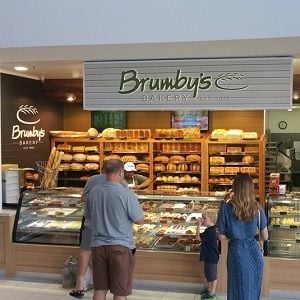
Further, the chairman says landlords simply deferring payments of rent for RFG's franchisees, who run food and beverage outlets like Gloria Jean's, Brumby's, Pizza Capers and more, will only serve to delay a significant financial impact.
"It is abundantly clear that the reduction in foot traffic attributable to government restrictions intended to combat the coronavirus has materially reduced the benefit otherwise derived by RFG and its franchisees from their leases within shopping centres," says George.
"Deferral of rent in these circumstances is simply unacceptable, and will achieve nothing for our franchise network other than to delay the adverse financial consequences arising from the current situation."
Ultimately, George believes the Federal Government must step in to address the considerable uncertainty faced by retail tenants nationwide.
"Where the government's objective is to hibernate business so that it is able to contribute to restarting the economy and preserve jobs, RFG considers that robust and urgent government intervention is necessary to address fixed cost bases such as occupancy costs, and limit the uncertainty that is necessarily influencing current decision making," says George.
The plea for government intervention comes as Retail Food Group announced around 90 domestic franchisees have chosen to temporarily close their stores.
The main impact on franchisees has come from a lack of foot traffic in stores as the population dutifully self-isolates.
The situation is most evident in shopping centres where RFG franchisees have experienced 50 per cent reduction in customer count.
Ultimately franchisees have seen a consistent and increasing decline in revenues compared to this time last year and have shut up shop because trading conditions have become untenable.
Internationally temporary closures because of government restrictions have increased to 481, with a further 141 outlets limited to take-out orders. Just 51 outlets continue to operate normally but are subject to increasingly difficult trading conditions.
RFG has implemented a number of measures to support franchisees and preserve the long-term sustainability of its network.
"The steps we have taken differ by brand system, are directed at those franchisees most in need, and include the waiver or reduction of certain fixed and percentage based fees, waiver of fixed royalty and or marketing levy 'floors' so that these are calculated solely by reference to a percentage of, albeit declining, sales, and the deferment of outstanding debt and RFG provided finance," says George.
The trading update comes just days after the group announced it would be standing down or reducing the working hours of the majority of its staff.
RFG employs around 500 people directly, but there are thousands of staff employed by its franchisees around the country.
The company does not actively track the total number of staff employed by the franchisees themselves. However, in a submission to the Franchising Code of Conduct Inquiry, which released its findings in March last year, the company claimed the network employed approximately 15,000 team members across the country.
Shares in RFG are down 11.36 per cent to $0.04 per share at 3:28PM AEDT.
Updated at 4:55PM AEDT on 2 April 2020.
Free childcare for working families
 "Free childcare for working families")
The Federal Government has today announced an extra $300 million in subsidies to allow free childcare for working parents and carers, adding to existing support schemes and $1 billion from the JobSeeker package to assist wages in the sector.
Normally the fees paid to childcare centres are split between the Commonwealth Childcare Subsidy (CCS) and parents.
But today the government has announced it will pay 50 per cent of the sector's fee revenue up to the existing hourly rate cap, which will be based on a point in time before parents started withdrawing their children in large numbers.
The sector would have received an estimated $1.3 billion if current revenues and subsidies had continued, but now that has been lifted to $1.6 billion.
Childcare eligibility will no longer be means tested and the new measures are expected to assist one million families Australia-wide, not just with traditional childcare and early learning services but also after-school care and vacation care.
The initiative is designed to ensure anyone with a job can continue to work without needing a trade-off with their family's wellbeing, while also ensuring doors remain open for the sector's 13,000 child care and early learning services
"Relief is on its way for around a million Australian families and thousands of early learning educators and carers," Prime Minister Scott Morrison said, emphasising we would likely be dealing with coronavirus-related restrictions and challenges for the next six months.
"These services are vital for so many parents so they can provide for their family, and children need as much familiarity and continuity as we can help provide at this unsettling time.
"Priority will be given to working parents, vulnerable and disadvantaged children that need early education more than ever and parents with pre-existing enrolments."
The new system will see payments start flowing at the end of next week. The system will be reviewed after one month, with an extension to be considered after three months. The payments will be paid in lieu of the Child Care (CCS) and Additional Child Care Subsidy payments.
Minister for Education Dan Tehan said the assistance package would ensure services remained open to serve families that needed to work and support vulnerable children.
"The Federal Government is working with states and territories and the sector to minimise the impact of coronavirus," Tehan said.
"This package will help support families during these difficult times, particularly those who have lost their job and are doing it tough.
He said until payments arrive the government would be allowing services to waive gap fees for families who keep their children home, and families will be able to use the 20 extra absence days the government has funded for coronavirus-related reasons without giving up their place in a child care centre.
"If you have terminated your enrolment since 17 February, then I encourage you to get back in contact with your centre and re-start your arrangements," he said.
"Re-starting your enrolment will not require you to send your child to child care and it certainly won't require you to pay a gap fee. Re-starting your enrolment will, however, hold your place for that point in time when things start to normalise, and you are ready to take your child back to their centre.
"We will also make payments of higher amounts available in exceptional circumstances, such as where greater funding is required to meet the needs of emergency workers or vulnerable children."
There is a range of government assistance available to early learning and child care operators. Most services operate as small businesses, with 79.9 per cent of providers operating a single service, while 95.9 per cent operating fewer than five. The available assistance includes:
- The $130 billion JobKeeper payment;
- A cash flow boost of at least $20,000 and up to $100,000 with payments equal to 100 per cent of businesses' and not-for-profits' salary and wages withheld; and
- Loan guarantees so businesses can get working capital.
National Cabinet is also considering short-term intervention for commercial tenancy arrangements.
Updated at 1:59pm AEDT on 2 April 2020.
NSW social distancing powers will last until end of June
 "NSW social distancing powers will last until end of June")
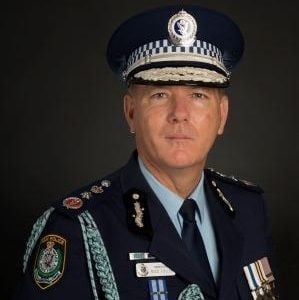
The battle to flatten the Covid-19 infection curve is far from over, with NSW Police Commissioner Mick Fuller (pictured) announcing the state's strict social distancing measures will be in place for 90 days.
The commissioner told a press conference he won't be seeking an extension at the end of that period and "hopefully people will have gotten the message by then".
Fuller noted there had been three tickets issued in the previous 24 hours relation to isolation.
"Four men in a park drinking alcohol [is] not exercise. Three of the men left, one refused to go, he got a $1,000 ticket. I think it's entirely appropriate," he said.
"I'm reviewing all of these tickets personally, which would never happen again for any other time, and I'll continue to do that and if I think it's unreasonable it will be withdrawn immediately and we will make personal contact.
"But police are out there, we're doing our best to protect the community in a very different way than what we normally do."
He called on the community to work with police and understand they are trying to slow the spread of the virus by minimising unnecessary contact.
"The safest place is at home in isolation, and of course there are lots of carve-outs for people who need to work and we want you to go to work," he said.
"There's been a lot of questions about exercise and I get it, we want people to be able to say fit and physically and psychologically healthy, and we're trying to make sensible decisions in relation to that.
"But of course, if I said it's OK to sit on a park bench then everyone's going to go to the park, and we're going to end up back where we started."
The commissioner explained 500 more people were expected to arrive in the state from overseas today - more than expected, and including military personnel would would go into isolation just like all other arrivals.
There were 116 new cases of Covid-19 reported in NSW in the past 24 hours, taking the state total to 2,298.
Nationwide there are now 5,103 confirmed cases of the virus (NSW 2,298; VIC 1,036; QLD 835; WA 392; SA 367; ACT 84; TAS 72; and NT 19) and there have been 23 deaths.
Yesterday the new national case count was marginally lower at 303, and it is already at 239 today before lunchtime with several parts of the country yet to issue their updated numbers.
Updated at 11:38am AEDT on 2 April 2020.
Radio Rentals to close all stores
 "Radio Rentals to close all stores")
All 62 Radio Rentals stores nationally will close tomorrow until further notice in light of Covid-19 restrictions.
Thorn Group (ASX: TGA), Radio Rentals' parent company, says its focus is on protecting the health, safety and welfare of customers, team members, and the greater public.
"The decision to close the stores is a result of government's moves to limit the spread of the Covid-19 virus across Australia," says Thorn Group.
Radio Rentals' online store will continue to operate through the Covid-19 disruptions with the support of the company's back office customer service staff.
Shares in Thorn Group are down 11.54 per cent to $0.05 per share at 10:40am AEDT.
Updated at 11:01am AEDT on 2 April 2020.
CSIRO starts pre-clinical trials for potential Covid-19 vaccines
 "CSIRO starts pre-clinical trials for potential Covid-19 vaccines")
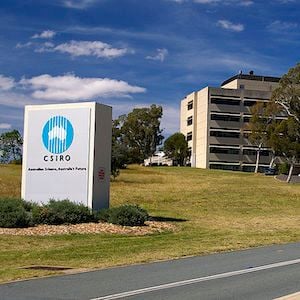
The first stage of testing Covid-19 vaccine candidates has commenced at CSIRO's high-containment biosecurity facility in Geelong today.
The testing, which is expected to take around three months, is being conducted in partnership with the Coalition for Epidemic Preparedness Innovations (CEPI) - a group that aims to derail epidemics by speeding up the development of vaccines.
In consultation with the World Health Organisation (WHO), CEPI has identified vaccine candidates from the University of Oxford and Inovio Pharmaceuticals to undergo the first pre-clinical trials at CSIRO, with further candidates likely to follow.
"Beginning vaccine candidate testing at CSIRO is a critical milestone in the fight against COVID-19, made possible by collaboration both within Australia and across the globe," says CSIRO chief executive Dr Larry Marshall.
"CSIRO researchers are working around-the-clock to combat this disease which is affecting so many whether it's at the Australian Animal Health Laboratory (AAHL) or at our state-of-the-art biologics manufacturing facility we will keep working until this viral enemy is defeated."
While the focus of the testing program will focus on how effective the vaccines are against the coronavirus the CSIRO is also investigating the best way to administer the vaccine for better protection, whether that be an injection or via a nasal spray.
The CSIRO's work on Covid-19 goes back all the way to January when CEPI engaged the Australian organisation to start researching the virus SARS CoV-2 which causes the disease Covid-19.
Director of AAHL and the leader of the CSIRO's Covid-19 virus and vaccine program Professor Trevor Drew says the team is now in the best position to begin vaccine trials.
"We have been studying SARS CoV-2 since January and getting ready to test the first vaccine candidates as soon as they are available," says Professor Drew.
"We are carefully balancing operating at speed with the critical need for safety in response to this global public health emergency."
CSIRO's COVID-19 research so far:
- CSIRO was the first research organisation outside of China to generate sufficient stock of the virus using the virus strain isolated by the Doherty Institute to enable pre-clinical studies and research on COVID-19.
- CSIRO successfully established a biological model in February 2020, the first in the world to confirm ferrets react to SARS-CoV-2. Researchers have quickly progressed to studying the course of infection in the animals a crucial step in understanding if a vaccine will work.
- CSIRO researchers confirmed, after studying SARS CoV-2's genomic sequence that the virus is presently changing into a number of distinct 'clusters' and are now starting to look at how this may also impact on the development of a vaccine.
Updated at 10:20AM AEDT on 2 April 2020.
Profiteers could face jail under new Government regulations
 "Profiteers could face jail under new Government regulations")
The Federal Government has introduced a raft of measures aimed at dissuading the export and price gouging of items considered "essential" in the fight against Covid-19.
Minister for Home Affairs Peter Dutton says these practices needs to stop, and the Government has stepped in by introducing tough penalties for those attempting to rip off Australians in need.
"We have acted decisively to address concerns about the hoarding and profiteering of essential goods, such as personal protective gear, disinfectants and other medical products and have introduced tough penalties for price gouging," says Dutton.
"These temporary measures will ensure that essential goods are distributed to those with the highest need, such as vulnerable communities, front line health workers and law enforcement, while safeguarding legitimate trade."
As reported by The Daily Telegraph, changes to the Customs (Prohibited Exports) Regulations 1958 include potential jail sentences of up to five years for those caught exporting essential goods or selling these goods for exorbitant prices.
Minister for Health Greg Hunt has also made a determination under the Biosecurity Act 2015 to allow the Border Force to add essential goods already in their custody to the National Medical Stockpile.
As the practice of price gouging becomes a worry for the Government, Minister Hunt has introduced a requirement that will crack down on those attempting to extort Australian consumers.
The Health Minister's requirement prevents a person who has purchased essential goods at retail on or after 30 January 2020, and for the duration of the human biosecurity emergency period, from selling or offering to sell these goods for more than 120 per cent of the price for which they were purchased.
This measure will not apply to manufacturers or legitimate business activities, ensuring that it does not apply to key suppliers that are vital to maintaining Australia's supply chains.
Where individuals have been found to be engaging in 'price gouging', they will also be required to surrender the essential goods to the Australian Federal Police for provision to the National Medical Stockpile, or destruction if the goods are defective.
"These measures have become necessary because we have seen a small number of individuals engaging in the bulk purchasing of essential goods from retail outlets in Australia, with the intent of profiteering from exploitative exporting and price gouging," says Dutton.
"These goods are essential to preventing the spread of COVID-19."
Updated at 4:32PM AEDT on 1 April 2020.
Grounded Webjet to raise $275 million
 "Grounded Webjet to raise $275 million")
Update (2 April): The institutional component of the offer was oversubscribed raising $231 million. When the retail component of the offer is completed, Webjet is expected to have raised a total of $346 million.
Travel company Webjet (ASX: WEB) hopes a $275 million equity raise will help the group survive the next few months as Covid-19 continues to disrupt tourism globally.
Webjet says proceeds of the raise will be used to strengthen its balance sheet and are expected to be enough to cover operating costs and capital expenditure through to the end of 2020.
The raise, at an offer price of $1.70 per new share (a discount of 32.2 per cent), includes a fully underwritten placement to raise $101 million and a partially underwritten entitlement offer to raise between $174 million and $231 million.
Approximately 195.1 million new shares will be issued under the offer, more than doubling the amount of shares currently issued in the company (135.6 million shares).
New shares will rank equally with existing shares but will not be entitled to the dividend for the six months ended 31 December 2019.
"This equity raising importantly positions Webjet to weather the severe disruption caused by COVID-19 to the travel industry," says Webjet managing director John Guscic.
"Equally significantly, travel is a core part of life and as the travel landscape recovers, this equity will help the company emerge in a strong position relative to its competitors."
To manage the near-term financial impact of Covid-19 Webjet has taken a number of steps to cut costs including reducing board and executive remuneration, deferring the 1H20 dividend payment, making over 440 staff redundant, reducing the working week to four days, and freezing all non-essential spending (including travel, hiring, consultants, contractors, etc).
These initiatives are expected to result in cash flow savings of around $13 million per month, with further cost reduction plans available if the Covid-19 situation drags on longer than six months.
Post-coronavirus Webjet believes its WebBeds hotel booking platform will be in a position to consolidate a larger share of the market should smaller competitors come under financial strain.
As for its main business, the flight booking platform, Webjet says it is well placed to capture the pick-up in travel activity once Covid-19 passes.
"When travel activity begins to normalise, it is expected to occur at various points in time and in different regions due to differences in timing and severity of the impact of COVID-19 in each region," says Webjet.
"As other regions are reaching their peak rates of infection, China is slowly beginning to see early signs of normalization hotel bookings in the week to 1 March 2020 increased 40 per cent over the previous week, while peak daily bookings for domestic flights were up 230 per cent from the lowest level recorded in February."
The Covid-19 crisis has already forced Webjet to withdraw its earnings guidance of between $147 million to $165 million.
Updated at 3:16PM AEDT on 1 April 2020.
Twiggy Forrest's foundation commits $160m for medical supplies
 "Twiggy Forrest's foundation commits $160m for medical supplies")
Mining magnate Andrew 'Twiggy' Forrest's Minderoo Foundation will donate up to $160 million to address Australia's extreme shortage of personal protective equipment (PPE), with the first plane loaded with supplies on its way to Perth today.
The foundation has joined forces with Fortescue Metals Group (FMG) - which is 30 per cent owned by Forrest's Minderoo Group - to procure and distribute the life-saving medical supplies and equipment.
The first flight was due to depart from Shanghai today, with two more flights are due to arrive on Friday and Saturday this week. Together they are expected to bring more than 600 cubic meters of supplies with a total weight of more tha 90 tonnes.
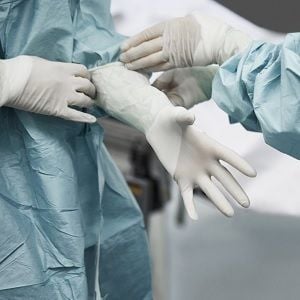
This includes more than one million N95-equivalent face masks, 400,000 surgical masks, 2.3 million medical-grade gloves, 100,000 nasal swabs, 200,000 medical coveralls, 10,000 medical goggles, 5,000 touch-less thermometers and over 33 ICU grade ventilators.
Forrest says Fortescue's deep and enduring relationships with China are what allowed the foundation to supercharge procurement efforts, on behalf of and in collaboration with the Western Australian and Federal Governments.
"Unprecedented times cannot be met with a precedented response," says Forrest.
"The trusted relationships, procurement expertise and logistics knowledge of the FMG and Minderoo Foundation teams, have been fundamental in rapidly securing this vital equipment."
He says the country is facing a threat not seen in our lifetimes.
"China's Ambassador to Australia, His Excellency Ambassador Cheng, and the Chinese people have been great mates to Australia," says Forrest.
"They are now doing all they can to help us in our hour of need. I thank the People's Republic of China for protecting our critical medical orders in the face of intense pressure from other nations.
"Without this, there would be no plane loads of equipment that we celebrate today for our first responders and suffering Australians."
Minderoo Foundation co-chair Nicola Forrest says the equitable distribution of supplies will be coordinated with WA Health across key stakeholders in primary and aged care, private and public hospital systems, and other front-line services based on the areas of greatest need.
"We are working with the WA Government, the Australian Medical Association (AMA), WA's private hospitals, National COVID-19 Coordination Commission, National Incident Room and Aspen Medical to determine how we can best meet projected surges in demand for critical supplies," she says.
WA Health Minister Roger Cook has thanked Minderoo Foundation and Fortescue for their "extraordinary support" in finding these "incredibly difficult to obtain supplies" for WA's broader health system, other stakeholders and frontline staff.
"To allow this generous commitment to continue to scale, the WA Government will reimburse Minderoo Foundation at cost for the supplies purchased so that Minderoo Foundation can further leverage its incredible commitment of up to $160 million over the coming weeks and continue to source these critical medical supplies for Australia," says Cook.
Updated at 3:46pm AEDT on 1 April 2020.
Advertisement
Latest News
From $13,000 to $20 million: how a PCOS diagnosis and a pair of scissors built Xali Organics
Inspired by a medical diagnosis and driven by innovative marketing,...
Cedar Woods secures $63.4m in new land acquisitions as record presales underpin pipeline push
Perth-headquartered residential developer Cedar Woods Properties (A...
Australia's long-term beer decline hits home as Lion plans to close Boag's brewery in Launceston
Australia's decades-long decline in beer consumption has claime...
Downer EDI seals $310m Transurban contract to maintain Sydney motorway network
Infrastructure services group Downer EDI (ASX: DOW) has secured con...
Propel Funeral Partners expands New Zealand footprint with trio of acquisitions worth $9.1m
Sydney-based death care provider Propel Funeral Partners (ASX: PFP)...
Advertisement