Advertisement
Staying informed is more important than ever as the situation unfolds with Covid-19. Stay tuned here for our live updates, and be sure to let us know what your business is doing to face this unprecedented challenge.
Covid-19 News Updates
Qantas to raise $1.9 billion for COVID-19 recovery, 6,000 staff made redundant
 "Qantas to raise $1.9 billion for COVID-19 recovery, 6,000 staff made redundant")
Airline Qantas (ASX: QAN) will raise $1.9 billion in equity to accelerate recovery as it taxis onto its COVID-19 recovery plan.
Qantas' three-year recovery plan includes making 6,000 staff redundant, grounding 100 aircraft for at least a year, and immediately retiring Qantas' six remaining 747s.
Of the $1.9 billion, approximately $1.4 billion will come from a fully underwritten institutional placement and up to $500 million from a non-underwritten share purchase plan.
The issue price for new shares under the placement will be $3.65, representing a 12.9 per cent discount to the last traded price on 24 June.
Approximately 372.7 million new fully paid ordinary shares will be issued under the placement, representing a 25 per cent increase to total shares on issue.
Following the placement the company's available liquidity is expected to be $4.6 billion, including a $1 billion undrawn facility.
As at 31 May 2020 pro forma net debt is expected to be $4.7 billion with no major debt maturities until June 2021.
Most of the funds will be used for working capital requirements, but at the same time 6,000 roles will be made redundant.
Of the group's 29,000 people, around 8,000 are expected to have returned to work by the end of July this year.
The company anticipates this will increase to around 15,000 at the end of the calendar year and will reach 21,000 active employees by June 2022.
In the meantime, 15,000 staff will continue to be stood down, particularly those associated with Qantas' international operations.
 "Adapting to this new reality means some very painful decisions," says Qantas CEO Alan Joyce (pictured).
"The job losses we're announcing today are confronting. So is the fact thousands more of our people on stand down will face a long interruption to their airline careers until this work returns."
But there is a positive sign of recovery on the horizon: Joyce says the airline expects to return to 40 per cent of Qantas' pre-crisis domestic flying during July.
"But we'll be living with COVID for some time and recent events show we can't take a low infection rate for granted," says Joyce.
"That means all airlines - including Qantas - must take action now. We have to position ourselves for seveal years where revenues will be much lower. And that means becoming a smaller airline in the short term."
$15 billion cost savings
Ultimately, the company expects costs to be reduced by $15 billion during the coming three-year period of expected lower activity, followed by $1 billion in ongoing cost savings per annum from FY23.
Joyce says the airline entered this crisis in a better position than most airlines with "some of the best prospects for recovery, especially in the domestic market, but it will take years before international flying returns to what it was."
"It's clear that international travel is likely to be stalled for a long time. IATA - the peak body for airlines - says it will take more than three years for global travel to return to 2019 levels.
"Despite the hard choices we're making today, we're fundamentally optimistic about the future. Almost two-thirds of our pre-crisis earnings came from the domestic market, which is likely to recover fastest particularly as the state borders prepare to open," says Joyce.
In comparison to its main Australian-based rival Virgin Australia (ASX: VAH) Qantas has fared well. The news of the $1.9 billion equity raising comes in conjunction with Virgin finalising the sale of the airline following its collapse into administration.
Bain Capital and Richard Branson-linked advisory firm Cyrus Capital Partners have been shortlisted to acquire the ailing VAH, with a final decision to be made on Tuesday 30 June.
Qantas has also been hit with an asset impairment charge of between $1.25 billion and $1.4 billion in FY20 as a result of its 12 Airbus A380 aircraft being grounded.
These Airbus assets will remain idle for the foreseeable future, representing a significant percentage of their remaining life.
As a result, the carrying value of the A380 fleet, spare engines and spare parts will be written down to their fair value, resulting in the impairment charge.
The airline has also provided a FY20 financial performance update today, during which the airline saw a significant reduction in the second half of the financial year.
After reporting a strong underlying profit before tax of $771 million in the first half, Qantas now expects to report a full year result between breakeven and a small underlying profit before tax as the financial year comes to a close.
The group's loyalty business will make the largest positive contribution to this result, with only a 5 per cent to 10 per cent reduction in earnings compared to FY19.
"The program continues to see strong levels of engagement, with a range of initiatives planned over the next six months to maintain and improve its value to members and partners," says Qantas.
Because of COVID-19 disruption Qantas deferred its interim dividend on 19 March.
The airline says the uncertainty has now "crystallised" into a significant detrimental impact on the company's earnings and cash position.
Accordingly the Qantas board has decided to revoke the interim dividend, avoiding the outflow of $201 million of cash.
Updated at 9:03am on 25 June 2020.
Mirvac retail property value drops $349m
 "Mirvac retail property value drops $349m")
The impacts of social distancing requirements due to COVID-19 have taken their toll on real estate group Mirvac (ASX: MGR), slashing the value of its retail property portfolio by $349 million.
The preliminary unaudited devaluation represents a 9.9 per cent drop for the group's second-largest property asset class.
In contrast Mirvac's office and industrial property valuations lifted slightly in the half, with the former notching a large jump in the six months to December.
For the full-year the office portfolio looks to be up 3.4 per cent, or $231 million, while industrial asset values have risen by 3.6 per cent or $33 million.
Overall the reduction is tracking at around 2.8 per cent less than the December 31 book value of $11.6 billion.
"COVID-19 has transformed the world in the space of a few short months. No sector has been untouched by the health and economic crises that have developed," says Mirvac CEO and managing director Susan Lloyd-Hurwitz.
"These are unprecedented times and Mirvac is taking necessary measures to address these challenges including appropriate capital management.
"Mirvac's purpose and unique asset creation capability positions the group to capture opportunities and generate value throughout the recovery process and beyond."
Updated at 12:51pm AEST on 24 June 2020.
Village Roadshow to reopen theme parks, cinemas
 "Village Roadshow to reopen theme parks, cinemas")
Village Roadshow (ASX: VRL) will start opening some Queensland theme parks on Friday, while its cinema circuit in Tasmania is already open with Victorian regional cinemas to follow suit later this week.
The company's theme parks Warner Bros. Movie World, Sea World, Wet'n'Wild and Paradise Country have all had their COVID Safe plans approved by the Queensland Government and are able to reopen at 50 per cent capacity.
"Sea World and Paradise Country will reopen on Friday 26 June, Australian Outback Spectacular on Friday 3 July and Warner Bros. Movie World and Wet'n'Wild on Wednesday 15 July," the group said today, adding Topgolf Gold Coast reopened on Friday, 12 June.
It has now been just over three months since Village Roadshow announced the closure of its theme parks in respond to COVID-19, and earlier this month the Queensland Government pledged millions of dollars in funding to support the company along with Ardent Leisure (ASX: ALG) and Currumbin Wildlife Sanctuary.
Village Roadshow has also announced it aims to reopen its metropolitan Melbourne cinemas by late July if coronavirus restrictions allow it.
"VRL's cinema circuit in other States, including those operated by VRL's partner Event, are expected to reopen in early July," the company said.
"VRL's businesses will operate under applicable operating restrictions and social distancing policies, ensuring the safety of patrons, employees and the community."
Updated at 11:43am AEST on 24 June 2020.
Crown Perth to reopen on Saturday
 "Crown Perth to reopen on Saturday")
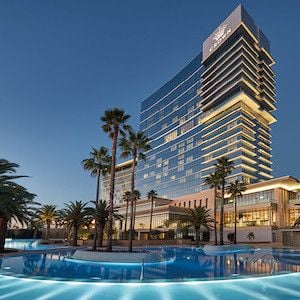
The easing of COVID-19 restrictions in Western Australia will allow Crown Perth to recommence operations from Saturday 27 June.
With effect from this weekend Crown will restart its casino and gaming floor food and beverage outlets under temporary restrictions agreed with the WA Government.
The restrictions include:
- Capacity limits at each venue based on the 2sqm rule;
- Physical distancing between patrons at electronic gaming machines and electronic table games;
- Restricting the number of players at table games;
- Enhanced hygiene protocols.
"Crown's priority is to the health and safety of our employees, customers and the community," says Crown Resorts (ASX: CWN) CEO Ken Barton.
"The physical distancing and hygiene measures have been developed in consultation with the Government, Commissioner of Police and Chief Health Officer to allow reopening in a safe manner.
"We look forward to welcoming back many of our employees and customers to Crown Perth."
The reopening of Crown Perth comes in conjunction with Western Australia entering Phase 4 of its COVID-19 restriction easing roadmap that will do away with seated service requirements and will deploy the 2sqm rule govern capacity numbers in venues.
Phase 4 will start from Saturday, 27 June (11:59pm, 26 June), allowing major sport and entertainment venues to operate at 50 per cent capacity, casino gaming floors to reopen and gyms to operate unstaffed but with regular cleaning.
WA reported two new cases of COVID-19 overnight, bringing the State's total to 607.
Both cases are related to overseas travel and are in hotel quarantine.
There are currently four active cases in WA following one additional recovery overnight.
Updated at 4:17pm AEST on 23 June 2020.
SA to adopt 2sqm rule, mulls VIC traveller pre-approvals
 "SA to adopt 2sqm rule, mulls VIC traveller pre-approvals")
South Australia will implement the two square metre rule per person for indoor gatherings, restaurants, bars and cafes when it moves to Stage 3 on Monday 29 June.
The approach sees COVID-19 restrictions being wound back even further, after the SA Government previously announced the application of the 4sqm rule would be applied across the board from next week.
SA Premier Steven Marshall says the new rule can be implemented thanks to the hard work done by South Australians in suppressing COVID-19.
"South Australia continues to have an excellent, excellent record in terms of reduced infections," says Marshall.
"We're the envy of the entire country and quite frankly I think we are the envy of the entire world, and this is what has given the Transition Committee confidence today to further ease restrictions in Stage 3."
"Large events" like outdoor concerts and the reopening of nightclubs are also on the cards for Stage 3, with the specificities of how these events and venues can operate to be announced in the coming days.
"Some higher risk activities which have never even been contemplated before, larger events and nightclubs, will be considered, but only after a comprehensive COVID management plan has been put in place and approved by SA Health and the Transition Committee," says Marshall.
SA's borders have gradually begun to open up to travellers from WA, NT, QLD and TAS, but the spike in COVID-19 cases in Victoria has raised red flags for Premier Marshall.
As such, the State is planning on implementing a pre-approval process for travellers from Victoria, whereby Victorians must obtain essential travel approval if they wish to enter SA.
SA will open its borders to Victoria on 20 July as previously announced, but Marshall says he is looking "very closely" at Victoria.
"Having said that, I do emphasise that we're not going to lift the borders if we're going to go backwards as a State," says Marshall.
"We've got three, nearly four weeks until that date, we are looking at what's happening in Victoria extraordinarily carefully, but we as a nation have got on top of outbreaks and clusters before and I'm sure that's exactly what will happen in Victoria."
SANFL games this weekend will also be permitted to host spectators. The maximum capacity for both days will be 5,000 people per game on Saturday and Sunday.
Updated at 12:32pm AEST on 23 June 2020.
NSW Premier tells tourism providers to bar travellers from Melbourne
 "NSW Premier tells tourism providers to bar travellers from Melbourne")
NSW Premier Gladys Berejiklian (pictured) may not be closing down the border with Victoria as the neighbouring state's COVID-19 cases spike, but today she has taken a firm stance against Melburnians coming to visit.
The ABC reports the Premier called on all accommodation owners and tourism operators "not to interact with citizens from Melbourne at this stage", albeit with the caveat they can choose to accept any traveller as they wish.
Premier Berejiklian also reportedly urged people not to undertake business travel to and from the Victorian capital.
Her stance contrasts with South Australian Premier Steven Marshall's approach to the latest Victorian case uptick, involving a pre-approval process in the works for admitting Victorians into his state.
Berejiklian's rally cry could potentially disincentivise Melburnians to travel to NSW. However, it could just as easily prompt people to travel under the radar, lie about their residence or stay in households, making traceability more challenging if they turn out to be COVID-19 positive.
Victoria has reported 17 new cases today with "significant community transmission" including 11 cases currently under investigation.
Updated at 12:12pm AEST on 23 June 2020.
Positive signs from plasma treatment tests on 20,000 COVID-19 patients
 "Positive signs from plasma treatment tests on 20,000 COVID-19 patients")
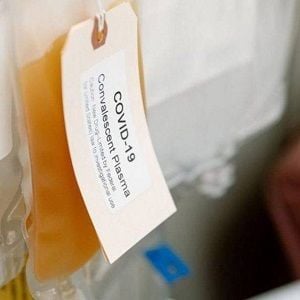
Researchers in the US have observed reduced mortality in COVID-19 patients who were given convalescent plasma with anti-viral antibodies, prompting calls to shift the focus of studies from safety to efficacy.
Mayo Clinic scientists and collaborators have found investigational convalescent plasma to be safe following transfusion in a diverse group of 20,000 patients with the disease.
The safety report assessed the seven days following transfusion for hospitalized patients between 3 April and 11 June who were deemed at risk of progressing to a severe or life-threatening condition.
Seven-day mortality rates declined to 8.6 per cent, compared to 12 per cent in a previous safety study of the first 5,000 transfused patients. Serious adverse events continued to be less than one percent.
"Our efforts to understand convalescent plasma continue," says Michael Joyne,r MD, principal investigator of the EAP at Mayo Clinic and lead author of the article.
"We're optimistic but must remain objective as we assess increasing amounts of data."
The expanded safety report reveals a decline in mortality which appears contemporary with the more rapid availability of plasma for use, but the authors caution that this alone does not provide any evidence on effectiveness of convalescent plasma for treating COVID-19.
Given the accelerating use of the therapy, research is now broadening its focus to determine indicators of efficacy.
The 7000-plus physicians who are part of the program have done an exceptional job of offering convalescent plasma to a diverse group of patients, enrolling women as forty percent of the participants as well as significant numbers of patients who are of African American, Asian or Hispanic ethnicity," says researcher DeLisa Fairweather, PhD.
"We hope recruitment of minority subjects continues to increase given the disproportionate burden these communities have faced with COVID-19," Fairweather says.
The researchers say that while the mortality rate has decreased, the patients in the latter part of this study were less critically ill.
They also say the decrease may be in part due to improved medical care based on increased knowledge during the pandemic and that more of the patients received the plasma earlier in their hospital treatment.
CSL to use COVID-19 survivor blood donations in new treatment
There are now close to 9.19 million COVID-19 cases worldwide with 474,258 deaths recorded.
Nearly 2.4 million of these cases are in the US where the death tally stands at 122,610, which is more deaths than the country recorded in World War I.
Case rates are rising rapidly globally, particularly in Brazil and India where the numbers of new daily cases continue to skyrocket.
Chile and Peru, whose combined population of around 51 million is dwarfed by other virus hotspots, have also seen a worrying increase in infection rates. If counted together, these two Andean countries would constitute the fourth hardest-hit region behind the US, Brazil and Russia.
Updated at 11:36am AEST on 23 June 2020.
WA to remove seated service requirements on Saturday
 "WA to remove seated service requirements on Saturday")
The Western Australian Government has created two new phases in its COVID-19 roadmap, doing away with seated service requirements and letting the two square metre rule govern numbers in restaurants, cafes, bars, nightclubs and other venues.
Phase 4 will start from Saturday, 27 June (11:59pm, 26 June), allowing major sport and entertainment venues to operate at 50 per cent capacity, casino gaming floors to reopen and gyms to operate unstaffed but with regular cleaning.
Major venues will be allowed to have more ticketholders for concerts, so Optus Stadium will be able to have 30,633 for sport events and 35,000 for concerts; HBF Park can hold 10,150 (16,500 for concerts) and RAC Arena can hold 7,150 (8,250 for concerts).
Staff will not be included in the 2sqm rule for venues that hold 500 patrons or less, while food businesses and licensed premises will no longer need to keep a register of patrons.
Depending on infection rates locally, Phase 5 involving the removal of the 2sqm rule is set to be introduced on Saturday, July 18, along with a lifting of the 50 per cent capacity limit for major venues.
The State Government was planning to announced Phase 6 including a the removal of WA's hard border with the rest of the country and travel restrictions currently in place for remote Aboriginal communities, but this was put on hold due to the rapidly evolving situation in Victoria.
The WA hard border will only be removed when the WA Chief Health Officer is confident the spread of infection is controlled in the Eastern States.
"Western Australia is ready take another giant step out of COVID-19 restrictions," says Premier Mark McGowan.
"Our phased approach has allowed us to get more Western Australians back to work and into more social and recreational activities, as together we continue to kick-start WA's economy.
"It's because of the incredible effort of all Western Australians that we've been able to reach each phase and continue to lead the states in relaxing restrictions."
He explains WA is the only state in the country that doesn't have the "problematic" 4sqm rule, and today's step goes a step further.
"We can only do this thanks to WA's success in minimising the spread of COVID-19, and our hard border with the Eastern States," he says.
"We all need to be aware that the virus has not been eradicated, so we all have a personal responsibility to keep the community safe.
"To better protect each other in the community we need to continue to keep our physical distance, practice good personal hygiene and stay home if we're unwell."
Updated at 4:52pm AEST on 22 June 2020.
Deloitte Australia slashes 700 jobs in response to COVID-19 impacts
 "Deloitte Australia slashes 700 jobs in response to COVID-19 impacts")
The economic impacts of the COVID-19 pandemic have forced Deloitte Australia to tighten its belt, resulting in 700 staff members being made redundant.
The company says the decision to reduce its workforce of 10,000-strong by 700 was made in response to COVID-19.
Whilst Deloitte's revenue has grown for the financial year by 10 per cent the firm experienced a "significant" decline in revenue in the fourth quarter.
This decline includes a 19 per cent revenue drop year on year in May 2020, and the company anticipates this reduced level of revenue will continue for at least the first quarter of FY21.
The staff reduction equates to approximately 7 per cent across most business units and client service departments, with most of the reductions coming from the consulting and advisory parts of the business.
"From the beginning of the COVID-19 crisis two of our important principles have been to preserve as many jobs as possible while also protecting the long-term sustainability of the firm," says Deloitte Australia CEO Richard Deutsch.
"Unfortunately, the last quarter of our 2020 financial year has seen a substantial drop in revenue and operating profit. We expect this trend to extend into at least the first quarter of our new financial year.
"Today, I have announced a second round of measures that includes a reduction in our workforce, actions that would not have occurred had it not been for the impact of COVID-19."
In April Deloitte announced that it would be making some immediate changes to the business to keep the company afloat during the COVID-19 pandemic including the short term reduction in annualised pay of 8 per cent for the majority of Deloitte Australia's staff.
Updated at 4:57pm AEST on 22 June 2020.
QLD, NSW Premiers raise concerns over VIC case spike
 "QLD, NSW Premiers raise concerns over VIC case spike")
A recent spike in community transmission of COVID-19 in Victoria has raised alarm bells up north and could derail Queensland's border reopening plans, while New South Wales Premier Gladys Berejiklian has urged people to reconsider travelling to Melbourne.
Speaking to the press this morning, Queensland Premier Annastacia Palaszczuk (pictured) said the state's plan to reopen borders on 10 July would still involve a review at the end of the month, but Victoria could be excluded from the plan.
It comes as Victoria extended a state of emergency over the weekend and has today reported 16 new cases of COVID-19 overnight.
"The AHPPC has said they have concerns about Victoria, I have concerns about Victoria, and the Health Minister has concerns about Victoria," says Palaszczuk.
"There is a lot of community transmission happening in Victoria and I hope that Victoria can get this community transmission under control."
Palaszczuk says the question of whether Queensland will open up to the entire country excluding Victoria will be considered this Friday during a National Cabinet meeting.
"The Prime Minister has said that he does not want to have certain states open to certain states, so I think that will have to be a very considered conversation at National Cabinet," says Palaszczuk.
"But I think it's something that we all need to look at in terms of what is happening in Victoria."
Ultimately, a decision regarding Queensland's borders will not be made until next Tuesday.
Queensland has reported zero new cases of COVID-19 today.
NSW Premier: Reconsider travelling to Melbourne
New South Wales Premier Gladys Berejiklian has told her citizens to reconsider travelling to Melbourne if possible as the city's COVID-19 cases grow.
Berejiklian says the travel warning is in line with health advice she has received, but has stressed the border to Victoria will remain open.
"Nobody from New South Wales should be travelling to those hotspots in the present time, and people should consider whether they should be travelling to Melbourne at this poin in time whilst community transmission is where it is," says Berejiklian.
"Having said that, we said from the beginning that once you start easing restrictions we will expect case numbers to go up but it's a question of how you monitor them, how you clamp down on them, how you make sure people are coming forward to get tested.
"It would be wonderful to think that we're through the pandemic but we're not, we have to live with this until there's a cure or a vaccine, and it's how you manage spikes that allows the community to keep being able to be active and working, and having a good life."
Updated at 12:55pm AEST on 22 June.
Advertisement
Latest News
From $13,000 to $20 million: how a PCOS diagnosis and a pair of scissors built Xali Organics
Inspired by a medical diagnosis and driven by innovative marketing,...
Cedar Woods secures $63.4m in new land acquisitions as record presales underpin pipeline push
Perth-headquartered residential developer Cedar Woods Properties (A...
Australia's long-term beer decline hits home as Lion plans to close Boag's brewery in Launceston
Australia's decades-long decline in beer consumption has claime...
Downer EDI seals $310m Transurban contract to maintain Sydney motorway network
Infrastructure services group Downer EDI (ASX: DOW) has secured con...
Propel Funeral Partners expands New Zealand footprint with trio of acquisitions worth $9.1m
Sydney-based death care provider Propel Funeral Partners (ASX: PFP)...
Advertisement