Advertisement
Staying informed is more important than ever as the situation unfolds with Covid-19. Stay tuned here for our live updates, and be sure to let us know what your business is doing to face this unprecedented challenge.
Covid-19 News Updates
Casinos cut CEO pay as thousands of staff stood down
 "Casinos cut CEO pay as thousands of staff stood down")
Two of Australia's largest casino operators have announced pay cuts for CEOs as staff are stood down across the board to manage costs during Covid-19.
Star Entertainment Group (ASX: SGR) and Crown Resorts (ASX: CWN) have stood down around 12,355 staff cumulatively to manage operating costs.
To reflect the sacrifices made by staff, Star has reduced non-executive director fees by 50 per cent and CEO Matt Bekier's salary by 40 per cent.
Star's properties have been shut down since Monday 23 March and will remain closed until gathering restrictions are lifted.
As a result the company has had to reduce expected group capital expenditure for both FY20 and FY21.
To see the period through, Star has executed an additional debt funding facility with existing relationship banks for $200 million.
Including the new facility Star has available cash and undrawn debt facilities of around $700 million, which the company says will provide sufficient liquidity for an extended shutdown period.
Star estimates monthly expenditure at its properties will be around $10 million, comprising payments to employees who are not stood down, asset security, technology and other fixed costs.
"The Star is implementing necessary and wide-ranging measures to strengthen the balance sheet and preserve liquidity in the current exceptional circumstances," says Bekier.
"The shutdown continues to have a significant impact on our people and their families, and the group welcomes the Australian Government's support, particularly the JobKeeper Payment program. Our focus remains on preserving the group's solid financial position and operating flexibility to resume operations quickly when the current Covid-19 restrictions begin to lift."
Crown Sydney construction continues
Construction of the Crown Sydney Hotel Resort will continue as planned and remains on track for completion by the end of 2020.
The project cost remains unchanged at approximately $2.2 billion. During the build 1,300 construction staff have been employed and once completed the company expects more than 2,000 people to work in the hotel.
Crown has agreed to terms with three relationship banks for a $450 million project finance facility to support the continued construction of Crown Sydney.
The unwavering commitment to the build comes as Crown CEO and managing director Ken Barton has taken a 20 per cent reduction in fixed remuneration until 30 June 2020.
The company has progressively stood down on either a full or partial basis approximately 95 per cent of its employees, representing more than 11,500 staff.
The casino business has agreed to provide an ex gratia payment of two weeks' pay to those full-time and part-time employees that have been stood down and a lump sum payment of $1,000 to eligible casual workers.
Crown expects its underlying operating costs to reduce between $20 million to $30 million per month during the Covid-19 crisis.
"We have taken the tough but necessary decision to stand down a large number of our employees," says Crown CEO Ken Barton.
"We are continuing to investigate ways in which we can support our employees on an ongoing basis. Crown welcomes the Commonwealth Government's JobKeeper scheme, which will be critical in keeping our business and our employees connected."
Like Star, Crown has also entered into new debt facilities with its banks for a total of $560 million.
The company's current cash balance of approximately $500 million, in addition to Crown's ability to secure more than $1 billion in extra debt facilities, means the company is confident it will make it through this period of market destabilisation.
"As a result of today's announcement, Crown is well placed to withstand an extended period of closure," says Barton.
Crown will pay its FY20 interim dividend on 17 April 2020.
Never miss a news update, subscribe here. Follow us on Facebook, LinkedIn, Instagram and Twitter.
Business News Australia
Sewage the next frontier in tracking Covid-19 cases
 "Sewage the next frontier in tracking Covid-19 cases")
Researchers from the University of Queensland (UQ) and the CSIRO have taken the first steps to develop a sewage-based early warning surveillance system to track Covid-19 prevalence in the community.
Scientists have successfully demonstrated the presence of SARS-CoV2, the virus which leads to the disease COVID-19, in untreated wastewater from two treatment plants in South East Queensland.
A proof of concept study completed last week found NA fragments of SARS-CoV2 in the raw sewage, which would have been shed in the stream by coronavirus-infected people.
Director of UQ's Queensland Alliance for Environmental Health Sciences, Professor Kevin Thomas, said the validated method built on work by research groups in the Netherlands and the US.
"This is a major development that enables surveillance of the spread of the virus through Australian communities," Professor Thomas said.
Federal Minister for Health Greg Hunt welcomed the Covid-19 wastewater pilot as "extremely encouraging" with potential to further strengthen Australia's response to the global pandemic.
"A national program based on this work could add to the broader suite of measures our Government can use in the identification and containment of Covid-19," Hunt said.
Federal Minister for Industry, Science and Technology Karen Andrews said this was the latest example of Australian scientists making a difference in the fight against the coronavirus.
"From the work happening to find a vaccine through to this research to track community spread of the disease - our science and research community are among our greatest assets in our efforts to beat this pandemic."
CSIRO chief executive Dr Larry Marshall said the testing would help Australia manage the outbreak.
"The hope is eventually we will be able to not just detect the geographic regions where Covid-19 is present, but the approximate number of people infected without testing every individual in a location. This will give the public a better sense of how well we are containing this pandemic," Dr Marshall said.
CSIRO Land and Water Science Director Dr Paul Bertsch said the project showed Australia had the capability to deliver timely COVID-19 wastewater surveillance data to inform decisions, response actions and public communications.
"These data will be particularly useful for catchments with vulnerable populations where testing using other methods may not be feasible," Dr Bertsch said.
"An early warning detection system like this would also be incredibly useful for monitoring and response in the recovery phase."
The team is keen to share the new knowledge and methods to develop a national collaboration.
"By showing how the method has worked in Australia, it is hoped that this research will bring together a national collaboration of government authorities, wastewater utilities, universities and other research organisations and commercial laboratories," Professor Thomas said.
"The next step is to build the capacity to deliver a national program."
Professor Thomas said the research used systematic sampling and analysis of wastewater for SARS-CoV-2 using a standardised, coordinated approach based on refined analytical methods.
"The wastewater samples were analysed for specific nucleic acid fragments of the virus using RT-PCR analysis, which is used to identify a gene fragment from SARS-CoV2," he said.
"The presence of SARS-CoV2 in specific wastewater samples was then confirmed using sequencing techniques."
Updated at 11:04am AEST on 16 April 2020.
Virgin suspended from ASX
 "Virgin suspended from ASX")
Two days after entering into a trading halt Virgin Australia (ASX: VAH) has requested an immediate suspension of its ordinary shares and unsecured notes on the ASX.
The suspension relates to internal discussions at Virgin regarding how the airline intends to continue during the Covid-19 crisis, including deliberation over financial assistance and restructuring alternatives.
"Whilst this consideration and these discussions have continued over the last two days including discussions which remain confidential and are incomplete, the company is not presently in a position to make an announcement to the market with respect to these matters," says Virgin.
"In particular the company requests that trading in its securities be suspended to enable this consideration and these discussions to continue so as to ensure the market is not trading in the relevant securities on an uninformed basis."
The suspension will remain in place until the Virgin makes an announcement regarding these discussions or at the expiry of seven days from today's date 16 April.
It has been reported that Virgin could be looking at going into voluntary administration if support from the Federal Government is not granted.
As reported by The Guardian, Virgin has hired insolvency and turnaround experts at Deloitte to consider restructuring the business or going into administration.
Virgin's decision comes after the airline announced last week that it would be suspending all domestic passenger flights except for a daily Sydney to Melbourne service (but not on Saturday).
The company also recently stood down around 10,000 staff and suspended all Tigerair Australia domestic services. International flights have also been suspended until mid-June except for one return flight per week between Los Angeles and Brisbane and two return flights between Hong Kong and Brisbane. These flights have been scheduled to ensure Australians can get back home.
Virgin is also running flights to maintain important freight links into the country.
Updated at 9:34am AEST on 16 April 2020.
Aussie Disposals enters administration, 11 stores to close
 "Aussie Disposals enters administration, 11 stores to close")
Australian camping store chain Aussie Disposals appointed voluntary administrators yesterday after bearing the brunt of shopper impacts from bushfires and the Covid-19 crisis.
A notice filed with the Australian Securities and Investments Commission (ASIC) shows the company appointed Melbourne-based administrators Magnetic Insolvency.
Peter Goodin of Magnetic Insolvency says 11 of Aussie Disposals' 36 stores in Victoria, NSW and South Australia are due to close in order to achieve a profitable model.
In a press release, Aussie Disposals managing director Mark Purvis explained the company had experienced many highs and lows as a family-owned retail organisation over the past 58 years.
"ln recent times the drought, bushfires and now the Coronavirus has taken a massive toll on the business leaving us no alternative but to place the business into Voluntary Administration," Purvis said.
"We are now working extremely hard with our banker's creditors and suppliers to secure a way forward."
He said the main focus now was to make sure all of Aussie Disposals' more than 120 staff are looked after in the best possible way, ensuring they receive their full entitlement regardless of the company's future.
"Aussie Disposals also has a very loyal large customer base with so many of them supporting our business over so many years. We would like to ensure them our service will continue as it always has and this is the time we need them the most," Purvis said.
"The Directors along with the Adm jnistrators have a strong business plan for the future and would hope all affected parties can see their way clear to support us in these most difficult times.
Initially published at 4:10pm AEST on 15 April 2020, and updated at 11:48am AEST on 16 April 2020.
State governments pump billions into land tax and rent relief
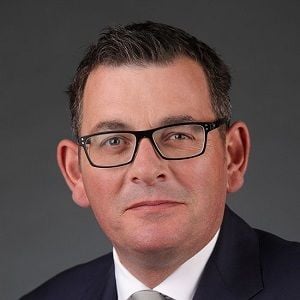 "State governments pump billions into land tax and rent relief")
The Victorian Government is acting on the new commercial tenancies code by pledging half a billion dollars to tenants and landlords as they struggle with the impacts of coronavirus-related economic disruption.
The package is the largest state-backed initiative of its kind to date, compared to $440 million from the NSW Government and $400 million from the Queensland Government over the past week. In late March the South Australian Government also announced six-month land tax deferrals.
The lion's share of the Victorian funding will come in the form of $420 million for land tax relief, while the remaining $80 million will go to a rental assistance fund for renters facing hardship due of coronavirus.
"More than ever, we need to be working in partnership. Landlords working with tenants. Tenants working with landlords. And Government willing to help those most in need," says Premier Daniel Andrews (pictured).
"This is about supporting tenants, landlords and small business and making sure that everyone can make it to the other side of this pandemic," adds Treasurer Tim Pallas.
Businesses will only be eligible for the measures if they have an annual turnover under $50 million per year and have experienced more than a 30 per cent reduction in turnover due to the coronavirus.
Key aspects of the bill include:
- Land tax relief for landlords who give rental relief to tenants;
- A ban on evictions for six months for residential and commercial tenants;
- A ban on rental increases;
- Rent relief for tenants experiencing hardship;
- Fast-tracked dispute resolution access for tenants and landlords;
- The establishment of a Coronavirus Relief Deputy Commissioner to handle land tax relief claims; and
- Implementation of the mandatory code of conduct for commercial tenancies as agreed upon by the National Cabinet.
If a landlord provides tenants impacted by Covid-19 with rent relief, they will be eligible for a 25 per cent discount on their land tax, while any remaining land tax can be deferred until March 2021.
A new Coronavirus Relief Deputy Commissioner will be established at the State Revenue Office to manage these land tax relief claims.
The government has encouraged partnerships between tenants and landlords, and landlords and their banks, to help people continue to pay the rent and have a roof over their heads through the crisis.
But if tenants and landlords struggle to strike deals over rent reductions, they will be given access to a fast-tracked dispute resolution service with Consumer Affairs Victoria or the Victorian Small Business Commission mediating to ensure fair agreements are reached.
Evictions will banned for six months for the non-payment of rent for commercial tenancies involving small and medium-sized businesses, while rental increases will also be banned for commercial or residential properties.
Evictions will also be banned for residential properties for the same period, except in some circumstances.
Consistent with the National Cabinet agreement to implement a mandatory code of conduct for commercial tenancies, the Government will also urgently legislate so that eligible small and medium sized businesses can be granted rental waivers or deferrals.
"This support will help small businesses keep their doors open, keep employing and keep driving the state's economy," says Minister for Small Business Adem Somyurek.
"These are unprecedented measures - but we are facing an unprecedented crisis. With this support, we'll help tenants cover the rent and keep a roof over their head," adds Minister for Consumer Affairs Marlene Kairouz.
WA takes action to support tenants and landlords
The move follows an announcement yesterday from the Western Australian Government it would introduce the Commercial Tenancies (COVID-19 Response) Bill 2020 to State Parliament this week.
The WA Government's bill, aimed at minimising financial impacts from the pandemic on both commercial and residential tenants and landlords, will include:
- A moratorium on eviction for six months except in limited circumstances including, for example: if a tenant is causing serious damage to the property or injury to the landlord or a person in adjacent premises; the landlord or tenant is experiencing undue hardship; a tenant is experiencing family violence and the perpetrator needs to be evicted; the tenant abandons the premises; or the agreement is frustrated;
- A prohibition on rent increases during the emergency period;
- That any fixed term tenancy agreement due to expire during the emergency period will continue as a periodic agreement;
- Relieving lessors of the obligation to conduct ordinary repairs if the reason they cannot do so is Covid-19 related financial hardship or a lawful restriction on movement; and
- Enabling a tenant to end a fixed term tenancy prior to its end date without incurring break lease fees (tenants will still be liable for damage and rent arrears).
"Under the proposed reforms, tenants must continue to pay rent. If a tenant can't pay their rent they will still have to pay it later, so continuing to pay rent will increase your chances of keeping debt to a manageable level," says WA Premier Mark McGowan.
"Tenants in financial distress due to Covid-19 should contact their landlord or property manager to try and make an arrangement. This could include a reduction to the amount paid for a period of time, for example.
"What we're introducing are sensible amendments to help landlords and tenants to work together during these challenging and uncertain times."
Commerce Minister John Quigley says there are expectations of a spike in disputes during the emergency period.
"As a result of these concerns, the legislation will provide a mandatory conciliation step in the dispute resolution process," says Quigley.
"This will act as a buffer between complainants and the Magistrates Court and the State Administrative Tribunal (SAT) protecting the Magistrates Court and SAT from being flooded by residential tenancy dispute applications.
"We will also be introducing a code of conduct that will apply broadly to all tenancies for small to medium enterprises that are suffering financial stress or hardship as a result of the pandemic."
NSW divvies up $440m to commercial and residential sectors
On Monday the NSW Government announced a $440 million land relief package to be distributed roughly 50-50 between the commercial and residential property sectors hit by the economic impacts of the pandemic.
Commercial landlords will be offered a land tax concession if they pass savings on to tenants through a rent reduction.
Eligible landlords will be able to apply for a land tax concession of up to 25 per cent of their 2020 (calendar year) land tax liability on relevant properties.
A further land tax deferral for any outstanding amounts for a three-month period will also be offered to landlords who claim the land tax concession.
The Government will give effect to the Code of Conduct, which will operate for a temporary period during the pandemic, and include the following key measures:
- Landlords must negotiate rent relief agreements with tenants in financial distress due to Covid-19 by applying the leasing principles in the Code;
- A ban on the termination of a lease for non-payment of rent;
- A freeze in rent increases.
To facilitate these changes, and deliver increased mediation and advisory services to commercial parties, the NSW Small Business Commission will be bolstered with extra staff and an injection of $10 million from the $1 billion Working for NSW Fund.
The policy will apply to business tenants with a turnover of less than $50 million that experience a 30 per cent (or more) reduction in revenue as a result of the COVID-19 pandemic, in line with the Prime Minister's announcement on 7 April.
This will include any business with annual turnover of less than $50 million who is eligible for the Commonwealth's JobKeeper program.
Treasurer Dominic Perrottet welcomed the initiatives, saying they would help businesses stay afloat and provide greater surety for tenants and landlords.
"This provides a way forward for tenants and landlords so they can reach an agreement during this difficult period and includes an incentive in the form of a land tax reduction." Perrottet said.
"I thank the many landlords who are already supporting their tenants through this period and the banks for showing flexibility with deferring loan repayments - we are all in this together and need to work together."
Finance and Small Business Minister Damien Tudehope said the package demonstrated the need for a united effort to endure the COVID-19 pandemic.
"Breathing room on rent is one of the most frequently raised issues by businesses, and we want to ensure we protect retailers and offer landlords an incentive to do so. We also want to ensure retail tenants have more time and options," Mr Tudehope said.
"For any small business rent is one of the biggest fixed costs, easing this burden will help operators survive and keep people employed."
Perrottet said it was important that both landlords and tenants understood that the policy only applied to those businesses significantly impacted by COVID-19.
"If your circumstances have not significantly changed you need to fulfil the terms of your existing agreement." Perrottet said.
Queensland Government pledges $400m in land tax relief
Last Thursday, Queensland Deputy Premier and Treasurer Jackie Trad said her Government had heard "loud and clear" people's concerns about losing their homes or businesses through no fault of their own.
The Queensland Government announced $400 million in land tax relief for property owners, which must be passed on to tenants.
"Since February, we have announced more than $3 billion in measures to sustain businesses through the coronavirus downturn, but when it's over, they need to know their shops and tenancies are still there," Trad said.
"Whether they've been required to close their doors or not, many businesses have seen their cash flow dry up, making it harder to pay the rent.
"To ensure commercial or residential property owners don't face undue hardship on their own, we will be offering a three-month rebate of land tax for 2019-20, followed by a three month deferral of land tax 2020-21 for property owners who agree to provide rent relief for tenants affected by the coronavirus downturn."
A landowner can apply for land tax relief if they meet criteria including:
- The landowner rents all or part of a property to a tenant/s OR all or part of a property is currently available for lease;
- At least one tenant's ability to pay their normal rent OR the landowner's ability to secure a tenant is affected by the Covid-19 pandemic;
- The landowner provides rent relief to an affected tenant/s commensurate with the amount of the land tax rebate or if the property is unable to be leased, the landowner requires land tax relief to meet their financial obligations (such as debt repayments); and
- The landowner complies with new leasing requirements, even if the relevant lease is not regulated.
Property Council Queensland executive director Chris Mountford said the land tax relief was an effective way for the Government to support businesses through this crisis.
"By granting this relief, landlords will have a greater capacity to support tenants that have been adversely affected COVID-19, taking pressure off their cash flow at this critical time," Mountford said.
"We know the circumstances that landlords and tenants are finding themselves in vary greatly. A 'one size fits all' approach to these challenges simply does not work.
"Today's announcements are a demonstration that the State Government is stepping up and supporting tenants and landlords as they work this through."
The Deputy Premier said the ban on eviction would be underpinned by new laws.
"We'll make changes to legislation that will ban evictions on the grounds of financial distress, prevent rent increases, except in cases where business turnover has increased, and allow leases to be extended for the term of a rent waiver that has been agreed to by property owner and tenant," Trad said.
"By working together, we can protect homes, businesses and jobs as much as possible through this downturn."
Updated at 12:09pm AEST on 15 March 2020.
Trump suspends funding for WHO
 "Trump suspends funding for WHO")
As the world grapples with containing the Covid-19 pandemic and total deaths now stand at almost 126,000, US President Donald Trump has announced a suspension of his country's funding for the World Health Organisation (WHO).
Trump has today alleged the WHO severely mismanaged the health crisis, which began in the Chinese city of Wuhan in November last year.
"We have deep concerns whether America's generosity has been put to the best use possible," Trump said.
"The reality is that the WHO failed to adequately obtain, vet and share information in a timely and transparent fashion.
"The world depends on the WHO to work with countries to ensure that accurate information about international health threats is shared in a timely manner, and if it's not to independently tell the world the truth about what is happening, the WHO failed in this basic duty and must be held accountable."
The President said he was instructing his Administration to halt funding for the WHO while a review is undertaken to assess the organisation's "role in severely mismanaging and covering up the spread of the coronavirus".
"American taxpayers provide between $400 million and $500 million per year to the WHO - in contrast China contributes roughly $40 million a year and even less," he said.
"As the organization's leading sponsor the United States has a duty to insist on full accountability.
"One of the most dangerous and costly decisions from the who was its disastrous decision to oppose travel restrictions from China and other nations - they were very much opposed to what we did."
In an interview with 6PR, Prime Minister Scott Morrison said he sympathised with Trump's criticisms of the WHO and noted he'd made a few of his own.
"We called this thing weeks before the WHO did," he said.
"If we were relying on their advice, then I suspect we would have been suffering the same fate that many other countries currently are. We were calling it a pandemic back in early January or mid-January, I should say.
"The WHO is also as an organisation does a lot of important work, including here in our own region in the Pacific, and we work closely with them so that we're not going to throw the baby out with the bathwater here. But they're also not immune from criticism and immune from doing things better."
The PM dismissed criticisms from some that the economic damage wrought by measures taken to slow the virus spread is worse than the health crisis itself.
"I think they should Google Italy, the United Kingdom, New York, any of these countries will do, Spain, Sweden, the Netherlands. And look at the horror show that's happening there and ask themselves the same question," he said.
Updated at 9:46am AEST on 15 April 2020.
NSW Premier appoints special commissioner for Ruby Princess inquiry
 "NSW Premier appoints special commissioner for Ruby Princess inquiry")
The NSW Government has today announced a special commission of inquiry into events surrounding the Ruby Princess cruise ship, whereby thousands of passengers disembarked the vessel in Sydney on 19 March despite the known presence of Covid-19 onboard.
The ship is single largest source of coronavirus cases in Australia, and its handling is the subject of a potential class action under investigation by Shine Lawyers (ASX: SHJ).
Within a couple of weeks of NSW Police Commissioner Mike Fuller announcing a criminal investigation would be launched into the matter, Premier Gladys Berejiklian (pictured) has today galvanised the push for answers.
The Premier will appoint leading barrister Bret Walker SC as Commissioner for the inquiry, which will report back to the government in three to four months.
"It is important that answers are provided quickly for the people of NSW," Berejiklian said.
"As I have said before, we will leave no stone unturned until we find out exactly what happened."Walker will have the extraordinary powers of a special commissioner to examine all matters involving the cruise ship, including its departure and arrival, and the actions of all agencies and parties involved.
"Discussions with the Police Commissioner and the State Coroner have made clear to me their expected investigation timelines, and I have decided that the quickest path to answers is through a powerful and independent inquiry," Berejiklian said.
Police and the State Coroner will continue their respective investigations.
Updated at 9:19am AEST on 15 April 2020.
Relaxed financial advice rules praised by industry groups
 "Relaxed financial advice rules praised by industry groups")
Several industry bodies have praised regulators for relaxing rules around how financial advice is given during the Covid-19 crisis.
The Australian Securities and Investments Commission (ASIC) announced yesterday that registered tax agents (RTAs) would be allowed to temporarily give advice about early access to superannuation without having to hold an Australian Financial Services (AFS) licence.
Financial planners providers won't need to give a statement of advice (SOA) to clients when providing advice about early access to superannuation, and they will also have access to simplified advice documents instead of a long and complex statement of advice.
These decisions have been made to help the sector adjust to new rules permitting individuals to access their superannuation early if they are facing financial hardship due to the virus outbreak.
"The decision to access superannuation early is significant and many Australians will seek assistance from superannuation funds, financial advisers and registered tax agents before deciding whether to access the early release scheme," ASIC said.
The new measures are the result of lobbying from five major professional bodies CPA Australia, Chartered Accountants Australia and New Zealand (CA ANZ), SMSF Association (SMSFA), Financial Planning Association (FPA) and Institute of Public Accountants (IPA).
In an announcement yesterday, the groups said they had joined forces to ensure Australians can get the advice they need to understand the Federal Government's COVID-19 economic packages, including early access to their superannuation.
"There has been an increasing demand for advice around early access to super since the Government announced Australians could access up to two parcels of $10,000 in superannuation tax-free as part of their second stimulus," the joint bodies said.
"We have come together and collectively worked with ASIC to help the Australian community and to ensure there are more skilled advisers in the marketplace to address this demand.
"This move has removed significant red tape and ensured a simple, streamlined process is in place so those facing financial hardship during this time get the right advice."
CPA Australia CEO Andrew Hunter said these unprecedented times called for a pragmatic approach to regulation and a commitment from the associations to work together in the public interest.
"Over 600,000 people have registered their interest accessing their super early, so there is great need for support. It's important that these people and others also considering their options can access professional advice," Hunter said.
"As trusted advisers, accountants are well-placed to provide individuals with advice and many already have an existing relationship with their accountant. This is therefore an excellent extension for clients," added CA ANZ group executive for advocacy & professional standing, Simon Grant.
FPA CEO Dante De Gori said Australians can sleep better at night knowing they have a professional financial planner assisting them in managing their financial position, which is "second only to their health in personal importance".
"This is welcome and timely relief from ASIC to assist our members in supporting as many Australian's as possible through the financial crisis caused by this pandemic, and demonstrates ASIC acting on sensible calls from professional associations," De Gori said.
SMSF Association CEO John Maroney said the professional bodies had worked together with ASIC to provide regulatory relief for financial advisers and registered tax agents that allow them to provide advice in the most efficient, timely and cost-effective way to individuals in the current environment.
"The decision to access superannuation early is a significant one with a long-term impact on individuals' retirement savings, so for them to be able to speak to an accountant or adviser for a small fee to get the advice they need without sacrificing safeguards is welcomed," Maroney said.
"At this time in particular, Australians need access to high quality financial advice. Decisions around superannuation are critical to quality of life. For this reason, a decision to access superannuation early should be based on advice that is easily accessible," added IPA CEO Andrew Conway.
Around 9 per cent of the 10,323 submissions made to the Royal Commission into the banking, superannuation and finance sectors related to financial advice.
Updated at 10:19am AEST on 15 April 2020.
Genetic Signatures' Covid-19 testing kit receives regulatory approval
 "Genetic Signatures' Covid-19 testing kit receives regulatory approval")
A new rapid testing kit that can detect the virus which causes Covid-19 has been given the tick of approval from the Therapeutic Goods Administration (TGA).
Genetic Signatures' (ASX: GSS) SARS-CoV-2 Detection Kit has been approved for inclusion in the Australian Register of Therapeutic Goods (ARTG), giving the company greater access to patients during the Covid-19 pandemic and upcoming flu season.
The kit can be used on high throughput instruments to allow for rapid detection of up to 188 patient samples in under five hours with minimal interaction required from laboratory technicians.
The TGA's approval follows formal European authorisation for the kit which was announced on 4 April.
"We thank the TGA for moving so quickly and the opportunity to support the important national and international effort to rapidly and accurately test, treat and contain the spread of coronavirus throughout the community," says Genetic Signatures CEO Dr John Melki (pictured).
Several domestic private and public testing labs are already using the EasyScreen detection kit and the new SARS-CoV-2 test can be used alongside the broader respiratory kit which detects 14 common respiratory pathogens.
"Our hope is it will help clinicians move faster and better manage their urgent work, to detection infection and save lives," says Dr Melki.
Shares in Genetic Signatures spiked up 10.59 per cent to $1.99 on the news from the TGA this morning.
Life sciences company Cellmid Limited (ASX: CDY) has also confirmed today that the first shipment of 12,000 SARS-CoV-2 rapid diagnostic tests have arrived in Sydney.
The test, manufactured by Chinese company Wondfo Biotech, detects antibodies to SARS-CoV-2. If antibodies are discovered doctors can confirm that a patient has been exposed to Covid-19 and is likely to convey immunity to the coronavirus.
Cellmid says this test will be likely used to confirm whether someone is able to return to work or not.
Updated at 4:40PM AEST on 14 April 2020.
Sales rise for Afterpay as online drives growth
 "Sales rise for Afterpay as online drives growth")
Shares in Afterpay (ASX: APT) are up 26 per cent today after the buy-now-pay-later (BNPL) powerhouse reported March was its third-highest underlying sales month on record, up 12 per cent on January and February.
The group claimed it was "difficult to identify any sustained trends" in any region as a result of Covid-19 impacts, and has benefited from digital exposure as 88 per cent of total underlying sales were online.
The daily increase was particularly marked Afterpay Day on 19-20 March, illustrating "customer appetite notwithstanding the new and sudden impact to their work and living conditions".
On the day of that particular online sales event, CEO Anthony Eisen released a letter to shareholders emphasising Afterpay's business model, balance sheet and customer base offered protection in times of economic uncertainty.
His calls were not heeded though and market hysteria got the better of investors, with APT shares closing at $9.90 on 19 March. Today they have reached $28 each - a level not seen since 10 March.
In today's announcement, Afterpay explained underlying sales moderated by 4 per cent in the second half of March as governments enforced lockdown and isolation protocols. The falls were more pronounced in the UK and the US compared to Australia.
"ANZ online sales showed a marked uptick in the second half of March (up 8 per cent on first half of March), while in-store volumes were significantly impacted (down 29 per cent on first half of March)," the company said.
The initial skew and increase in online sales were weighted towards necessity, personal care and homeware categories, however this trended back somewhat towards lifestyle and luxury categories.
"We have experienced positive growth in April month-to-date in all markets with average daily underlying sales up approximately 10 per cent on the second half of March globally."
Afterpay has also held up the mature ANZ region as a "blueprint" for the path to profitability in other markets.
"Estimated profitability on a YTD basis has increased relative to H1 FY20 and for the month of March relative to the pcp," the company said of the Australian and NZ markets.
"Gross Losses (Group) for the month of March is estimated to be approximately 1.0 per cent (unaudited), in line with H1 FY20, notwithstanding increased contribution from newer markets that are initially higher loss early in lifecycle."
For the March quarter underlying sales globally were up 97 per cent at $2.6 billion, with a 40 per cent increase in ANZ and a 263 per cent jump in the US.
Related story: Zip Co sales rise despite Covid-19 challenges
Updated at 3:15pm AEST on 14 April 2020.
Advertisement
Latest News
From $13,000 to $20 million: how a PCOS diagnosis and a pair of scissors built Xali Organics
Inspired by a medical diagnosis and driven by innovative marketing,...
Cedar Woods secures $63.4m in new land acquisitions as record presales underpin pipeline push
Perth-headquartered residential developer Cedar Woods Properties (A...
Australia's long-term beer decline hits home as Lion plans to close Boag's brewery in Launceston
Australia's decades-long decline in beer consumption has claime...
Downer EDI seals $310m Transurban contract to maintain Sydney motorway network
Infrastructure services group Downer EDI (ASX: DOW) has secured con...
Propel Funeral Partners expands New Zealand footprint with trio of acquisitions worth $9.1m
Sydney-based death care provider Propel Funeral Partners (ASX: PFP)...
Advertisement