Advertisement
Staying informed is more important than ever as the situation unfolds with Covid-19. Stay tuned here for our live updates, and be sure to let us know what your business is doing to face this unprecedented challenge.
Covid-19 News Updates
Virgin creditors accept terms ahead of Bain Capital handover
 "Virgin creditors accept terms ahead of Bain Capital handover")
Virgin Australia CEO Paul Scurrah says the airline is closer to exiting administration after a successful second meeting of creditors today, with expectations shares will be transferred to Bain Capital by 31 October.
The US fund is buying out the group for $3.5 billion, and its 10 proposed deeds of company arrangement (DOCAs) covering 41 Virgin Australia-associated entities were approved by creditors in an online meeting.
Deloitte administrators Vaughan Strawbridge, John Greig, Sal Algeri and Richard Hughes have confirmed the DOCAs will be signed, and completed, within 15 business days.
The DOCAs provide for the previously announced partial return of funds to unsecured creditors, in the range 13 and 9 cents in the dollar on claims from funds of $462 million and $612 million.
Once shares have been transferred a proposed creditors' trust is set to be created to adjudicate claims and pay distributions, all undertaken by the Deloitte Restructuring Services partners as trustees.
The timing of the payment of the dividend to creditors has been estimated at between six and nine months from completion of the sale transaction.
The DOCAs also provide for the value of all customer travel credits and prepaid flights provided post-administration; continued employment for the majority of employees and entitlements paid in full, including for those leaving the business; the continuation of the Velocity Frequent Flyer program; the retention of aircraft and equipment; and interim funding and acceptance of economic risk by Bain from 1 July 2020.
"This outcome provides certainty for employees and customers, a return to creditors, opportunities for suppliers and financiers to continue to trade with the Virgin Australia Group as well as maintaining a competitive Australian aviation industry for the benefit of consumers," says joint voluntary administrator Vaughan Strawbridge.
"While the outcome of the meeting today is a significant milestone for both the future of Virgin Australia and Australia's aviation industry more broadly, we also acknowledge those loyal Virgin Australia Group employees who will lose their jobs and the difficulties that this will cause them and their families as well as the numerous suppliers and investors who will not receive all of the monies owed to them.
"The outcome has also been achieved due to the incredible support from Virgin management and staff, unions who have played an important part in securing the future jobs for so many of their members, financiers, service providers, trade suppliers, and other key stakeholders including the federal government."
However, Strawbridge explained there was still a lot of work to do to complete the restructuring of the airline and complete the sale transaction before the business is ready to emerge from Voluntary Administration under Bain Capital's ownership.
Virgin Australia CEO Paul Scurrah says it is vital for the country to have two major airlines for consumer choice, value airfares and to help support the recovery of a robust tourism sector after this crisis is over.
"This is an important outcome for Virgin Australia, which brings us closer to exiting administration and allows us to focus on the future," says Scurrah.
"While we can feel very proud that we have got to this point, the impact of COVID-19 remains very challenging for our business and industry. These are tough times and we must remain focused and adapt to this new environment.
"It's been an incredibly tough journey for our people and they should be commended for how they have handled themselves. I'm pleased today gives us some more certainty around the company's future."
Updated at 2:16pm AEST on 4 September 2020.
Eviction moratorium in VIC extended until March 2021
 "Eviction moratorium in VIC extended until March 2021")
A moratorium on evictions in Victoria will be extended until 28 March 2021 to give both residential tenants and landlords more certainty as the state emerges from Stage 4 lockdowns.
In addition, eligible residential tenants will now be able to apply for rental relief of up to $3,000, an increase of $1,000 to what was previously announced.
Further, the eligibility criteria for relief, which is essentially an assessment of asset holdings, will be increased to $10,000.
This means families will be able to amass significantly more funds than before to be eligible for relief under the Victorian government's program.
The residential tenancies dispute resolution scheme will be also extended until the 28 March 2021 to enable landlords and tenants to work together in good faith to reach new rental agreements in this current climate.
"Everybody would understand the importance of a home in the current environment, the security of a roof over your head in these difficult times," says Victorian Treasurer Tim Pallas (pictured).
"We've assessed how the virus is presenting, the length of time that we know that people need security and certainty in terms of their residences going forward."
Residential landlords who give tenants relief under the scheme will be entitled to 2021 land tax relief in addition to relief already provided in the 2020 calendar year.
"Once it is recognised and appropriate agreements have been struck, and there is a clear indication of proportionality that appropriate relief has been given to tenants and that landlords should expect similar relief from the state in regard to the land tax obligations," says Pallas.
The announcement comes as Victoria reports 81 new confirmed cases of COVID-19 today.
The state has also attributed 59 more deaths to the coronavirus today, including a number of historical deaths that are the result of the reconciliation of data between private aged care providers, the Commonwealth and Victorian health officials.
Updated at 12:53pm AEST on 4 September 2020.
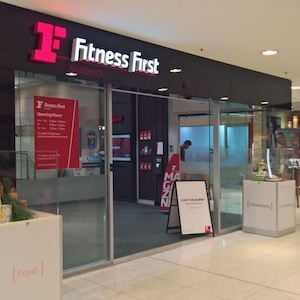
Sydney: New public health alert issued for Fitness First in Randwick
 "Sydney: New public health alert issued for Fitness First in Randwick")
UPDATE (11:50am, 4 September): New heatlh warnings issued for New Brighton Golf Club, Aldi North Strathfield, Bunnings Padstow.
NSW Health has added new dates to a public health alert for Fitness First in the Sydney suburb of Randwick after confirmed COVID-19 cases attended the gym.
Anyone who attended the gym between Sunday, 23 August and Tuesday, 1 September should monitor for symptoms and get tested if they develop.
The alert follows notification of an additional two cases who attended the gym.
"NSW Health is continuing to work with Fitness First Randwick to identify and notify close contacts," says NSW Health.
In addition, Regents Park Christian School was closed yesterday for deep cleaning after a case of COVID-19 was confirmed late Wednesday night.
NSW Health is contacting people who attended after-school hours care on Monday, 31 August and Tuesday, 1 September, from 3-6pm.
All children and staff who attended at these times are considered close contacts and have been directed to get tested and isolate for 14 days, and stay isolated for the entire period, even if a negative test result is received.
Health alert issued for New Brighton Golf Club
More health warnings were issued later this morning for three Sydney-based venues and businesses.
NSW Health has confirmed a COVID-19 case attended New Brighton Gold Club while infectious on 28 August 2020.
Anyone who was at the club for more than two hours between 6.15pm and 12.30am on that date is considered a close contact must self-isolate and get tested.
Further, anyone who attended the following businesses at the specified times should monitor for symptoms:
- Aldi North Strathfield, 20 George St North Strathfield Tuesday 1 September 2020, 10:00am-10:30am
- Bunnings Padstow, 88 Fairford Rd Padstow Thursday 27 August 2020, 12:00pm-2:00pm
The warnings come as NSW Health has diagnosed eight new cases of COVID-19 in the state, bringing the cumulative total number of confirmed cases since the pandemic began to 3,910.
Of the eight new cases, one is a returned traveller and seven are locally acquired and linked to a known source or cluster.
Of the seven linked to known clusters, three are contacts of cases linked to the CBD cluster, two are contacts linked to the St Pauls Catholic College Greystanes cluster, and two are household contacts of previously reported cases linked to Liverpool Hospital.
Updated at 9.45am AEST on 4 September 2020.
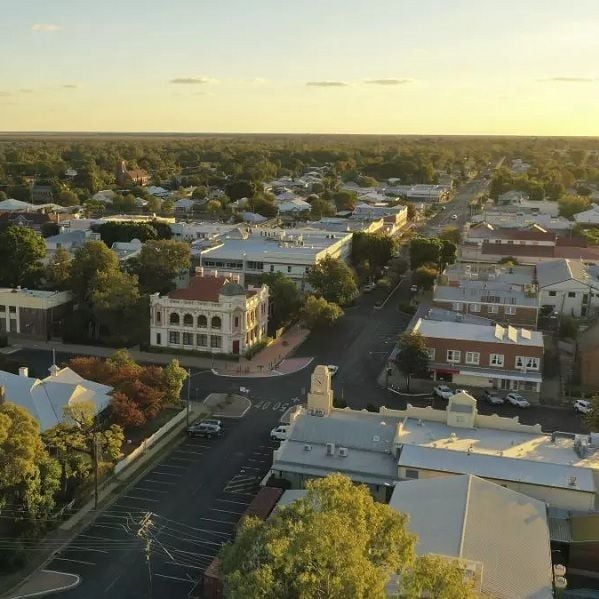
QLD expands border bubble to Moree, records zero new cases
 "QLD expands border bubble to Moree, records zero new cases")
After reporting its first 24-hour period of no new cases in 10 days, the Queensland Government has taken the decision to extend its border travel bubble to Moree in northern NSW.
The move follows complaints from Moree residents who haven't been able to see their children in southern Queensland boarding schools, as well as the recent burning down of the only supermarket in the nearby Queensland border town of Mungindi.
Queensland's Chief Health Officer Dr Jeannette Young told a press conference this morning she had been working very closely with her NSW counterpart, sharing information to help find a solution.
"With that information I'm very confident that Moree is a safe place to add into our border zone that we're looking at for New South Wales," Dr Young said.
"We know that's particularly important. I went and looked into it in great detail because unfortunately when that supermarket burnt down they didn't have a lot of options...the distances, if you look at them, it would be quicker for them to have travelled down into Moree."
She said the decision was made mainly because it was deemed safe to do so, remembering that the extension could potentially change.
"But at this point in time New South Wales does have control of their outbreak and they've been able to limit it to other parts of New South Wales," she said.
"The risk, of course, is that people in those other parts can travel up into the northern part of New South Wales, but I discussed that risk every single day with my counterpart in New South Wales."
Premier Annastacia Palaszczuk's message was "well done Queensland" after reporting zero new cases overnight, but emphasised the state was "not out of the woods yet" with 25 active cases.
The Premier also announced the launch of a special dedicated health unit for residents of northern New South Wales.
"There is a team of eight specialists that will that will involve doctors, nurses, paramedics and also social workers because this is often a distressing time for people," she said.
Dr Young noted 900 New South Wales residents were treated in Queensland hospitals last week.
"We are continuing to provide essential and emergency health care to people who live in northern New South Wales, because we've always done that," she said.
"Traditionally, Queensland provides that care. There has been no change to that."
The Premier added there was currently a team of 80 people working in the unit for exemptions.
Photo: VisitNSW
Updated at 9:47am AEST on 4 September 2020.
Have we just stumbled on the biggest productivity increase of the century?
 "Have we just stumbled on the biggest productivity increase of the century?")
One of the most striking responses to the COVID-19 pandemic has been the sudden, shift of around half the workforce to working at home.
In many cases, this was combined with an equally sudden shift to home schooling.
Contrary to what might have been expected, working from home was one part of the pandemic response that went remarkably smoothly. Most kinds of office work continued almost as if nothing had changed.
Discussion of the crisis has mostly worked on the assumption that a return to something like the pre-crisis 'normal' is both inevitable and desirable.
But the unplanned experiment we have been forced to undertake suggests we might have stumbled upon a massive opportunity for a microeconomic reform, yielding benefits far greater than those of the hard-fought changes of the late 20th century.
The average worker spends an hour on commuting every work day. Remarkably, this is a figure which has remained more or less stable since Neolithic times, a finding known as Marchetti's Law. (The same observation has been attributed to Bertrand Russell).
If working from home eliminated an hour of commuting, without changing time spent on work or reducing production, the result would be equivalent to a 13% increase in productivity (assuming a 38 hour working work).
If half the workforce achieved such a gain, it would be equivalent to a 6.5% increase in productivity for the labour force as a whole.
For a comparison, let's look at the radical microeconomic reforms of the 1990s, including privatisation, deregulation and national competition policy.
In 1995 the main advocate of these reforms, the Productivity Commission, then called the Industry Commission, estimated they would increase national income by 5.5%.
In retrospect, that estimate appears to have been over-optimistic.
Although there was an upsurge in measured productivity growth in the mid-1990s, the total increase relative to the long term trend was less than 1 percentage point per year above normal and low productivity growth since then has wound back those gains.
These gains are big, compared to those we sweated on
Even so, those reforms were, and to a large extent still are, widely seen as a crucial contributor to economic prosperity.
So, an improvement of 6.5% would be a huge benefit. It would be enough over a few years to offset the economic costs of the lockdown and many other impacts of the pandemic.
But, as in the case of microeconomic reform, this initial estimate may be misleading. And even if there are real benefits on average, it's important to ask who will get them and who, if anyone, will lose.
A study by Harvard and New York University economists finds that people working from home spend around 48 minutes more time per day connected to their offices, leaving an average gain in free time of only 12 minutes per day.
It seems likely however, that at least some of this time is spent on household tasks, especially to the extent that workers had to take on child care and home schooling during the lockdown period. And, as well as saving commuting time, workers also save the monetary costs of commuting and at least some of the time spent getting ready for work.
On balance, it seems clear that on average working from home yields net benefits.
However, workers for whom social contacts at work represent a significant "fringe benefit" will lose that benefit while other workers who value privacy or separating work and social life will gain a benefit.
It'll be harder for managers
Similarly, those who rely on chatting to colleagues to develop ideas will lose something relative to those who prefer more systematic approaches to obtaining information relying on electronic contact.
Another group of workers who might lose from remote working are middle managers.
To the extent that management depends on "presenteeism", that is, physically keeping an eye on workers, remote working presents problems.
Intrusive checking on computer activity is likely to be resisted and evaded. Managers will have to learn to manage by objectively assessing results rather than observing what people do, and to get that evidence accepted further up in the hierarchy.
manageable for employers
For employers, the shift to working from home has had little immediate impact. Workers wages haven't changed, and, at least in the short run, neither has spending on office space.
But in the long run, remote working offers the possibility of much greater flexibility in hiring. Some employers such as Facebook's Mark Zuckerberg have already floated the idea of paying workers less because they can now live in cheaper locations, setting the stage for future conflict.
For the most part, disputes over sharing the benefits of remote office work will be hashed out between employers, workers and unions, in the ordinary workings of the labour market.
But what about the other half of the workforce, who don't have the option of working from home? In particular, what about the mostly low-paid service workers who depend on people coming into offices?
If the productivity gains made possible through remote work are to be shared by the entire community, substantial government action will be needed to make sure it happens.
Most obviously, the higher rate of JobSeeker allowance has helped us get through the pandemic without the upsurge in suicide and other measures of social distress predicted by many. Returning to the poverty-level unemployment benefit (the old Newstart) would be a disaster.
We'll need to change the way we support workers
The pandemic has shown how whole sectors of the economy, such as aged care, rely on casual workers piecing together multiple jobs, with no access to standard conditions like sick leave. Younger workers in particular suffer from underemployment and difficulties in making the transition to permanent full-time work.
What will be needed is both an expansion of publicly funded employment in a wide range of services including aged care and a reversal of trends towards casual and contract employment.
Disastrous though it has been, COVID-19 has taught us a lot about ourselves and about how our economy and society work. If we learn these lessons, we might be able to benefit and mitigate at least some of the harm done by the disaster.
John Quiggin, Professor, School of Economics, The University of Queensland
This article is republished from The Conversation under a Creative Commons license. Read the original article.
Starpharma secures funding to develop COVID-19 nasal spray
 "Starpharma secures funding to develop COVID-19 nasal spray")
Shares in Starpharma (ASX: SPL) are on the rise after the pharmaceutical company announced it has received $1 million in funding to develop its COVID-19 nasal spray.
The company was selected by the Australian Government's Medical Research Future Fund (MRFF) as a recipient of the funding to expedite the development and commercialisation of its novel SPL7013 nasal spray.
The listed pharmaceutical company was selected as one of five recipients of MRFF funding for its project the Fund determined was "capable of achieving substantial and rapid impact in the global response to the COVID-19 pandemic within 12 months".
The spray has demonstrated potential to prevent both acquisition and transmission of COVID-19 due to its broad-spectrum antiviral properties.
While its efficacy to prevent the spread of COVID-19 was at the forefront of the company's mind during development, Starpharma says the spray could also play a role for other respiratory viruses.
Additionally, Starpharma says while its initial focus is on a nasal spray as the most rapid path to market, SPL7013 could also be administered via eye drops, inhalers, or injections.
"Feedback from clinicians and healthcare providers indicates a strong interest in a preventative product for COVID-19 as an additional line of defence, in addition to conventional PPE and vaccines," says Starpharma.
"The product would have application for the general population, including those in the frontline of this crisis, such as doctors, nurses and those exposed to crowded and high-risk environments, such as public transport, airlines and aged care."
The expedited development and commercialisation process to get SPL7013 onto shelves has been ongoing since April.
To date, the company has already identified a manufacturer for the spray with pilot manufacturing already underway.
Further, work has commenced on compiling regulatory documentation in preparation for submission.
"We are very pleased that the SPL7013 COVID-19 nasal spray has been selected for this grant, especially from such a large and competitive field of applicants," says Starpharma CEO Dr Jackie Fairley.
"This is an important initiative aimed at accelerating Australian innovations to address the global COVID-19 pandemic and we thank the Government for continuing to fund programs like these that drive the local development of novel, innovative therapies for patients globally.
"We are proud of our contribution to the Australian biomedical industry response to combat COVID-19."
Receipt of the funding comes hot on the heels of the announcement that Starphrama has created a slow release, water soluble version of COVID-19 treatment remdesivir.
That announcement saw the company's shares hit a record high of $1.90 per share on 1 September.
Today, the company's shares are up 4.91 per cent to $1.71 per share at 2.40pm AEST.
Photo: The concept of the treatment of the common cold at home. Male nose and nasal spray close up by Marco Verch under Creative Commons 2.0
Never miss a news update, subscribe here. Follow us on Facebook, LinkedIn, Instagram and Twitter.
Business News Australia
Churchgoers in isolation after COVID-19 case attended Sydney service
 "Churchgoers in isolation after COVID-19 case attended Sydney service")
NSW Health has issued a public health warning for visitors of a church service at Life in the Spirit Ministry in Prestons after a confirmed COVID-19 case attended a service.
Those who were at the Preston church on 30 August from 12.30pm to 2.30pm are considered close contacts and must be tested for COVID-19 and self-isolate for 14 days until midnight on 13 September.
The warning comes as 12 new cases of COVID-19 were confirmed today in New South Wales, including three returned travellers in hotel quarantine.
Of the 12, three are locally acquired, including two in a South Western Sydney family and a case in Parkes, with no source of infection identified at this point.
One is linked to a previously reported case in South Eastern Sydney whose source is under investigation, and the remaining five are linked to known cases or clusters.
Among today's new cases is a contact of a previously reported case in a student at St Pauls Catholic College Greystanes and a new case in Girraween Public School, bringing the total linked to the schools to 12.
In addition to the public health warning for Life in the Spirit Ministry, NSW Health has asked anyone who attended the following venues to get tested as they are considered casual contacts of confirmed COVID-19 cases:
- Westfield Chatswood on Thursday, 27 August from 1pm-1.50pm
- Gram Café and Pancakes, Chatswood Station on Thursday, 27 August from 11.10am-12.15pm
- Balmain Community Pharmacy, 273 Darling Street, Balmain, on Monday, 31 August from 11am-11.20am
- God's Power Ministries Heckenberg, 18/7-9 Progress Circuit, Prestons, on Sunday, 30 August from 2.50pm-3.30pm
- Quality Suites Camperdown in the foyer, 108 Parramatta Rd Camperdown on Saturday, 29 August 3.15-4.30pm
- Leaf Café & Co, Lidcombe Shopping Centre on Monday, 31 August from 11.30am-1.30pm
Updated at 12:52pm AEST on 3 September 2020.
Victorian recovery roadmap to be released on Sunday
 "Victorian recovery roadmap to be released on Sunday")
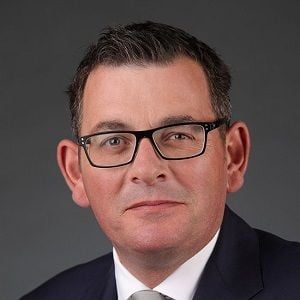
Victorian Premier Daniel Andrews (pictured) has described a recently leaked roadmap to recovery blueprint as "out of date" and clarified an updated plan will be announced on Sunday, 6 September.
The leaked documents revealed by the Herald Sun signalled an extension of Stage 4 lockdown restrictions for two weeks, followed by an easing from 28 September.
The publication reported that blueprint also entailed changes from 14 September whereby single people could have one visitor at their homes and limited outdoor gatherings would be allowed.
But Premier Andrews said these documents have no status.
"We will on Sunday give people a clear roadmap with as much detail and as much certainty as we can possibly provide," he told a press conference this morning.
"It won't be guided simply by dates on the calendar though. It'll be guided by the science and the data; it'll be guided by how many cases there are in Victoria, and the types of cases.
"There is an enormous amount of modelling going on at the moment. That does take quite some time - literally thousands of scenarios are run through various computers and processors."
The state reported new daily cases above the 100-mark again today at 114 and 15 lives lost.
The Premier emphasised the easing of restrictions would need to be done in a safe way, reiterating that if everything opens up too quickly the COVID-19 case numbers will explode and authorities will have "no sense of control whatsoever".
"It's not something that occurs from the 14th of September. It's not an instant thing...we have to find a COVID-19 normal and lock that in with the aim of those settings remaining in place for 2021, or indeed until we receive a vaccine," he said.
"I know everyone wants to open up tomorrow. I understand that, but if we were to do that these numbers will explode, and we will have a couple of weeks of sunshine and we will be back most likely in an even worse position than we were four or five weeks ago."
Updated at 10:41am AEST on 3 September 2020.
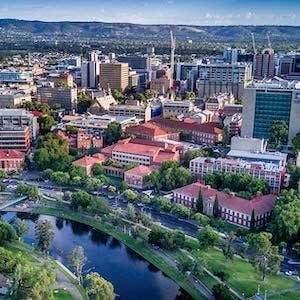
SA declared COVID-19 free
 "SA declared COVID-19 free")
Update: SA has since recorded one new case of COVID-19 on 5 September, its first in nearly two weeks.
With no active cases South Australia has been declared COVID-19 free today by Premier Steven Marshall.
It has been 10 days since SA last reported a positive COVID-19 case, and the state has only recorded 459 positive infections of the coronavirus since the beginning of the pandemic.
However, according to SA Health, a woman in her 40s who returned from interstate has tested positive to COVID-19.
She was a confirmed case interstate but was cleared to enter SA and was not considered infectious while travelling.
The woman is now in hotel quarantine, and the current positive result represents an old infection and does not contribute towards SA's COVID-19 case numbers.
As SA currently has its borders open to visitors from Queensland, SA Health has asked all travellers returning from Brisbane and greater surrounds, Logan, Ipswich, Darling Downs, Toowoomba, and the Gold Coast to closely watch for COVID-19 symptoms on their return to SA and to get tested for COVID-19 if any symptoms develop, even if mild.
Despite the declaration that SA is COVID-free, health authorities are still asking those in the state to practice social distancing, good hygiene, and to stay at home if unwell.
Updated at 5:47pm AEST on 2 September 2020.
AFL Grand Final to be played in Brisbane
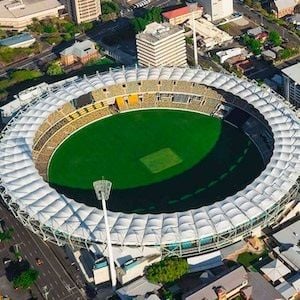 "AFL Grand Final to be played in Brisbane")
AFL chief executive Gillon McLachlan has today confirmed Queensland will be home to the Grand Final this year, with the Adelaide Oval playing understudy to Brisbane's Gabba in case any COVID-19 outbreak disrupts plans.
The match will be held outside Victoria for the first time in 123 years, and will be the played under lights at night for the first time as well in what McLachlan described as an opportunity to make it a "truly unique event".
The game will be held on 24 October although the exact time is yet to be decided.
Speaking from the AFL quarantine hub on the Gold Coast, McLachlan said the decision was by no means a "done deal" from early on, and confirmed Perth was not chosen as the back-up option due Western Australia's very strict border controls.
He said presentations from different states to host the final were "outstanding" and the decision was "extraordinarily difficult". In the end the choice was based on the following criteria:
- Safety in the best environment for all;
- Integrity and the need for uncompromised games in a high-performance environment;
- Fans and the engagement with existing and new supporters;
- Financial support for the game in a year when revenue has been so impacted; and
- The legacy and long-term vision for the game.
Premier Annastacia Palaszczuk has welcomed the decision, claiming the state is honoured and ready.
"I want to thank the AFL, and especially the game's fans in Victoria, for trusting Queensland with their most important event," the Premier said.
"This will be a once-in-a-lifetime opportunity, so we are determined to give everyone a Grand Final they'll never forget."
More than 30,000 fans will be allowed into the stadium under COVID-safe plans that have allowed the season to progress safely this year in Queensland. However, contingency measures are in place in case there are COVID-19 outbreaks that warrant a reduction in crowd numbers.
Premier Palaszczuk said the AFL Grand Final would be an economic boost for the state and an opportunity to attract new fans.
"Rather than marking the end of a very difficult year I hope it marks the beginning of a whole new era," she said.
"Very few industries have been as hard hit by COVID-19 as our tourism and events businesses, so to be able to host the AFL Grand Final in Queensland for the first time ever is a huge confidence boost," added Tourism Minister Kate Jones.
"This is so much more than a game of footy, this is a chance to show Australia exactly what Queensland offers when it comes to being not only an events destination, but a tourist destination."
The Victorian Government also announced it had agreed to the relocation of the AFL Grand final for one year, with that year to be added to the MCG's decades-long Grand Final contract.
Victorian Minister for Tourism, Sport and Major Events Martin Pakula said the decision to hold the event outside the state was made in the interests of Victorians and all footy fans.
"This is a one-off deal in a one-off year that means the Grand Final can be played in front of supporters, as it should be," he said.
"The pandemic is a life and death battle and we cannot risk our hard-fought gains for the sake of rushing back to crowds before it is safe.
"This agreement secures the Grand Final at the MCG until 2058 and reinforces our position at the heart of Australian football."
McLachlan thanked the Queensland Government for making the relocation possible, with plans underway to help it successfully stage the biggest event on the AFL calendar and share it with the community.
"This is a really exciting opportunity for our code to take our biggest game to new audiences across Queensland and to also provide a lasting legacy for future generations," McLachlan said.
The AFL chief also thanked Pakula and Victorian Premier Daniel Andrews for working with the organisation so the Grand Final could be played in front of a crowd.
"The Victorian Government has been a long-term partner and supporter of our game and a driving force behind the growth of our game," McLachlan said.
"We know this is a tough time for all Victorians and our thoughts are with the Victorian community as we continue to deal with the impacts of this pandemic.
"We look forward to returning our Grand Final to the MCG in 2021."
Melbourne Cricket Club chief executive Stuart Fox said while there was disappointment the beloved Grand Final would not be held at the MCG, "we know this is an important decision to support the health of all Victorians and the AFL".
Updated at 1:50pm AEST on 2 September 2020.
Advertisement
Latest News
From $13,000 to $20 million: how a PCOS diagnosis and a pair of scissors built Xali Organics
Inspired by a medical diagnosis and driven by innovative marketing,...
Cedar Woods secures $63.4m in new land acquisitions as record presales underpin pipeline push
Perth-headquartered residential developer Cedar Woods Properties (A...
Australia's long-term beer decline hits home as Lion plans to close Boag's brewery in Launceston
Australia's decades-long decline in beer consumption has claime...
Downer EDI seals $310m Transurban contract to maintain Sydney motorway network
Infrastructure services group Downer EDI (ASX: DOW) has secured con...
Propel Funeral Partners expands New Zealand footprint with trio of acquisitions worth $9.1m
Sydney-based death care provider Propel Funeral Partners (ASX: PFP)...
Advertisement