Advertisement
Staying informed is more important than ever as the situation unfolds with Covid-19. Stay tuned here for our live updates, and be sure to let us know what your business is doing to face this unprecedented challenge.
Covid-19 News Updates
Owner of Noni B and Millers strikes deal to reopen its Westfield stores
 "Owner of Noni B and Millers strikes deal to reopen its Westfield stores")
Mosaic Brands (ASX: MOZ) has struck a deal with major landlord Scentre Group (ASX: SCG) to reopen its stores in Westfield shopping centres outside Victoria, but the fashion retailer will still press ahead with plans to permanently close 300-500 shopfronts.
The breakthrough follows an announcement on 20 August whereby Scentre temporarily locked Mosaic out of 129 stores in Westfield shopping centres due to an impasse in negotiations.
In charge of such brands as Rockmans, Katies, Millers, Rivers, Autograph, Crossroads, Noni B and W.Lane, Mosaic Brands CEO Scott Evans recently said the group wanted to minimise closures but "not on uncommercial terms".
Evans said the retail rental market had not just paused due to COVID-19 but had "fundamentally changed".
Today the group confirmed the terms of its agreement with Scentre was confidential, but the successful negotiations mean all non-Victorian stores in Westfield shopping centres have now reopened.
"This is a good outcome for Mosaic and, in particular, the 400 affected team members. As we noted last week, shuttered stores work for no one," says Mosaic chairman Richard Facioni.
"We're pleased to have reopened our Westfield stores over the weekend following a mutually agreeable outcome to our negotiations with Scentre Group.
"We have had a long-standing relationship with Westfield enabling us to reach a solution that worked for both parties."
Victorian stores remain closed due to Stage 3 and 4 restrictions in the state.
"Our Victorian stores remain temporarily closed for health and safety reasons. We look forward to reopening those stores as soon as it is safe for our team and customers to do so."
Mosaic noted it would continue to negotiate with landlords nationally to achieve commercially sound lease terms consistent with the fundamental shift it sees in the market. It continues to anticipate shutting down 300-500 stores over the coming 12-24 months.
Updated at 10:25am AEST on 31 August 2020.
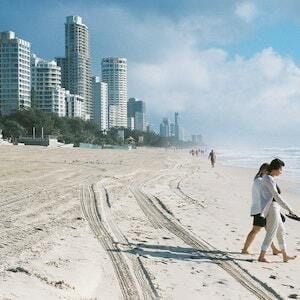
Schoolies cancelled and new restrictions as Gold Coast records two new COVID-19 cases
 "Schoolies cancelled and new restrictions as Gold Coast records two new COVID-19 cases")
The COVID-19 cluster at the Queensland Corrective Services Academy has grown to four confirmed infections after another three people tested positive overnight.
Because two of the three new cases are people based on the Gold Coast, the state government has implemented new restrictions for the city.
For Gold Coast residents, this means that no more than 10 people can gather inside a house or outdoors, and aged care facilities will be locked down.
The third case was detected in a person from Forest Lake.
As such, the State Government has made the tough decision to cancel the annual Schoolies festival - traditionally a rite of passage for school leavers in Queensland.
Chief health officer Dr Jeannette Young has designated mass gatherings of young people over multiple days 'high risk'.
"This is not something that is unique to Queensland," Dr Young said.
"I feel terribly for this year's school leavers who have already been through so much.
"But that is the reality of keeping every family safe from this horrible disease."
Premier Annastacia Palaszczuk said school-leavers should still celebrate their achievements and take advantage of being able to travel throughout the state.
"Schoolies Week doesn't have to be just one week," the Premier said.
"We are Good to Go across Queensland to some of the most beautiful places in the world right here in our own backyard."
Accommodation providers will be required to register guests as part of their COVID-safe plans.
The three new cases brings the total number of active cases in Queensland to 20.
Updated at 9:52am AEST on 28 August 2020.
Theme park closures sees Dreamworld operator post $137m loss
 "Theme park closures sees Dreamworld operator post $137m loss")
The enforced closures of Ardent Leisure's (ASX: ALG) theme parks in Australia and entertainment centres in the US due to COVID-19 restrictions resulted in the company's loss ballooning to $136.6 million in FY20.
Total reported revenue for the Dreamworld operator decreased by $85 million to $398.3 million in the full year, also due to COVID-19 restrictions on trade.
The results capped off another rough year for Ardent Leisure which was witnessing revenue growth of 5 per cent for the 35 weeks up to the end of February 2020, before the pandemic hit Australia and the US.However, from March onward, the company only brought in $68.2 million of earnings, compared to $362.3 million generated pre-pandemic.
Ardent Leisure also suffered from an impairment charge of $15.4 million on property, plant and equipment in its theme parks division, and a charge of $2 million relating to the its Main Event business.The company's chairman Dr Gary Weiss did not play down the disappointing FY20 results.
"The emergence of COVID-19 in the second half of the financial year has had a significant impact on our business," says Weiss."Following the restrictions put in place by government and health authorities, we made the difficult decision to close our Main Event centres in the United States and Theme Park businesses in Australia from mid-late March.
"While positive progress had been achieved by Main Event and Theme Parks in the first eight months of the year, our focus turned to capital management and securing capital for the business as the COVID-19 pandemic escalated."The group's theme parks division, which includes Dreamworld, Whitewater World and Sky Point, reported trading revenue of $54.5 million for the year, down 18.8 per cent.
The division also reported an EBITDA loss of $24 million, compared to an EBITDA loss of $19.8 million in the prior year, largely because of COVID-19 impacts and the associated impairment charge.In addition, the group's US cinema arm, Main Event, saw revenue decrease by 17.4 per cent.
Main Event has progressively reopened its facilities in May and June, with 38 centres reopened as at 30 June 2020.Despite the uncertainty, Weiss is optimistic about Ardent Leisure's FY21, particularly because of the government support the theme parks division has received from the Queensland Government ahead of Dreamworld's reopening in September.
"We anticipate uncertain and challenging conditions to continue in FY21, however we believe that the demand for out-of-home family entertainment experiences will be stronger than ever once the pandemic has subsided and restrictions have eased," says Weiss."Our guests and team members can be confident we have implemented the highest levels of cleaning and safety standards across out business."
Shares in Ardent Leisure group are down 3.30 per cent to $0.44 per share at 3:54pm AEST.
Updated at 4:21pm AEST on 27 August 2020.
COVID-19 impacts dull Lovisa's profits
 "COVID-19 impacts dull Lovisa's profits")
The standing down of staff, store closures and supply chain disruptions had a significant impact on jewellery retailer Lovisa's (ASX: LOV) full year profits.
The COVID-19 pandemic took the shine off Lovisa's profit after tax this financial year, down 69.7 per cent to $11.2 million.
However, a focus on digital during the fourth quarter led to the company growing online sales by 311 per cent in FY20, with growth of 382 per cent in Q4 and that trend continuing since the end of the financial year.
Overall, the company's revenue dipped moderately to $242.1 million, down 3.2 per cent from FY19.
"We are pleased with what our team has been able to achieve through the disruptions to our business over the past six months, and whilst it has had a temporary impact to sales and profitability we remain confident in our growth objectives and have been able to maintain the balance sheet strength required to deliver on them," says Lovisa managing director Shane Fallscheer.
"This leaves us very well placed for the future."
Before the COVID-19 pandemic hit the global economy, Lovisa was witnessing total sales increasing by 22.2 per cent.
It was in Q3 that the impacts of COVID-19 were felt by the jeweller, initially in its Asian markets, as economic activity slowed in response to events in China, and then escalating to full store closures globally by the end of March.
The second half was particularly hit by disruption to the company's supply chain, first with factory and warehouse closures in China and followed by freight disruption.
To this day Lovisa says it is still experiencing bottlenecks in freight deliveries, albeit to a lesser degree.
At the end of the financial year Lovisa was trading from 435 stores, with performance strongest in the Australia and New Zealand markets which were able to reopen earlier than its stores in the UK.
During the period Lovisa decided to exit the Spanish market, which it attributes to poor support from landlords through the lockdown period, resulting in nine store closures.
As a result, Lovisa's results were impacted by a $3.4 million impairment charge recognised in relation to this exit.
Additional impairment charges were taken across a "small number" of other stores in its global network, taking the total impairment recognised in FY20 to $4.5 million.
Lovisa says it bounced back in the fourth quarter, with cash flow returning to strong levels, and cash from operations before interest and tax of $51.7 million.
For the first eight weeks of FY21 Lovisa says it is still suffering from challenging trading conditions, with comparable store sales down 19 per cent. This is still an improvement on the fourth quarter of FY20 when sales were down by 32.5 per cent.
Lovisa still has 30 stores in Melbourne, 19 stores in California, two stores in New York and eight stores in New Zealand closed temporarily due to COVID-19 government lockdowns.
"Our strategic plan remains in place, we are ready to continue our store roll out and we continue discussions with our landlords globally as we believe current circumstances will create further opportunities," says Lovisa.
"Our balance sheet remains strong, with a continued net cash position above $20 million and undrawn cash debt facilities supporting investment in growth."
Shares in LOV are down 5.72 per cent to $7.09 per share at 10:19am AEST.
Updated at 10:40am AEST on 26 August 2020.
Public health alerts issued for Apple and Kmart at Broadway Sydney
 "Public health alerts issued for Apple and Kmart at Broadway Sydney")
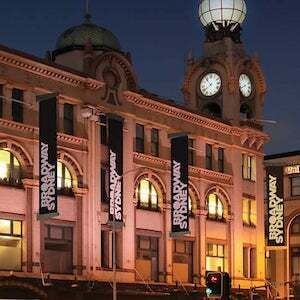
A number of public health alerts have been issued in Sydney overnight, including at the Broadway shopping centre and the City Tattersalls Fitness Centre on Pitt Street.
According to NSW Health, a confirmed COVID-19 case visited the Apple and Kmart stores on 22 August between 3:30pm and 5pm.
Further, two cases of COVID-19 attended the Tattersalls Fitness Centre on August 19, 21 and 23.
Anyone who attended any of these venues or stores on any of these dates should monitor for symptoms and get tested if any appear.
Apple and Kmart are currently undertaking deep cleaning and working with NSW Health.
In addition, NSW Health has alerted people who may have been to 300 George Street, Sydney on August 19, 20, 21, or 24 to monitor for COVID-19 symptoms after one of the cases worked in the building while infectious.
In a statement posted to Facebook, Broadway Sydney has told customers to "not be alarmed".
"Based on current Health advice, customers in our wider community who may have visited other retailers in the centre, or visited at other times should not be alarmed. The centre and all other retailers will remain open," says Broadway Sydney.
"The Centre underwent a full centre clean Saturday evening, as it does each night as part of our regular cleaning regime.
"We continue to co-operate with NSW Health and will keep all our customers and retailers informed and provide you with more information as we receive updates."
NSW reported three new cases of COVID-19 yesterday, bringing the state's cumulative total since the pandemic began to 3,991.
Updated at 9:28am AEST on 26 August 2020.
Servcorp profit up despite "severe" impact on coworking
 "Servcorp profit up despite \"severe\" impact on coworking")
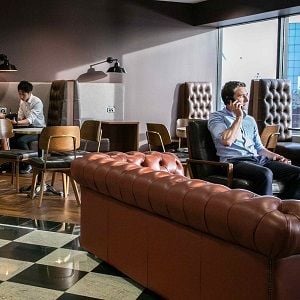
Serviced offices provider Servcorp (ASX: SRV) has seen occupancy levels decline by four percentage points and had to close 29 floors globally due to COVID-19, but the Sydney-based company is optimistic for the year ahead.
After announcing a 28.9 per cent increase in net profit after tax (NPAT) in FY20 to $6.9 million, of which more than $1 million came from JobKeeper, Servcorp expects to remain profitable "even at a low case" in the current financial year.
SRV shares rose 8.8 per cent today to $2.34 each, buoyed by a dividend of 8.7 cents per share and projections more could be in store if the underlying business continues to generate free cash.
The company's revenue rose by 4.6 per cent to $352.9 million, with performance in markets like the Middle East and North Asia - except for a drag on profit in China - pushing sales higher.
"We are still of the view that coworking is an important part of not only our offering but the industry too, and that our investment in reshaping our portfolio for coworking will realise a return on investment in the longer term.
The group opened three new floors in FY20 and expanded two floors, but the pandemic forced the closure of 12 US locations, five in North Asia including four in China and seven in the Australia-NZ-South East Asia segment.
"In the 2020 financial year, net capacity decreased by 749 offices, including 271 in the USA. During the year three floors were opened and 29 floors were closed, including 12 floors closed as part of the restructure in the USA in June 2020," the company said.
"During the 2020 financial year we opened new locations at Madison Avenue in New York and One Museum Place in Shanghai. In addition, two floors were expanded in Hobart and Brisbane locations."
The USA continues to be a thorn in Servcorp's side as the only region that recorded a like-for-like loss in FY20, which deepened by 77 per cent on FY19 to $6.9 million.
Overall, the restructuring and closure of floors meant the USA operations recorded an even larger deconsolidation loss of $14.3 million for the period.
Servcorp also replaced its USA general manager in April with Colleen Susini, who is based in New York and has extensive flexible workspace industry experience, including with Regus.
The group explains recent growth in the flexible workspace industry has been underpinned by the expansion of coworking spaces, but the COVID-19 has had a significant impact on these arrangements.
"There has been a severe impact to coworking and we expect the recovery to take significantly longer than our serviced and virtual office offerings," Servcorp says.
"Given the nature of coworking, and its inherent lack of social distancing, it is expected to take significantly longer to recover from COVID-19."
Updated at 3:57pm AEST on 25 August 2020.
SA to reinstate buffer zone with Victoria, NSW border relaxation considered
 "SA to reinstate buffer zone with Victoria, NSW border relaxation considered")
South Australia will reimplement a COVID-19 buffer zone along its border with Victoria, and NSW residents may soon be able to come into SA without restrictions.
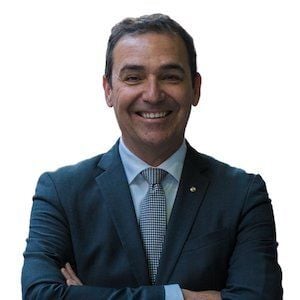
As of midnight on Thursday evening a 40-kilometre buffer zone on either side of the border will come back into effect, which Premier Steven Marshall (pictured) says will make things easier for those living in border towns.
"We are extraordinarily grateful for [South Australians] adherence to the tough restrictions that we've had in place, and that has put us in a very good situation," says Marshall, following the latest decision from the state's Transition Committee.
"So as of Friday, school students will be able to return to school in South Australia, and businesses will be able to resume exactly and precisely as the were."
The easing of the state's hard border with Victoria, initially instated on 8 July, will only go ahead if there is no evidence of community transmission of COVID-19 in the western part of Victoria between today and midnight on Thursday evening.
"The information that's been provided to us by the Victorian authorities has given the Transition Committee the confidence to put that 40 kilometre buffer either side of the border back in place for this coming Friday."
In addition, Marshall says state health authorities are keeping a close eye on the COVID-19 situation in NSW and the ACT, which may mean residents from those jurisdictions could come to SA without a period of self-isolation within a matter of weeks.
"We are not announcing today that that border will be removed, but what we are saying is that we're looking very closely at this," says Marshall.
"If we continue to see very low levels like we've been seeing, it's quite possible that we'll remove that requirement for 14 days of self-isolation within the next two weeks."
In addition, Marshall announced today that the restrictions on household gatherings will be eased from Friday, with homes now able to accommodate 50 people at once, up from a strict 10 person limit.
Finally, SA will now allow travellers from jurisdictions the state has an open border relationship with to transit through airports in NSW and Canberra without having to do 14 days of isolation.
These states include Tasmania, Western Australia, the Northern Territory and Queensland.
South Australia did not record any new cases of COVID-19 today, but it's eastern neighbour Victoria confirmed 148 new infections of the coronavirus this morning and eight new deaths.
There were no new cases in Queensland, the Northern Territory or the ACT, but there were three new cases of COVID-19 in NSW.
Updated at 2:05pm AEST on 25 August 2020.
Qantas puts another 2,500 jobs on the chopping block
 "Qantas puts another 2,500 jobs on the chopping block")
Thousands of Qantas Group (ASX: QAN) ground operations staff face an uncertain future after the airline announced a review to outsource their jobs and save $100 million.
The latest cost-cutting measure could potentially impact 2,500 baggage handler, aircraft cleaning and ground transport jobs for the airline and its subsidiary Jetstar, on top of the 6,000 redundancies already announced in June.
In an announcement today the company said the COVID-19 crisis had forced management to examine whether these services could be delivered more efficiently.
Some Qantas management roles could also be in the firing line, but customer-facing team members at airports are not under the scope of the reviews.
Staff and unions have been informed of the decision, with the review set to be undertaken over the coming months.
Qantas Domestic CEO Andrew David, who will soon lead on the airline's international business as well after the departure of its CEO Tino La Spina, emphasises airlines have to change how they operate to ensure they can survive long-term.
"We've already taken drastic action, with more than 220 aircraft grounded, the vast majority of our workforce stood down and assets mortgaged to raise cash," says David.
"Right now, our domestic capacity is at 20 per cent of pre-COVID levels and international travel is expected to take years to recover.
"We know travel restrictions will lift eventually, but the market will be very different. Every airline will come through this much leaner and more efficient, and we have to be able to compete if we're going to survive."
David estimates outsourcing work to specialist ground handlers would save an estimated $100 million in operating costs each year.
To help it get through this period as one of Australia's most heavily impacted companies from the pandemic, Qantas received $267 million in JobKeeper payments from the Federal Government to support its staff by 30 June.
This was part of a total gross benefit from government support of $515 million, but the net benefit of government payments after the costs of operating flights was $15 million.
"Today's announcement will be very tough for our hard-working teams, most of whom have already been stood down for months without work," says David.
"This obviously adds to the uncertainty but this is the unfortunate reality of what COVID-19 has done to our industry."
David's sentiments were echoed by Jetstar Group CEO Gareth Evans.
"We realise this decision will be extremely difficult news for our ground handling team and their families at what is already a very challenging time," he says.
"But unfortunately this ongoing crisis means we have to make some really tough decisions which impact our team members who have provided a consistent and professional operation over many years.
"Every major airline around the world uses these specialist providers to support their operations. These ground handlers provide these services to many airlines at airports, rather than just one, and provide scalable resources, which makes them very cost effective."
He says contracting this work out also reduces the capital spend required each year.
"As an example, Qantas and Jetstar would need to invest a further $100 million on ground handling equipment over the next five years, such as tugs and bag loaders, if the work is kept inhouse," he says.
"The Qantas Group sets the safety standards through our safety management system whether work is done in house or external suppliers. We expect some unions will come out and say these suppliers are unsafe, despite the fact they are used by every other airline in this country.
"We would never compromise on safety. We've already worked with some of these suppliers for decades and we know their track record on safety is consistent with work done in house."
The changes are proposed for Qantas staff at airports in Adelaide, Alice Springs, Brisbane, Cairns, Canberra, Darwin, Melbourne, Perth, Sydney and Townsville, as well as Jetstar staff in Adelaide, Avalon, Brisbane, Cairns, Melbourne and Sydney Domestic.
Qantas will also look to outsource its bus services for customers and employees in and around Sydney Airport, as part of a similar but separate review.
Qantas Group says affected employees will be provided a redundancy package and be provided with support to transition to new jobs outside the business.
On its Ground Operations careers page, Qantas reports it has 7,000 people currently working in its airport terminals around Australia.
Updated at 2:14pm AEST on 25 August 2020.
Pandemic slams Scentre with $3.6 billion loss
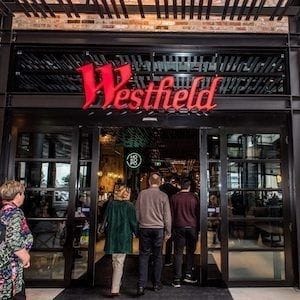 "Pandemic slams Scentre with $3.6 billion loss")
The operator of Westfield shopping centres in Australia has seen the value of its properties dive by around $4 billion in the first six months of 2020, leading to a loss of $3.6 billion.
The devaluation was the main driver of Scentre Group's (ASX: SCG) fall from a 2019 first half profit of $740 million, with much of the rest explained by a credit charge of $232.1 million, mostly comprising the costs of rental assistance agreements.
The half was tinged by the effects of government imposed COVID-19 restrictions on retailers, which have been gradually eased in most of the country except for Victoria, forcing many to close for long periods of time.
This resulted in Scentre signing rental assistance agreements with more than two thirds of its retail partners in the half, including 1,624 SME retailers; a segment that normally contributes 30 per cent to its retail income.
Under the SME code of conduct, SMEs were able to reduce the amount of cash rent payable commensurate with the decline in sales they may have experienced during the pandemic and post-pandemic recovery period.
"We acknowledge this has been a difficult time for our customers and our retail partners. We have supported our retail partners throughout this period on a case-by-case basis. We have done this without receiving financial assistance from the government," says Scentre Group CEO Peter Allen.
"The shopping centre industry has provided over $1.6 billion of support for retailers during the pandemic. Our industry is unique in that it has provided, and self-funded, a level of financial support beyond any other industry as well as most government pandemic support packages."
"Importantly, the structure of our leases with our retail partners has not changed and remains based on the mutual agreement to pay a fixed rent."
For the six-month period to the end of June 2020 Scentre collected 70 per cent of gross rental billings, and for the months of June and July 2020 gross rental billing collections were over 80 per cent.
Retailers in Westfield centres were impacted by restrictions on store openings and the movement of people. As such, in-store sales for the retailers that traded throughout the first half were 8.1 per cent lower compared to the previous corresponding period.
Further, specialty in-store sales were 12.1 per cent lower compared to the first six months of 2019.
"I am very proud of our team, particularly how we responded and adapted to the significant challenges brought about by the COVID-19 pandemic," says Allen.
"We remained focussed on providing our customers with the ability to continually meet their needs throughout the period. We did this by remaining open as well as implementing, and communicating, the highest standards of health and safety protocols."
So far this year Scentre raised or extended $5.8 billion of additional funding, including $3.4 billion of bank facilities and $2.4 billion of long-term bonds.
The company currently has available liquidity of $4.4 billion, which it says is enough to cover all maturities to January 2023.
"At the onset of the pandemic we acted quickly to secure additional funding, ensuring we are in a strong financial position to see the group through and beyond the volatile period," says Allen.
Even with restrictions in place, Scentre says more than 93 per cent of retail stores were open across the Westfield centres (excluding Victoria), and its portfolio occupancy was 98.8 per cent at the end of June 2020.
All of the 42 Westfield centres remained open and trading during the pandemic.
Updated at 9:52am AEST on 25 August 2020.
Super Retail Group thrives online as Australians embrace domestic travel
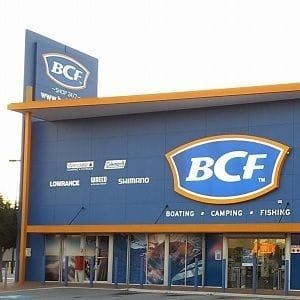 "Super Retail Group thrives online as Australians embrace domestic travel")
Super Retail Group's (ASX: SUL) omni-channel retail model enabled the company to ride out the worst of the initial COVID-19 market shock as online sales rose by 44.4 per cent in FY20.
However the company's net profit after tax was down by approximately 21 per cent in the financial year to $110.2 million.
The retailer is the parent of major brands including Supercheap Auto, outdoor and leisure retailers Macpac and BCF, as well as sporting retailer Rebel Sport.
As such, SUL says it benefited from "pent-up" demand for domestic travel, leisure and outdoor activities as many Australians emerged from COVID-19 lockdowns, eager to get outside.
This resulted in the company's fourth quarter sales in May and June rebounding by 27.2 per cent.
That positive momentum continued across all four brands in the first seven weeks of FY21, with sales growth of 32 per cent.
Group online sales increased by 44.4 per cent to $290 million, representing 10 per cent of total sales.
SUL's managing director and CEO Anthony Heraghty says the company's omni-channel approach and its response to the initial impact of COVID-19, including reallocating resources to its online businesses, enabled it to thrive in the last six months of FY20.
"The group's omni-channel retail strategy has enabled our business to adapt quickly to changing consumer behaviour during COVID-19 and delivered a strong trading performance," says Heraghty.
"Keeping stores open for our customers while successfully pivoting to meet increased demand in our online sales channels has enabled the Group to profitably navigate an extremely challenging period for retail and deliver 44 per cent annual online sales growth.
"We are well positioned to benefit from consumer trends emerging from the pandemic, including the channel shift to online, uptake in DIY auto repairs and household projects, increased focus on personal health and wellbeing, and greater demand for domestic travel and outdoor leisure activities."
During FY20 more than one million customers made their first online purchase with SUL.
Heraghty says ongoing investment in SUL's omni-channel capability is positioning the group well.
"This investment has supported 66 per cent CAGR in group online sales over the past four years," says Heraghty.
"During this period, the group's active membership base of 6.6 million has grown almost five-times faster than store numbers.
"Scalable growth is critical to our success and our ability to expand the group's customer base multiple times faster than our physical store network reinforces our conviction in an omni-retail strategy."
In the first seven weeks of FY21, SUL has witnessed "extremely robust" sales growth of 32 per cent, driven by an uptake of domestic tourism, exercise and fitness, and outdoor leisure activities.
Sales growth for the beginning of the new financial year was particularly pronounced at BCF, which has seen 72 per cent growth.
SUL says while the economic outlook is uncertain for the remainder of FY21, it expects capital expenditure to be approximately $90 million.
The company's board has declared a fully franked dividend of 19.5 cents per share, representing a payout ratio of 55 per cent of second half underlying NPAT.
Updated at 12:48pm AEST on 24 August 2020.
Advertisement
Latest News
From $13,000 to $20 million: how a PCOS diagnosis and a pair of scissors built Xali Organics
Inspired by a medical diagnosis and driven by innovative marketing,...
Cedar Woods secures $63.4m in new land acquisitions as record presales underpin pipeline push
Perth-headquartered residential developer Cedar Woods Properties (A...
Australia's long-term beer decline hits home as Lion plans to close Boag's brewery in Launceston
Australia's decades-long decline in beer consumption has claime...
Downer EDI seals $310m Transurban contract to maintain Sydney motorway network
Infrastructure services group Downer EDI (ASX: DOW) has secured con...
Propel Funeral Partners expands New Zealand footprint with trio of acquisitions worth $9.1m
Sydney-based death care provider Propel Funeral Partners (ASX: PFP)...
Advertisement