Advertisement
Staying informed is more important than ever as the situation unfolds with Covid-19. Stay tuned here for our live updates, and be sure to let us know what your business is doing to face this unprecedented challenge.
Covid-19 News Updates
Public health warning issued for Paddington pub
 "Public health warning issued for Paddington pub")
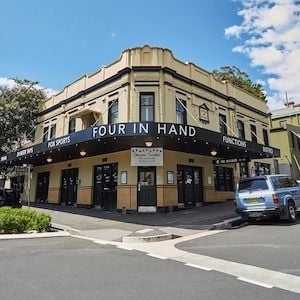
NSW Health has issued a public health warning for the Four in Hand Pub in Paddington after a confirmed case of COVID-19 attended the venue.
Guests who attended the pub downstairs between 6.30-10pm on 26 August for more than two hours are considered close contacts and must immediately get tested and self-isolate for 14 days since they were there.
The warning comes as NSW confirms 17 new cases of COVID-19 today, including one in hotel quarantine and one locally acquired infection with no known source.
The other 15 are linked to a known case or cluster, including eight linked to the August CBD cluster, six to St Paul's Greystanes school, and one linked to Liverpool Hospital.
One previously reported case, who worked at Cubbyhouse Childcare out-of-school-hours centre at Homebush Public School, has been excluded following further investigation. People previously identified as close contacts are no longer required to isolate for 14 days.
Two more students at St Paul's Greystanes and four contacts have tested positive, bringing the total cases associated with the school to 10.
The school has been cleaned and remains closed for onsite learning today but the source of the original infection is still under investigation.
NSW Health is treating 75 COVID-19 cases, including five in intensive care and three who are ventilated. 87 per cent of cases being treated by NSW Health are in non-acute, out-of-hospital care.
In addition to the public health warning issued for the Four in Hand Pub, NSW Health has asked anyone who attended the following venues or public transport to monitor for symptoms:
- Four in Hand Pub, 105 Sutherland Street Paddington guests who dined upstairs only or for less than two hours on 26 August from 6:30-10pm.
- Metro Fuel Greystanes on 27 August, 3.15-3.35pm
- Big Bun, 260 Pitt Street Merrylands, 27 August 3.30-4pm
- Carslaw Building, University of Sydney Camperdown toilets, 28 August 8-8.20pm
- Stockland Merrylands on 29 August between 9-11am
- Bus 810 28 August departed St Paul's Catholic College Greystanes 3.04pm, arrived 3.28pm Macquarie Rd opposite Boothtown Reserve Greystanes
Updated at 1:19pm AEST on 2 September 2020.
Australian GDP falls by a record 7 per cent
 "Australian GDP falls by a record 7 per cent")
The Australian economy is officially in recession after the country's gross domestic product (GDP) fell by 7 per cent in the June quarter.
The contraction is the largest on record and follows a dip of 0.3 per cent in the March 2020 quarter.
According to the Australian Bureau of Statistics (ABS) the combined effect of the pandemic and government responses led to movements of an "unprecedented size".
"The global pandemic and associated containment policies led to a 7.0 per cent fall in GDP for the June quarter," says head of national accounts at the ABS Michael Smedes.
"This is, by a wide margin, the largest fall in quarterly GDP since records began in 1959."
Private demand detracted 7.9 percentage points from GDP, driven by a 12.1 per cent fall in household final consumption expenditure.
Spending on services fell 17.6 per cent, with falls in transport services, operation of vehicles and hotels, cafes and restaurants.
"The June quarter saw a significant contraction in household spending on services as households altered their behaviour and restrictions were put in place to contain the spread of the coronavirus," says Smedes.
In addition, Net Trade contributed 1.0 percentage points to GDP, imports of goods fell 2.4 per cent, with falls in consumption and capital goods reflecting weak domestic demand.
Imports of services fell 50.5 per cent while exports of services fell 18.4 per cent, due to restrictions on travel and tourism.
General government net saving fell to -$82.6 billion from $1.2 billion in the March quarter 2020.
However, according to analysis from Deloitte, the contraction to GDP needs to be put into perspective.
Only a small number of countries have seen less damage to their economies amid the COVID-19 pandemic including China, Vietnam, Taiwan and South Korea.
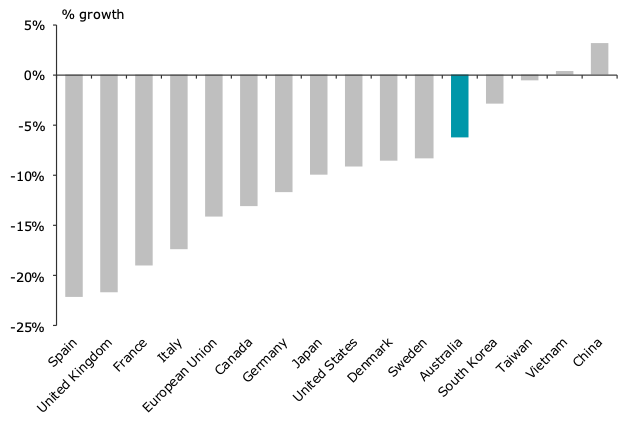
GDP growth rates over the same quarter of the previous year international comparison (via Deloitte)
"The underlying equation is simple. The greater the success against the virus, the greater the success in protecting economies against the pandemic," says Deloitte Access Economics senior economist Sheraan Underwood.
"At the other end of the scale, the hit to most economies is rather larger than that seen in Australia.
"The defence of Australian lives and livelihoods has seen us thread the needle. Australia has seen both less economic damage and relatively fewer lives lost than most nations, including the US, the UK and most of Europe, including Sweden, which has taken a different path than many others."
Despite today's economic update, the All Ordinaries are up 1.58 per cent at 6,240.500.
Updated at 12:53pm AEST on 2 September 2020.
Mesoblast gains ethics approval to treat COVID-19 patients in Australia
 "Mesoblast gains ethics approval to treat COVID-19 patients in Australia")
With US trials for its potential COVID-19 treatment now at the Phase 3 stage, regenerative health company Mesoblast (ASX: MSB, NASDAQ: MESO) has today received a breakthrough for testing the stem cell-based intravenous solution in Australia.
The Melbourne-based group has today announced it received ethics approval to include Australian hospitals in the Phase 3 randomised controlled trial of remestemcel-L in ventilator-dependent COVID-19 patients with acute respiratory distress syndrome (ARDS).
Participating hospitals in Melbourne and Sydney have been granted approval by the Human Research Ethics Committee of Monash Health, and will join more than 17 leading US medical centers already in the Phase 3 trial.
This study is being conducted by the US National Institutes of Health-funded Cardiothoracic Surgical Trials Network, and cleared by the US Food and Drug Administration (FDA).
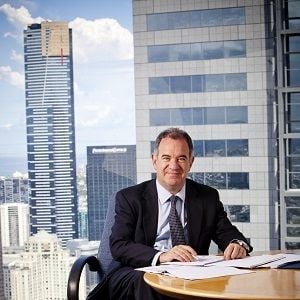
"As an Australian company developing a potential treatment for COVID-19 ARDS, the primary cause of death in patients infected with COVID-19, we have a responsibility to evaluate remestemcel-L in Australian patients as the country continues to grapple with COVID-19," says Mesoblast chief executive and founder Dr Silviu Itescu (pictured).
"We are pleased that Monash Health is involved in this important COVID-19 trial, especially given the extensive experience we have had with Mesoblast's mesenchymal lineage cells," adds principal investigator, Associate Professor Tony Goldschlager.
The company's shares have skyrocketed since April when restemcel-L produced encouraging results in a small cohort of severely ill COVID-19 patients in New York, with 83 per cent surviving compared to a 12 per cent rate at the time for those in similar circumstances.
Before COVID-19 and the company's pivot to treat the virus, Mesoblast was worth $1.56 billion. Today it is worth more than $3 billion.
Updated at 11:36am AEST on 2 September 2020.
Nufarm forecasts $215m impairment charge, 29 per cent profit drop
 "Nufarm forecasts $215m impairment charge, 29 per cent profit drop")
Crop protection group Nufarm (ASX: NUF) is capping off a whirlwind financial year with a $215 million hit to its asset values in Europe, where competition and high input costs have put profit margins under strain.
It is a state of affairs that prompted the Melbourne-based group to curtail herbicide manufacturing at its operations Austrian operations in June, when Nufarm also revealed its decision to cease manufacturing insecticides and fungicides at its Raymond Road site in Laverton, Victoria.
Apart from logistical challenges and demand pressures caused by the pandemic, dry weather has also worked against Nufarm in Europe as less rain means less disease pressure and people don't buy as many fungicides.
The opposite is the case in Australia and New Zealand, where CEO Greg Hunt says wet weather led underlying EBITDA to double in the second half.
But overall the company is expecting a 29 per cent reduction in EBITDA to $290-300 million for FY20; a decline also partly driven by around $33 million foreign exchange losses due to currency volatility that damaged returns in some markets such as Eastern Europe and Mexico.
Expectations of underlying EBITDA for continuing operations are lower still at $230-240 million, following Nufarm's $1.19 billion sale of its South American assets.
"We have delivered positive momentum across most regions in the second half of the financial year, however earnings for the full year will be down on last year, primarily due to the divestment of the South American businesses, lower earnings in the first half and reduced earnings in Europe," says Hunt.
"Drought breaking rains on the east coast of Australia in late January and good follow up rainfall has provided welcome relief for farmers and generated strong demand for crop protection products.
"This has more than doubled second half underlying EBITDA for the ANZ business compared to the prior year and provides a much stronger outlook for the summer cropping season."
He says EBITDA in North America also increased in the second half with increased crop planting and improved seasonal conditions lifting demand for crop protection products, with a particularly strong performance in Canada.
"This more than offset the impact of lower demand in the Turf and Ornamental segment due to COVID-19 restrictions. Earnings in the second half also benefited from a stronger US dollar relative to the Australian dollar," says Hunt.
"Our business in Asia had a strong second half as a result of improved weather, positive momentum from product launches and lower costs contributing to a much stronger EBITDA performance than the second half last year."
The market appears to have expected a worse result as NUF shares rose 5.1 per cent to $4.12.
This price level is still well down on Nufarm's $5.50 level three months ago before multinational Bayer reached one of the largest civil settlements in US history at more than $10 billion over claims Roundup - which Nufarm sells - caused cancer for more than 10,000 claimants.
Controversy has surrounded Roundup, scientifically known as glyphosate, since 2015 when the chemical herbicide was declared as "probably carginogenic" by the World Health Organisation.
NUF shares were trading at close to $10 each in 2017, but the potential implications of legal cases and court orders against glyphosate's former owner Monsanto - which was acquired by Bayer - were not lost on Australian investors and shares have steadily declined since then.
The company is now aiming to rise above these issues through its other divisions, including the ramp-up of commercialisation activities for Omega-3 canola oil and Carinata as part of its seed technologies business.
Nufarm is also switching its financial year from ending on 31 July to finishing on 31 September, so it is currently in a transitional period before that change takes effect.
The company will report its financial results on 23 September, and the following day ex Bunnings Group CEO and Officeworks chairman John Gillam will succeed Donald McGauchie AO as Nufarm chairman.
Updated at 10:50am AEST on 2 September.
Starpharma rises on breakthrough COVID-19 treatment news
 "Starpharma rises on breakthrough COVID-19 treatment news")
Pharmaceuticals developer Starpharma (ASX: SPL) has been riding positive investor sentiment for just over a week now after the announcements of two major COVID-19 breakthroughs.
Last week, SPL shares rose by about 40 per cent in response to the company's update about a nasal spray for protection against COVID-19, based on the company's proprietary antiviral dendrimer, SPL7013.
This run has continued today, with shares up around 13 per cent at the time of writing on the back of the news that SPL has created a slow release, water soluble version of remdesivir. At 10:25am this morning shares in SPL were at a record high of $1.90 per share.
Remdesivir is an antiviral drug, currently being developed by Gilead to treat COVID-19 and has emergency use authorisation from the US Food and Drug Administration for the treatment of the coronavirus in hospitalised adults and children.
According to Starpharma, its version of the COVID-19 treatment, dubbed 'DEP remdesivir', is an improvement on Gilead's.
The original is required to be administered intravenously, due to the drug's low solubility, and each infusion takes up to two hours and requires daily administration for either five or 10 days.
In contrast, Starpharma claims its DEP remedesivir variant is highly water-soluble with controlled release properties, potentially allowing for less frequent dosing and use in a non-hospital setting such as aged care.
"The solubility of DEP remdesivir is 100-fold higher than standard remdesivir," says SPL.
"The benefit of DEP remdesivir's enhanced aqueous solubility is that it would enable subcutaneous injection rather than intravenous infusion, allowing for outpatient treatment and reducing the burden on hospitals."
Starpharma CEO Dr Jackie Fairley says the company's new product will make remdesivir more widely available.
"The ability to deliver remdesivir via a long-acting, subcutaneous injection has the potential to expand its application outside hospitals, into settings like aged care, and also facilitate its use in countries with less developed healthcare systems," says Dr Fairley.
"It would also improve patient convenience and reduce the burden on the healthcare system.
"We're pleased to be able to utilise the DEP platform to improve the delivery of this important antiviral medicine."
Updated at 4:24pm AEST on 1 September 2020.
Victorian manufacturer crafts ventilator for COVID-19 from scratch
 "Victorian manufacturer crafts ventilator for COVID-19 from scratch")
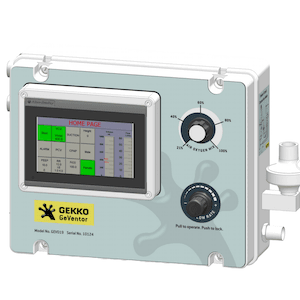
A new ventilator specifically designed for COVID-19 patients has been designed in Ballarat, Victoria with manufacturing of the device to begin within weeks.
Built by Gekko Systems, the ventilator is easy to use, highly robust and can be transported and used in regional and more remote environments.
The move into ventilator manufacturing is a major pivot for Gekko, which was founded in the mid-1990s to build mining equipment.
Gekko will harness local suppliers and its 100-strong workforce to build the GeVentor ventilator, which co-founder Sandy Gray designed in his shed with the help of local anaesthetist Doug Paxton.
Health Purchasing Victoria has placed an order for 170 ventilators with Gekko Systems after the company's machine was provided with a production exemption from the Therapeutic Goods Administration (TGA).
The speed at which the final product was designed and developed at is a testament to the proven agility of Victorian manufacturers according to the state's Minister for Industry Support and Recovery Martin Pakula.
"Creating a local ventilator industry in a matter of just months is testament to the excellence and agility of Victorian manufacturers," says Pakula.
"We have seen an amazing response to the challenges posed by the pandemic and that has helped to shore up jobs and place the state in the best position possible to recover once the health crisis is behind us."
In addition to the order from Health Purchasing Victoria, Gekko has reported interest in its ventilator from humanitarian organisations for potential use in developing countries.
Following the successful development of the GeVentor, Gekko has now created a medical arm of the company to produce a range of equipment to supply local, national and international markets.
"The Gekko group of companies is delighted to have designed and developed the GeVentor ventilator and, as a result, to launch a start-up medical technology company, Gekko Medical, in regional Victoria," says Gekko Systems chair and co-founder Elizabeth Lewis-Gray.
The Victorian Government provided development grants to Gekko Systems and three other groups in the early stages of the pandemic.
Health Purchasing Victoria has also placed orders for 200 ventilators that are being produced by Grey Innovation. The company established a consortium of local companies to build its transportable Notus Vivere Emergency Ventilator, with components coming from manufacturers ANCA, Marand, Hosico, Bosch Australia and Hydrix.
Grey Innovation is also producing machines under licence to fill an order from the Commonwealth Government.
Two other Victorian companies, Planet Innovation and Compumedics, are in the final stages of the TGA process for their ventilators.
Updated at 2:15pm AEST on 1 September 2020.
NSW loosens border restrictions with Victoria
 "NSW loosens border restrictions with Victoria")
As of Friday communities along the Victorian-NSW border will be able to move more freely, with the buffer zone extended to 50km on either side.
The easing of restrictions will extend the geographical scope of which residents are allowed to move interstate, but existing restrictions outside that zone will continue unchanged for the time being.
NSW Premier Gladys Berejiklian (pictured) told a press conference this morning the decision to close the border was a "last resort option", and she appreciated the measures led to disruption and angst for many people.
"We've had many people on both sides of the border within the border communities and outside the border communities who've been deeply impacted by the pandemic," she said.
"As Victorian numbers continue to decline, that gives us greater confidence to ease restrictions and to listen to the concerns raised by border communities."
The Premier took note of concerns raised when the initial 50km zone was reduced.
"I regret deeply the fact that the community wasn't prepared for what we had to do at that time.
"I want people to appreciate that every decision we take is in the interests of our citizens. The alternative to what we did could have resulted in high rates of infection in rural and regional New South Wales, not just in in the border communities but throughout the state.
"We have had a few close calls in respect to the virus seeding into regional communities and border communities, but our health officials have done an outstanding job in contact tracing."
Today's announcement follows yesterday's call from the state's Deputy Premier John Barilaro and Minister for Agriculture Adam Marshall to remove restrictions on agricultural workers crossing the border.
Ahead of a National Cabinet meeting on Friday where an Agricultural Workers Code will be presented and considered, Barilaro said it was imperative restrictions were lifted to ensure farmers had an adequate workforce for the fast-approaching harvest.
"The situation is now at the 11th hour for many producers across the state. We cannot stand by and watch farmers, crops and businesses face ruin due to the border closure with Victoria," Barilaro said.
"Agriculture is an essential industry. Our farmers feed and clothe the nation and we must do everything to ensure they can continue to operate as smoothly as possible.
"NSW is an agriculture production powerhouse and this needs to continue, to help the economy recover after COVID-19, and bring many communities and farmers back from the brink after years of drought."
Marshall, who described the border restrictions as "senseless", said the proposed Agricultural Workers Code included "sensible" safety requirements imposed in exchange for the removal of all other restrictions on the movement of ag workers.
"Our farmers are suffering because the current cumbersome permit system restricts the free movement of agricultural workers across the NSW/Victoria border, beyond 100 kilometres," Marshall said.
"While we have been able to introduce a new permit which has allowed more primary producers to access exemptions, the time has definitely come to remove these restrictions altogether.
"As part of that proposal, new requirements would be introduced to ensure the safety of primary producers and rural communities, including having a mandatory COVID Safe Plan in place, the use of PPE by workers as well as robust records keeping to allow contact tracing."
Updated at 11:28am AEST on 1 September 2020.
Helloworld manages crash landing after weathering the "perfect storm"
 "Helloworld manages crash landing after weathering the \"perfect storm\"")
Travel booking company Helloworld (ASX: HLO) has reported a $69.9 million loss for a year it described as a "perfect storm", just like competitors such as Flight Centre, Corporate Travel Management and WebJet.
During FY20 Helloworld's bottom line dropped by more than $100 million as international and even some interstate travel took a hit.
Booking activity is starting to pick up although total transaction volume (TTV) is just 30 per cent of last year's levels in July 2020.
The bulk of the loss stemmed from non-cash impairment charges of $67.1 million, mostly due to COVID-19 impacts.
The lion's share of the impairment, at $51.8 million, relates to Helloworld's wholesale and inbound business which is heavily reliant on an almost paralysed international travel sector.
In addition, around $14 million of the impairment loss relates to the recently acquired TravelEdge Group. In light of COVID-19 that segment's near-term cash flows are ecxpected to be below what was assumed at the time of acquisition as 30 per cent of the group's TTV was historically derived from international travel.
Before tax the company managed to record a $17.1 million profit, while revenues fell by $75 million in FY20 to $282.1 million.
"This has been the most challenging period in our company's history, and we are working, like every other business around the world, to manage the responses to this crisis so we can be there when the world starts to emerge from COVID-19 and starts travelling again," says Helloworld CEO and managing director Andrew Burnes (pictured).
"I believe that travel experiences will be even more treasured when this has ended. People will not hesitate to go and see the things they have always wanted to do in the newfound knowledge that circumstances can change very rapidly.
Tightening the belt, securing cash
To mitigate COVID-19 impacts the company reduced monthly net operating cash outflows to around $2 million, excluding one-off costs, from April 2020 onwards.
In addition, Helloworld completed a $50 million equity raising in July and August to improve its liquidity.
The signs of recovery seen in July 2020 are expected to improve further from October as Australian state borders reopen.
"This together with other call centre related activity has provided the company with some revenue generation during the COVID-19 period so far," says Helloworld.
To date, the company has paid out full or partial refunds from its corporate, wholesale and ticketing businesses of more than $800 million in Australia and New Zealand.
Helloworld has been receiving JobKeeper wage subsidies during the pandemic period which will continue to at least March 2021. Between July and March, under current JobKeeper levels, the company expects to receive a net benefit of approximately $20 million in additional subsidies for retained employees.
Because of continued uncertainty, fuelled by COVID-19, Helloworld is unable to provide any guidance for FY21 at this point in time.
"Travel relies on the ability of people to move without undue restriction and that is not the case at present in Australia or New Zealand, where citizens are not even allowed to leave their countries except on the most compassionate of grounds," says Helloworld.
"With overheads at around $4 million to $5 million per month.strong liquidity and a significantly lower cost base across our key business operations, we are confident we can continue to adapt the business to the circumstances that confront us, ride out this "perfect storm" and take advantage of opportunities as they arise and emerge from this crisis in a very strong position."
Updated at 9:47am AEST on 1 September 2020.
EVENT reeling from cinema closures with $11.4m loss
 "EVENT reeling from cinema closures with $11.4m loss")
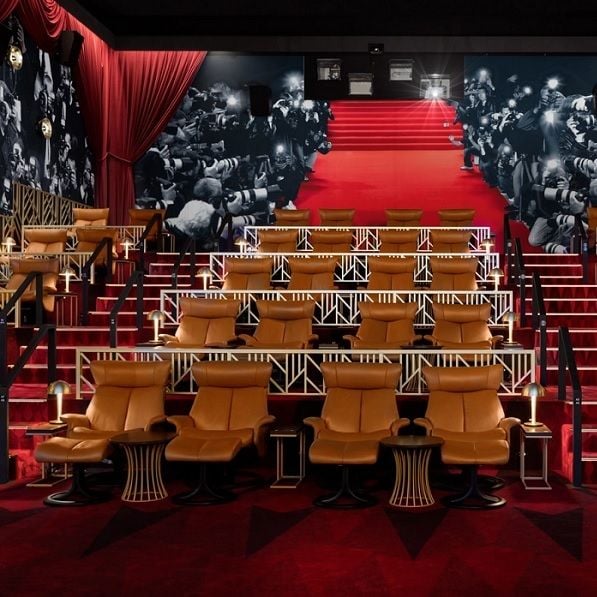
With the best box office performance in three years across its Australian and New Zealand cinemas, as well as high occupancy rates in its resorts, EVENT Hospitality and Entertainment (ASX: EVT) was on track for a good result before COVID-19 crept up on the world.
That's even despite closures at its Thredbo Alpine Resort due to bushfires, with the eight months to February representing the second-highest EBITDA for the period in the company's history.
But like so many companies this reporting season, EVENT's results are an ugly before and after juxtaposition of fortunes.
The Sydney-headquartered group has reported its normalised EBITDA fell in half in FY20 to $105 million, while revenue fell 22 per cent to $784 million.
A massive $56.9 million in impairment charges - in addition to almost $13 million in asset write-offs, redundancies and restructuring costs - led to a statutory loss of $11.4 million, compared to an NPAT of $111.9 million in FY19.
"The year was impacted by the most unprecedented external factors experienced in the Group's 110-year history, including bushfires, floods and COVID-19 government-mandated restrictions," says EVENT's CEO Jane Hastings.
"The final four months of the year was defined by the impact of COVID-19 government mandated restrictions which immediately impacted revenue, down $262 million for the four month period.
"We immediately adapted with new operating models by division, reflecting the various government COVID-19 restrictions and plan for potential financial scenarios.2
Hastings says this planning allowed the group to pivot at short-notice and achieve $140 million in cost reduction including government subsidies, excluding the benefit of negotiated rent relief which will be recognised once agreements have been signed.
"We are well prepared and some of the changes are expected to deliver lasting benefits for the future," she says.
"We believe that our businesses will rebound relatively quickly once restrictions are lifted due to pent-up demand and we have already seen green shoots, when this has occurred, across the Group."
Last month the company announced an increase in its debt facilities to $750 million, of which the majority matures in in 2023.
"Our current net debt is approximately $450 million and we have a strong balance sheet, underpinned by a solid property portfolio with a fair value of $2 billion at the most recent valuation dates," she says.
"Successful completion of the refinancing process in July, our strong balance sheet, and the swift response to COVID-19 positions the Group well to navigate through this challenging period and improve earnings as restrictions ease," adds chairman Alan Rydge.
In March EVENT confirmed its German cinema business Cinestar to Vue International Bidco for $305 million had received conditional approval from Germany's competiton regulator, subject to the divestment of six sites of which one was successfully sold in August.
Updated at 4:45pm AEST on 31 August 2020.
Apollo stalls on COVID-19 shutdowns, posts loss greater than market cap
 "Apollo stalls on COVID-19 shutdowns, posts loss greater than market cap")
There are unlikely to be too many happy campers on the board of Apollo Tourism & Leisure (ASX: ATL) today after the company announced a $61.2 million loss, with global demand for RV rentals heavily impacted by travel restrictions.
To put the magnitude of this loss into perspective, it is 15 per cent higher than the market value of the company itself.
The result compares to what was a "disappointing" $4.7 million profit in FY19. Leading up to COVID-19 the Brisbane-based company had recorded an $11.3 million profit for the first half despite the negative effects of bushfires.
When the first half result was announced - almost a month before the coronavirus was declared a pandemic - Apollo indicated a loss would be likely in H2 due to the double whammy of the virus and bushfires, but it still expected a full-year profit in the range of $8-9 million.
That horse had bolted by the time 12 March came around as Apollo withdrew its guidance, raising alarms over cancellations and border closures between the US and Europe.
By the time of Apollo's next announcement four days later, travel restrictions had escalated around the globe with its key markets of the US, Australia, New Zealand and France effectively shut down.
By mid-May the group had made the tough decision to sell its US fleet, which led to the booking of a $12.5 million loss on the transaction.
In today's result, Apollo has announced a non-cash impairment expense of the same size ($12.5 million) due to the impacts of COVID-19 in Europe, while the impairment was even greater in Australia at $23 million.
Apollo's loss in Australia accounted for around 63 per cent of the loss overall, but a pivot to the domestic market has sparked strong growth for the segment which previously only accounted for around a fifth of Australian sales.
Overall, bookings and revenues are nonetheless significantly below prior year levels even though there has been a recovery since May.
Despite a significant drop in retail sales in April 2020 due to COVID-19 restrictions, the first full year of Apollo's Geelong, Newcastle and relocated Melbourne dealerships contributed to overall increased retail vehicle sales for the year.
New Zealand was the only market that did not run at a loss with an EBIT of $6.2 million. This result across the Tasman was still down on the previous year, even though retail sales were up 35.4 per cent.
The group's sales in New Zealand achieved a new monthly record in July, even though winter months tend to be the slowest periods for the market. But the recent Auckland lockdown is expected to have a negative impact on August and potentially future months.
The company has also received $3.3 million in wage assistance, while in FY21 it has also received a $15 million export loan from the Federal Government and a $10 million industry support package loan from the Queensland Government.
In its outlook statement today, Apollo said it expected it guest mixes in Australia, New Zealand and Canada would shift to a majority of domestic guests for FY21, with some international travellers in the second half of this financial year.
While still a relatively small region for Apollo, Europe and the United Kingdom markets are primarily in-market guests and therefore activity is expected to be impacted less than other regions.
"As domestic travel re-emerges, followed by international travel in time, Apollo is ideally placed to service guests looking for "COVID-19 safe" ways to explore the great outdoors with family and friends," says Apollo's managing director and CEO Luke Trouchet.
"We expect the recent increase in retail RV sales to continue as people seek more freedom and control over their holiday choices.
"With limited options for consumer travel related discretionary spend, and many people finding themselves with more spare time than previously, a RV holiday is becoming an increasingly attractive option."
Updated at 12:30pm AEST on 31 August 2020.
Advertisement
Latest News
From $13,000 to $20 million: how a PCOS diagnosis and a pair of scissors built Xali Organics
Inspired by a medical diagnosis and driven by innovative marketing,...
Cedar Woods secures $63.4m in new land acquisitions as record presales underpin pipeline push
Perth-headquartered residential developer Cedar Woods Properties (A...
Australia's long-term beer decline hits home as Lion plans to close Boag's brewery in Launceston
Australia's decades-long decline in beer consumption has claime...
Downer EDI seals $310m Transurban contract to maintain Sydney motorway network
Infrastructure services group Downer EDI (ASX: DOW) has secured con...
Propel Funeral Partners expands New Zealand footprint with trio of acquisitions worth $9.1m
Sydney-based death care provider Propel Funeral Partners (ASX: PFP)...
Advertisement