Advertisement
Staying informed is more important than ever as the situation unfolds with Covid-19. Stay tuned here for our live updates, and be sure to let us know what your business is doing to face this unprecedented challenge.
Covid-19 News Updates
COVID-19 uncertainty sees Vocus post $178m loss
 "COVID-19 uncertainty sees Vocus post $178m loss")
Internet service provider Vocus (ASX: VOC) has seen its profits fall away in FY20 as it grapples with how COVID-19 will impact the small-to-medium business sector.
The company posted a loss for FY20 of $178.2 million today, down from a profit of $34 million last year, with revenue also dipping by 6 per cent.
Vocus attributes this downturn to an $202 million impairment to its goodwill and brand, relating to the uncertainty faced by its Australian SME clients.
"Due to the uncertainty caused by COVID-19, the outlook for the small to medium business sector is more challenging for the foreseeable future," says Vocus.
As such, the company has reduced the carrying value of intangible assets related to its retail business unit from $500 million to $298 million.
"The strong growth of the Vocus Network Services and New Zealand business units continues to support carrying values of intangible assets of $781 million and $366 million respectively," says Vocus.
The Sydney-based telco delivered EBITDA growth of 3.5 per cent to $361.3 million in FY20, with recurring revenue up 6 per cent.
In addition, revenue from high-margin data networks grew by 3 per cent for the full year, with NBN revenue up 42 per cent year on year.
"Vocus' FY20 results show that we are firmly on track in our three-year turnaround, meeting all aspects of financial guidance that was first provided in July 2019," says Vocus managing director and CEO Kevin Russell.
"The Group operated strongly throughout the year and especially during COVID-19, which has reinforced the essential nature of telecoms infrastructure and services.
"Revenues have been resilient and cash collections strong across the organisation."
Shares in Vocus are up 7.51 per cent to $3.15 per share at 2:52pm AEST.
Updated at 4:01pm AEST on 19 August 2020.
WiseTech shares jump on bullish FY21 profit forecast
 "WiseTech shares jump on bullish FY21 profit forecast")
Shares in logistics solutions provider WiseTech (ASX: WTC) have risen 32 per cent to $27.51, hitting their highest levels since a February crash when FY20 guidance was cut by 17 per cent due to the onset of COVID-19.
Today the group founded by former music executive Richard White reported an EBITDA of $126.7 million, above the midpoint of guidance and representing year-on-year growth of 17 per cent.
The increase in NPATA was not as pronounced at 3 per cent to reach $64.6 million, with WiseTech attributing the difference to increased depreciation and amortisation expenses due to greater R&D investments and new product development.
A slowdown in the movement of goods led to volatility in global logistics markets from late January through to May, but WiseTech started to see signs of moderate recovery in June.
User numbers for the Sydney-based company's CargoOne logistics software platform were close to pre-COVID levels by the end of July, giving the board the confidence to forecast optimistic revenue and profit guidance for FY21.
The company expects EBITDA to rise by 22-42 per cent to a range of $155-180 million, along with a 9-19 per cent rise in revenue to $470-510 million.
"The COVID-19 challenges faced by the global logistics and supply chain sectors are accelerating the longer term trend towards consolidation and integration," says White.
"Within this environment, we are seeing increased demand amongst large global logistics service providers for our technological and digital solutions that drive efficiencies and productivity improvements.
"WiseTech is ideally placed to address this growing demand, with our logistics execution technology and 40 development centres delivering seamless, global capabilities that improve productivity, functional depth, data integration and visibility, regulatory compliance and value for over 17,000 customers worldwide."
This bullish outlook has pushed the WTC share price closer to the $29 mark they were trading at on 19 February before a frenzied sell-off, likely giving some investors déjà vu of movements that followed a short seller report from J Capital in October last year that wiped billions from WiseTech's value.
J Capital has made repeated criticisms of WiseTech. In its most recent report in June the fund's co-founder Anne Stevenson-Yang raised doubts about the acquired business Containerchain, which she believed to be "bleeding accounts" as a "loss-making business that could now potentially collapse".
"The total of $97.6 million in cash that WiseTech paid in early 2019 was clearly too rich for this company, whose revenue we now expect to halve in next financial year while losses increase as customers abandon the platform," Stevenson-Yang said.
In its reports today, WiseTech notes Containerchain contributed $4 million to group revenue and around $100,000 in net profit from the date of the acquisition. The Goodwill on Containerchain has been reduced by $10.6 million, while for other acquisitions it is down $23.5 million.
These numbers are significantly lower than Stevenson-Yang's warnings for investors to expect goodwill write-downs of around $200-300 million.
In contrast, the company has reported a non-cash, non-taxed fair value gain of $111 million generated as a result of the renegotiation of acquisition earnout obligations and adjustments in the first half of 2020.
In her report in June, Stevenson-Yang alleged Wisetech was trying to sweep its failed acquisition strategy under the carpet by writing down earn-outs without writing off the equivalent item - goodwill.
"WiseTech frantically rid itself of 40 per cent of the earn-outs from 17 poor-performing acquisitions in May," she said.
In its report today, WiseTech highlighted a "robust" financial position and explained COVID-19 provided the impetus for WiseTech to renegotiate and completely or partially close-out 22 acquisition earnout obligations.
"These close-outs included the replacement of various cash payouts with equity resulting in improved overall liquidity and better alignment of the acquired businesses to the company's objective of accelerating technology development and improving commercial efficiency."
The company also reported today that 29 per cent of its revenue growth in FY20 came from acquisitions, mostly driven by the full-year impact of 14 acquisitions in FY19 and five acquisitions in FY20.
Updated at 3:06pm AEST on 19 August 2020.
Crown profits take a hammering from closed casinos
 "Crown profits take a hammering from closed casinos")
With its casinos closed in line with COVID-19 restrictions for a chunk of the last financial year, Crown Resorts (ASX: CWN) witnessed an 80.2 per cent dive in profits after tax down to $79.5 million.
The group was forced to close all of its gaming facilities as well as a significant part of non-gaming operations at Crown Perth and Melbourne - the latter is still not operational because of the city's Stage 4 lockdown.
As such, Crown stood down 95 per cent of its workforce and take up the Federal Government's JobKeeper program, receiving $111.3 million in wage subsidies through to 30 June. Crown has announced today it will not declare a final dividend for the full financial year.
Closure costs added up to $81.6 million for the financial year, and the company recorded impairments worth around $75 million relating to its operations in London and restaurant chain Nobu.
CEO and managing director Ken Barton describes the year as "extremely challenging".
"Given this backdrop, Crown has been focussed on liquidity management to ensure it is well placed to withstand this extended period of closure," says Barton.
"Despite the challenges of COVID-19, the construction of Crown Sydney has continued throughout this period and it's a credit to our team that it remains on track for its scheduled December opening."
Crown's earnings also suffered because of the COVID-19 pandemic, down 40.6 per cent to $504.6 million, as did its resort revenue streams which were down 25.7 per cent to $2.2 billion.
Naturally, with international travel off the cards, the company witnessed occupancy at its Melbourne hotels of 82 per cent and at its Perth hotels of 66 per cent on average, with both its Melbourne and Perth hotels used as quarantine facilities.
Without a physical place to gamble, punters tried their luck with Crown's digital wagering businesses Betfair and DGN Games.
EBITDA from the digital gaming operations was $34.7 million, up 32 per cent year-on-year.
At 30 June Crown's net debt position was $891.5 million, with the company securing an agreement from its lenders for a waiver of banking covenants due to the ongoing closure of Crown Melbourne.
Crown says it has been encouraged by initial trading performances from its recently reopened casino in Perth, especially given the operating restrictions which remain in place like physical distancing requirements and limited product availability.
For the period from 1 July to 16 August Crown Perth's main floor gaming revenue was up approximately 18 per cent on the pcp, but non-gaming revenue was down 24 per cent.
Based on current trading levels, Crown Perth is not expected to qualify for the JobKeeper program beyond 27 September.
Shares in Crown are up 2.85 per cent to $9.76 per share at 1:48pm AEST.
Updated at 2:26pm AEST on 19 August.
Tabcorp to raise $600m as COVID-19 closures spark massive loss
 "Tabcorp to raise $600m as COVID-19 closures spark massive loss")
All bets are off for gambling giant Tabcorp (ASX: TAH) as it looks to raise capital to offset the impacts of more than $1 billion in impairment charges due to COVID-19.
The company posted a $870 million loss today, which is a far cry from the company's FY19 profit of $362.5 million.
Despite recent reopenings in most of the country CEO David Attenborough said closures form 23 March were a major challenge for the company.
"The COVID-19 pandemic has been very challenging for Tabcorp's people, partners and customers, and materially impacted our FY20 results," says Attenborough.
"COVID-19 restrictions meant that hotels, clubs and TAB agencies were closed for significant periods of time during FY20.
"We continue to support our venue partners and have waived more than $100 million in fees to date."
To mitigate the impacts of this disastrous year, Tabcorp has announced a $600 million equity raise.
Attenborough says the proceeds of the entitlement offer will be used to pay down existing drawn bank debt facilities and strengthen the company's balance sheet during uncertain times.
"The continued significant uncertainty regarding the severity and duration of the COVID-19 impact has led Tabcorp to reconsider its previous capital management targets in order to improve its credit metrics and conserve more capital over time," says Attenborough.
"We remain confident that the strength and resilience of Tabcorp's diversified portfolio of businesses will allow Tabcorp to manage current market challenges and we continue to focus on executing strategies to create value for shareholders."
The offer, at a price of $3.25 per new share, represents an 11.4 per cent discount to Tabcorp's closing price on 18 August.
While the company's wagering and gaming businesses suffered because of COVID-19 venue closures, the group's lotteries & Keno business did most of the heavy lifting in FY20.
Lotteries & Keno revenues were up 1.8 per cent to $2.9 billion, and EBITDA was up 5.7 per cent to $542 million.
Tabcorp says while distribution partners like newsagents and convenience stores buoyed the lotteries division during COVID-19 lockdown periods, it was the company's digital product that witnessed the most revenue growth, up 23.5 per cent and accounting for 28 per cent of the division's total turnover.
Wagering revenues were down 10.1 per cent to $2.08 billion in FY20, impacted by COVID-19 enforced closures and restrictions.
As a result of those closures Tabcorp says the pivot to digital has been accelerated, with digital wagering turnover growing by 3.8 per cent compared to a 27.9 per cent decline to retail turnover.
"This is the first time digital turnover has exceeded retail turnover in Tabcorp's Wagering business across a full year," says Tabcorp.
Similarly, the company's gaming division was impacted by venue closures, resulting in a 27.3 per cent revenue dive to $221 million.
The company appears to be cautiously emerging from lockdowns in Australia (except for in Victoria), with group revenues up 2.8 per cent on the pcp in July.
In terms of Tabcorp's three business units, lotteries & Keno revenues were up 4.7 per cent, wagering was up 6.8 per cent, and gaming was down 52.2 per cent.
"There continues to be uncertainty associated with COVID-19 in terms of both the severity and duration of the impact," says Attenborough.
"It remains a challenging time, especially for the Victorian community which is in the middle of a difficult Stage 4 lockdown.
"With the integration of Tatts substantially complete, we are focused in FY21 on capturing the value from the digital opportunity across Lotteries, Keno and Wagering and on unlocking the value of a more competitive TAB."
Updated at 11:27am AEST on 19 August 2020.
Corporate Travel Management surprises market with underlying profit
 "Corporate Travel Management surprises market with underlying profit")
After Flight Centre (ASX: FLT) last week reported a loss equivalent to around 39 per cent of its market capitalisation, Corporate Travel Management (ASX: CTD) has today reported a marginal loss while recent monthly revenue is tracking well above expectations.
The group reported a statutory loss of $8.2 million for FY20, which is less than 1 per cent of that reported by its Brisbane-based peer FLT.
Corporate Travel Management would have been in the black if it weren't for one-off costs, and the company does not expect any items of this nature in the current financial year.
Non-recurring costs after tax reached $33.8 million and mostly stemmed from COVID-19 related issues such as $15.1 million paid out in redundancies, bad and doubtful debts of $13 million from market impacts and supplier failures including problems with Virgin Australia, and $9.1 million in the amortisation of intangible assets due to lower client demand.
CTM's underlying net profit after tax (NPAT) of $32 million, a Q4 average monthly revenue rate of $11.5 million compared to expectations in May of $2-5 million and 97 per cent client retention all helped shares take off this morning by 9.3 per cent to $13.27 each.
As a recipient of the JobKeeper wage subsidy, the group has acted in the spirit of the scheme and cancelled its dividends.
"Revenue has been ahead of our May market update expectations with high exposure to domestic essential travel," says managing director Jamie Pherous (pictured).
"This coupled with our flexible business model and rapid response to COVID-19 enabled CTM to deliver full-year results that exceeded our market update provided in May.
"Because we moved early and rapidly with redundancies and other cost reductions, we have been able to stem our losses very quickly, and do not expect any further significant one-off costs in the current FY21 financial year."
Pherous says CTM's business model positions the company for a "rapid return to profitability" with only a marginal increase in domestic travel activity from current levels.
In the fourth quarter the company recorded an average a monthly EBITDA loss of $3 million, but as of Monday 17 August it had $55 million cash in the bank, zero debt and undrawn committed facilities of $180 million.
That monthly loss was trimmed back to $2.2 million in July, while its European and Australia/NZ businesses broke even.
The group highlights client activity has begun to recover from a low point in April. Monthly revenue is typically lowest in July, reflecting the northern summer vacation.
However, bookings in July were greater than in June, suggesting a broad-based recovery in corporate travel activity is underway, especially in the northern hemisphere as corporate clients return to work in August.
The group is also looking to potentially make acquisitions as an extended period of no international travel is likely to create opportunities for industry consolidation.
Updated at 11:29am AEST on 19 August 2020.
Tasmanian border measures to remain in place until 1 December
 "Tasmanian border measures to remain in place until 1 December")
Victoria's ongoing outbreak of COVID-19 is still of serious concern for the state's southern neighbour, forcing Tasmania to keep current restrictions and border measures in place until 1 December.
As such, the island state will keep its hard border up with the rest of the country, and current gathering restrictions on businesses, households, venues and workplaces will not change.
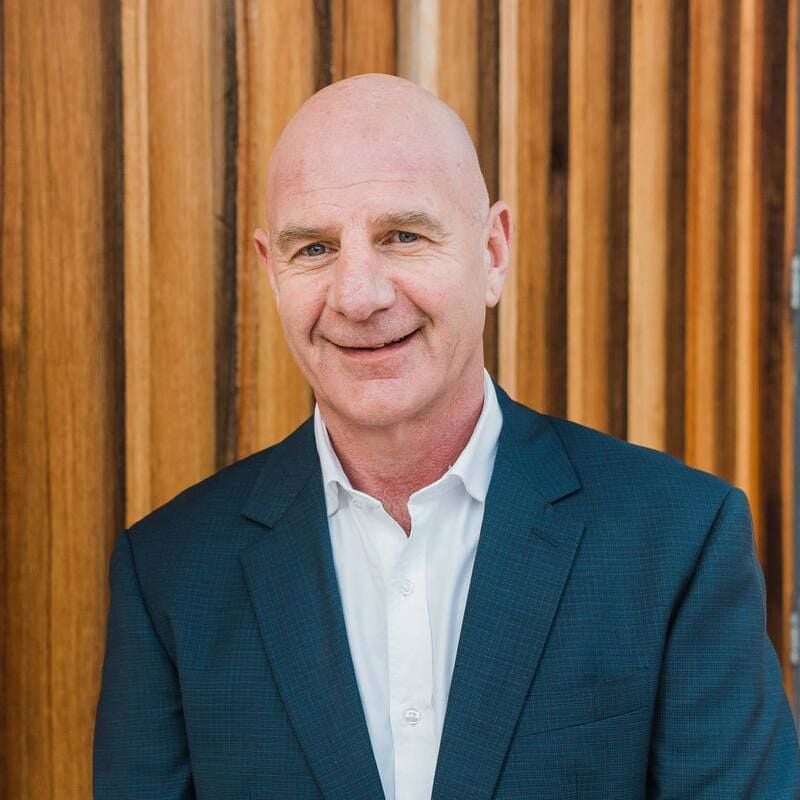
Tasmanian Premier Peter Gutwein (pictured) says the extension of restrictions will allow sufficient time for the outbreak in Victoria and the threat posed to other states to be clearly controlled.
"This will enable our community and our businesses to understand and prepare for border relaxations, and to ensure appropriate planning and risk mitigation processes are in place," Gutwein said.
"At the moment the risk posed to Tasmania by the situation in Victoria is considerable. There are many Tasmanian businesses, which have had to close their doors, who are only just returning to reasonable levels of trade, and many others who are still doing it very tough.
"But we must avoid a situation like Victoria or NSW, as we would have to impose serious restrictions once again. We would see shrinking business confidence and the jobs regained, lost once more."
Current restrictions imposed on Tasmanians businesses include:
- A maximum of 250 people for an undivided space in an indoor businesses;
- A maximum of 500 people in an undivided space outdoors; and
- The maximum density limit is one person per 2 square metres.
Household gatherings can have up to 20 people at any one time, not including the residents of the household and Tasmanians are also still encouraged to work from home if possible.
$7.5 million in travel grants for Tasmanians
With the border closures extended yet again Premier Gutwein has announced his government will be subsidising costs for intra-state travel.
From 1 September the 'Make Yourself at Home travel voucher' will be made available as part of a $7.5 million program.
$2.5 million each month will be made available to support Tasmanians who travel outside of their municipality, to stay midweek in accommodation, to enjoy a tourism experience, or visit an attraction on any day of the week.
The support will provide up to $100 toward the cost of a room in commercial accommodation or up to $50 per booking to participate in a tourism experience.
"Tasmanians we know, have been very supportive of local businesses, with hotel and accommodation occupancy rates being relatively strong during the recent school holidays and on the weekends especially," Gutwein said.
"However, midweek overnight occupancy remains weak, and many of our tourism experiences and attractions have significant capacity to share their product with Tasmanians.
"We want Tasmanians to experience this wonderful state and support these businesses."
Updated at 3:00pm AEST on 18 August 2020.
WA extends Phase 4 restrictions for another two months, Royal Show cancelled
 "WA extends Phase 4 restrictions for another two months, Royal Show cancelled")
Current COVID-19 restrictions in Western Australia will be extended for another two months to allow for the outbreak in Victoria to come under control.
As such, WA will move to Phase 5 of its restriction easing roadmap on Saturday 24 October.
The delay also means the 2020 Perth Royal Show has been cancelled.
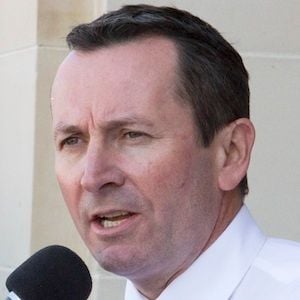
"I know this will cause some frustration and problems for some parts of our community," says WA Premier Mark McGowan (pictured).
"We're trying to find the right balance here between protecting our community and keeping our economy as open as possible.
"While we have had no community transmission in Western Australia for 129 days now, we simply can't afford to get complacent because the virus could sneak back into Western Australia it spreads like wildfire."
As such, the following Phase 4 restrictions will remain in place:
- Gathering limits only determined by WA's reduced 2 square metre rule
- The 2 square metre rule will only include staff at venues that hold more than 500 patrons
- Removal of seated service requirements at food businesses and licensed premises
- No requirement to maintain patron register at food businesses and licensed premises
- Alcohol can be served as part of unseated service arrangements
- All events permitted except for music festivals
- Unseated performances permitted at venues such as concert halls, live music venues, bars, pubs and nightclubs
- Gyms operating unstaffed, but regular cleaning must be maintained
- The casino gaming floor reopening under agreed temporary restrictions.
Phase 5 would see remaining restrictions removed, except WA's hard border and access to remote Aboriginal communities.
It would also see the removal of WA's 2 square metre rule and the 50 per cent capacity limit for major venues.
"We have been fortunate enough to remain in Phase 4," says McGowan.
"This has been crucial to kickstarting our economy and providing West Australians with the freedoms we experience.
"By remaining in Phase 4 for longer it assists us in reducing the numbers of people who could be potentially exposed, or requiring health responses, should an outbreak occur."
The extension comes as Western Australia records just one new case of COVID-19 today: a returned overseas traveller in hotel quarantine.
On the east coast Victoria has recorded its lowest number of new confirmed cases of COVID-19 in a month today, with 222 new cases.
The state also confirmed 17 new deaths from COVID-19, down from 25 on Monday.
New South Wales reported just three new cases today including one in hotel quarantine.
Updated at 1:03pm AEST on 18 August 2020.
$10k grants on offer for NSW businesses to go global
 "$10k grants on offer for NSW businesses to go global")
The New South Wales Government has unveiled a $12 million 'Going Global Package', with grants of up to $10,000 available to eligible businesses that want to boost their export capabilities.
The package is available to SMEs across NSW who will benefit from the state government's push to showcase local products and develop global export sales.
"Helping home-grown businesses succeed in the global marketplace is more important than ever before and here in NSW we have some of the best produce in the world," says NSW Deputy Premier and Minister for Regional NSW, Industry and Trade John Barilaro.
"Our Export Assistance Grants, together with intensive, direct assistance through the Going Global program will complement existing support and advice services to forge new business connections and sales offshore."
The $12 million 'Going Global Package' includes:
- A $1.8 million Going Global program which will provide export coaching, networking and in-market assistance for export-ready firms. The initiative includes 15 tailored programs covering nine markets and ten sectors;
- a $10 million Export Assistance Grant scheme reimbursing 50 per cent of eligible expenses up to a maximum of $10,000 per eligible business;
- connections to international consumers via the Buy Regional Goes Global initiative;
- online webinars to help businesses upskill;
- ongoing support through the NSW Government's network of trade advisors in regional locations and Sydney, and its international trade and investment offices around the world
- access to information on the Global NSW website;
- other support, tools and resources available online.
According to NSW Treasurer Dominic Perrottet, assisting businesses in the NSW with international exports will be a vital component of the state's post-COVID recovery plan, with exports making up 16 per cent of the state economy prior to the global pandemic.
"We know our exporters have faced big hurdles in recent months, especially in regional areas also affected by bushfires and drought," says Perrottet.
"I urge small and medium-sized firms in regional areas and across NSW to apply."
Applications for the Going Global Package can be submitted now.
Updated at 11:19am AEST on 18 August 2020.
Patent litigation, COVID-19 send Cochlear into the red with $238m loss
 "Patent litigation, COVID-19 send Cochlear into the red with $238m loss")
Hearing implant maker Cochlear (ASX: COH) has reported its first ever loss since listing on the ASX almost 25 years ago, as a US court battle and suspended surgeries due to COVID-19 weighed heavily on its results in FY20.
The Sydney-based group has today announced a $238.3 million loss, down 186 per cent from a profit of $276.7 million in FY19.
The bulk of this sharp drop can be explained by a US patent infringement case brought by two research institutes that compete with Cochlear, which led a District Court to order US$268 million (AUD$371 million) in damages.
After losing an appeal on the decision in March, Cochlear is now taking its legal activities up a notch through an appeal to the US Supreme Court.
A US$75 million (AUD$104 million) settlement was also reached for prejudgment interest and attorneys' fees with the Alfred E. Mann Foundation for Scientific Research (AMF) and Advanced Bionics, but the money is in escrow pending the outcome of Cochlear's appeal.
In a letter to shareholders released today, CEO Dig Howitt and chairman Rick Holliday-Smith claimed the amount of damages awarded was "out of proportion".
"If Cochlear's Supreme Court appeal is successful, there may be a new trial to redetermine the quantum of damages," Howitt and Holliday-Smith said.
"As the patent at issue in the litigation has expired, the judgment will not disrupt Cochlear's business or customers in the US."
The rest of the negative shift in performance is due to the impacts of COVID-19, with implant sales going from a 13 per cent rise in the first half to a decline of 60 per cent in April.
"The impact of COVID-19 on profitability was significant with underlying net profit declining by 42 per cent to $153.8 million," the Cochlear leaders said.
Sales revenue for FY20 fell 6 per cent to $1.4 billion, although in constant currency terms it fell by 11 per cent. In the second half revenue was down by more than a fifth.
But the trading trend has improved since May with surgeries restarting across most markets, and in June-July cochlear implant revenue was only down 15 per cent year-on-year.
"For the developed markets, unit volumes were in line with last year for the June/July trading period, reflecting both a return to surgery and marketshare gains," Howitt and Holliday-Smith said.
"While the resumption of surgeries in the US, Germany, Japan and northern Europe has been quite rapid, there are still a number of markets with lower levels of surgery activity including the UK, Italy and Spain.
In contrast, volumes were down 50 per cent year-on-year for Cochlear's emerging markets, although circumstances vary greatly from country to country.
"Surgeries in China are growing quickly, and we remain committed to continuing to invest in further growth," the pair said.
"In other markets, including India and Latin America, surgeries have remained very low as COVID-19 cases continue to grow."
The group added it expected $23.6 million in coronavirus-related government assistance from a number of countries.
It has now been just over six months since Cochlear - like most ASX-listed companies - started to factor COVID-19 into its guidance.
On February 11 the company reduced its earnings forecast by around $15 million due to expected impacts from the virus in greater China, but if that result materialised it would have still been a 2-9 per cent increase year-on-year. In mid-March Cochlear bit the bullet like so many and withdrew its guidance.
This was swiftly followed by a $1.1 billion capital raising that was well received, and the company has continud on its course of reinvestment with $185 million spent on R&D in FY20. In July the company also received US FDA approvals for four new products.
COH shares were up 6.15 per cent to $210.50 each at 10:35am AEST.
Updated at 10:35am AEST on 18 August 2020.
COVID-19 health alert issued for Sydney Market Flemington
 "COVID-19 health alert issued for Sydney Market Flemington")
A health alert has been issued for Sydney Market Flemington overnight after person who worked at the market tested positive for COVID-19.
The person worked at the market while infectious on Sunday 9 August and is now in isolation. The case was reported positive on 16 August but the source of infection is still under investigation.
NSW Health has asked all people who were at the market on 9 August at any time between 8am and 4pm to monitor for symptoms and get tested if any develop.
Seven new cases of COVID-19 were diagnosed in New South Wales yesterday, bringing the state's cumulative total of confirmed cases to 3,768.
Of the new cases, six were locally acquired and one is a traveller in hotel quarantine.
Three locally acquired cases are close contacts of case linked to Chopstix Asian Cuisine at Smithfield RSL. Two are close contacts of a case linked to the Our Lady of Mercy College, whose source is still under investigation.
One case attended Sydney Girls High school at Surry Hills while infectious on 6, 7, 10 and 11 August. The school is closed for cleaning and will reopen on Tuesday, 18 August.
Another case worked at Parramatta Local Court. The person last attended Parramatta Local Court on Wednesday, 12 August, and the positive result was received on Saturday, 15 August.
NSW Health has directed that people who attended the following locations should watch for symptoms and get tested if they appear:
- Parramatta Local Court on Tuesday 11 August and Wednesday 12 August between 8.30am and 12.30pm
- Woolworths Metro North Strathfield on Saturday 8 August between 12.50pm and 1.15pm
- DFO Homebush on Saturday 8 August between 10.45am and 12pm.
Updated at 9:29am AEST on 18 August 2020.
Advertisement
Latest News
From $13,000 to $20 million: how a PCOS diagnosis and a pair of scissors built Xali Organics
Inspired by a medical diagnosis and driven by innovative marketing,...
Cedar Woods secures $63.4m in new land acquisitions as record presales underpin pipeline push
Perth-headquartered residential developer Cedar Woods Properties (A...
Australia's long-term beer decline hits home as Lion plans to close Boag's brewery in Launceston
Australia's decades-long decline in beer consumption has claime...
Downer EDI seals $310m Transurban contract to maintain Sydney motorway network
Infrastructure services group Downer EDI (ASX: DOW) has secured con...
Propel Funeral Partners expands New Zealand footprint with trio of acquisitions worth $9.1m
Sydney-based death care provider Propel Funeral Partners (ASX: PFP)...
Advertisement