Advertisement
Staying informed is more important than ever as the situation unfolds with Covid-19. Stay tuned here for our live updates, and be sure to let us know what your business is doing to face this unprecedented challenge.
Covid-19 News Updates
Victorian COVID-19 cases keep growing, hospitalisations double
 "Victorian COVID-19 cases keep growing, hospitalisations double")
After putting the brakes on increased patron numbers and extending a state of emergency by four weeks over the weekend, Victoria has today reported 16 new cases of COVID-19 overnight.
Health Minister Jenny Mikakos (pictured) says six of these new cases are linked to known outbreaks, four relate to hotel quarantine, five are from routine testing and one is under investigation.
The number of cases linked to an H&M store at Northland Shopping Centre has doubled to four, two teachers have tested positive at Albanvale Primary School taking its total to three, while two more have been linked to the Stamford Plaza hotel taking its total to 14.
The Great Beginnings Nursery in Reservoir has also been shut down for deep cleaning after a toddler tested positive to the coronavirus.
Five cases have been removed from Victoria's total due to duplication, taking the total to 1,847 including 125 active cases. This means around 57 per cent of Australia's active cases are currently in the state.
"We currently have nine patients in hospital including two in intensive care...the number of people in hospital has gone up from just four a few days ago, which is always a concerning sign," Mikakos told a press conference today.
"We're very grateful for the sacrifices that people have made, but the thing that keeps me awake at night is the thought of a second peak - we have seen very concerning increased numbers in recent days. We don't want this to get away from us."
Mikakos welcomed a statement yesterday from the Australian Health Protection Principal Committee (AHPPC) which strongly discouraged travel to and from COVID-19 hotspots identified by the Victorian Government, which include the local government areas (LGA) of Hume, Casey and Brimbank, Moreland, Cardinia and Darebin.
"I want to stress to Victorians just because you don't leave in a hotspot local government does not mean that your area is without risk. Everybody should still be complying very closely with all the public health advice," she said.
Mikakos said she was also stepping up testing community engagement in hotspot areas.
"We have a team of 50 that is starting from today to do door knocking - we are going to start with Brimbank and Cardinia, and they will be people who will be clearly identifiable as public health officials," she said.
That strategy also includes a strong focus on multicultural communities where some residents may struggle with English, and there will be a focus on shopping centres and train stations as well.
"We want to make sure that everyone in the state understands the public health messaging," she said.
"Clearly, in terms of the hotspot areas that have been identified, we have some some lower socio-economic disadvantaged communities - not all of them but there are very strong pockets of disadvantage in some of those communities."
This is a particularly important point considering the experience of Singapore, which was held up as an example in virus containment but saw a second wave of cases arising from its underprivileged communities of migrant workers.
Today's update follows yesterday's announcement that a state of emergency would be extended until 11.59pm on 19 July.
The extension was made in response to the recent substantial rise in household contacts spreading the virus amongst extended family groups. There will be a squad of 500 officers conducting spot checks of venues and homes to ensure compliance.
On the spot fines include up to $1,652 for individuals and up to $9,913 for businesses. Under the state of emergency, people who don't comply could also be taken to court and receive a fine of up to $20,000. Companies face fines of up to $100,000.
"Now is not the time to let our guard down, our coronavirus fight is far from over. Keeping the State of Emergency in place will ensure we have the tools we need to keep Victorians safe," Mikakos said yesterday.
"We know these restrictions are frustrating, but we can't get complacent and let the virus get away from us. It's vital we follow these directions to keep our community transmission numbers low and protect more Victorians," added Chief Health Officer Professor Brett Sutton.
Updated at 12:31pm AEST on 22 June 2020.
SEEK improves at home, records $190m impairment after "devastating" impacts in Latin America
 "SEEK improves at home, records $190m impairment after \"devastating\" impacts in Latin America")
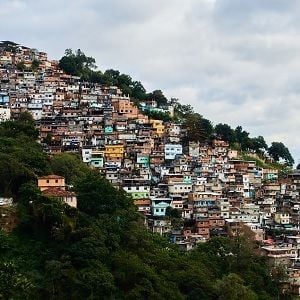
Online job postings giant SEEK (ASX: SEK) has seen improved momentum across its three largest businesses, but green shoots have been offset by the economic impact of COVID-19 in Brazil and Mexico with impairments of $190-230 million.
Weekly billings have been on the rise for SEEK's Australia-NZ business although they are still down 40 per cent year-on-year. It is a similar story for SEEK Asia, although the numbers are down by half.
The group's Zhaopin business in China, which originally served as a bellweather of troubles to come due to the economic fallout from COVID-19 restrictions, has seen a significant improvement in billings since March 2020.
In February Zhaopin's billings were down a whopping 60 per cent year-on-year, but now they are tracking just 10 per cent below this time last year.
But it is in the new epicentre for COVID-19 in Latin America where SEEK's results have been hit the hardest recently.
The company today recognised an impairment of $130-170 million for its businesses Brasil Online and OCC Mundial (Mexico), while impairments have been lifted by a further $60 million due to problems with four early-stage minority investments.
Brazil is now approaching 1.1 million cases of COVID-19. Mexico's numbers are much lower at around 175,000, although reports on the ground indicate a high degree of underreporting from officials.
The latest official figures show Brazil and Mexico have had close to 1,000 coronavirus-related deaths in the past 24 hours. Brazil and Mexico have populist leaders - Jair Bolsonaro and Andres Manuel Lopez Obrador respectively - from opposing ends of the political spectrum, but both have been dismissive of social distancing measures throughout the crisis.
"In recent weeks, we have begun to see improving momentum across our three largest businesses in SEEK ANZ, SEEK Asia, Zhaopin and the continuation of good results from OES and the ESV portfolio," says SEEK CEO and co-founder Andrew Bassat.
"However, not all businesses have fared as well in these challenging times and we will need to recognise a reduction in the carrying values of Brasil Online, OCC Mundial and four other small investments.
"Whilst our near-term profitability has been impacted by the Virus, our largest businesses remain highly defensible and well placed to capitalise on our large opportunity set. Job creation will be at the core of any economic recovery and SEEK is well placed to play a meaningful role in connecting the most relevant candidates to hirers across our major markets."
Based on the current market situation the group has released a "best estimate" forecast for FY20, with revenue up slightly at $1.575 billion and EBITDA down close to 10 per cent at $410 million.
Updated at 11:12am AEST on 22 June 2020.
Queensland stadiums to welcome up to 10,000 fans from next weekend
 "Queensland stadiums to welcome up to 10,000 fans from next weekend")
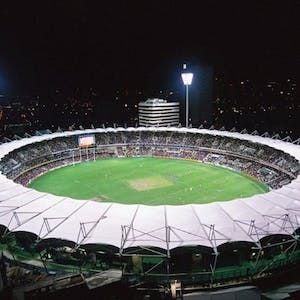
Up to 10,000 spectators will be allowed to watch the footy in Queensland stadiums from Saturday 27 June.
The move is the latest COVID-19 restriction to ease in the sunshine state, and represents things returning to a sense of normality according to Queensland Premier Annastacia Palaszczuk.
"This is another small, sensible step towards getting life back to normal," says Palaszczuk.
"We can make these steps because of the outstanding way Queenslanders have united to confront COVID-19 but we are still in a pandemic so we have to keep being careful."
Health Minister Steven Miles said the increase in crowd numbers was in line with the professional codes' COVID-safe plans.
"The codes have shown they are taking COVID-safe measures seriously," the Deputy Premier said.
"Our stadiums are also taking their responsibilities seriously making it safe for more spectators enjoy their favourite games.
"The first two games welcoming smaller numbers of spectators on Saturday at Suncorp Stadium and the Gabba showed the COVID safe measures put in place work, with fans respecting the new social distancing arrangements and guidance from stadium officials and security."
Measures protecting the health of spectators include:
- Extra cleaning and sanitisation of high traffic areas such as hand-rails
- Seating plans of segmented zones
- Dedicated facilities and exits to reduce potential for virus spread.
Townsville will welcome 2,000 spectators for its home game on 27 June at QLD Country Bank Stadium.
They will be permitted to increase to 25 per cent capacity (6,359 spectators) at future games.
NRL Chairman Peter V'Landys welcomed the move.
"I want to personally thank Queensland Premier Annastacia Palaszczuk for her assistance during the COVID-19 pandemic. Rugby league is part of a Queenslander's DNA and her support has been instrumental throughout the resumption of the competition," V'Landys said.
"This is an outstanding outcome for our Queensland clubs, players and importantly Queensland fans. Queensland is rugby league heartland and we're delighted the State Government has approved the return of crowds to Queensland venues."
The easing of restrictions comes as Queensland has gone almost five days without reporting any new cases of COVID-19 in the state.
No new cases have been reported today at the time of writing, but yesterday 25 new cases were reported in Australia, with 19 of those in Victoria, five in New South Wales and one in Western Australia.
Globally the situation is a different story; there were 140,000 new cases reported yesterday, including 31,000 in the USA and 34,000 in Brazil.
There are now more than 9 million cases of COVID-19 worldwide, including 466,000 deaths.
Updated at 9:27am AEST on 22 June 2020.
Victoria delays easing restrictions to tackle COVID-19 resurgence
 "Victoria delays easing restrictions to tackle COVID-19 resurgence")
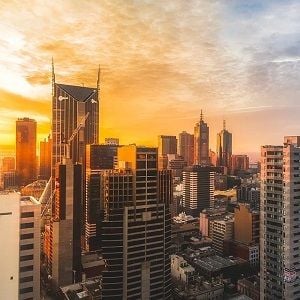
A sharp rise in COVID-19 cases has prompted the Victorian Government to take a harder line on home visits and postpone an increase in patron numbers for venues by three weeks.
After 25 new cases were reported in the state overnight, Premier Daniel Andrews said medical experts had advised Victoria was at a "critical crossroads".
In response, as of 11:59pm tomorrow the number of visitors allowed in someone's home will be cut to five.
"Outside the home, families and friends can meet in groups up to 10. As we've seen across the world, this virus has the ability to turn a few cases into hundreds in a matter of days," Andrews said.
"That's why we also need to delay an increase to gathering limits in businesses and community facilities."
The government was previously planning to allow up to 50 people inside restaurants, cafes and pubs - with a maximum group size of 20 people - on 22 June, but that date has now been changed to 12 July.
These changes will also apply to auction halls, community halls, libraries, museums and places of worship.
"Businesses that were set to open on Monday like gyms, cinemas, theatres and TABs can do so - but again, only with a maximum of 20," Andrews said.
"Community sport for kids and non-contact competition for adults can proceed as planned. Ski season and accommodation facilities with communal spaces will also open, but with increased screening and safeguards in place."
Medical experts have told the government the numbers are largely being driven by families, with big get-togethers where advice around social distancing and hygiene has not been followed.
"In fact, around half of our cases since the end of April have come from transmission inside someone's home," the Premier said.
"You can see how this could happen. People feeling relaxed at home. Letting their guard down. Letting old habits creep back. But we are still in a pandemic - and people's lives are still at risk.
"Today, our case numbers have hit the highest they've been in more than two months. I know that's not what people want to hear but sadly, that is our reality."
The situation in Victoria demonstrates the state is not out of the woods yet, and as this virus spreads exponentially there is always potential that similar circumstances could take place elsewhere.
"If you do have to see people, keep your distance. No handshakes and no hugs. Maintain good hygiene. Don't share food or drinks. And if you're feeling unwell - stay at home," Andrews advised Victorians.
"Don't visit friends and family. Don't go on holiday. Don't go to work. Stay home."
To make it easier for people to comply with the rules, the state government is also announcing a $1,500 payment for those who have a confirmed case or are a close contact and who can't rely on sick leave.
"This is about making sure there's no financial reason for these people not to isolate and to go to work instead," he said.
"I know businesses are keen to open further - which is why we've all got to play our part.
"That means ensuring those who can work from home continue to do so at least until 31 July. And if you do have people on the job - having a zero-tolerance approach to sickness. Having symptoms must mean you go home, and you get tested.
"The vast majority of Victorians have been doing the right thing. But this is a wake-up call. We cannot be complacent. And the only thing between us and a second wave is what we do next."
Updated at 5:21pm AEST on 20 June 2020.
SA borders open to Queenslanders from midnight tonight
 "SA borders open to Queenslanders from midnight tonight")
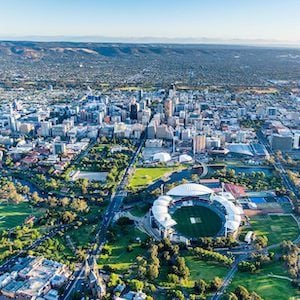
As of midnight tonight travellers from Queensland into South Australia will no longer be required to complete 14 days of self-isolation.
The removal of the self-isolation requirement brings Queensland in line with travellers from Western Australia, Tasmania, and the Northern Territory who have been able to freely travel into SA since 17 June.
The State plans on opening its borders to all remaining Australian states on 20 July.
This latest development comes as South Australia eases COVID-19 restrictions further today, increasing the number of patrons allowed to gather in public and in venues like pubs, bars, restaurants and clubs.
From today, the upper capacity limit per room in a venue moves from 20 people to 75, and the total capacity per venue has been increased from 80 to 300.
Fitness classes can now have a maximum capacity of 20 people where the one person per seven square metre rule can be observed.
The cap on public assemblies has also been increased to 300 people, and alcohol can now also be consumed at these types of events which includes public, outdoor sporting events.
The start date for Stage 3 easing of restrictions in SA remains at this coming Monday 29 June.
This will enable even more people to gather in public, with the four square metre per person rule to be applied broadly with no maximum capacity limit to be enforced.
For venues like smaller stadiums with a capacity of 40,000 people or less under Stage 3 they will be able to operate with specific restrictions in place.
Venues that run outdoor sporting or cultural/entertainment events can be operational as long as people are seated with a cap on 25 per cent capacity, meaning some venues may be able to have up to 10,000 people.
Updated at 12:58PM AEST on 19 June 2020.
NT to reopen borders, COVID-19 "eradicated"
 "NT to reopen borders, COVID-19 \"eradicated\"")
Northern Territory Chief Minister Michael Gunner has today announced interstate borders will reopen from 17 July, giving the country four weeks' notice before visitors can enter the "safest place in Australia without question".
Speaking at a press conference this afternoon, Gunner said today marked 28 days since the last coronavirus patient recovered.
"That means today the Northern Territory has officially eradicated the coronavirus - the first and only place in Australia to do so," he said.
Gunner said hard borders had been the territory's most effective weapon in its arsenal against the spread of COVID-19, allowing it to be at the forefront of opening up businesses.
But in order to make today's decision, the territory government needed to be confident that the number of active cases would continue to fall with low rates of community transmission in other parts of the country
Now that 10 days have passed since mass Black Lives Matter protests in states with the highest numbers of active cases, Gunner met with NT Chief Health Officer Dr Hugh Heggie to seek his advice on allowing people in.
"10 days after mass gatherings, community transmission down south is now tracking at an acceptable risk level. This was the final piece of the puzzle," Gunner said.
"Northern Territory will keep these mandatory quarantine arrangements in place for all states and territories until 12:01am on Friday, the 17th of July. From that date, arrivals will not have to self-quarantine for 14 days.
"That gives the rest of Australia four weeks notice, and it gives Territorians four weeks to get ready...it gives businesses time to prepare, and allows us to market the territory; it also gives us the time to lock in the gains that we've made and be absolutely certain that we aren't putting our progress at risk."
Photo: Kata Tjuta (The Olgas), Matt Ogg
Updated at 2:20pm AEST on 18 June 2020.
Employment levels dive again in May with 228,000 jobs lost
 "Employment levels dive again in May with 228,000 jobs lost")
Employment levels in Australia have continued to tumble in the month of May, down 227,700 people according to the Australian Bureau of Statistics (ABS).
Speaking to the press this afternoon, Prime Minister Scott Morrison described the figures as "devastating" but stressed the situation was improving with consumer and business confidence on the rise.
The drop in employment of close to a quarter of a million people, when added to the dive of 600,000 people in April, brings the total fall to 835,000 people since March when the COVID-19 pandemic began to take its toll on the Australian economy.
Unemployment also increased by 85,700 people to 927,000, representing a rise in the unemployment rate of 0.7 percentage points to 7.1 per cent.
This compares to the eight per cent unemployment rate Treasury Secretary Steven Kennedy forecasted for September in a recent Senate inquiry, and is much lower than a previous estimate that the rate would be in double digits by June.
The participation rate in the workforce, representing the number of people currently in the workforce or actively looking for work, is now at 62.9 per cent. This is the lowest level of participation since 2001.
Underemployment has decreased in May by 0.7 per centage points to 13.1 per cent, but remained 4.3 points above March's rate.
The majority of those counted as newly unemployed are female, with 180,00 or 52 per cent of the jobs lost in May being women.
Young people continue to be impacted disproportionately, with youth employment (people aged 15 to 24 years) falling by 103,000 in May, representing 45 per cent of the total jobs lost.
The underutilisation rate, which combines unemployment and underemployment rates, rose to a new record high of 20.2 per cent.
Monthly hours worked also fell by 0.7 per cent in May, to be down 10.2 per cent since March, with the April fall revised up to 9.5 per cent.
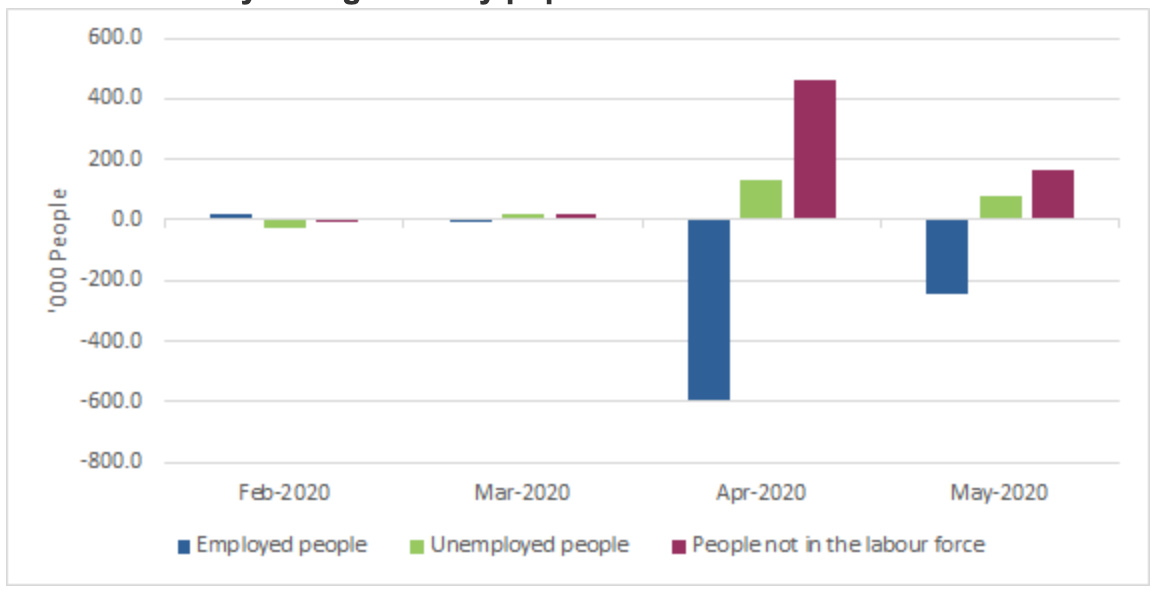
Chart: Monthly changes in key populations (via ABS)
Despite these dire statistics, Prime Minister Scott Morrison remains optimistic about Australia's future.
"I can see that ray of light, and I'm sure Australians can too, but we've got to keep moving towards it," PM Morrison said.
"We're looking at around two years to get the economy back to where it was before COVID hit it, and let's make no mistake, this recession is a product of the coronavirus pandemic.
"We estimate around two years to get back just to where we were when that happened and I believe over five years we can catch where we were planning to be."
Federal Treasurer Josh Frydenberg pointed toward some signs that an economic rebound is slowly emerging, citing how consumer confidence has regained 93 per cent of its lows, and business confidence regaining 70 per cent of its lows.
"We still have a very steep mountain to club, but as the Prime Minister said, we are working day and night to get Australians back into work," Frydenberg said.
Updated at 1:10pm AEST on 18 June 2020.
PharmAust shares surge on COVID-19 treatment results, plans for human trials
 "PharmAust shares surge on COVID-19 treatment results, plans for human trials")
A Perth-based pharmaceutical company attempting to repurpose existing drugs for COVID-19 treatment has received a boost today, after repeat in vitro experiments showed a reduction in infectivity in cell culture.
Two weeks ago PharmAust (ASX: PAA) announced preliminary tests using monepantel (MPL) and monepantel sulfone (MPLS) managed to surpress the replication of SARS-CoV-2 virus particles in the lab by 50-95 per cent.
MPL is traditionally used against gastrointestinal deadworms in sheep, and PharmAust has previously evaluated its effects on human patients with cancer.
The repeat experiments undertaken by virologists at the Walter and Eliza Hall Institute of Medical Research in Melbourne again showed the virus particles could be suppressed by up to approximately 95 per cent with these drugs.
Discussions are now underway with the institute to explore the significance of this work, including a comparison to a similar drug rapamycin and current anti-viral drugs authorised by the FDA for emergency use to treat COVID-19, such as remdesivir.
Walter and Eliza Hall Institute researcher Professor Marc Pellegrini describes MPL's and MPLS' anti-viral profiles as encouraging.
"These exciting repeat results validate the results of the initial test and form strong grounds for progressing the drug to the next step," says Pellegrini.
"Demonstrating twice that infectivity of SARS-CoV-2 virus particles can be suppressed by up to approximately 95 per cent in cell cultures is a remarkable outcome.
"We intend to continue collaborating with PharmAust with preclinical experimentation to support their progress."
PharmAust's chief scientific officer Dr Richard Mollard says the reproducible nature of this work in vitro "paves a propitious pathway for continued evaluation".
The company will now prepare an Executive Summary and an Investigator's Brochure to permit discussions with clinicians about a Phase I trial in a small number of human patients to treat COVID-19.
PAA shares were up 27 per cent at $0.14 each at 12:19am AEST.
Updated at 12:19am AEST on 18 June 2020.
Lights, camera, action again as QLD film industry restarts
 "Lights, camera, action again as QLD film industry restarts")
A COVID-safe plan has meant the film industry is back on set in Queensland, with two productions about to start and plans to get Baz Luhrmann's Elvis biopic filming again "as soon as possible".
Premier Annastacia Palaszczuk says two productions in Cairns and on the Gold Coast will start filming again, showing great confidence in recovery with 225 jobs to be created along with a $10 million in the state's economy.
"Rom-com feature film This Little Love of Mine, by Brisbane-based The Steve Jaggi Company, will start filming in Cairns and is part of our Far North Queensland Screen Production Strategic Plan designed to grow the industry in the region," she says.
"This production will create 25 local jobs and inject more than $1.5 million into the economy.
"Also resuming filming this month is the second season of The Bureau of Magical Things, on the Gold Coast, employing more than 200 cast and crew and injecting more than $8.5 million into the Queensland economy."
She says season three of Harrow is also poised to kickstart filming, while the government and Screen Queensland are also working to ensure major international productions can return to the State.
"We're working closely with Baz Luhrmann and his production team to recommence filming of the new "Elvis" movie at Village Roadshow Studios on the Gold Coast," the Premier says.
"We want to ensure that this can happen as soon as possible while making sure that the cast and crew can operate safely.
"Screen Queensland and Queensland Health are also currently developing a screen industry COVID safe plan that will be released shortly, paving the way for the whole sector to get rolling cameras again and crew back to work on sets."
The Premier notes the industry had been hit hard by COVID-19 in Queensland and around the world, but it is great to see the sector ramping up again.
"While the global pandemic may have forced productions into hiatus, the Queensland Screen industry has still been active - doing what they do best, creating and developing until productions can recommence," she says.
"Screen Queensland established a Queensland Screen Industry Task Force and announced a $3.3 million COVID-19 support package to support Queensland writers and producers and businesses.
"I look forward to announcing the start of more productions in our State soon, that are getting people back to work and our economy recovering."

The Bureau of Magical Things.
Member for Mulgrave Curtis Pitt has been instrumental in developing the Far North Queensland Screen Production Strategic Plan, and welcomes the This Little Love of Mine production and crew to the Tropical North.
"The screen industry is rebounding and it's absolutely fantastic that the very first production to start up again will be filmed here in Cairns," says Pitt.
Member for Cairns Michael Healy says the film will showcase he stunning locations and lifestyle of Far North Queensland when released in cinemas in 2021, ideally timed to put the state in the spotlight for potential tourists.
Member for Barron River Craig Crawford says he is sure the Cairns community will welcome the crew with open arms.
This is the third feature film to be shot in Queensland by The Steve Jaggi Company in less than 18 months, since relocating to Brisbane from Sydney in late 2019.
Producer Steve Jaggi says the production is led by a outstanding team of female talent in key creative roles.
"With director Christine Luby at the helm of this romantic comedy written by Australian screenwriter Georgia Harrison, we know we are on the right track to connect with our female target audience," Jaggi says.
It has been a challenging year for the screen sector, and we feel fortunate to be heading into production on this feature and would like to recognise the support of Screen Queensland in helping us get to this crucial point."
The film is produced by Kelly Son Hing, Spencer McLaren and Steve Jaggi, with Kylie Pascoe co-producing.
Updated at 11am AEST on 18 June 2020.
Gold Coast Convention and Exhibition Centre prepares to reopen
 "Gold Coast Convention and Exhibition Centre prepares to reopen")
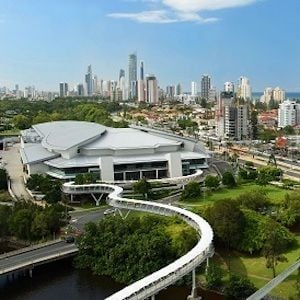
Green shoots are showing at one of Australia's preeminent conference and events spaces as the Gold Coast Convention and Exhibition Centre (GCCEC) announces plans to reopen.
The GCCEC says it has received approval from the Gold Coast Public Health Unit to operate under its COVID-safe plan.
As such, the Centre could potentially host 4,500 visitors per day based on the one person per four square metre rule.
GCCEC's arena, that normally can accommodate up to 6,000 people, now has a COVID-safe capacity of between 1,500 and 3,000 people.
The venue's COVID-safe plan covers all areas of operation including cleaning, hygiene, and social distancing.
"We are all looking forward to welcoming businesses back to the Centre after months of getting the building and business COVID safe," says GCCEC general manager Adrienne Readings.
"We are confident in our plan and the processes that we have implemented to ensure the safety of all visitors to GCCEC.
"We're in a unique position on the Gold Coast to be able to accommodate larger events such as graduations, conferences, meetings and dinners to current distancing regulations."
ICC Sydney back in the frame
GCCEC's reopening plans follows similar news from New South Wales' equivalent conference space, the International Convention Centre Sydney (ICC Sydney).
Last week the ICC Sydney announced it had launched the 'ICC Sydney EventSafe Operating Framework' - a set of operating principles that will allow the venue to safely reopen.
The launch of the Framework signals the preparedness of ICC Sydney to reopen pending the further rollback of NSW and Federal Government COVID-19 restrictions.
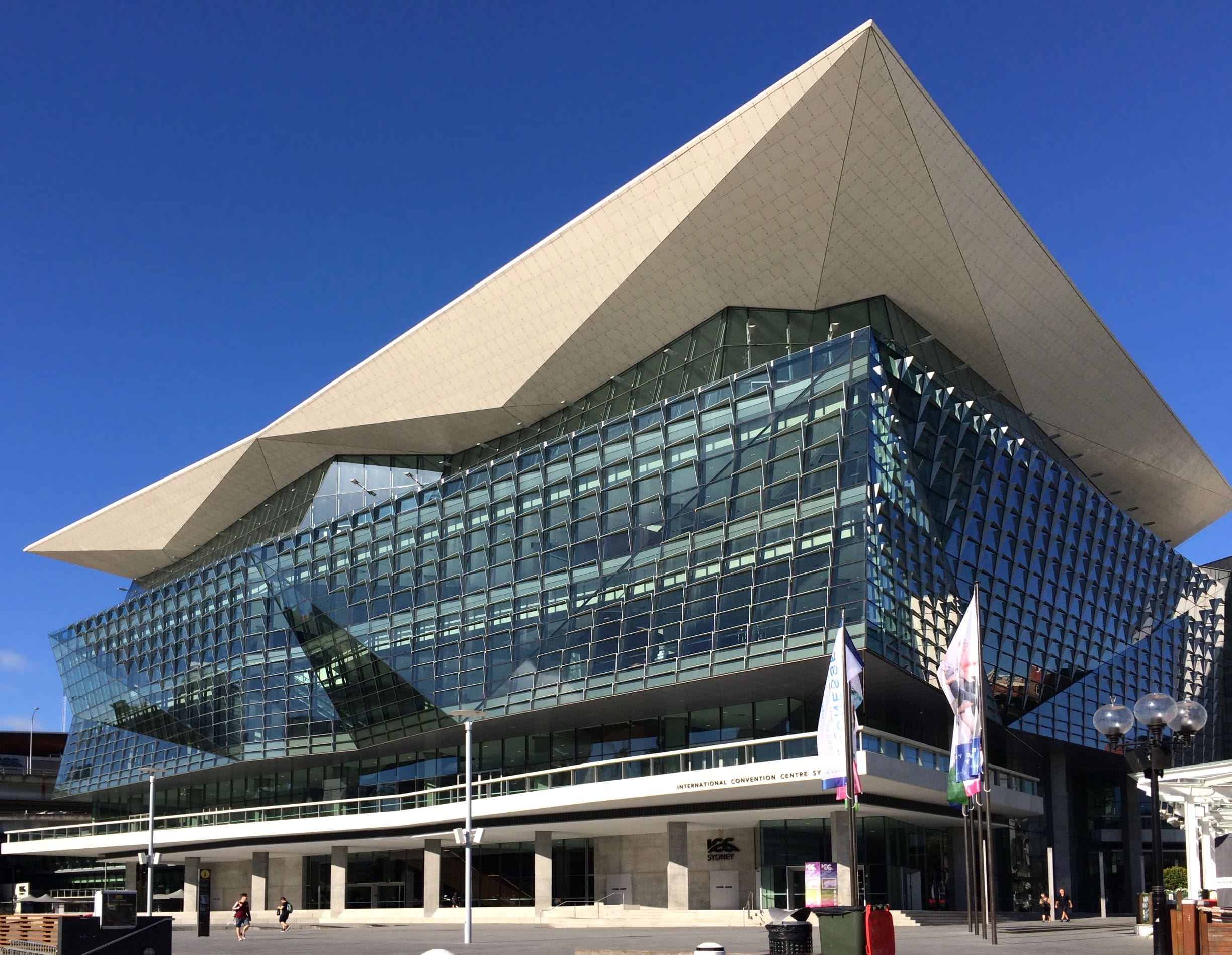
ICC Sydney
"We are confident that ICC Sydney's EventSafe Operating Framework not only delivers against this challenge by establishing best practice, but will also reinstill confidence in people to start hosting and attending events," ICC Sydney CEO Geoff Donaghy said.
"This is critical for rebooting our industry and the many other businesses and parts of Australia's economy that will benefit from that success."
Convention centres in Adelaide, Melbourne, Brisbane, Perth and Hobart all remain closed due to COVID-19 restrictions.
Updated at 10:44am AEST on 18 June 2020.
Advertisement
Latest News
From $13,000 to $20 million: how a PCOS diagnosis and a pair of scissors built Xali Organics
Inspired by a medical diagnosis and driven by innovative marketing,...
Cedar Woods secures $63.4m in new land acquisitions as record presales underpin pipeline push
Perth-headquartered residential developer Cedar Woods Properties (A...
Australia's long-term beer decline hits home as Lion plans to close Boag's brewery in Launceston
Australia's decades-long decline in beer consumption has claime...
Downer EDI seals $310m Transurban contract to maintain Sydney motorway network
Infrastructure services group Downer EDI (ASX: DOW) has secured con...
Propel Funeral Partners expands New Zealand footprint with trio of acquisitions worth $9.1m
Sydney-based death care provider Propel Funeral Partners (ASX: PFP)...
Advertisement