Advertisement
Staying informed is more important than ever as the situation unfolds with Covid-19. Stay tuned here for our live updates, and be sure to let us know what your business is doing to face this unprecedented challenge.
Covid-19 News Updates
Beacon Lighting beaming on profit growth forecast
 "Beacon Lighting beaming on profit growth forecast")
Beacon Lighting (ASX: BLX) shares are shining 22 per cent brighter this morning after the Melbourne-based retailer reported sales growth throughout the pandemic to date, as well as expectations underlying profit will rise in FY20.
By the close of business yesterday BLX shares had already clawed back all of their losses due to the market crash, but today's illumination of recent results - including 15.5 per cent total sales growth - sent them surging.
Comparative sales growth for company stores is up 16.9 per cent in the second half to date, while online sales have risen 77.7 per cent.
"The Beacon Lighting Group has experienced significant growth in sales in H2 FY2020 as customers are spending more time working, educating and completing projects at home," the company said.
"Given the recent changes to customer shopping patterns and future changes in government policies, it is uncertain as to whether the higher levels of sales will continue in the future."
In December the group announced the sale of its Parkinson distribution centre in Queensland to Charter Hall for $28 million, with a leaseback arrangement for the site that was initially developed for Woolworths' (ASX: WOW) failed hardware venture Masters.
The group made a $7.8 million profit before tax on the sale, but this was partially offset to the tune of around $5 million from the closure of its Beacon Energy Solution business.
Regardless of this $2.8 million lift to the bottom line, Beacon Lighting still expects underlying net profit after tax (NPAT) to exceed its $16.5 million result from FY19.
Updated at 11:18am AEST on 17 June 2020
SA to open borders to WA, TAS and NT tonight
 "SA to open borders to WA, TAS and NT tonight")
South Australia has today taken its first major step since COVID-19 restrictions began to welcome visitors from the rest of the country, with plans to open borders to Western Australia, the Northern Territory and Tasmania as of midnight.
This lifting of restrictions means travellers coming from these origins will not be required to spend 14 days in self-isolation.
A relaxation of the border with Queensland also could be imminent.
"It's important for me to point out this doesn't mean that those jurisdictions have lifted their borders for South Australians going into their jurisdictions," SA Premier Steven Marshall told a press conference this afternoon, signalling airlines to reopen flight routes into Adelaide.
"What we are effectively doing is removing the border on our side, and what that means is we should see more people travelling into South Australia."
The Premier clarified the travel must be direct. For example, someone cannot avoid the self-isolation requirements if they travel from WA to SA via Sydney.
As of midnight, people who have entered SA from WA, NT and TAS and are currently in self-isolation will no longer be required to complete the duration of their quarantine.
"I would say that we are also considering Queensland. We didn't make a decision on Queensland today, but it's likely that we will again meet later this week or early next week and again consider whether or not we can remove that state border with Queensland," the Premier added.
The State Government also made two other decisions today:
- As of Friday, public assemblies of up to 300 people will be permitted; and
- Indoor classes such as fitness, dance and yoga that have previously had a 10-person limit will have that number lifted to 20, so long as seven square meters per person can be provided.
As announced last Friday, South Australia plans to open all state borders as of 20 July.
"What we've seen in recent weeks is a massive improvement in virtually every jurisdiction around the country - last week I think only 42 new cases across the entire country; two thirds of those came from people travelling back from overseas," the Premier reiterated this afternoon.
"All jurisdictions are doing well, and we look forward to a time when the entire country can be open to all interstate travel."
Updated at 2:34pm AEST on 16 June 2020.
Fresh $100m grant round for QLD small business, plus $10m interstate flight boost
 "Fresh $100m grant round for QLD small business, plus $10m interstate flight boost")
The next phase of the Queensland Government's economic recovery plan has been unveiled, and small businesses, the tourism and arts industries and more are set to receive some stimulus.
More than $300 million will be pumped into a variety of sectors as part of the next phase in the Queensland Government's 'Unite and Recover' program, designed to restore and create jobs.
"In the fallout of the Covid-19 pandemic, it's imperative that we prepare Queensland for the difficult road ahead and plot a definitive, responsible and comprehensive plan for our economic recovery," says Queensland Premier Annastacia Palaszczuk.
"Today's new package of measures shows that our focus continues to be Queensland jobs and a plan for our economy.
"Every job matters and we stand shoulder to shoulder with our workers, businesses and industries on the road ahead."
Additional $100 million in small business grants
Queensland small businesses impacted by COVID-19 will be able to tap into a new $100 million funding round.
Grants of up to $10,000 will be made available from next month to help small businesses survive and grow their staffing levels.
The additional funding comes after the State's first round of small business grants were "snapped up within days".
"Our small business community has spoken, and we have listened and responded as part of the second stage of our Unite and Recover for Queensland Jobs plan," Palaszczuk said.
"Round one of the Small Business grants received an overwhelming response.
"In the second round, we are prioritising regional areas and allocating half of the funding to support small businesses in regional Queensland."
Small businesses, including those who had expressed interest in the first round of grants, are encourage to apply from 1 July.
Airlines and national parks supported ahead of tourism revitalisation
As Queensland gears up for the pencilled in 10 July border reopening date the tourism industry will be supported by the State Government.
The State has committed an extra $10 million to airline route support for interstate flights, designed to encourage the domestic tourism spend across the State and bring back airline capacity faster than it would have otherwise.
It comes on top of $5 million already committed to 16 airports to help airlines to secure intrastate flights.
"The combined $15 million program will give even greater scope to negotiate with airlines to open up the state and bring more tourists to our regions," Palaszczuk said.
"Airports and aviation are crucial to our regional economies as we recover from the COVID-19 pandemic.
"More flights will help to further revive our tourism industry, support hundreds of thousands of jobs and pump millions of dollars into local businesses."
National parks will also receive $8.93 million under a works and jobs boost to provide visitor infrastructure upgrades and enhancements.
"Before COVID-19, one in 10 Queenslanders were employed in tourism," says Tourism Minister Kate Jones.
"We want to continue getting people back to work. More direct flights will help us do that."
$22.5 million for creative industries
A new 'Arts and Cultural Recovery Package', worth $22.5 million, will help support the recovery of the sector hard hit by COVID-19 restrictions.
The package includes $11.3 million to offset revenue losses in music and performing arts venues.
The package will also support COVID-safe cultural experiences for Queensland audiences, and brings the total dedicated by the QLD Government to the arts sector to $42.5 million.
"The funding will boost jobs through the creation of a pipeline of live and local music and other performing arts experiences, including a focus on our independent artists who have been particularly impacted during this time, says Palaszczuk.
"Importantly it ensures the activation of our venues and helps the arts sector move past the economic impacts of COVID-19.
"Our arts, cultural and creative sector has shown ingenuity and hope, so we're continuing to support them in finding new ways to connect and inspire us."
Indigenous creatives will also be supported by this funding program, with the Government supporting the distribution of First Nations arts product through a digital marketplace, expanded sale channels and investment in the growth of the Indigenous Arts Centre network.
Agriculture, construction and resources industries to receive a boost
As part of the latest economic recovery measures the State's agricultural, construction and energy sectors will also receive funding for growth.
More than $12 million will be delivered to the agricultural sector designed to create new technologies, sponsor e-commerce platforms, and to explore potential tourism opportunities.
The Queensland Government will also commit $10 million to promote exploration activity for new economy minerals for emerging technologies.
Renewable energy is also at the forefront of the stimulus package, with the Government investing $17 million in a state-of-the-art renewable energy training facility in Brisbane to teach workers about solar and other renewables.
The State Government has also reaffirmed its commitments to the $15,000 first home owner grants program, plus for those building a new home in a regional location an additional $5,000 grant will be made available.
Additionally, the Government has committed to a further $100 million 'Housing Construction Works for Tradies' program, with new social housing to be built across Queensland.
Councils in South-East Queensland will receive an additional $50 million for a 'Unite and Recover Community Stimulus Program' to support minor works and projects that create local jobs in our most impacted areas.
Updated at 12:01pm AEST on 16 June 2020.
NSW to cut nightlife red tape for COVID-19 recovery
 "NSW to cut nightlife red tape for COVID-19 recovery")
The New South Wales Government will relax late night trading laws and lift a freeze on new liquor licences across Sydney's CBD, as part of a plan to reinvigorate the city's night time economy post-coronavirus.
The state says changes will allow venues like pubs, clubs, hotels and bottle shops to adjust service offerings to meet consumer demand.
Changes to late night trading will also allow new venues to open up, with the state to remove a freeze on new liquor licence applications.
It is expected that the NSW Government will allow applications for these new licences later in 2020. The initial licence freeze was implemented as part of the State's measures to target alcohol-related harm in areas with high concentrations of liquor businesses.
The freeze completely prevented the granting of new licences for hotels, nightclubs, registered clubs and liquor shops across Sydney's CBD and Kings Cross.
Minister for Customer Service Victor Dominello said trading restrictions for existing venues ended on 1 June 2020, and the NSW Government is working with stakeholders on a framework for approving new licences.
"In some CBD locations, this will be the first time in 11 years that applications for new venues will be considered. These changes will kick-start a new era in Sydney's 24-hour economy," Dominello said.
NSW is calling upon the public and industry to have a say in how Sydney's 24-hour economy will be reformed.
Those interested in providing feedback to the NSW Government can do so here.
Updated at 10:46am AEST on 16 June 2020.
CBA data shows rebound in spending intentions
 "CBA data shows rebound in spending intentions")
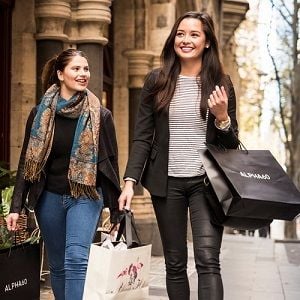
The Commonwealth Bank of Australia (ASX: CBA) has observed "big changes" to household spending intentions in May, with upticks for retail and entertainment in particular.
The latest report in the bank's Household Spending Intentions (HSI) series provides early signs of stabilisation and recovery in parts of the economy, largely driven by government policy according to CBA chief economist Stephen Halmarick.
"Data up to the end of May 2020 showed retail spending intentions jumped higher on the month, consistent with our CBA credit and debit card spending data. Improvement was also seen in entertainment spending intentions," he says.
"After big falls in April, spending intentions stabilised for home buying and travel. Health and fitness spending intentions also stabilised after recent gains, while some weakness was evident for education spending intentions and motor vehicle spending intentions."
The economist says travel spending intentions stabilised in May as parts of the economy re-opened.
"While Australians may not be able to holiday overseas until well into 2021, domestic tourism is likely to get a significant boost in coming months," says Halmarick.
"Australians will no doubt be keen to visit family and friends around the country and use the opportunity to explore the best that Australia has to offer."
The key drivers of the jump in retail spending were food, general retail (department and discount stores) and household furnishings and equipment.
"Perhaps adding to coronavirus 'waist-lines', there was also an ongoing increase in spending on both alcohol for at home consumption, and confectionery," he says.
"Weakness is still evident in alcohol sales at licenced premises, as well as restaurants, art galleries, live music venues, bowling allies, cinemas and theatres.
Halmarick adds home buying spending intentions stabilised in May due to an increase in mortgage applications as house prices fell.
"This was especially the case for owner-occupiers looking to lock in low fixed rate mortgages," he says.
"Online Google searches related to home buying decreased in previous months and is in line with house price falls for the month.
"While we know that the Australian economy is in recession, the path to recovery is becoming clearer."
Photo: Visit Melbourne
Updated at 11.32am AEST on 16 June 2020.
$72 billion worth of infrastructure projects fast-tracked as PM targets "restoration of growth"
 "$72 billion worth of infrastructure projects fast-tracked as PM targets \"restoration of growth\"")
Prime Minister Scott Morrison has today pledged to drastically cut Commonwealth assessment and environmental approval times on projects, with at least $72 billion worth of priority works set to be fast-tracked across the nation.
Addressing the Committee for Economic Development of Australia (CEDA) this morning, the PM highlighted key aspects of a five-year JobMaker plan that "charts the way forward for a new generation of economic success".
He said 15 major projects had been identified for fast-tracked approvals under a bilateral model between the Commonwealth, States and Territories, with around 66,000 direct and indirect jobs to be created.
"This investment, and most importantly these jobs, will be brought to market earlier by targeting a 50 per cent reduction in Commonwealth assessment and approval times for major projects from an average of 3.5 years to 21 months," the PM said.
"This priority list includes the inland rail from Melbourne to Brisbane, the Marinus Link between Tasmania and Victoria, Olympic Dam extension in in South Australia, emergency town water projects in New South Wales, and road, rail and iron ore projects in Western Australia.
"Early examples of this approach are already paying dividends and are very encouraging. I commend the New South Wales government who we've been working with and we are on track to complete Commonwealth assessment and approval for the Snowy 2.0 project in under two years, unlocking over 2,000 regional jobs."
The government also aims to cut approval times under the Environment Protection and Biodiversity Conservation (EPBC) Act 1999.
"According to departmental estimates, delays associated with these approvals alone cost industry over $300 million just in 2019 - that's not good," Morrison said.
"The Commonwealth has already taken steps to cut project approval times under the EPBC Act, and at the end of 2019 approval decisions took 90 days on average. Today they take 40; that is what we've achieved this year in 2020.
"Our goal is to cut these times by a further 25 per cent by the end of this year, getting down to 30 [days] for major projects," he said, adding the National Cabinet has been working on how to streamline Commonwealth and State process for "point of single-touch" approvals.
In terms of new spending, the Prime Minister outlined $1.5 billion would go towards immediately starting small priority projects that have been identified by states and territories.
"As part of this package $1 billion will be allocated to priority projects which are shovel-ready smaller projects - they're ready to go - with $500 million reserved specifically to target road safety works," he said.
"This is an important opportunity to make our roads safer across the country, not just in rural areas where it is critically important, but also in other parts of the country."
Once this support is finalised the government expects to have either brought forward or provided additional funding to some $9.3 billion in infrastructure investment in the past eight months, building a pipeline of future projects.
Deregulation
The PM also announced the Deregulation Taskforce established last year would be brought into his department of the Prime Minister and Cabinet as part of the JobMaker agenda.
"This [taskforce] has already included simplifying business registers, streamlining export documentation, and making it easier for a sole trader and micro business to employ people; in most cases their first ever employee," he said.
"The next phase of the taskforce work will zero in on areas to assist COVID-19 economic recovery, so for example occupational licensing and registration requirements often vary across states and territories, which increases costs on businesses and workers who operate or move across Australia.
"Greater mutual recognition of qualifications and improved information flows between jurisdictions will be vital to allow Australians to take up to opportunities in coming months."
Morrison added COVID-19 had shown the country's laws have not kept pace with digital technology when it comes to business communication.
"For example, by requiring businesses to use paper for storing information instead of using electronic delivery or adopting new technologies like blockchain; these laws too are ripe for modernisation.
"This crisis has shown what can be achieved when regulators are pragmatic and responsive, solving problems without compromising safeguards.
"Successful deregulation has increased competition and economic efficiency, raising productivity and ultimately supporting jobs and wages."
"Australia is opening up again"
The PM referenced consumer confidence indices from both Westpac and ANZ that show lost ground has been recovered, and high frequency spending data shows this has been increasingly translated into increased retail sales.
But the harsh reality is that around 1.6 million in Australians are now on JobSeeker, and around half of these people have started accessing these payments over the past few months.
"Many have done it for the first time in their lives," the Prime Minister said.
"It has been young people who have had the greatest increase in the demand for JobSeeker; this is also true when you include those still employed but working zero hours.
"We know there is a disproportionate impact on women and younger Australians and those with lower skills attainment."
In accommodation, hospitality and retail more than 600,000 Australians have either lost their job or are working zero hours, while national household consumption of services figures are expected to get worse in the June quarter as so many businesses were shut down or remained idle.
"We're aspirational and we're a positive people, and the good news is we are now coming back. Australia is opening up again," he said.
"While trailing the improvement in consumer sentiment, business confidence and conditions are also clawing their way back; the easing of restrictions and Australians emerging from isolation confident in the health measures taken by governments, will continue to drive up demand and indicate to businesses that they can once again open their doors and make a go of it.
"It's not just enough for businesses to be able to be open - they've got to have confidence to open, to bring the staff back, to get the orders in for their inventories; you have to put the investments in, including through the instant asset write-off which the Treasury extended out till the end of the year."
He said while global growth forecasts were "weak and bleak", the outlook for Australia's major trading partners was much stronger.
"Our mining sector has also been able to keep on running. Export volumes and prices are encouraging...and will provide much needed income for the country, and the same is true for many other export sectors," he said.
The PM noted Australia had been able to get the balance right between health and economic priorities in comparison to other nations.
"Whereas other countries imposed strict lockdowns, we've been able to keep large sectors of our economy open and functioning, including construction, manufacturing, agriculture, mining, as well as large parts of the retail sector which were not closed," he said.
"The recent national accounts show that the Australian economy shrunk by 0.3 per cent in the March quarter. Now, while the damage to the economy is heartbreaking at that level, it has been far less than so many countries.
"Looking forward, Australia is expected to have the third lowest fall in GDP in 2020 of all economies surveyed by the OECD. But the hit to our economy, we must understand, is significant despite our relatively stronger performance and the road ahead will be very hard. There is a mountain yet to climb."
It is expected that more than $100 billion of economic activity has been lost as a result of this crisis, and that it will take the country at least two years to get back to the level it was at prior to COVID-19.
"That's why we have a plan to lift that growth not just for the next few months, just not for now, but the next five years.
"We need to lift our economic growth rate by more than one percentage point above trend, to beat the expected pre-COVID-19 GDP position by 2025, to catch back up to where we were before COVID hit. The restoration of growth is also critical to our public finances."
Updated at 10:47am AEST on 15 June 2020.
QLD border opening date pencilled in, further restrictions to be eased in VIC and NSW
 "QLD border opening date pencilled in, further restrictions to be eased in VIC and NSW")
The highly anticipated July 10 date for the reopening of Queensland's borders has been tentatively confirmed this morning by the State's Premier.
Speaking at a press conference, Premier Annastacia Palaszczuk reiterated plans to stick to that date, which was outlined in the state's roadmap for recovery but will be subject to review at the end of this month.
"Our roadmap clearly says July 10," Palaszczuk said.
"I raised at National Cabinet that Queensland has a very comprehensive roadmap, and that July 10 is listed there. I also mentioned that we will review at the end of the month but it is our clear intention that July 10 will be the date for consideration."
Palaszczuk's statements come as the State announces the further easing of restrictions on funerals in Queensland.
From tomorrow, 16 June, up to 100 people will be allowed to attend a loved one's funeral. Social distancing restrictions will still apply and records of attendees must be kept.
"The restrictions we've had to enforce on funerals has been one of the hardest for us to implement," QLD Deputy Premier Steven Miles said.
"We've received hundreds of heartbreaking stories from families wanting to have more people to grieve their loved ones. It's an event that people don't get to choose the timing of so they can't put it off as they can other events.
"So to be able to now allow up to 100 people at a funeral, provided records are kept of those attending and social distancing measures are implemented, we can do that safely while allowing people to grieve their loved ones."
Palaszczuk also announced today that the Queensland Government is assessing the new gathering restriction rules for Stage 3 announced on Friday by Prime Minister Scott Morrison.
These new rules will allow venues in Australia to ditch the 100-person venue capacity limit which will instead be replaced by a four square metre per person per room rule.
"We are actively considering that and we don't have a problem," says Palaszczuk.
The latest announcements from Queensland follow statements from the Victorian and New South Wales Governments regarding the further easing of restrictions in those states.
Victoria
On Sunday, the Victorian Government announced the gradual easing of restrictions from 11:59pm on Sunday, 21 June 2020.
From 22 June up to 50 people will be permitted to sit inside restaurants, cafes and pubs, with a maximum group size of 20 people.
Patrons of these establishments will also be allowed to be served alcohol without food, and bars and clubs will also be permitted to have up to 50 patrons per space.
The state has also increased the number of people permitted to visit a gallery, museum, national institution, historic site, outdoor amusement park, zoo, or outdoor arcade with up to 50 patrons per indoor space.
Indoor cinemas, movie theatres, concert venues, theatres and auditoriums will also be allowed to reopen with up to 50 seated patrons per space.
Private worship or small religious ceremonies can now include up to 50 people plus people reasonably required for the ceremony.
Auction houses, real estate auctions and open house inspections can now increase to 50 people plus those required to facilitate the auction.
Indoor sport centres and venues can open with up to 20 people per space, with a limit of up to 10 people per group or activity at any one time.
A staggered approach to the return of community sport will also commence from 22 June, including the resumption of full-contract training and competition for people 18 years' old and under, and the resumption of non-contract competition for people aged over 18 years (both indoor and outdoor).
From 13 July, Victoria will allow the resumption of full-contact training for adults, and from 20 July the resumption of all sport competition for adults.
Other limitations on sports will eased on 22 June including the removal of the limit on three people per lane in swimming pools and the ski season will resume.
Shared facilities at camping and tourist accommodation can also reopen on 22 June and indoor play centres and toy libraries will be able to open with 20 people per space.
New South Wales
New South Wales will begin moving into Stage 3 easing of restrictions from 1 July, with the state to apply the new gathering restrictions announced on Friday by PM Scott Morrison.
This will mean the number of people allowed inside indoor venues will be determined by the one person per four square metre rule with no upper limit. All activity must be seated only.
Smaller stadiums with a maximum capacity of 40,000 or less will be allowed to reopen at up to 25 per cent of their normal capacity. Events must be ticketed, seated and follow strict social distancing guidelines.
Restrictions on funerals will be eased to allow the four square metres rule to apply, while all other restrictions including the 20 guests in the home and 20 for outside gatherings rules will remain the same.
"We are keen to open the economy in a COVID-safe way," NSW Deputy Premier John Barilaro said.
"The government will also be considering solutions for smaller venues, particularly in regional NSW, where the four square metre rule is not practical for small businesses.
"The July 1 measures will allow vital community hubs in the region to open, such as showgrounds, providing a big boost for communities many of which are still recovering from the devastating impacts of drought and bushfires."
Updated at 10:19am AEST on 15 June.
SA reveals plans to reopen borders and increase gathering limits
 "SA reveals plans to reopen borders and increase gathering limits")
South Australian Premier Steven Marshall has today announced his state will move to Stage 3 restrictions from 29 June, and interstate travellers will be permitted to enter the Festival State from 20 July.
However, before Stage 3 is implemented SA will move into 'Stage 2.5' next Friday, under which the number of people allowed to attend venues will be increased from 20 people per room to 75 people per room.
The total number of people allowed in a venue at one time will also be increased from 80 people per venue to 300.
This tentative step prefaces the major easing of restrictions that will be implemented from 29 June when the State enters Stage 3.
In line with the alterations made to Stage 3 restrictions, announced today by Prime Minister Scott Morrison and agreed upon by the National Cabinet, the 100-patron limit will be scrapped in SA to be replaced with the more lenient one person per four square metre rule.
SA's domestic borders will also be lifted on Monday 20 July as part of Stage 3, allowing interstate travellers to visit.
"This could only be possible because of the massive improvement right across the entire nation," says SA Premier Steven Marshall.
"We will be looking at some of the state borders with individual jurisdictions who are doing particularly well; we don't want to unnecessarily detain people for two weeks of isolation if they don't pose a health risk to us in South Australia."
Marshall says the state is still considering final legal advice over the lifting of borders and will announce further developments next week.
While SA is pushing ahead with the reopening of its venues, it is unlikely the State's crown jewel Adelaide Oval will be allowed to reopen at a higher capacity under the new Stage 3 restrictions announced today by the Prime Minister.
For venues like smaller stadiums with a capacity of 40,000 people or less under Stage 3 they will be able to operate with specific restrictions in place.
Venues that run outdoor sporting or cultural/entertainment events can be operational as long as people are seated with a cap on 25 per cent capacity, meaning some venues may be able to have up to 10,000 people.
But Adelaide Oval has a total capacity of 53,500, meaning it is too large to fit under the national guideline announced today by the Prime Minister.
That has not deterred SA so far, with the Adelaide Oval to host an AFL match tonight between the Adelaide Crows and Port Adelaide to a seated crowd of 2,000 people.
Updated at 2:59pm AEST on 12 June 2020.
PM scraps 100-patron limit, international students to return to Australia
 "PM scraps 100-patron limit, international students to return to Australia")
Prime Minister Scott Morrison expects pilot programs for the return of international students to start next month, while patron caps at indoor venues will be replaced with the four square metre rule under Stage 3.
Under changed rules for that next stage under Australia's suppression strategy, stadiums with less than 40,000 people will be able to have seated ticketing at 25 per cent capacity.
Following a week where there have only been 38 new cases of COVID-19, of which more than half were from overseas transmission, National Cabinet met today to put the wheels in motion for significant changes.
The application of these guidelines will still depend on decisions made by State and Territory governments, but they are expected to commence in July.
South Australian Premier Steven Marshall has also announced today that his state's borders will reopen on 20 July.
As of next Friday the 20-person per room limit will be lifted to 75 in the Festival State, while the number of people allowed in a venue will go up from 80 to 300. Thenn Stage 3 will kick in on 29 June with a cap removal as per National Cabinet plans.
100-person venue cap replaced with four square metre rule
Stage 3 previously capped indoor gatherings to 100 people per establishment, but that limit has now been removed and will be replaced by a four square metre rule per person per room rule.
This measure will apply to each room in a premises, so larger venues will have scope to let more people inside.
The new rule will not just apply to venues like pubs, clubs and restaurants, but also for funerals, places of worship and outdoor areas too.
However, nightclubs are "not on the agenda" for this change given the difficulty of enforcing social distancing in the setting.
"We have seen overseas that that is one of the areas of failure where nightclubs have opened, and Michael Gunner, the Chief Minister in the Northern Territory, today noted that even though that is not prohibited the application of the one and a half metre distancing means that venues have not opened there because it's just not commercially practical to do so."
Smaller stadiums to open up for capped seated events
The PM has also announced that for venues like smaller stadiums with a capacity of 40,000 people or less under Stage 3 they will be able to operate with specific restrictions in place.
Venues that run outdoor sporting or cultural/entertainment events can be operational as long as people are seated with a cap on 25 per cent capacity, meaning some venues may be able to have up to 10,000 people.
For example a venue with a capacity of 40,000 up to 10,000 people will be able to attend.
This new rule will also apply to outdoor festivals, enabling them to operate on the condition that patrons are seated. This may rule out traditional music festival-style events though, considering how people often roam about the space and are not seated.
"This is something that will be happening under Stage 3 where states and territories choose to move to that, and it will require quite a bit more work," says the PM.
"We have to give venues and others time to prepare for that sort of change, and I think that will be welcomed."
The PM says venues with a capacity of more than 40,000 people are an entirely separate issue which will require further work, and that these larger venues will not be able to operate under the freedoms given to their smaller counterparts.
This means venues like the MCG, ANZ Stadium in Sydney, Optus Stadium in Perth, Marvel Stadium in Melbourne, Adelaide Oval, Suncorp Stadium in Brisbane, the Sydney Cricket Ground and the Gabba in Brisbane will not be covered under the new changes. However, the PM speculates there will be individual approval processes undertaken by the State Chief Medical Officers to develop re-opening plans.
"When you're up above 40,000 you've got more than 10,000 people going to a gathering and that has implications for the access to those premises, public transport crushes, all of those sorts of things," says the PM.
"I wouldn't want to raise expectations there, I think that will require a fair bit of work. But for those smaller, mid-tier venues and below, up to 25 per cent is something that can be done in Stage 3."
Despite this announcement Adelaide Oval will be operating at a severely reduced capacity this evening for an AFL match between the Adelaide Crows and Port Adelaide. Just 2,000 spectators will be permitted to watch the match live in the stadium that has a capacity of 53,500 people.
International students to return to Australia
Finally, the PM has announced that international students will soon be able to return to Australia.
He says the Federal Government is working closely with states and territories on a pilot program to facilitate the re-entry of international students into Australia, but no date has been set for when that might occur.
Students will only be allowed to come to Australia on a pre-approved plan for particular institutions.
"I'm not suggesting this is going to happen soon - there's still a lot of work to do," says the PM.
"We have received some very well thought through proposals from states as to how this can be done, particularly here in the ACT, and this is something I'm sure we would all welcome happening again.
"But it has to be done with the appropriate quarantine, entry arrangements, biosecurity, all those matters being addressed."
Ultimately, the PM has stressed that States will first need to open up borders domestically before any plan to allow international students into the states can be put into motion.
"If you want borders open for international students then you need to open the borders for Australians," says the PM.
Updated at 2pm AEST on 12 June 2020.
Restrictions to ease further in NSW on Saturday
 "Restrictions to ease further in NSW on Saturday")
A number of restrictions will be eased in NSW from this Saturday, 13 June, as the State's businesses continue to reopen with COVID-safe practices implemented.
From Saturday food courts will be allowed to reopen, the number of people allowed to visit homes will be increased from five to 20, and the number of people allowed to gather outdoors will be increased from 10 to 20.
"NSW acted quickly to introduce restrictions to tackle the spread of COVID-19 and I am determined for us to move as quickly as possible out of them," says NSW Premier Gladys Berejiklian.
"We have been a world leader in dealing with COVID-19 and I want us to be an example on how to reopen an economy in a COVID-safe way."
Berejiklian says the next raft of changes to COVID-19 restrictions will be implemented from 1 July.
Food courts that do reopen on Saturday must have a COVID-safe plan implemented, including: abiding by the four square metre rule, a maximum of 50 people per separate seated eating area, and enhanced hygiene and cleaning processes.
The announcement comes as NSW has gone two full weeks without detecting a single case of community transmission of COVID-19.
Updated at 10:44am AEST on 11 June 2020.
Advertisement
Latest News
From $13,000 to $20 million: how a PCOS diagnosis and a pair of scissors built Xali Organics
Inspired by a medical diagnosis and driven by innovative marketing,...
Cedar Woods secures $63.4m in new land acquisitions as record presales underpin pipeline push
Perth-headquartered residential developer Cedar Woods Properties (A...
Australia's long-term beer decline hits home as Lion plans to close Boag's brewery in Launceston
Australia's decades-long decline in beer consumption has claime...
Downer EDI seals $310m Transurban contract to maintain Sydney motorway network
Infrastructure services group Downer EDI (ASX: DOW) has secured con...
Propel Funeral Partners expands New Zealand footprint with trio of acquisitions worth $9.1m
Sydney-based death care provider Propel Funeral Partners (ASX: PFP)...
Advertisement