Advertisement
Staying informed is more important than ever as the situation unfolds with Covid-19. Stay tuned here for our live updates, and be sure to let us know what your business is doing to face this unprecedented challenge.
Covid-19 News Updates
No new Covid-19 cases recorded in Queensland
 "No new Covid-19 cases recorded in Queensland")
Queensland has recorded no new cases of Covid-19 for the first time since the outbreak began, according to the State's Premier Anastacia Palaszczuk.
Speaking to the press this morning Palaszczuk said the news was "tremendous" and could mean restrictions may be lifted if numbers remain down for an extended period of time.
Over the weekend Queensland recorded five new cases. In the state there are currently 1,019 confirmed cases of the coronavirus, with 85,870 tests conducted and 738 recovered patients.
The announcement follows the news from Western Australia yesterday that there was just one new case of Covid-19 overnight.
In Australia there are 6,619 confirmed cases and 71 people have died from the virus to date.
Nationally NSW still has the most confirmed cases of Covid-19 with 2,963, followed by VIC (1,329), QLD (1,019), WA (545), SA (435), TAS (197), ACT (103), NT (28).
Updated at 11:12AM AEST on 20 April 2020.
QLD tells NSW to "back off" over Virgin HQ relocation
 "QLD tells NSW to \"back off\" over Virgin HQ relocation")
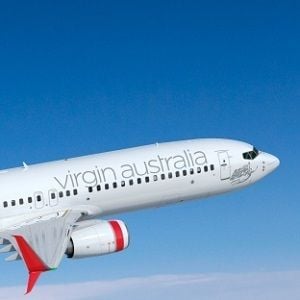
Queensland Minister for State Development Cameron Dick has slammed New South Wales for attempting to relocate the headquarters of ailing airline Virgin Australia (ASX: VAH) to Sydney.
Speaking to the press this morning Dick told New South Wales Treasurer Dominic Perrottet to "back off", saying his state will fight to keep Virgin and 1,200 head office jobs in Queensland.
"There is nothing more dangerous than Queenslanders with their backs to the wall; we will stop at nothing to ensure the headquarters of Virgin remains in Queensland," said Dick.
"New South Wales might want to bring a peashooter to the fight, that's fine. We'll bring a bazooka and we're not afraid to use it."
The inflammatory comments come after Queensland offered Virgin a $200 million support package on the condition it keep the head office in Brisbane, where the airline has been for the past 20 years.
Dick has also called upon the Federal Government and Virgin shareholders to offer the airline further support to ensure Australia has two national airlines at the end of the Covid-19 crisis.
"Virgin is flying through a cyclone and we need everyone on the ground to help this airline land, and the one air traffic controller that hasn't turned up, the one air traffic controller that is not on duty is the Prime Minister," said Dick.
"We are calling on Scott Morrison to come to the party and show some national leadership. This is a national airline in a national crisis, and it needs a national response."
Dick's war of words comes as Virgin is facing voluntary administration after being suspended from trading on the ASX last week.
According to Queensland Minister for State Development Cameron Dick it is important Australia has two national carriers to support tourism, jobs and regional investment.
"Queensland has given Australia both our national airlines we won't let them go, or let thousands of families watch their jobs go, without a fight," says Dick.
"The Queensland Government is ready to do its bit to support, offering $200 million towards a national support package to help get Virgin get back in the skies.
"But we can't do it alone, and nor should we, because all parts of Australia benefit from two national airlines. We need the Australian Government to lead a national effort to keep our two great airlines flying."
The proposed $200 million relief package is conditional on federal government backing, debt restructuring, shareholders and bond holders contributing, the airline's headquarters remaining in Brisbane and ongoing support for regional flights.
"We know other investors are looking at Virgin too," says Dick.
"Our message to potential investors is that we are prepared to put money on the line to keep a national carrier based in Queensland."
The Queensland Government's offer follows the Federal Government's decision to underwrite $165 million of flights for both Virgin and Qantas (ASX: QAN).
Updated at 10:47am AEST on 20 April 2020.
NSW gives $14m for SME advisory to get through Covid-19
 "NSW gives $14m for SME advisory to get through Covid-19")
The NSW Government is injecting $14 million into a small business advisory program to help company owners get through the Covid-19 pandemic.
On Sunday, Minister for Finance and Small Business Damien Tudehope said Business Connect would have additional advisors to help small and medium-sized enterprises (SMEs) navigate this challenging time.
"As part of this funding boost we've allocated $4.6 million to engage an additional 30 advisors to support businesses, on top of $9.8 million to ensure the program continues for another 12 months," Tudehope said.
"Business Connect is a powerful tool, with advisors having assisted more than 28,000 businesses over the past three years, providing advice and skills training for small businesses.
"Business owners have reported increased confidence, stronger finances, and developed plans for their business. We've also seen these businesses create and support more than 15,000 additional jobs since 2017."
Treasurer Dominic Perrottet said the funding would support Business Connect until June 2021, giving NSW businesses the tools they need to stay in business, rethink their model and boost their digital presence.
"Business Connect was on the front foot, rolling out targeted support and Small Business Bushfire Information Sessions in regional areas following the recent bushfires," Perrottet said.
"As a result of Covid-19, more than 60 webinars are available through Business Connect to support businesses in developing a road map for success and managing cash flow amid challenging conditions.
"In addition, a series of Covid-19 Business Information Session webinars with representatives from various government agencies will be rolled out soon, to provide information about stimulus and support initiatives.
"Businesses impacted by COVID-19 and bushfires will be able to access the webinars and receive advice free-of-charge."
The State Government has also announced a $140 million Bushfire Industry Recovery Package to support forestry, horticulture and agriculture industries impacted by the recent bushfires.
Premier Gladys Berejiklian and Deputy Premier and Minister responsible for Disaster Recovery John Barilaro said the package will help industries significantly impacted by bushfires to rebuild, recover, regrow and remain the heartbeat of regional economies.
"This funding will support the recovery and resilience of key industries by backing projects that retain and create jobs, strengthen local supply chains and support a return to production," the Premier said.
"Regional NSW relies on these key driver industries to help generate jobs and economic activity and this funding will provide the direct help many businesses need to recover from devastating losses, which in turn will help their wider industry remain viable."
Barilaro said regional NSW is the backbone of this state and it is critical to support the key regional industries which keep our economy thriving.
"Our farmers feed this state and this nation, and not only have they endured the worst drought on record, but many have suffered horrific bushfires and now COVID-19 is affecting our regional economies," Barilaro said.
"Bushfire impacted towns cannot afford to suffer further job losses and economic downturn, which is why we are delivering this funding to keep our key regional industries in business.
"Industries with the greatest impact will be given the greatest share of this funding. The program will focus on recovery in the short term and will support valuable investments to help these sectors plan for recovery in the longer term."
Details of funding criteria including amounts available for businesses under this package will be made available with the release of program guidelines in the coming weeks.
Other bushfire support measures include the NSW and Australian governments sharing the cost for the clean-up of residential and small business properties, the NSW Government's $1 billion fund to replace vital state infrastructure, $75,000 grants for bushfire affected primary producers and $50,000 grants for bushfire affected small businesses.
Related story: NSW Government announces $10,000 fast relief for small businesses
Updated at 9:55am AEST on 20 April 2020.
US launches three-phase reopening plan as cases pass 670,000
 "US launches three-phase reopening plan as cases pass 670,000")
US President Donald Trump has put the wheels in motion to ease coronavirus-related restrictions if certain benchmarks are hit within fortnightly periods.
In an announcement that pushed Wall Street higher overnight, the White House released "gating criteria" that must be met before states and regions can enter a new phase within a three-phase process.
The final phase would ultimately imply unrestricted staffing of worksites and the resumption of public interactions for vulnerable individuals with physical distancing.
At that point however, low-risk populations would still be encouraged to consider minimising the time spent in crowded environments.
The announcement came after Prime Minister Scott Morrison's triggered approach to easing restrictions, which hinge on improved surveillance, tracing and response mechanisms.
The difference in policy could be best described as Australia trying to crush the virus as our case numbers are so much lower, while the US tries to live with it and effect a slow decline in the virus' spread.
The three gating criteria for "Opening Up America Again" are as follows:
- A downward trajectory over 14 days for flu-like illnesses or covid-like syndromic cases;
- A downward trajectory over 14 days for documented Covid-19 cases or positive tests as a percentage of total tests (flat or increasing volume of tests); and
- Hospitals are treating all patients without crisis care with robust testing programs in place for at-risk healthcare workers, including emerging antibody testing.
If Australia were to adopt the US approach, most of our states and territories would almost be ready to enter Phase One, depending on their health systems. Under this scenario, groups of 10 or less would be able to congregate and people would return to work in phases, while large venues and gyms could reopen under strict guidelines.
Under Phase Two, non-essential travel can resume, and schools and bars can reopen, before entering the third phase where most parts of society can act normally but with continued physical distancing and sanitation protocols.
Donald Trump said American society was engaged and mobilised in "the war against an invisible enemy".
"While we must remain vigilant, it is clear that our aggressive strategy is working and very strongly working I might add," he said.
"New cases are declining throughout the New York metropolitan area; cases in the Detroit and Denver metro areas are flat; Washington DC, Baltimore, Philadelphia and St. Louis are showing great signs of progress; and new cases in Houston and New Orleans are declining."
The US President claimed the data nationwide suggested the peak of new cases had been passed.
Hopefully this will turn out to be true as a peak to date of 35,100 cases was reached on 10 April, before a a drop-off in daily reported cases to 25,300 on 13 April. But since Easter the daily cases have been climbing again and reached 31,500 yesterday.
The number of total reported coronavirus-related deaths in the US has risen from 16,684 to 33,268 over the past week, and the country has the world's highest reported number of cases and deaths from the disease.
"A national shutdown is not a sustainable long term solution to preserve the health of our citizens; we must also preserve the health and functioning of our economy over the long haul. You can't do one without the other," he said.
Updated at 1:18pm AEST on 17 April 2020.
Australian universities facing a $19 billion cumulative loss
 "Australian universities facing a $19 billion cumulative loss")
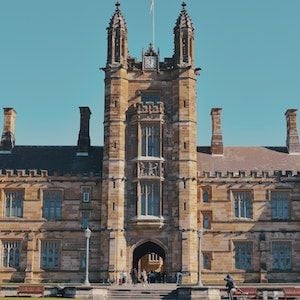
Losing international student revenue could result in Australian universities posting a $19 billion cumulative loss from 2020 to 2023.
According to the latest research from think tank Mitchell Institute the impact from Australia's borders being closed on the higher education industry could be a loss in the range of $10 billion to $19 billion.
The report, Australian Investment in Education: Higher Education, advocates for a change to current policy setting to increase capacity across the tertiary sector to encourage domestic student enrolments.
Pre-Covid-19 investment in higher education had increased by 43.6 per cent between 2008 and 2018, driven largely by the increase in international student revenue.
Despite increases over the past decade, funding for domestic students has plateaued and participation rates for domestic students in higher education are decreasing for the first time in over 10 years according to the Mitchell Institute.
"Between 2008 and 2018, international student numbers increased by 57.9 per cent while international student revenue increased in real terms by 137 per cent," says the Mitchell Institute.
"This suggests that higher education providers were able to enrol more international students and charge them higher fees.
"Increases in revenue associated with domestic students are closely aligned to participation. Between 2008 and 2018 there was an increase of 37.5 per cent in full time equivalent domestic students, and an increase in revenue of 43.2 per cent for the same cohort."
Despite this trend the Mitchell Institute says universities are not reporting larger surpluses than previously reported, and in fact surpluses are trending downwards.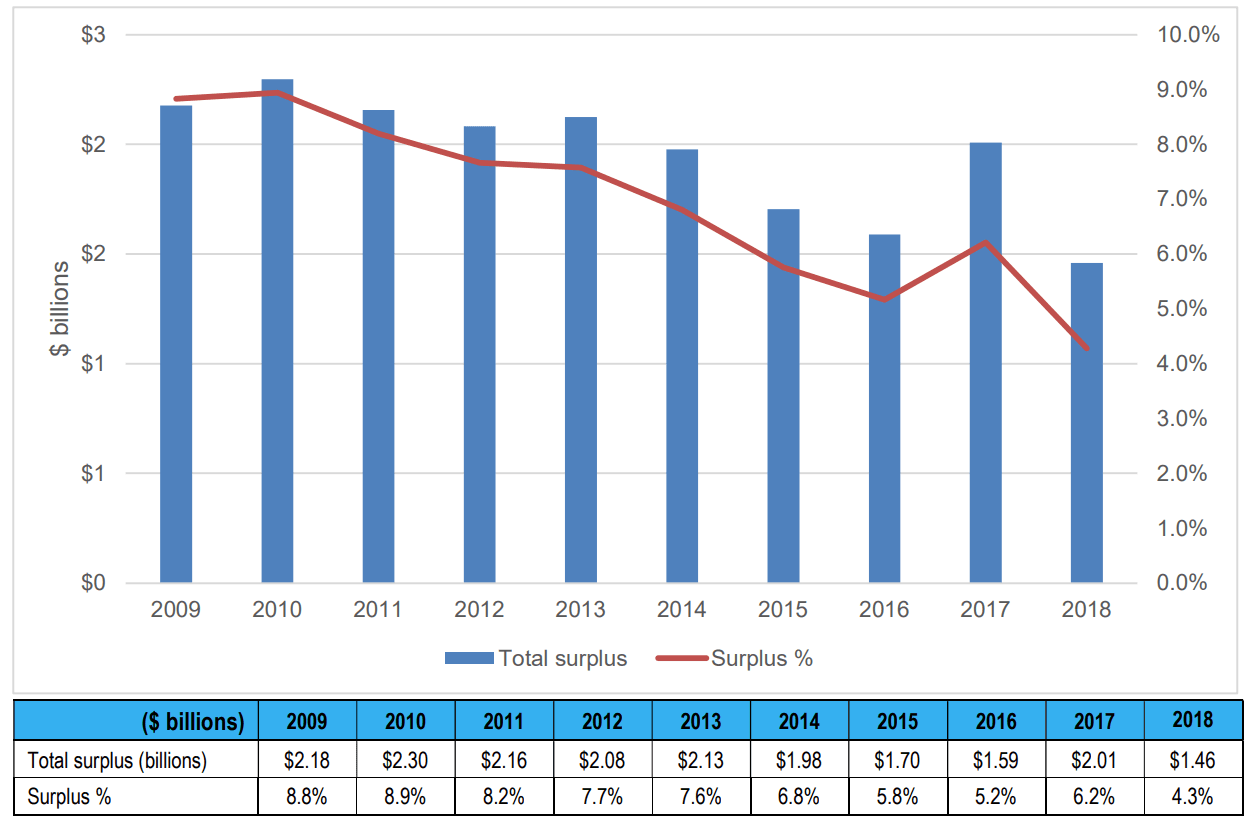
Total university sector surplus (2018 dollars) (via Mitchell Institute)
Growth in revenue has been uneven. "Mid-ranked" universities have benefited most from demand driven funding whereas Go8 universities have benefited most from the increase in international student revenue.
"Smaller universities have not grown at the same rate as larger universities," says the Mitchell Institute.
"The reasons for this have little to do with quality as many of these universities score highly on quality indicators."
Updated 11:41am AEST on 17 April 2020.
Michael Hill sales dive as executives take pay cuts
 "Michael Hill sales dive as executives take pay cuts")
Covid-19 trading restrictions have taken the shine off jewellery group Michael Hill (ASX: MHJ) with total store revenue down 11.9 per cent in the third quarter of FY20.
The results come as the listed retailer cuts board fees and slashes executive bonuses entirely to manage the fallout from the financial crisis.
The effects were felt the most in Canada, the region where the company was forced to close its retail stores first, where same-store revenue was down 21.1 per cent during the quarter.
The company's results for the first nine weeks of Q3 FY20 demonstrate strong sales figures in the lead up to the crisis.
Positive sales growth of 3.1 per cent was maintained throughout January and February, and at the end of February same store sales for the group were up 5.7 per cent against the prior year.
E-commerce sales were up significantly in the first nine weeks of Q3 by 49.1 per cent, representing 3.6 per cent of all quarterly sales for Michael Hill.
These strong sales results came immediately before the company was forced to close all of its stores in Australia, New Zealand and Canada, resulting in the standing down of all retail staff and more than 100 support centre team members.
"The company entered the crisis on a strong footing in all markets and channels," says Michael Hill CEO Daniel Bracken.
"The crisis has afforded us the ability to really focus on our digital business and we will emerge with a much bigger and stronger offering."
This focus on digital is necessary in the Covid-19 economic reality, and Michael Hill says its online store is successfully operating in Australia and Canada with product being fulfilled from its Brisbane distribution centre.
Orders continue to be accepted on its New Zealand website, but delivery will be delayed until New Zealand Government restrictions are lifted.
In addition to shutting down all stores to manage the Covid-19 crisis Michael Hill has reduced all board member fees by 50 per cent for the remainder of FY20.
Executive cash bonuses have been cut to zero for the second half of the financial year and all executives have agreed to a 20 per cent cut in remuneration for the remainder of the financial year.
Pre-Covid-19 the company was actively engaged in an employee remediation program to address an historic misapplication of the General Retail Industry Award to the tune of between $10 million and $25 million.
This program has since been put on pause, but former team members owed outstanding unpaid wages will be paid with interest once the crisis blows over.
Michael Hill says it is in a good position with regard to its balance sheet and liquidity to enable it to push through the crisis and beyond; the retailer's net debt at 29 March 2020 is approximately half the available facility limit of $70 million.
The company's board has also decided to defer payment of its interim dividend for a period of six months.
"A crisis always creates opportunities," says Bracken.
"The combination of strong performance leading into the crisis and the decisive actions we are taking to preserve cash and strengthen our balance sheet will leave us well positioned to lead the market through the recovery period and we will emerge as a stronger, leaner, and more agile business," says Bracken.
Updated at 10:58am AEST on 17 April 2020.
Master Builders Australia survey shows orders have "fallen off a cliff"
 "Master Builders Australia survey shows orders have \"fallen off a cliff\"")
A survey of builders and tradies around the country has found new work could run out in the next few months if orders don't pick up.
Master Builders Australia CEO Denita Wawn describes the results of a recent Covid-19 impacts survey as "alarming", with 73 per cent of respondents reporting substantial fall in forward work on their books.
On average respondents reported a 40 per cent drop.
"While projects that commenced prior to the onset of the Covid-19 crisis are providing short term work for many, for the overwhelming majority of our 32,000 members new orders have fallen off a cliff," says Wawn.
"The situation is dangerous. At risk is the viability of nearly 400,000 building and construction businesses, the jobs of 1.2 million Australians and the industry's capacity to aid the economic recovery.
The executive adds the home building sector is being hit especially hard.
"Confusion about how domestic building activity fits in with government safety rules combined with job losses and business closures is having a devastating impact on demand for new residential building activity," she says.
"So, while we strongly back the current measures to support businesses and jobs, we are calling on all governments to urgently rollout new stimulus measures that will immediately kick-start building activity.
"Increasing the size of the First Home Loan Deposit Scheme and expanding its eligibility to include anyone wanting to purchase only new homes while maintaining the current price and income caps is just one of a range of measures we have proposed to the Federal Government."
Wawn explains commercial and civil construction contractors also urgently need a forward pipeline of work.
"Our calls for governments at all levels to accelerate the construction of social, defence and transport infrastructure projects will continue to be relentless," she says.
"Our message to governments, is that we understand the enormity of the challenge they face but that these stimulus measures cannot wait. If urgent action is not taken our industry's role in the economic recovery will be severely blunted."
Never miss a news update, subscribe here. Follow us on Facebook, LinkedIn, Instagram and Twitter.Business News Australia
Government props up Virgin, Qantas to keep critical flights and freight alive
 "Government props up Virgin, Qantas to keep critical flights and freight alive")
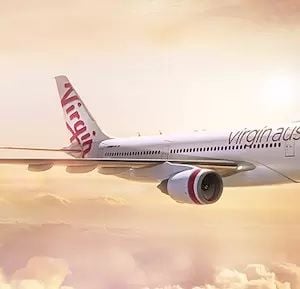
The Federal Government will underwrite $165 million for domestic flights run by Qantas (ASX: QAN) and Virgin Australia (ASX: VAH) during the Covid-19 pandemic.
The investment from the Government will allow both Qantas and Virgin to reinstate some domestic services, and is a big support for Virgin in particular which is currently suspended from the ASX as it considers its future.
Virgin's reinstated minimal domestic schedule will recommence tomorrow and run for a period of eight weeks until 7 June 2020.
The support of the Federal Government will also allow Virgin to reinstate some of its stood down staff including flight, cabin and ground crew.
The new domestic schedule is in addition to the international repatriation flights to Los Angeles and Hong Kong that Virgin Australia is operating at the request of the Australian Government.
For Qantas the investment will go toward increasing its domestic flight capacity from 105 flights per week to 164 to all capital cities and 36 regional destinations.
While the reinstatement of domestic air travel is necessary for those embarking on essential interstate travel, Qantas has highlighted how these flights will provide critical freight capacity.
"Much of the bellyspace on these flights will be used for mail and other urgent shipments, including medical equipment," says Qantas.
"Importantly these additional services will see more planes in the air and ensure communities stay connected and assist with the movement of critical freight around the country."
Qantas' new schedule will recommence from today and will be fully operational by Monday 20 April.
This new $165 million investment from the Federal Government is the third tranche of support for the aviation industry, following a $198 million regional airlines support package and a broader $715 million package for the entire industry.
"As Australians are asked to stay home unless absolutely necessary, we are ensuring secure and affordable access for passengers who need to travel, including our essential workers such as frontline medical personnel and defence personnel, as well as supporting the movement of essential freight such as critical medicine and personal protective equipment," says Deputy Prime Minister and Minister for Infrastructure, Transport and Regional Development Michael McCormack.
"We know that a strong domestic aviation network is critical to Australia's success and today's announcement demonstrates our commitment, yet again, to maintaining connectivity during this pandemic.
"This investment will also help Australians returning from overseas, who find themselves in a different city after 14 days of mandatory quarantine, complete their journey home safely."
Virgin Australia will operate 64 return services each week as per the following schedule:
Melbourne
- Melbourne / Adelaide (three return services per week)
- Melbourne / Brisbane (seven return services per week)
- Melbourne / Canberra (three return services per week)
- Melbourne / Perth (seven return services per week)
- Melbourne / Sydney (seven return services per week)
Brisbane
- Brisbane / Melbourne (seven return services per week)
- Brisbane / Sydney (seven return services per week)
- Brisbane / Cairns (three return services per week)
- Brisbane / Mackay (five return services per week)
- Brisbane / Rockhampton (three return services per week)
- Brisbane / Townsville (three return services per week)
Sydney
- Sydney / Melbourne (seven return services per week)
- Sydney / Brisbane (seven return services per week)
- Sydney / Gold Coast (three return services per week)
Canberra
- Canberra / Melbourne (three return services per week)
Adelaide
- Adelaide / Melbourne (three return services per week)
Perth
- Perth / Melbourne (seven return services per week)
- Perth / Broome (three return services per week)
- Perth / Port Hedland (two return services per week)
- Perth / Newman (two return services per week)
- Perth / Karratha (two return services per week)
- Perth / Kununurra (two return services per week)
- Perth / Kalgoorlie (two return services per week)
Qantas' updated domestic schedule includes:
Trunk routes
- Adelaide / Melbourne
- Brisbane / Melbourne
- Canberra / Melbourne
- Melbourne / Hobart
- Melbourne / Sydney
- Adelaide / Sydney
- Brisbane / Sydney
- Canberra / Sydney
- Melbourne / Sydney
- Melbourne / Perth
- Perth / Sydney
Regional network
- Melbourne / Mildura
- Melbourne / Launceston
- Albury / Sydney
- Armidale / Sydney
- Ballina / Sydney
- Coffs Harbour / Sydney
- Dubbo / Sydney
- Lord Howe Island / Sydney
- Tamworth / Sydney
- Wagga Wagga / Sydney
- Adelaide / Kangaroo Island
- Adelaide / Port Lincoln
- Adelaide / Whyalla
- Alice Springs / Darwin
- Alice Springs / Sydney
- Brisbane / Darwin
- Newman / Perth
- Broome / Perth
- Geraldton / Perth
- Kalgoorie / Perth
- Learmonth / Perth
- Port Hedland / Perth
- Karratha / Perth
- Brisbane / Cairns
- Brisbane / Emerald
- Brisbane / Gladstone
- Brisbane / Mt Isa
- Brisbane / Longreach
- Brisbane / Mackay
- Brisbane / Moranbah
- Brisbane / Roma
- Brisbane / Rockhampton
- Brisbane / Townsville
- Cloncurry / Mt Isa
- Cloncurry / Townsville
- Cairns / Horne Island
- Cairns / Townsville
- Cairns / Weipa
- Charleville / Roma
- Mackay / Rockhampton
- Mackay / Townsville
- Townsville / Rockhampton
Updated at 9:44am AEST on 17 April 2020.
PM outlines triggers for easing of restrictions
 "PM outlines triggers for easing of restrictions")
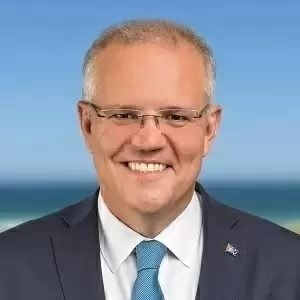
The Australian Government has set a four-week goal to achieve surveillance, tracing and response milestones if social distancing measures are to be eased, but Prime Minister Scott Morrison emphasises there will be "sobering" economic news along the way.
While 63 people have lost their lives so far to Covid-19 in Australia and a further 43 are battling for their lives with the virus on ventilators, our citizens can take comfort in encouraging trends for the virus here relative to the rest of the world.
New daily case rates have been below 50 for several days, and on average every case that is mitigated and controlled has led to less than one additional reported infection.
This is known as the effective reproduction rate (ERR) and right now it is where authorities want it to be - except for Tasmania which has seen a slight uptick due to a local outbreak in the state's northwest.
In a press conference today, Chief Medical Officer Brendan Murphy pointed to a modelling paper from the London School of Hygiene and Tropical Medicine that concluded Australia had the highest symptomatic case detection rate of any country studied.
Meanwhile, the PM noted more than half of those who have contracted the coronavirus in Australia have actually overcome it, which is also positive news.
But all of these achievements would amount to very little if we lost sight of how vulnerable the health situation, and subsequently the economy, could be to any lapse in our systems and behaviour.
"We need to hold our performance in relation to the effective reproduction rate, and we are looking at that by state - that is the most important way to look at how we're tracking in relation to those statistics," Morrison said.
"If you move too early, and the health response gets out of control, then the economic consequences will be even worse.
"We were advised today that markets are finding a new normal in this Covid-19 world but that new normal and that relative stability - and everything's relative now - will depend very much on continuing to achieve a stable health outcome."
As the country works towards this objective, the Australian Health Protection Principal Committee (AHPPC) advised National Cabinet today of important benchmarks to guide decisions on the easing of restrictions "when that is deemed possible". The PM summarised these guidelines in three main parts:
- A more extensive surveillance/sentinel testing regime that goes beyond just including people who are symptomatic to Covid-19;
- Ensuring there is greater tracing capability than at present, including automated functions. A tracing app similar to Singapore's that is still being refined is likely to play a key role in this; and
- Boosting local response capability so that authorities can move quickly to contain any outbreak.
While these are the three key aspects of the triggers, the National Cabinet has agreed to seven precedent conditions overall:
- Situational awareness of current measures and their impact - sophisticated surveillance of disease incidence and spread, health system status, public health capabilities, stocks of material and community adherence to public health measures.
- Finalised surveillance plan - enabled with adequate resources.
- A better understanding of the implications of the modelling and a better understanding of the characteristics and transmission of the virus.
- Complete maturation of public health capacity - including capacity to conduct testing more broadly; and public health workforce and technology for contact tracing, data collection and analysis.
- Advanced technology for contact tracing - the role of a mobile phone application should be wholly explored, as it could be a valuable tool in contact tracing if numbers increase and the application is widely taken up. This would act to complement and augment our current public health contact tracing strategies and enable scale-back strategies.
- Assurance of adequate health system capacity - should control measures fail, there must be assurance that the system will cope with any surge in cases, including the requirement for hospital beds, ventilators, PPE and ongoing workforce training.
- Assurance of supply lines for - PPE, pathology consumables, ventilators.
"There will be other outbreaks in other parts of the country, and in all states and territories we need that ability to move very fast, to be able to lock down an outbreak where it occurs, and to ensure that it does not transmit more broadly within the community," Morrison said.
"[If] You're going to move to an environment where there are fewer and strict restrictions, then you need these three things in place, and National Cabinet agreed today that we will use the next four weeks to ensure that we can get these in place.
"And the baseline restrictions that have been set some weeks ago, will remain in place until we're able to achieve those three goals. We'll be reviewing that in the next four weeks."
Once these three conditions have been reached, the Federal, State and Territory governments will be able to work on opening up "high-value, low-risk economic activities".
"The six month timeframe gives us a ticking clock basically on this lifeline and it gives us a clear goal to work towards to ensure that we find that road out with these restrictions eased ideally," the PM said.
Under this scenario, he said the goal was for the economy to "lift to a level of activity where people's wages and incomes can be supported again" so they do not need to rely on JobKeeper or JobSeeker payments; both six-month plans he confirmed would be in place until the end of the September quarter.
"That's the timeframe that we have bought through those economic supports, so you've got to work backwards from there. There will be I imagine baseline levels of restrictions that will be changed over that period of time."
The PM also pointed to a positive sentiment towards Australian bonds, with $28 billion raised by the Australian Office of Financial Management since 20 March, including a $13 billion syndicated offer yesterday.
"This should give Australians a sense of assurance and confidence...we have been successful in raising those funds on markets - some 68 per cent of this latest syndicated offer was from domestic investors and that was dominated by banks.
"We are finding ourselves in a situation where Australia's bond issuances have been well received, and that is because of the relative strength and the relative the positive impression that markets have in relation to Australia."
Updated at 4:40pm AEST on 16 April 2020.
QLD Government to tackle "hefty" food delivery fees
 "QLD Government to tackle \"hefty\" food delivery fees")
The Queensland Government has called a meeting for Monday to address ways of tackling the delivery fee burden on restaurants and cafés.
Minister for Employment and Small Business Shannon Fentiman says key stakeholders will come together to discuss the issue of "exorbitant delivery fees as a matter of urgency".
"The last thing we want to see [is] struggling businesses hit with high fees from delivery companies - it's not the Queensland way," says the minister.
"Many of our restaurant and café owners have been forced to shut their doors and operate solely on takeaway and delivery orders due to the Covid-19 crisis.
"Small businesses have had to innovate and think fast, pivoting their business to online and takeaway."
Fentiman says these businesses deserve a "fair go" in this time of crisis, but delivery companies such Uber Eats and Deliveroo will often charge up to 35 per cent commission, leaving businesses to bear the cost.
"We need our food and beverage businesses to be open, not just now but also once the economy recovers,"
"They will play a driving force in kick starting local economies and job growth once the pandemic is over."
The minister says cafés and restaurants are experiencing downturns of up to 90 per cent.
"We aim to help small businesses by making home delivery work for them as well as for the delivery services and the customers," she says.
Queensland's Small Business Champion, Maree Adshead, welcomes Monday's meeting.
"Opening the lines of communication and exploring ways to better support and inform small businesses is important. As we all know, small Businesses across Queensland are doing it tough," Ms Adshead said.
"I look forward to addressing these issues with stakeholders on Monday."
One food precinct in northern Brisbane has launched its own app in a bid to reduce reliance on Uber, while Uber Eats has offered new payment options and extra marketing spend to help some foodservice providers rise to the challenge.
Photo: Cyclonebill, via Creative Commons.
Updated at 2:12pm AEST on 16 April 2020.
Advertisement
Latest News
From $13,000 to $20 million: how a PCOS diagnosis and a pair of scissors built Xali Organics
Inspired by a medical diagnosis and driven by innovative marketing,...
Cedar Woods secures $63.4m in new land acquisitions as record presales underpin pipeline push
Perth-headquartered residential developer Cedar Woods Properties (A...
Australia's long-term beer decline hits home as Lion plans to close Boag's brewery in Launceston
Australia's decades-long decline in beer consumption has claime...
Downer EDI seals $310m Transurban contract to maintain Sydney motorway network
Infrastructure services group Downer EDI (ASX: DOW) has secured con...
Propel Funeral Partners expands New Zealand footprint with trio of acquisitions worth $9.1m
Sydney-based death care provider Propel Funeral Partners (ASX: PFP)...
Advertisement