Advertisement
Staying informed is more important than ever as the situation unfolds with Covid-19. Stay tuned here for our live updates, and be sure to let us know what your business is doing to face this unprecedented challenge.
Covid-19 News Updates
Ramsay Health Care to raise $1.4 billion
 "Ramsay Health Care to raise $1.4 billion")
Australia's largest private hospital operator Ramsay Health Care (ASX: RHC) plans to bulk up its balance sheet by $1.4 billion to give the flexibility needed for riding out the Covid-19 pandemic and beyond.
While the National Cabinet agreed yesterday to ease restrictions on category 2 and some category 3 elective surgeries, Ramsay has seen the suspension of most elective surgery in the 11 countries where it operates.
Faced with an uncertain outlook, the group has today announced a $1.2 billion institutional placement underwritten by JP Morgan, to be followed by a share purchase plan (SPP) for an additional raise worth up to $200 million.
The placement will be at $56 per new share, representing a a 12.69 per cent discount to the last trading price and diluting current ownership by 10.6 per cent.
At the end of December 2019 Ramsay Health Care had $433 million in cash and cash equivalents.
"The equity raising will strengthen Ramsay's balance sheet and liquidity position, as well as increase financial flexibility during the unprecedented operating environment," says RHC managing director Craig McNally.
"More importantly, it will ensure that we can continue to pursue our growth initiatives and position us to take advantage of other growth opportunities that may arise.
"Private hospital operators, including Ramsay, are making an important contribution in terms of supplementing the broader public health system in fighting the COVID-19 pandemic."
As part of its capital management initiatives, Ramsay has also today announced that lenders to the Ramsay Funding Group have provided consent to amend or waive key banking covenants tests through to December 2020.
The combination of the equity raising, covenant waivers and amendments, and the dividend suspension is expected to provide Ramsay with a stronger balance sheet, with lower leverage and increased liquidity.
"The support Ramsay's lending group has provided by agreeing to these covenant test waivers and modifications will further strengthen our financial flexibility during the challenging operating environment," says McNally.
"We believe this demonstrates our lending group's confidence in the longer term outlook for Ramsay."
Adapting to Covid-19
The company says its 72 hospitals in Australia (out of 500 globally) are prepared for the reintroduction of some surgeries that will be allowed after the ANZAC Day long weekend.
The company will now work closely with our doctors on a staged and controlled reintroduction taking into consideration the safety of patients and healthcare workers, as well as the capacity constraints imposed by the government.
Ramsay adds discussions are progressing with several state governments about the capacity and support it can provide.
As part of the suspension arrangements, contractual or legislative support has been or is proposed to be provided by governments and health authorities to reserve capacity to treat Covid-19 patients.
In return for reserving this capacity, governments and health authorities have agreed to a core principle of meeting private hospital operators' agreed operating costs or, in the case of France, providing approximately 85 per cent of revenue from the previous corresponding period in calendar year 2019.
"While the effect of these arrangements is that profits cannot be generated during the period of their operation, the fact that governments and health authorities are contributing to the ongoing viability of private hospital operators demonstrates the important role private hospitals can play in conjunction with public health systems," says McNally.
"This government support and the capital management initiatives will ensure Ramsay's ability to maintain its extensive hospital platform intact and will position the company to support previously deferred elective surgeries as the operating environment normalises."
Never miss a news update, subscribe here. Follow us on Facebook, LinkedIn, Instagram and Twitter.
Business News Australia
Six-month moratorium on evictions legalised in WA
 "Six-month moratorium on evictions legalised in WA")
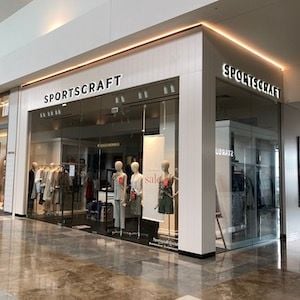
Both residential and commercial tenants will be saved from eviction after a six-month moratorium passed the Western Australian Parliament this afternoon.
WA businesses will also benefit from the Parliament legislating a mandatory code of conduct, based on the National Cabinet Code of Conduct, designed to assist with negotiations between landlords and tenants.
In addition to the eviction moratorium, which will be backdated to March 30, 2020, the legislation includes:
- A freeze on rent increases;
- Restrictions on penalties for tenants who do not trade or reduce trading hours;
- No interest to be charged on rent arrears;
- The introduction of an enhanced dispute resolution process; and
- A prohibition on landlords progressing proceedings that occurred after the restrictions were imposed but before these laws came into operation.
With regard to the code of conduct, the impact the COVID-19 restrictions have had on the business with regard to revenue, expenses and profitability will be taken into consideration when determining and implementing appropriate deferrals, reductions or waivers of rent as well as sharing costs.
"It is crucial for the WA economy that small businesses are able to survive this period of restrictions and it's hoped these measures will support efforts in preventing business failures and get people back to work when it's over," says WA Premier Mark McGowan.
"We urge all commercial landlords and tenants to enter into negotiations with a sense of shared destiny and to understand each other's difficulties at this time.
"Business closures will benefit no-one, so mutually acceptable arrangements are urgently required to help save these businesses so they can bounce back quickly."
For residential tenants the new laws implement the decision of the National Cabinet and are designed to prevent tenants from having to move out or being made homeless during the COVID-19 pandemic.
Tenants may still be evicted if they are causing damage to the property, posting a threat to the landlord or neighbours, not paying rent, refusing to make a rent repayment agreement or if they abandon the property.
Rent increases during the moratorium period will be banned under the legislation and tenants experiencing Covid-19 related financial hardship who ended a fixed-term tenancy prior to its end date will not incur break lease fees, but will still be liable for damage and rent arrears.
For residential landlords the legislation will mean that they do not have to carry out non-urgent repairs if they themselves are experiencing financial hardship or are unable to access the premises due to restrictions on movement.
The laws will apply to all residential tenancies including those in public and government housing, park homes as well as boarders and lodgers.
"The new laws recognise the financial impact of the current COVID-19 coronavirus measures on both landlords and tenants, but we want to prevent tenants having to move out or become homeless over what is a short-term situation," says McGowan.
"The moratorium prevents evictions but should not be used as an excuse for tenants not to pay rent when they are in a position to do so. It is a moratorium on evictions, not on paying rent.
"Any unpaid rent will still need to be paid at the end of the moratorium period and the landlord will then be able to pursue payment as they would normally."
Never miss a news update, subscribe here. Follow us on Facebook, LinkedIn, Instagram and Twitter.
Business News Australia
Elective surgeries to restart, ventilator goal reached
 "Elective surgeries to restart, ventilator goal reached")
The Australian National Cabinet has agreed to the first major easing of Covid-19 containment restrictions with elective surgeries to recommence after the Anzac Day long weekend on 27 April.
Prime Minister Scott Morrison told a press conference today the move will lead to the reopening of around 25 per cent of activity for elective surgery compared to capacity prior to restrictions.
"Priority will be given with this reopening on the basis of clinical determinations by the relevant health professionals, and that will take place in both the public and private system," he said.
"This is an important decision because it marks another step on the way back - there is a road back, there is a road ahead, and the decision that the national cabinet has taken today is evidence of that.
"This wouldn't be possible if we were not able to secure the additional PPE (personal protective equipment) and it also wouldn't be possible if we weren't able to have confidence about the the level of cases that have been identified in Australia, and slowing that rate of growth down to very minimal levels."
Health Minister Greg Hunt highlighted a sustained and consolidated flattening of the curve of new cases, with less than one per cent growth for nine consecutive days.
"And over the last three days, we have averaged less than half a percent of growth in new cases - this is a collective national achievement. It's our doctors, our nurses, our pathology workers, but it's every Australian that's been contributing and I want to say thank you for what people have done," he said.
Hunt said 60 million masks had been secured and delivered into Australia, allowing for 22 million distributions and another 11.5 million masks to be distributed over the coming week.
"And we have secured a further 100 million masks over the coming six weeks - that means that we are in a position now to support elective surgery," he said.
"In terms of our hospitals, we have now had delivered 3,260 ventilators in the last week and half from a great Australian company ResMed (ASX: RMD) - that's 3,000 non-invasive, and 216 invasive ventilators.
"We have now achieved our national goal of full capacity of 7,500 ventilators. That's an extraordinary achievement across our hospitals, across the country. All of this means we're in a position to start the recovery."
The Prime Minister also revealed a review of recent events in a number of aged care facilities had shown some had implemented restrictions on all visits for residents, which goes beyond what was recommended by the National Cabinet.
"The National Cabinet agree that there needs to be a strong reminder that the National Cabinet decision was not to shut people off, or to lock them away in their rooms."
The share market's response to the announcement has been mixed with the share price staying fairly flat for country's largest private hospital operator Ramsay Health Care (ASX: RHC), albeit against a backdrop of a 1.96 per cent drop in the ASX All Ordinaries Index and a 1.76 per cent fall in the S&P/ASX 200 Health Care index (XHJ).
It should however be noted that under half of Ramsay's revenue comes from its operations in Australia and Asia, with the rest heavily weighted towards continental Europe as well as a presence in the UK.
Shares have risen for the likes of ResMed (ASX: RMD) by 1.31 per cent and Sonic Healthcare (ASX: SHL) by 0.75 per cent, while shares are down 1.47 per cent for Cochlear (ASX: COH), 1.45 per cent for CSL (ASX: CSL) and 2.04 per cent for Healius (ASX: HLS).
Virtus Health (ASX: VRT) has seen its shares rise 8.37 per cent, while smaller caps like Paragon Care (ASX: PGC) and Healthia (ASX: HLA) are down 5.88 per cent and 4.38 per cent respectively.
In the dental space, shares in 1300 Smiles (ASX: ONT) are up 1.19 per cent and Pacific Smiles (ASX: PSQ) has risen by 0.85 per cent.
Shares in aged care home operator Japara Health (ASX: JHC) are down 4.9 per cent.
Updated at 2:22pm AEST on 21 April 2020.
Premier Investments stores to remain closed until mid-May
 "Premier Investments stores to remain closed until mid-May")
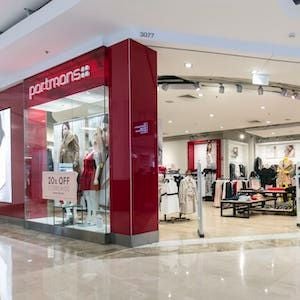
All of Premier Investments' (ASX: PMV) stores will remain closed until at least 11 May 2020, extending the period of closure by three more weeks.
The decision to leave Dotti, Portmans, Jacqui E, Jay Jays, Peter Alexander, Smiggle, Jay Jays and Just Jeans closed for the extended period of time is in line with current health guidance from the Federal Government.
"Our decision to temporarily close our retail stores is consistent with the clear message reiterated by the Prime Minister that the population should only leave the house when it is absolutely necessary to go out," says Premier Investments.
"Whilst our seven brands do sell much loved discretionary products, it is irrefutable that we are not an essential retailer."
Previously announced stand downs of Premier Investment employees will continue during this period. The company has already taken steps to access JobKeeper subsidies in Australia and the Wage Subsidy Scheme in New Zealand for all eligible employees.
Premier Investments says it will continue to not pay any rent globally for the duration of the shutdown.
The company says it is trading well online in Australia and looks forward to being able to begin trading online in New Zealand from 28 April when the country moves from Level 4 shut downs to Level 3.
"We are continuing to monitor all developments closely," says Premier Investments.
"Premier, with the support of all our employees, will overcome this global health pandemic and bounce back and thrive at the earliest opportunity."
Updated at 2:11pm AEST on 21 April 2020.
Virgin Australia receives interest from "extraordinary number" of potential backers
 "Virgin Australia receives interest from \"extraordinary number\" of potential backers")
The administrator charged with turning the fortunes of embattled airline Virgin Australia (ASX: VAH) says the intent is to "run hard" to avoid a protracted restructuring process.
Deloitte administrator Vaughan Strawbridge (pictured) says there is a "good sophisticated group of interested parties" in the airline who "have the financial capacity to take this business forward".
"We've got an extraordinary number of parties who have reached out to us around the restructuring and recapitalisation of this business," he says, clarifying there are more than 10 parties at this point.
"I do think government has an important role to play, but it doesn't have to be the decisive decision maker through this."
Related story: Virgin Australia enters voluntary administration
When asked about how a revived airline might look in terms of international routes, as well as the size of its fleet and workforce, Strawbridge said the plan was to create as much optionality as possible.
"Obviously, we will look through the the operating structure of the business - the asset structure, the lease structure - and see what we can do to help position the business to be a more profitable business.
"But we want to create as much optionality for interested parties as possible, so that will be around retaining all the employment of the staff, continuing to maintain the current services the company operates."
The process could take as long as eight weeks before the flight path is clear.
"I would say that we're looking probably at a initial expressions of interest in the next three weeks, and then we'll run a timetable after that probably for a further four to five weeks, and we hope to have a reasonable estimate of what the position looks like after that and how long would then take to complete a transaction."
The Federal Government has committed to working constructively with Deloitte through the process, and has appointed former Macquarie Group (ASX: MQG) CEO Nicholas Moore (pictured right) as its representative in discussions.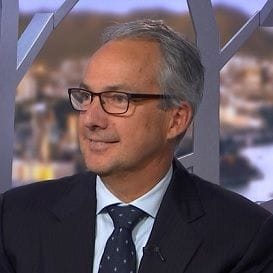
"Virgin Australia is a very good airline performing a very important task, and we want to see two airlines continue," says Treasurer Josh Frydenberg.
"We've already had discussions with the ACCC [Australian Competition and Consumer Commission] to ensure they strongly enforce our competition law, so that we can have two commercially viable airlines operating on domestic routes here in Australia."
When asked about the possibility of Virgin being owned by a Chinese state-owned entity, the Treasurer explains he can't comment on foreign investment matter but emphasises Australia has a strong national interest test.
"As you know In the wake of the Coronavirus pandemic we have announced the temporary removal of those thresholds for foreign investment, which means that there'll be extra scrutiny on any foreign investment proposal, and I would wait to consider any proposal on its merits without making any further comment than that."
CEO Paul Scurrah emphasises this is "certainly not the end" for Virgin Australia and the company is not collapsing, even though the pandemic situation has "cut off its oxygen".
"The global Covid-19 pandemic as we know, and the tough but necessary travel restrictions that have been imposed by governments because they want to limit the spread of Covid-19, has seen travel demand all but evaporate," he says.
He says this has forced some of the most profitable airlines around the world to ground their fleets, of which many have drawn on their own governments for loans and grants to stay solvent.
"In recent weeks, Virgin Australia too has has needed to take some pretty dramatic steps, and we're still down 80 per cent of their workforce, we've reduced by 95 per cent the amount of flights that we are conducting, and those that we are conducting are subsidised by the Federal Government, and we've grounded most of our aircraft.
"We've actively sought financial assistance from our shareholders, from from the government and from other parties to help us through this crisis.
"In the absence of the level of assistance that we needed, the board last night made the difficult decision for the group to enter voluntary administration, which is obviously a very difficult decision. However it represents the best option for the Virgin Australia group to emerge stronger on the other side of this crisis."
He says the administration process will allow Virgin Australia to immediately freeze the financial pressures upon it while it restructures and refinances.
"It will allow us to continue to operate while quickly resolving these financial concerns to secure our future, and it is our absolute intention to emerge stronger. Australia needs a second airline and we are determined to make sure that we are that second airline.
"We make an estimated $11 billion contribution to the Australian economy every year. We will play a vital role in getting the Australian economy back on its feet after the pandemic, ensuring that Australia has access to competitive high quality air travel."
Velocity places pause on point redemptions
Virgin has placed a pause on all redemptions of Velocity Frequent Flyer points for an initial period of four weeks as a result of the voluntary administration.
Member points will not be going anywhere during the pause, they will remain in member accounts and will not expire during the period. Members can continue to earn points via Velocity partners.
Administrators Deloitte have confirmed that Velocity is not up for sale as an independent asset, despite the rewards program being a separate legal entity from the broader Virgin Australia group.
"The members are well protected, there's a trustee and a separate CEO of that entity, and we're going to work with them during this process," says Vaughan.
"They're a key part of how this business is restructured and comes out of administration. The Frequent Flyer program is an incredibly good asset, it has been well set up and we'll be working with that closely going forward."
Updated at 11:05am AEST on 21 April 2020.
Virgin Australia enters voluntary administration
 "Virgin Australia enters voluntary administration")
After 20 years in business the airline that changed the competitive landscape of Australian aviation has fallen into voluntary administration.
Coronavirus-related travel restrictions proved too much for Virgin Australia (ASX: VAH), which will now need to reassess its business model as airports are shut down for international travel, borders are closed and Australians remain dutifully at home.
Deloitte have been appointed as voluntary administrators of Virgin with plans to restructure the company in an attempt to ensure its survival.
"Our intention is to undertake a process to restructure and refinance the business and bring it out of administration as soon as possible," says Deloitte administrator Vaughan Strawbridge, who incidentally has been involved in the administration processes for retailers Colette by Colette and Harris Scarfe.
"We are committed to working with [CEO] Paul [Scurrah] and the Virgin Australia team and are progressing well on some immediate steps. We have commenced a process of seeking interest from parties for the participation in the recapitalisation of the business and its future, and there have been several expressions of of interest so far."
Related: Virgin Australia receives interest from "extraordinary number" of potential backers
Despite hundreds of millions in Federal Government relief, as well as a stoush between state government's over the airline's future headquarters, Virgin has found itself cash strapped and laden with around $5 billion in debt.
While Covid-19 has certainly brought Virgin's problems to light, many of its own financial problems date back to before the crisis began.
Virgin Australia has been unprofitable for the past seven years, losing a combined total of $1.9 billion over the years. CEO Paul Scurrah (pictured below) was appointed in March 2019 to replace former chief executive John Borghetti, who had helmed Virgin for a decade and was appointed when the airline was still named Virgin Blue.
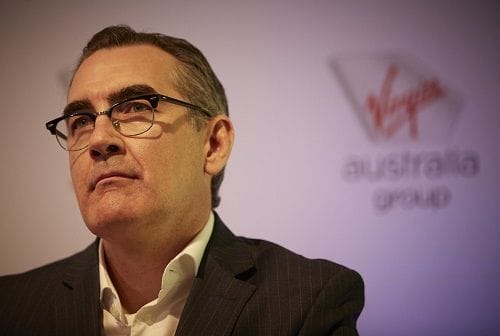
At December 31 the group's liabilities exceeded its assets by $1.6 billion, it had a cash balance of $1.1 billion and debt was on the rise.
Scurrah says the administration process is about ensuring the company survives the Covid-19 crisis and securing a future for Virgin Australia.
"In 20 years, the Virgin Australia Group has earned its place as part of the fabric of Australia's tourism industry," says Scurrah.
"Australia needs a second airline and we are determined to keep flying. Virgin Australia will play a vital role in getting the Australian economy back on its feet after the Covid-19 pandemic by ensuring the country has access to competitive and high-quality air travel."
The voluntary administration will seek to ensure the company survives the crisis in some form, enabling two national airlines to continue to fly in Australian skies once the Covid-19 pandemic subsides.
The company employs around 10,000 people directly and supports another 6,000 indirectly who will be left in the lurch following today's announcement.
Around 8,000 employees were stood down earlier this year to save cash as flights were grounded, with a further 1,000 staff made redundant including its Tigerair pilots and New Zealand-based crew.
In March the airline suspended virtually its entire flight network save a handful of flights considered essential by the Federal Government. A minimal domestic schedule was reinstated last week after the Government agreed to underwrite $165 million of flights for both Qantas and Virgin.
This investment was the third tranche of support for the aviation industry, following a $190 million regional airlines support package and a broader $715 million package for the entire industry.
Despite this support the airline has reportedly asked the Federal Government for further Government assistance. It asked for $1.4 billion to see it through the crisis, which was ultimately denied by the Morrison Government.
The Queensland Government has been particularly vocal about the need to save the Brisbane-headquartered airline, offering a $200 million assistance package to keep Virgin sky-high.
The company was suspended from trading on the ASX on the 16 of April while the board deliberated Virgin's future.
Virgin Australia is largely internationally owned by Singapore Airways, Etihad Airways, a Chinese aviation conglomerate and Richard Branson's Virgin Group. Just 10 per cent of the company is owned by ASX shareholders.
The group's frequent flyer program Velocity is a separate company and will not fall into administration.
Branson offers personal island as collateral for bail-out
Founder of the Virgin Group Richard Branson yesterday wrote an open letter to staff explaining his plan to save not only Virgin Australia but his British airline Virgin Atlantic.
In the letter Branson said he was requesting a $980 million commercial loan to bailout his limping airline group and offered his luxury island resort as collateral to secure assistance from the United Kingdom.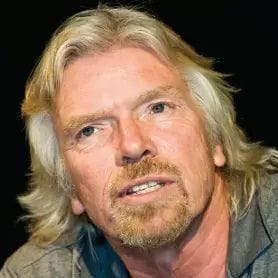
"Together with the team at Virgin Atlantic, we will do everything we can to keep the airline going but we will need government support to achieve that in the face of the severe uncertainty surrounding travel today and not knowing how long the planes will be grounded for," Branson said.
"This would be in the form of a commercial loan it wouldn't be free money and the airline would pay it back."
Branson further expressed his thanks to the staff at Virgin Australia who have been an important part in the movement of essential goods and services required to help combat Covid-19.
"The same is true in Australia, where the brilliant Virgin Australia team is fighting to survive and need support to get through this catastrophic global crisis," Branson said.
"We are hopeful that Virgin Australia can emerge stronger than ever, as a more sustainable, financially viable airline. If Virgin Australia disappears, Qantas would effectively have a monopoly of the Australian skies. We all know what that would lead to."
Speaking today about Virgin Australia's fall into administration Branson bemoaned the lack of support from the Federal Government and said today's announcement will not be the end for the airline.
"20 years ago we wanted to bring much needed competition to Australia's skies to lower airfares, to give consumers choice, to create thousands of jobs and to put a smile on people's faces," Branson said.
"I know only too well how devastating the news today will be to you. In most countries federal governments have stepped in, in this unprecedented crisis, to help our airlines. Sadly that has not happened in Australia."
"I want to ensure all of your and our competitor that we are determined to see you guys in Australia back up and running soon. Virgin Australia has captured the hearts of all Australians. That is down to all of you past and present who made it the best airline to fly with in Australia. This is not the end of Virgin Australia."
Virgin Australia's origins
The company was co-founded in 2000 by Brett Godfrey and Branson, with the former having dreamt of launching a low-cost carrier long before that to challenge the then duopoly been Qantas and the now defunct Ansett.
In 2009 Godfrey told Brisbane Business News (part of Business News Australia) people thought he was "nuts" for taking on the challenge.
In the early 90s Godfrey worked for Virgin Atlantic, before meeting Branson in 1996 who would later ask him to run Belgium-based Virgin Express.
He would then propose the Virgin Blue concept, and after their discussion he went back to his office iin Belgium, took out the business plan and sent it to Branson that night.
On a Monday morning he received a call from his bank manager who Godfrey thinks must have thought he had become a Colombian drug lord, because there was suddenly $10 million in his account - 'Were you expecting a deposit?'
"That was cool because it showed that he trusted me. So that says a lot of things how quickly that was done and how quickly he understood the vision," he says.
Godfrey said the airline industry was the most competitive and dynamic industry in the world, but a tough industry to do well in as its high profile attracts a lot of personalities, or 'billionaires that want to become millionaires'.
It is perhaps Godfrey's international upbringing that inspired his ambitions to offer consumers more affordable air travel, having grown up in Fiji, Honolulu and Vancouver before he started high school in Melbourne. He certainly didn't get into the industry because he loved planes.
"I definitely didn't get into it because I saw planes as exotic or exciting, I just see them as big chunks of metal that you should be able to get a decent return on," he said.
Virgin Australia timeline: a crash landing waiting to happen
21 April 2020
Virgin Australia enters voluntary administration.
20 April 2020
Both Moody's and Fitch downgrade Virgin, citing the uncertainty around whether the airline is able to obtain further financing to ensure it has sufficient liquidity to survive through Covid-19 travel restrictions.
18 April 2020
The Queensland Government offers Virgin a $200 million support package on the condition it keep the head office in Brisbane (1,200 head office jobs in Queensland), where the airline has been for the past 20 years.
16 April 2020
The Federal Government invests an additional $165 million into the aviation industry to underwrite key domestic flights with both Virgin and Qantas.
Two days after entering into a trading halt Virgin Australia requests an immediate suspension of its ordinary shares and unsecured notes on the ASX.
14 April 2020
Virgin Australia requests an immediate trading halt as it continues to consider the issues brought about by the Covid-19 crisis including discussions with respect to financial assistance and restructuring alternatives.
31 March 2020
Virgin Australia proposes a $1.4 billion bailout from the Federal Government so it can position itself to survive the Covid-19 crisis. The support "may or may not include conversion to equity in certain circumstances", which would give the Federal Government a sizeable slice of the company.
27 March 2020
Virgin Australia (ASX: VAH) receives its second credit rating downgrade in almost as many weeks as Standard & Poor's (S&P) expects a cut to the airline's variable costs will not be enough to offset its collapse in revenue. S&P estimates half of Virgin's costs are fixed, and the positive working capital benefit provided by forward bookings and the Velocity Frequent Flyer business is now likely to partially unwind.
26 March 2020
The Australian Competition and Consumer Commission (ACCC) grants regional airline Rex interim authorisation to coordinate flight schedules for the routes with Virgin Australia and Qantas Airways during the Covid-19 pandemic. The interim authorisation will also enable Rex, QantasLink and Virgin to share revenue from providing services on the routes.
25 March 2020
Virgin Australia extends its domestic capacity reductions from 50 per cent to 90 per cent and suspends all Tigerair Australia domestic services.
Approximately 80 per cent of VAH's workforce - or 8,000 out of a total 10,000 staff - are temporarily stood down. VAH team members that have been stood down have been asked to access accrued leave entitlements or take leave without pay.
18 March 2020
Virgin Australia suspends all international operations from 30 March to 14 June as travel demand flatlines. Virgin will also cut domestic capacity by 50 per cent until 14 June.
Both updates effectively grounded the equivalent of 53 aircraft. Until 29 March Virgin operates a reduced international schedule to ensure Australians can make it home.
17 March 2020
Department of Foreign Affairs and Trade advises all Australians overseas to return to Australia.
S&P downgrades Virgin's rating to 'B-' due to deteriorating domestic market conditions, along with a CreditWatch negative placement. The company previously had rating of 'B+'.
S&P also notes forward bookings and the Velocity Frequent Flyer business provide a material source of working capital, some of which could unwind.
13 March 2020
The Government's Smart Traveller page advises all Australians to reconsider the need for any non-essential travel, regardless of their destination, age or health. This represents an upgrade to Level 3 Travel Advice.
Virgin Australia cuts its flight capacity in line with the deterioration of the global travel industry due to the spread of Covid-19.
The company follows Qantas' lead in reducing its international flights, including the exit of flights from Auckland to Tonga and the Cook Islands, as well as reducing the number of flights from Australia to Japan, the US and New Zealand.
Virgin has a cash position in excess of $1 billion, with no significant debt maturities until October 2021 and no new aircraft deliveries until July 2021.
26 February 2020
Virgin Australia makes the decision to slash its overall network capacity in the second half as losses take their toll on the group's bottom line.
The three per cent reduction to its flight network is primarily in response to the impact coronavirus Covid-19 has had on the travel sector, with loss-making routes the first to go.
The changes will result in Virgin being slugged with a $50 to $75 million impact on its FY20 earnings.
Virgin Australia says the reductions are focused on leisure destinations where demand is weaker and includes the withdrawal from five unprofitable Tigerair routes.
Seven additional Tigerair A320 aircraft will cease flying by October 2020, following the announcement of five aircraft exits in November 2019, bringing the total to 12, as the group transitions Tigerair to an all Boeing 737 fleet.
Virgin Australia reports group statutory losses after tax of $88.6 million, which includes one-off costs associated with the $700 million buyback of its Velocity Frequent Flyer program, write-offs of assets no longer in use, and workforce reductions. Despite the loss, Virgin saw its revenue hit a new record, growing by $46.8 million to reach $3,116.3 million.
6 February 2020
Virgin Australia withdraws its services between Australia and Hong Kong, citing ongoing civil unrest in the region and the coronavirus outbreak.
Its Sydney to Hong Kong route will cease operating from 2 March 2020.
Virgin's decision to withdraw services from Hong Kong follows Qantas's announcement that it has suspended two direct services to mainland China.
Airlines such as British Airways, Lufthansa and Air France have also temporarily cancelled all direct flights to and from China, while carriers including United Airlines, American Airlines, Air Canada, Air India, Air Asia, Finnair, Cathay Pacific and Korean Airlines have either cancelled certain routes or reduced schedules.
25 October 2019
Virgin Australia secures a $623 million unsecured loan to buy-back a chunk of its frequent flyers program Velocity.
The unsecured Notes are due in 2024, with the loan to be used to buy Affinity Equity Partners' 35 per cent minority interest in Velocity Frequent Flyer Holdco, worth around $700 million.
11 October 2019
Virgin Australia named the number 17 top company in Brisbane for 2019.
28 August 2019
Adverse market conditions in the second half of FY19, new route investments, and increased fuel costs result in Virgin Australia posting an underlying loss of $71.2 million.
However, the statutory loss after tax of $315.4 million for FY19 is a significant improvement from FY18's $653.3 million loss, up 337.9 per cent.
The self-described "disappointing" results saw the airline cut 750 jobs in an attempt to turn the business around.
25 March 2019
Paul Scurrah officially commences as CEO and MD on 25 March 2019 and also joins the Virgin Australia board as an executive director on this date.
Scurrah joins with more than 20 years of experience in transport, logistics, travel and aviation and most recently held CEO roles at DP World Australia and Queensland Rail.
He has also recently held executive roles at Aurizon, Flight Centre, and Tourism Queensland.
6 February 2019
Virgin Australia names Paul Scurrah as John Borghetti's successor. The replacement for long-time Virgin Australia CEO and MD John Borghetti has been found to lead Australia's second largest carrier.
Paul Scurrah will replace John Borghetti who announced his intention to step down in June 2018 after a decade of working for the airline.
Borghetti joined the airline in 2010, when it was called Virgin Blue, and established Virgin Australia as the second largest carrier in Australia by market share.
Under his leadership, Virgin has added routes and purchased rival low-cost airline Tigerair Australia but has struggled to turn a profit, mostly because of an ongoing price war with main competitor Qantas and below-par performance with its Velocity frequent flyer program.
17 June 2011
The airline's boss Sir Richard Branson signals the end of the Virgin Blue brand and introduces Virgin Australia for both its domestic and international operations, allowing it to build one brand that will be recognised globally.
Virgin Blue Holdings Limited (VBA) announces it has appointed former QANTAS general manager John Borghetti as its new CEO effective May 8.
Borghetti left QANTAS in May 2008 two years prior to his new role with Virgin.
11 August 2009
Virgin Blue CEO Brett Godfrey announces his retirement from the airline he launched 10 years ago, saying it's time to give someone else a go.
Updated at 9:05am AEST on 20 April 2020.
SA scores a hat-trick with three days of no new Covid-19 cases
 "SA scores a hat-trick with three days of no new Covid-19 cases")
There have been no new confirmed cases of Covid-19 in South Australia for three consecutive days as the state leads the country in suppressing the coronavirus.
The last new confirmed case of Covid-19 was recorded on Friday 17 April just as the state began its 'testing blitz'.
This milestone comes as 62 active cases remain in SA, two of which are in critical condition. Of the total 435 confirmed cases of Covid-19 85 per cent have recovered.
South Australia is one of three states to have recorded at least one day of no new cases, with Queensland and Western Australia today announcing no new cases.
Whether SA is able to maintain this streak is yet to be seen; the State today welcomed 374 repatriated Australians into hotels from India for their government-mandated two-week quarantine period.
Since February SA Pathology has tested 44,000 people for Covid-19.
Updated at 4:48PM AEST on 20 April 2020.
Data-driven hot spots key to relaxing Covid-19 restrictions
 "Data-driven hot spots key to relaxing Covid-19 restrictions")
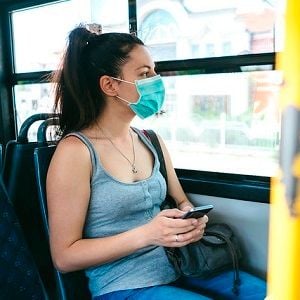
While the Federal Government's roll-out of a Covid-19 tracing app has received some pushback, a QUT data scientist says available technologies can protect privacy while informing better policy decisions on both restrictions and their relaxation.
Professor Raja Jurdak, from QUT's Centre for Data Science, says blanket Covid-19 lockdowns could become targeted to designated hotspots or neighbourhoods with the increased availability of personal location data.
He says as the pandemic continues to restrict people's movements, data about transmission sources and location or transport route 'hot spots' are paramount to prevention methods.
"We need to have a transparent conversation about what the public has to say about privacy and whether some individual freedoms can be relaxed at this critical point to secure public health benefits," he says.
"If we had all that data about where people are moving and who they are in contact with then we would be able to zoom in and control the spread of the disease much faster and that would then better inform the public and influence policy decisions."
He says privacy considerations are equally important, as individuals need to maintain control over what data they share.
"There are technologies that can be used to balance this need and automate contract tracing while preserving citizen privacy, such as a proposal that would involve transferring only encrypted contact data to a central server," he says. 
The Australian Government plans to roll out a new smartphone coronavirus tracing app to notify people who have encountered a person infected by Covid-19, and requires 40 per cent of the population to subscribe to be effective.
Professor Jurdak, in collaboration with researchers from CSIRO, John Hopkins University and the University of New South Wales, has recently conducted a case study using smart card travel data in Sydney to identify highly influential travellers for spreading disease on a public transport system.
The study traced possible infection flows between groups of passengers who displayed different mobility behaviours to investigate changes in spreading dynamics.
"The tap on and tap off information is valuable as we can look for patterns of who is on trains, buses and ferries at the same time and what areas are at risk based on movement profiles of the travellers," says Jurdak.
"This can allow for a more targeted response for specific transit routes, or specific stations or identify individuals who should avoid public transport due to either their high potential to spread the virus, or their high vulnerability to getting infected."
Open letter from leading economists urge Australia not to "squander" success
It has often been said, including from the WHO Director General Dr Tedros Adhanom Ghebreyesus, that the discussion of a trade-off between health and the economy is a false dichotomy.
The reason for this is that any benefits gained from having no restrictions would be offset by the exponentially higher costs of allowing the virus to spread.
A similar sentiment was shared by Prime Minister Scott Morrison last week when he said: "If you move too early, and the health response gets out of control, then the economic consequences will be even worse."
To hammer home this message, more than 200 of Australia's leading economists have written an open letter to the Prime Minister and Members of the National Cabinet emphasising "we cannot have a functioning economy unless we first comprehensively address the public health crisis".
"Some commentators have expressed the view that there is a trade-off between the public health and economic aspects of the crisis. We, as economists, believe this is a false distinction," the undersigned said.
"The measures put in place in Australia, at the border and within the states and territories, have reduced the number of new infections.
"This has put Australia in an enviable position compared to other countries, and we must not squander that success."
The economists recognised the measures taken to date have come at a cost to economic activity and jobs, but believe these are far outweighed by the lives saved and the avoided economic damage due to an unmitigated contagion.
"We believe that strong fiscal measures are a much better way to offset these economic costs than prematurely loosening restrictions," they said.
"As has been foreshadowed in your public remarks, our borders will need to remain under tight control for an extended period.
"It is vital to keep social-distancing measures in place until the number of infections is very low, our testing capacity is expanded well beyond its already comparatively high level, and widespread contact tracing is available.
"A second-wave outbreak would be extremely damaging to the economy, in addition to involving tragic and unnecessary loss of life."
Updated at 4:26pm AEST on 20 April 2020.
No new Covid-19 cases in WA
 "No new Covid-19 cases in WA")
Western Australia has joined Queensland as the second state in the country to record no new cases of Covid-19 today.
Both states made the announcements after South Australia recorded no new cases of the virus over the weekend, while Victoria reported just one new case today.
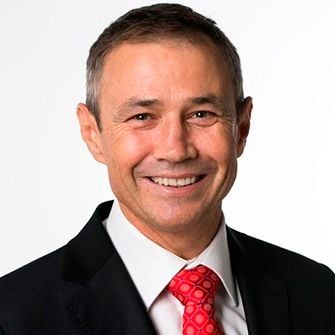
WA health minister Roger Cook (pictured) told a press conference this afternoon there were now only 103 active cases in WA.
"Today for the first time since Friday the 21st of February 59 days ago the number of of COVID-19 cases is static at 545," Cook said.
"It's important to note that our total number of active cases has declined to just 103 - this is because we recorded another nine recoveries overnight, bringing the total number of recoveries to 435 across the state with 48 of them from regional WA."
Cook acknowledged great work of the state's health workers to ensure community continues to get on top of the virus.
"In particular today, could I give a shout out to all those people who work in our hotels, assisting our guests to quarantine and self-isolate, and thank them for their work.
"I also want to thank every Western Australian for this incredible result a milestone in the battle against coronavirus of reaching zero new cases is obviously something of which we should all be proud.
"I know it's tough and I know it can be lonely, but we are winning this battle together. We must continue to listen to the health advice to do what is asked of us because it will save lives."
Updated at 3:37pm AEST on 20 April 2020.
Don't expect pubs to reopen in Victoria any time soon
 "Don't expect pubs to reopen in Victoria any time soon")
A cold glass of beer at the local pub might be what many of us need right now, but Victorians will have to hold onto that fantasy for a while longer.
Victorian Premier Daniel Andrews says pubs, restaurants, bars and cafes will not re-open for anything other than takeaway or delivery any time soon, but other social distancing measures may be relaxed in the near term.
"I want to make it clear though that the notion that pubs are open any time soon - restaurants, bars, cafes - I don't think that will be the case," said Andrews in a press conference this morning.
"The risk will be far greater than any reward. I think there are some areas where we might be able to make changes in around the way people interact, around some of the more social measures.
"I understand why you want to ask me 100 questions about that, I don't have answers to those, I'm trying to give people a sense that there is hope here. These numbers are good. This strategy is working."
The optimism comes as Victoria reported only one new case of Covid-19 on Sunday, taking the state's total to 1,329.
Updated at 11:36am AEST on 20 April 2020.
Advertisement
Latest News
From $13,000 to $20 million: how a PCOS diagnosis and a pair of scissors built Xali Organics
Inspired by a medical diagnosis and driven by innovative marketing,...
Cedar Woods secures $63.4m in new land acquisitions as record presales underpin pipeline push
Perth-headquartered residential developer Cedar Woods Properties (A...
Australia's long-term beer decline hits home as Lion plans to close Boag's brewery in Launceston
Australia's decades-long decline in beer consumption has claime...
Downer EDI seals $310m Transurban contract to maintain Sydney motorway network
Infrastructure services group Downer EDI (ASX: DOW) has secured con...
Propel Funeral Partners expands New Zealand footprint with trio of acquisitions worth $9.1m
Sydney-based death care provider Propel Funeral Partners (ASX: PFP)...
Advertisement