Advertisement
Staying informed is more important than ever as the situation unfolds with Covid-19. Stay tuned here for our live updates, and be sure to let us know what your business is doing to face this unprecedented challenge.
Covid-19 News Updates
Alliance Aviation hopes to land $122m capital raising
 "Alliance Aviation hopes to land $122m capital raising")
At a time when airlines are synonymous with financial woes, shares in Alliance Aviation Services (ASX: AQZ) have been flying at record highs after the Queensland Government pledged support for a key Whitsundays flight route.
Amidst the broad sentiment of business reopening, it's probably as good a time as any for Alliance to raise some extra cash.
This morning the Brisbane-based group entered a trading halt before announcing a $121.9 million capital raising to capitalise on "a number of prospective expansion opportunities" that have arisen during the COVID-19 pandemic.
The raising comprises a $91.9 million fully underwritten institutional placement that will dilute existing shareholdings by around 24.4 per cent, followed by a share purchase plan (SPP) aiming a further $30 million.
The placement will be at $2.95 per share, representing a 5 per cent discount to the last traded price on the ASX.
"Alliance's recent performance has been outstanding and allows us to be uniquely positioned to look to expand through a number of growth initiatives," says Alliance's managing director Scott McMillan.
"Importantly, this capital raising will give us the ability to invest in these initiatives whilst maintaining our strong balance sheet.
"Maintaining a strong balance sheet has been the focus of the Board for a number of years and is something we will jealously guard."
The company intends to acquire additional aircraft after the raising, provide additional services to existing customers in response to changes in their air travel requirements due to COVID-19, and continue to provide services to entities that were not long-term customers before the outbreak.
The airline also extended the term of its debt facilities with existing lenders on 28 May, with revolving term loan facilities of $70.2 million and a working capital facility of $5 million extended until January 2022.
"We are pleased to announce that Alliance has been able to successfully extend its debt facilities with our banking partners being the Australia and New Zealand Banking Group and the Commonwealth Bank of Australia until January 2022," says McMillan.
"Completing an extension at this time further cements the strong and long-standing relationship Alliance has with its banking club. We intend to undertake a formal refinancing process in 2021."
Updated at 10:10am AEST on 11 June 2020.
Consumer confidence almost back to pre-COVID levels, says Westpac chief economist
 "Consumer confidence almost back to pre-COVID levels, says Westpac chief economist")
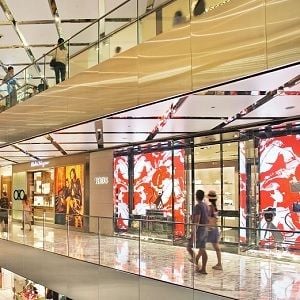
A spike in employment and underemployment has failed to dampen Australians' spending intentions, with the Westpac-Melbourne Institute Index of Consumer Sentiment rising 6.3 per cent this month.
Westpac Chief Economist Bill Evans says the index level of 93.7 is just two per cent below the average from September to February.
"Remarkably, consumer confidence is now back around pre-COVID levels, having recovered all of the extreme 20 per cent drop seen when the pandemic exploded in March-April," says Evans, who has recently advocated for negative interest rates to stimulate the economy.
"Confidence has clearly been buoyed by Australia's continued success in bringing the Coronavirus under control, which has in turn allowed for a further easing in social restrictions over the last month."
However, he notes sentiment was already "on the weak side" prior to the COVID-19 shock, when the index showed a persistent excess of pessimists over optimists.
"With the unemployment rate set to remain elevated; extensive restrictions staying in place and the economy facing permanent structural change it would be surprising if the recent upward momentum continues and is able to sustain a stable level of confidence which is above that previous period," says Evans.
"We have also seen more even confidence levels in the major states as restrictions begin to be eased extensively across the country."
Victoria's consumer confidence index lagged NSW in May with an 8.4 per cent lift compared to 23 per cent, but this month Victoria's level has jumped by 11.9 per cent, placing it ahead of the national average at 94.9.
Confidence NSW is also above the national level at 95.5, representing a rise of 4.8 per cent.
"While the monthly gains are impressive, the Index is still relatively weak by historical standards in pessimistic territory overall and down 7 per cent on a year ago," the economist explains.
"The general picture is of continued intense pressure on family finances and concern about the nearterm outlook for the economy but with firming optimism around prospects for finances in the year ahead and the economy's medium-term outlook."
He says the contrast between that medium-term outlook in this recession compared to the last recession in the 1990s is important, as it is 50 per cent higher than the average over those "long four years".
"Respondents are confident that they can see eventual better times ahead whereas in the early 1990s there was a pervasive mood of despair for years," he says.
"All component indexes recorded gains in June but the largest improvements were around views on the economic outlook and 'time to buy a major item'.
"Consumer concerns around the economy are definitely easing. The 'economy, next 12 months' sub-index is up another 8.4 percent and the 'economy, next five years' sub-index is up 6.4 per cent," he says, clarifying this is however from an "exceptionally weak base".
Meanwhile, consumer assessments of family finances are up 3.6 per cent versus a year ago, while their forward views are in "net optimistic" territory 105.3; just a couple of points shy of the long-run average of 107.5.
Evans says this mix points to what is likely to be a delicate period for policy.
"A tangible improvement in finances, linked to the reopening of the economy, will be required (rather than just an expected one)," he says.
"This improvement will need to be firmly in place before key supports to household finances such as JobKeeper, JobSeeker and home loan repayment holidays can be withdrawn.
"On a more promising note, the picture from buyer sentiment suggests we may see a significant 'pop higher' in some forms of spending near term."
Sentiment around housing showed a modest improvement in June, with assessments around 'time to buy' consolidating on previous gains and price expectations showing a lift, albeit to still very weak levels.
"The 'time to buy a dwelling' index dipped 0.5 per cent but held on to most of May's strong rebound following the collapse in this index in April.
"At 107.6, the index continues to hold in positive territory but is still well below 2019's average level of 118 - a pattern evident across all of the major states.
"To date, house prices have held up surprisingly well, albeit on extremely low turnover. Resilient reads on 'time to buy a dwelling' are encouraging but the survey continues to point to a sharp deterioration in the outlook for prices compared to a few months ago."
This pessimism extends across all the major states, although Evans observes it is somewhat more entrenched in Victoria (75.3) than in NSW (84.2).
"Responses to additional questions on the 'wisest place for savings' show risk aversion has lifted since March," he says.
Updated at 11:47am AEST on 10 June 2020.
Kogan to ride e-commerce success with $115 million capital raise
 "Kogan to ride e-commerce success with $115 million capital raise")
At a time when e-commerce star Kogan.com (ASX: KGN) is seeing accelerated sales prompted by the COVID-19 pandemic, the company has announced it will conduct a $115 million capital raise.
The company says its $100 million placement and $15 million share purchase plan (SPP) will enable the retailer to take advantage of positive market conditions and provide improved financial flexibility.
Kogan's announcement comes just a few days after the company announced its adjusted earnings before interest, taxes, depreciation and amortisation (EBITDA) was up 200 per cent in the fourth quarter to date, demonstrating the resilience of the company's online model during the COVID-19 pandemic.
Additionally, adjusted EBITDA in the financial year through to the end of May was up by more than 50 per cent.
"Kogan.com is well positioned to take advantage of current market conditions given the Company's ability to extract synergies through its leading proprietary systems, diversified supply chain and low cost of doing business," says Kogan.
"While multiple opportunities are presenting themselves, the Company will focus on opportunities that are value accretive and broaden its offering, expand its customer base or enhance its operating model."
The raise also comes in the wake of Kogan recently acquiring Australian furniture retailer Matt Blatt for $4.4 million which will be moved online.
"Kogan.com is committed to making the most in-demand products and services more affordable and accessible," says Kogan CEO Ruslan Kogan.
"Our long-term strategy has enabled us to thrive in the current challenging environment, and we are now in a better position than ever to take advantage of growth opportunities. Our low cost of doing business and digital expertise have put us in the driver's seat to capture market share as the retail industry undergoes significant change."
The $100 million fully underwritten placement will see 8.7 million new shares issued, representing 9.2 per cent of the company's existing issued capital.
The placement will be conducted at $11.45 per share, representing a 7.5 per cent discount to the last close price at Tuesday, 9 June of $12.38.
Canaccord Genuity (Australia) Limited and Royal Bank of Canada are acting as joint lead managers and underwriters to the placement.
After the placement is completed Kogan will conduct the offer of new shares under a non-underwritten SPP to existing shareholders.
The SPP will give eligible shareholders the opportunity to apply for up to $30,000 worth of new shares at the same issue price of the placement.
Updated at 10:27am AEST on 10 June 2020.
Wesfarmers online sales shoot up during COVID-19 restrictions
 "Wesfarmers online sales shoot up during COVID-19 restrictions")
The COVID-19 pandemic has continued to be a bountiful period for retail giant Wesfarmers (ASX: WES), with sales up across almost every one of the company's brands over the last five months.
The company attributes its continued success to the strong positions its brands hold in a variety of consumer segments that have generally performed well during the period of COVID-19 restrictions this year.
Of note, online has been increasingly important for Wesfarmers; the company's retail businesses delivered total online sales growth of 89 per cent in the first five months of the year.
On a financial year to date basis, total online sales across the group increased 60 per cent to $1.4 billion (or $1.9 billion if Catch is included).
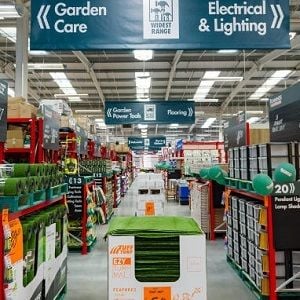
In particular Wesfarmers says significant demand growth was witnessed at Bunnings and Officeworks as customers continue to spend more time at home, whether they be working or relaxing. But these COVID-19 trends could just be a temporary sales boost.
"Sales growth in the calendar year to date has increased significantly relative to the levels achieved in the first half of the financial year," says Wesfarmers.
"Given the significant changes to the usual customer shopping patterns and expected future changes to government measures, it is uncertain whether the high levels of sales growth will continue for the remainder of the calendar year."
Overall, effectively every one of Wesfarmers brands saw positive sales growth in the first five months of 2020, with the company's ecommerce arm Catch proving to be the standout segment in terms of growth, with sales up 68.7 per cent so far this year.
Officeworks, Bunnings and Kmart also recorded positive sales momentum in the first five months up 27.8 per cent, 19.2 per cent and 4.1 per cent respectively.
Target was the only Wesfarmers brand that saw sales go down during the period, demonstrating further why the company is planning on transforming to 40 large format Target stores and 52 Target Country stores into Kmart stores.
Now, with the easing of trading restrictions in New Zealand and north-western Tasmania, the company's managing director Rob Scott (pictured) has celebrated Wesfarmers' retail networks returning to full operation.
"Each of our businesses remains vigilant in prioritising the safety of team members and customers," says Scott.
"Safety measures, including restricting the number of people in store, may at times result in some inconvenience and we are grateful for the patience and understanding of customers."
Never miss a news update, subscribe here. Follow us on Facebook, LinkedIn, Instagram and Twitter.
Business News Australia
NZ to lift all COVID-19 restrictions tonight
 "NZ to lift all COVID-19 restrictions tonight")
After taking a stricter approach than most nations to tackling COVID-19, New Zealand is now in the enviable position of being able to lift all social distancing restrictions except border controls.
The country reported no active cases today for the first time since 28 February, and it has now been 17 days since the last new case was reported.
Following the good news that it has been 40 days since the last case of community transmission and 22 days since that person finished self-isolation, Prime Minister Jacinda Ardern (pictured) announced New Zealand would move to Covid-19 Alert Level 1 at 11:59pm.
The declaration means effectively all restrictions will be lifted, although borders will remain closed with mandatory isolation and quarantine as New Zealand's first line of defence.
There will be no restrictions on gatherings, schools or workplaces, but people will be encouraged to keep diaries of their movements, maintain good hygiene and exercise caution.
"With care and commitment our team of 5 million has united to protect New Zealanders' health and ensure we now have a head-start on our economic recovery," Ardern said today.
"At Level 1 we become one of the most open economies in the world and now we must seize our advantage of going hard and early to beat Covid-19 and use the same focus and determination we applied to our health response to rebuild our economy.
"We are confident we have eliminated transmission of the virus in New Zealand for now, but elimination is not a point in time it is a sustained effort."
She noted the world would remain in the grip of a global pandemic for some time to come, and emphasised New Zealand would need to be prepared for more cases.
"Caution and hard work got us down the mountain safely when the descent is always the most perilous part," she said.
"At every step there have been those who've pushed us to do something different, to go faster or further, but our results speak for themselves."
Updated at 4:10pm AEST on 8 June 2020.
QLD Government to prop up Village Roadshow, Ardent Leisure, Currumbin Wildlife Sanctuary
 "QLD Government to prop up Village Roadshow, Ardent Leisure, Currumbin Wildlife Sanctuary")
Gold Coast theme parks will receive around one in every five dollars spent under the Queensland Government's $50 million tourism recovery package.
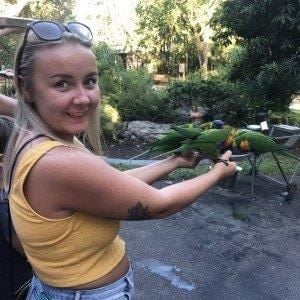
Premier Annastacia Palaszczuk has today announced $11 million to help Village Roadshow (ASX: VRL), Ardent Leisure (ASX: ALG) and Currumbin Wildlife Sanctuary retain staff while they wait for other support from banks and the Federal Government.
Village Roadshow operates Warner Bros Movie World, Sea World and Wet'n'Wild, while Ardent Leisure is known for Dreamworld which even before COVID-19 was struggling to recover from the Thunder River Rapids Ride (TRRR) tragedy of 2016.
"These are some of the biggest employers on the Coast. I'm making sure that this funding gets out the door as soon as possible to help safeguard jobs during these tough times," says Palaszczuk.
"Tourism businesses are doing it tough right now. It's crucial that we work with the private sector to ensure that they can get back to businesses soon."
Tourism Minister Kate Jones says theme parks are vital to the Gold Coast's economy.
"Sea World, Dreamworld, Currumbin Wildlife Sanctuary - these are names that are recognised right throughout the world," she says.
"We're working closely with these operators to ensure workers don't lose their jobs.
"The funding we're delivering today must be used for specific purposes, including wages, re-opening of attractions and other supplier costs."
Assistant Tourism Minister and Member for Gaven, Meaghan Scanlon, lobbied for funding to support some of the industry's biggest employers.
"One in seven Gold Coast workers are employed in the tourism industry - many of these people work at theme parks," she says.
"Today's funding will help to give workers certainty that we're standing with them through this crisis."
Dreamworld chief executive officer John Osborn welcomes the support and is pleased the government recognises the significant role our Parks play in the economy.
"We welcome the support announced by the Premier and Minister Kate Jones today as it will reduce our cash burn while we work with the QLD Government to finalise a date that we can viably re-open," he says.
In addition to the $50 million tourism recovery package aimed at protecting "tourism icons", the state government is also spending $7 million on a domestic tourism campaign, whose slogan "Queensland - You're Good to Go" was revealed yesterday.
Palaszczuk says the campaign is projected to deliver $1 billion in overnight accommodation takings for hard-hit tourism operators over the next four months.
"In coming weeks, you'll see our 'Queensland - You're Good to Go' campaign on television, in newspapers and across social media platforms showcasing the best of our state from Cape York to Coolangatta.
"Because Queenslanders have done such a great job flattening the curve, we were able to open up intrastate travel two weeks earlier."
The Premier had previously indicated the border could remain closed as late as September and the state's roadmap to recovery indicates a July reopening, but there has been speculation that this week she will be able to set an even earlier date.
The campaign will run from June until August, with flow-on effects expected into the September school holidays.
"Tourism and Events Queensland expects Queenslanders could spend over 9 million nights enjoying what the state has to offer, which would produce a $1 billion in overnight expenditure for tourism operators.
"Every year, 3.2 million Queenslanders spend nearly $10 billion holidaying interstate and overseas.
"We live in one of the most beautiful places in the world. Now's the time to get out and about and experience it."
Jones says the campaign is designed with the June-July holidays in mind.
"When interstate travel can return, this campaign will be expanded and tweaked to ensure our destinations remain front-of-mind for all Australian travellers," she says.
"The June-July school holidays are shaping as a crucial time for our operators.
"People often say to me I've always wanted to see Carnarvon Gorge, I've always wanted to get to Airlie Beach. Well, now's the time."
Australia Zoo's Terri Irwin welcomes the campaign.
"I am excited for Queenslanders to experience the many destinations that make our state so spectacular," she says .
"Australia Zoo is proud to be reopening for families to reconnect with wildlife and nature. Now it is even more important than ever to travel, make memories, and share mateship."
Tourism and Events Queensland (TEQ) chief executive Leanne Coddington says the campaign will show Queenslanders the very best of their own back yard.
"This is the chance for Queenslanders to experience our own tourism offerings and in turn help an industry which has been hard hit by the COVID-19 pandemic," she says.
Updated at 1:35pm AEST on 8 June 2020.
Rex expands flight offering on nine regional routes
 "Rex expands flight offering on nine regional routes")
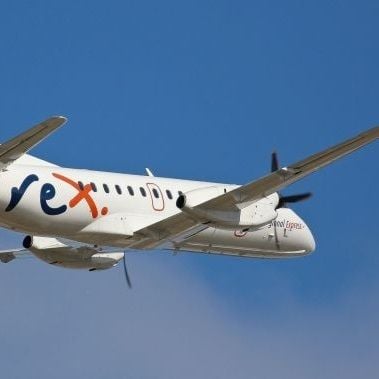
Regional flight operator Rex (ASX: REX) is responding to Qantas' (ASX: QAN) increased flight offering with daily weekday flights on six routes, as well as more services on another three.
The announcement on Friday relates to flights where Qantas is in competition with Rex and is doubling its number of flights.
"From 6 July 2020, Rex will be providing daily weekday return services to these competitive routes and will also provide twice-daily return services on certain days in order to facilitate day-return travel," Rex said.
Rex will offer daily return flights every weekday for Sydney to Albury, Wagga Wagga and Orange; Melbourne to Mildura; and Adelaide to Whyalla and Port Lincoln.
The airline will offer return flights four days a week from Sydney to Dubbo, three days Sydney to Ballina, and two days Adelaide to Kangaroo Island.
Rex was rescued from COVID-19 uncertainty at the end of March when the Federal Government announced a $198 million Regional Air Network Support (RANS) program.
"Given that Rex and QantasLink together operate approximately 80 per cent of all eligible regional services, both carriers will, over the six-month period, be expected to receive proportionately 80 per cent of the grant amount," Rex reported in a clarification note on 4 June.
The company has also explained the Qantas and Virgin were excluded from the $100 million Regional Airlines Funding Assistance (RAFA) program, so it is a possibility that Rex will receive the majority of that amount given its network accounts for more than 60 per cent of all regional services excluding the two large players.
Rex however does not expect to see much of the $715 million Australian Airline Financial Relief Package (AAFR).
"A large portion of these funds will be directed to Airservices Australia. Of the remaining funds that will go to the airlines over 90 per cent will go to the Qantas and Virgin Australia Groups," the airline said.
"It is clear for all to see that Qantas and Virgin Australia will receive the lion's share of the $1.2 billion grants available, exceeding what Rex will receive by many fold.
"The Federal Government has justifiably placed regional aviation as a national priority and has provided appropriate assistance to ensure that regional communities will retain their vital air services after the COVID-19 crisis is over."
In May the company confirmed it had been approached by several parties interested in providing around $200 million worth of equity required to start domestic operations in Australia.
The company has also reached various funding arrangements with state governments as well to reactivate 88 return service flights since late April.
Updated at 10:25am AEST on 8 June 2020.
WA to spend $444m on housing stimulus package
 "WA to spend $444m on housing stimulus package")
The Western Australian Government has announced a housing stimulus package worth almost two-thirds of the national HomeBuilder program, with a strong focus on social housing and grants for homebuyers.
The state government expects its $444 million package announced yesterday to support around 4,300 jobs in the building and construction sectors, comprising the following benefits:
- $117 million for $20,000 Building Bonus grants provided to homebuyers who sign up before December 31, 2020 to build new houses or purchase a new property in a single tier development (such as a townhouse) prior to construction finishing, creating 2,600 jobs;
- $8.2 million to expand the 75 per cent off-the-plan transfer duty rebate, capped at $25,000, until December 31, 2020 to include purchases in multi-tiered developments already under construction;
- $97 million to construct social housing dwellings and purchase off-the-plan units for supported housing programs;
- $142 million to refurbish 1,500 existing social housing dwellings; and
- $80 million for targeted maintenance programs for 3,800 regional social housing properties - including remote Aboriginal communities' stock and subsidised housing for regional government workers.
The plan is scheduled for immediate rollout, and will run into 2020-21, providing tradespeople and building material suppliers with additional certainty about an ongoing pipeline of work.
Premier Mark McGowan says the new major housing package will provide a much-needed boost to WA's economy.
"It will provide a pipeline of work for WA building companies and local tradies, like bricklayers, plumbers, carpenters and painters, as we recover from the COVID-19 pandemic," he said.
"The social housing component will also go a long way to helping those in need, get into a quality home.
"WA's residential building industry makes a significant contribution to our economy and community, so it's important we help protect, support and create new jobs in this space."
State Treasurer Ben Wyatt says the package takes the government's total COVID-19 stimulus and relief commitments to date up to $2.3 billion.
"The package will recharge our housing industry by bringing forward a pipeline of work, providing a boost to our economy and supporting jobs," he says.
"An estimated 66,000 workers are directly employed in the residential construction sector and many thousands more rely on the industry for their livelihoods," adds Housing Minister Peter Tinley.
"The various elements of the social housing package are designed to provide opportunities for work - especially in regional areas - and help propel WA's economic recovery."
"It will also result in more liveable, modern homes for tenants and improve the overall lifespan of our social housing stock - a publicly-owned asset with an estimated worth of about $14 billion."
In a column for The Conversation last week in anticipation of the Federal Government's $680 million HomeBuilder program, Brendan Coates of the Grattan Institute argued social housing stimulus would help address several problems at once; it not only provides a safety net and helps tackle homelessness, but it also pumps money into the construction sector quickly without the injection simply being passed on through higher property prices.
Updated at 9:20am AEST on 8 June 2020.
Blueprint for Trans-Tasman travel bubble submitted to Prime Ministers
 "Blueprint for Trans-Tasman travel bubble submitted to Prime Ministers")
The Trans-Tasman Safe Border Group has submitted a blueprint for the resumption of 'safe' Trans-Tasman travel to both the New Zealand and Australian Prime Ministers.
The proposal, developed by a group of 40 experts, government entities and industry bodies, recommends the establishment of a 'Safe Travel Zone' to be introduced in line with strong baseline health conditions in each country for the management of COVID-19.
The recommendations include several layers of protections across the traveller journey, allowing for the sustainable re-start of 'scheduled passenger services' without the need for a 14-day passenger quarantine.
Scott Tasker, co-chair of the Trans-Tasman Safe Border Group and Auckland Airport's General Manager Aeronautical Commercial, says the proposal is aligned with official guidance released yesterday from the International Civil Aviation Organisation.
"This has been a significant piece of work involving experts from all parts of the system," says Tasker.
"We've worked solidly together over the past three weeks to develop a detailed and comprehensive framework to enable the safe and sustainable re-start of scheduled passenger services between Australia and New Zealand, and we're delighted to have submitted our proposal to government.
"We believe our recommendations will effectively manage the risks but importantly they will also provide confidence to Australian and New Zealand travellers to visit each other's countries to reconnect with family and friends, re-establish vital business links, and provide a lifeline of visitors to our respective tourism industries."
The Australian and New Zealand Governments will now review the proposal.
The Trans-Tasman Safe Border Group says re-establishing this travel link is vitally important considering the two countries are two of the most integrated economies in the world.
"Each country is vital to the success of each other's small and medium-sized businesses, and contributes strongly to each other's tourism sectors, with estimated $3 billion in international visitor spend each way every year," says the Trans-Tasman Safe Border Group.
"Prior to the outbreak of COVID-19, New Zealand was the most popular outbound travel destination for Australians with 1.5 million visitors arriving from across the Tasman in 2019, accounting for 40 per cent of all foreign visitors to New Zealand.
"Likewise, Australia was the most popular outbound travel destination for Kiwis. New Zealand is Australia's second largest source market for visitors (behind China), with 1.4 million visitors in 2019, accounting for 15 per cent of total visitors to Australia."
Updated at 12:58pm AEST on 5 June 2020.
CSL aims to produce "100 million doses" of COVID-19 vaccine in late 2021 if trials prove successful
 "CSL aims to produce \"100 million doses\" of COVID-19 vaccine in late 2021 if trials prove successful")
Australian biotech giant CSL (ASX: CSL) has entered into a "significant" agreement that formalises the work it has been doing with COVID-19 vaccine developers since January.
A new partnering agreement with the Coalition for Epidemic Preparedness Innovations (CEPI) and the University of Queensland (UQ) aims to accelerate the development, manufacture and distribution of a COVID-19 vaccine candidate.
Funding will come from CEPI and CSL to develop and manufacture a vaccine candidate pioneered by UQ researchers, harnessing the university's proprietary "molecular clamp" technology that allows for a more effective immune response by locking unstable surface proteins.
Phase 1 clinical trials are expected in July with late stage clinical trials expected to follow.
If these trials are successful, the groups indicate a vaccine could be available for distribution by 2021 and large-scale production will take place at CSL's biotech manufacturing facilities in Melbourne.
UQ COVID-19 vaccine shows "potent protective response" in early tests
'Leadership is learnable', says doctor on the COVID-19 frontline
CSL believes the production technology can be scaled up to produce 100 million doses towards the end of 2021, while it would also sub-contract other global manufacturers to improve availability and geographical distribution.
"We are pleased to be able to provide our scientific expertise and platform technologies to make a strong contribution to this critical joint effort with CEPI, the University of Queensland and others," says CSL chief scientific officer, Professor Andrew Cuthbertson (pictured).
"The devastating toll COVID-19 has inflicted on the world is being countered by an extraordinary effort from scientists who have crossed borders and boundaries to collaborate, pool together their resources and make progress at a rate not seen before.
"CSL will contribute to UQ's promising vaccine with our proprietary adjuvant, MF59, made by Seqirus, along with expertise in process science and scale-up from our Australian facilities, managing advanced clinical trials and the large-scale manufacture of the recombinant vaccine."
CEPI CEO Richard Hatchett says investing in large-scale manufacturing capacity now will reduce the time needed to deliver millions of doses of the UQ vaccine to those who need them the most, should the candidate prove safe and effective.
CEPI chair Jane Halton emphasises the importance of collaboration, with the partnership set to benefit enormously from CSL's experience and capabilities in vaccine development and large-scale manufacturing.
"If this vaccine is successful, the partnership model we have established will enable CEPI to provide a significant number of doses to the COVID-19 Vaccine Global Access Facility for those who need them most, while allowing CSL to fulfil its own long-standing biosecurity commitment."
UQ Vice Chancellor Professor Peter Høj says the university is "absolutely delighted" at the speed with which this critical juncture has been reached, off the back of positive results from UQ's early pre-clinical studies.
"This accelerated timeframe, hitting the key milestones in the development of the UQ vaccine, would not have been possible without CEPI, our partners and additional funding assistance from the Queensland State Government ($10m), the Federal Government ($ 5m) and philanthropic partners," he said.
"Having CSL, an Australian-based global biotech leader, take our vaccine forward is a fantastic result for the dedicated research team who have worked tirelessly since January on this project, which will benefit Australians and the world."
Investors appear to have expected more from CSL - perhaps a shorter timeframe for vaccine development - as its share price is down 3.58 per cent this afternoon at $283.70.
Updated at 12:59pm AEST on 5 June 2020.
Advertisement
Latest News
From $13,000 to $20 million: how a PCOS diagnosis and a pair of scissors built Xali Organics
Inspired by a medical diagnosis and driven by innovative marketing,...
Cedar Woods secures $63.4m in new land acquisitions as record presales underpin pipeline push
Perth-headquartered residential developer Cedar Woods Properties (A...
Australia's long-term beer decline hits home as Lion plans to close Boag's brewery in Launceston
Australia's decades-long decline in beer consumption has claime...
Downer EDI seals $310m Transurban contract to maintain Sydney motorway network
Infrastructure services group Downer EDI (ASX: DOW) has secured con...
Propel Funeral Partners expands New Zealand footprint with trio of acquisitions worth $9.1m
Sydney-based death care provider Propel Funeral Partners (ASX: PFP)...
Advertisement