Advertisement
Staying informed is more important than ever as the situation unfolds with Covid-19. Stay tuned here for our live updates, and be sure to let us know what your business is doing to face this unprecedented challenge.
Covid-19 News Updates
COVID-19 restrictions to ease from today for the long weekend
 "COVID-19 restrictions to ease from today for the long weekend")
Around the country COVID-19 restrictions will be eased from today, with many of these moves to be welcomed by Australians just in time for the long weekend.
Queensland Premier Annastacia Palaszczuk - whose state along with WA won't have a public holiday on Monday - has today celebrated the news that venues will be permitted to open to more than 20 seated patrons from midday today.
The restrictions will see venues be able to accommodate groups of up to 20 seated people per dining area on the condition a COVID-safe plan has been approved.
"We are expecting a bumper weekend," said Palaszczuk.
But Queensland is not the only state reopening businesses today, with the Northern Territory, Tasmania, and Western Australia all easing COVID-19 restrictions.
Northern Territory
The NT is moving into Stage 3 of restrictions being eased from midday today.
From today Territorians will be able to:
- Frequent bars without consuming food;
- Attend nightclubs, cinemas, theatres, concert or music halls and other approved entertainment venues;
- Participate in licenced gaming activities;
- Enjoy amusement venues, community centres and play centres; and
- All previously restricted services at places that provide beauty therapy, cosmetic services, tattooing or body art can be accessed again from 5 June.
Sports including football, netball, basketball and soccer will also be able to resume and be officiated, with supporters and up to 500 people in any arena, stadium or community sport competition
Tasmania
Stage 2 easing of restrictions are being brought forward today from 3pm in Tasmania.
Pubs, restaurants and cafes will be able to provide table service for up to 40 patrons, with delivery and takeaway services able to continue.
Western Australia
In WA Phase 3 COVID-19 restrictions will be eased from Saturday midnight
As part of Phase 3, Western Australia will be the first State in the nation to implement a two square metre per person capacity rule for venues, replacing the previous four square metre rule, which is the current national advice.
Other restrictions will be eased, allowing:
- non-work indoor and outdoor gatherings of up to 100 people at any one time, per single undivided space, up to 300 people in total per venue (100/300 rule);
- food businesses and licensed premises may operate with seated service;
- alcohol may be served without a meal at licensed premises (patrons must be seated);
- food courts can reopen with a seated service;
- beauty therapy and personal care services to reopen;
- saunas, bath houses, float centres, massage and wellness centres to reopen (100/300 rule);
- galleries, museums, theatres, auditoriums, cinemas and concert venues can reopen (during any performance, the patrons must be seated. (100/300 rule));
- Rottnest Island to reopen to the WA general public;
- Perth Zoo to open with no patron limit for the whole venue (the 100/300 rule applies to indoor spaces and cafés/restaurants);
- wildlife and amusement parks can reopen (100/300 rule);
- arcades (including pool/snooker, ten pin bowling, Timezone), skate rinks and indoor play centres to reopen (100/300 rule);
- auction houses and real estate auctions can reopen;
- TAB and other gaming venues (other than the Casino which is being considered separately) are permitted to reopen;
- full contact sport and training is now permitted;
- playgrounds, skate parks and outdoor gym equipment are permitted to be used;
- parents/guardians will be able to enter school grounds to drop off or pick up their children;
- gyms, health clubs and indoor sports centres will be able to offer the normal range of activities, including the use of all gym equipment (gyms must be staffed at all times and undertake regular cleaning).
Travel will now be permitted throughout Western Australia, including into the Kimberley region, pending the Commonwealth's approval to remove the Biosecurity Area on June 5. Access into remote Aboriginal communities will remain prohibited.
Updated at 12:26PM AEST on 5 June 2020.
Qantas and Jetstar will triple flight capacity to meet "pent up demand"
 "Qantas and Jetstar will triple flight capacity to meet \"pent up demand\"")
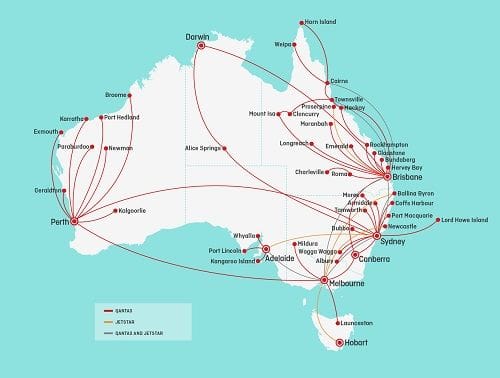
Qantas (ASX: QAN) and its subsidiary Jetstar will soon run 300 more return flights per week in response to the easing of travel restrictions in many parts of the country.
The uptick over the rest of June applies to domestic travel only, with capacity set to increase from five per cent of pre-coronavirus levels to 15 per cent by the end of the month.
Additional flights will likely operate during July depending on travel demand and the further relaxation of state borders. By the end of next month the group expects it could be at 40 per cent of pre-crisis capacity.
The move follows an announcement the Queensland Government would be supporting Alliance Airlines - partly owned by Qantas - to run four weekly return flights from Brisbane to the Whitsundays.
Details of the additional flights include:
- More services on capital city routes particularly Melbourne-Sydney and a number of routes to-and-from Canberra;
- Increased intra-state flights for Western Australia, Queensland, New South Wales and South Australia. Broome, Cairns and Rockhampton to see a significant boost in weekly flights;
- Flights will resume on eight routes not currently being operated; and
- Qantas to commence flights from Sydney to Byron Bay (Ballina), after the route launch was postponed due to the Coronavirus.
Click here for the full list of the increased network.
Qantas Group CEO Alan Joyce (pictured) says there has been a lot of pent-up demand for air travel, and the company is already seeing a big increase in customers booking and planning flights in the weeks and months ahead.
"We can quickly ramp up flying in time for the July school holidays if border restrictions have eased more by then," he says.
"Normally, we plan our capacity months in advance, but in the current climate we need to be flexible to respond to changing restrictions and demand levels.
"The one million people who work in tourism around Australia have been really hurting over the past few months. These additional flights are an important first step to help get more people out into communities that rely on tourism and bring a much-needed boost to local businesses."
The executive also explains parts of the company's Fly Well program, which includes optional masks and travellers will still be able to sit side-by-side as before.
"Customers will notice a number of differences when they fly, such as masks and sanitising wipes, and we'll be sending out information before their flight so they know exactly what to expect and have some extra peace of mind," he says.
"Importantly, the Australian Government's medical experts have said the risk of contracting Coronavirus on an aircraft is low."
However, close contact is considered one of the key ways the virus is spread.
Close contact is generally defined as either 15 minutes of face-to-face contact with an infected person, or sharing a closed space that is not well-ventilated with an infected person for a total of more than two hours.
When Qantas released its Fly Well program, the group's medical director Ian Hosegood gave his explanation as to why the risk of catching coronavirus on an aircraft is extremely low.
"That's due to a combination of factors, including the cabin air filtration system, the fact people don't sit face-to-face and the high backs of aircraft seats acting as a physical barrier," Dr Hosegood says.
"As far as the virus goes, an aircraft cabin is a very different environment to other forms of public transport.
"Social distancing on an aircraft isn't practical the way it is on the ground, and given the low transmission risk on board, we don't believe it's necessary in order to be safe. The extra measures we're putting place will reduce the risk even further."Updated at 11:48am AEST on 4 June 2020.
PharmAust lab tests show positive signs for suppressing COVID-19
 "PharmAust lab tests show positive signs for suppressing COVID-19")
Perth-based company PharmAust (ASX: PAA) has announced positive preliminary results in experiments aimed at inhibiting the virus that causes COVID-19.
Traditionally focused on repurposing existing drugs for cancer therapy, PharmAust is exploring the potential of monepantel (MPL), a drug traditionally used against gastrointestinal deadworms in sheep.
Experiments with MPL and monepantel sulfone (MPLS) have been undertaken by Melbourne's Walter and Eliza Hall Institute of Medical Research on PharmAust's behalf, testing the active ingredients' effects on cells infected with SARS-CoV-2 in tissue culture.
Today PharmAust came out of a trading halt after announcing these tests demonstrated both infectivity and replication of SARS-CoV-2 virus particles can be suppressed by between 50-95 per cent in cell cultures.
Virologists at the Walter and Eliza Hall Institute demonstrated that in preliminary experiments both MPL and MPLS reduce the capacity of SARS-CoV-2 to replicate as well as the capacity of SARS-CoV-2 to mature into infectious virus particles.
Of note, relatively low concentrations of monepantel blocked the infectious capacity of SARS-CoV-2 in tissue culture.
Based on the above findings, PharmAust has moved to broaden and extend its intellectual property in the area of anti-viral activity through the filing of a patent application specifically covering MPL in the treatment of COVID-19.
"PharmAust is excited by this early data set and is looking forward to continuing the project with the Walter and Eliza Hall Institute," says PharmAust's chief scientific officer Dr Richard Mollard.
"Continuation will involve repetition of these experiments for validation and comparisons with other mTOR inhibitors and treatments currently in the clinic."
Walter and Eliza Hall Institute researcher Professor Marc Pellegrini says these early signs demonstrating that monepantel can block SARS-CoV-2 infectivity in vitro are encouraging.
Updated at 11:19am AEST on 4 June 2020.
$680 million HomeBuilder program a "lifeline" for construction industry
 "$680 million HomeBuilder program a \"lifeline\" for construction industry")
The Federal Government has today announced a $680 million 'HomeBuilder' program to support the residential construction sector.
Until the end of 2020 the program will provide owner-occupiers with a grant of $25,000 to build a new home or substantially renovate an existing one, but there's a catch: renovators must be spending at least $150,000 to be eligible.
Construction must be contracted to commence within three months of the contract date, and applicants will be subject to a range of eligibility criteria, including income caps of $125,000 for singles and $200,000 for couples based on their latest assessable income.
A national dwelling price cap of $750,000 will apply for new home builds, and a renovation price range of $150,000 up to $750,000 will apply to renovating an existing home with a current value of no more than $1.5 million.
The program is expected to provide around 27,000 grants.
The Morrison Government expects the program will support 140,000 jobs directly and another one million related jobs in the residential construction sector.
The program has been welcomed by industry associations like Master Builders Australia (MBA) and the Housing Industry Association (HIA) and follows some dire warnings from the sector that half a million jobs were at risk without Government intervention.
In May HIA forecasted that new home building was about to fall in half from 200,000 new homes constructed by the Association in FY19 to just 112,000 in FY21.
But with the announcement of the HomeBuilder program, HIA says the package could generate over $15 billion in national economic activity.
"Most importantly this incentive will support hundreds of thousands of jobs across Australia," says HIA managing director Graham Wolfe.
"The housing industry directly engages more than one million people builders, trade contractors, designers, professional service providers and others. It provides jobs for many thousands more in the manufacturing and retail sectors, which supply the materials, products, white goods and furnishings that go into our homes.
"This incentive will help to address the projected decline in housing activity over the next 12 months."
MBA CEO Denita Wawn has also welcomed the program, describing it as a "lifeline" for an industry teetering on the edge of disaster.
"HomeBuilder will be a lifeline for an industry facing a valley of death in the coming months. It will mean more new homes, more small businesses and jobs are protected and provide a stronger bridge to economic recovery for our country," says Wawn.
"Based on the Government's estimated 27,000 grants, we think the scheme will be used for $10 billion in building activity, supporting the viability of 368,000 small builders and tradies the businesses which employ 800,000 people in communities around Australia.
"Supporting the home building industry is essential to strengthening the economy and helping Australia recover from the impacts of the pandemic. Residential building activity gives back more than double to the communities that sustain it with every $1 invested in home building activity providing $3 to the wider economy."
The announcement comes just a day after Federal Treasurer Josh Frydenberg declared Australia's economy to be in recession.
His announcement was made in conjunction with the release of the National Accounts for the March Quarter which showed a GDP contraction of 0.3 per cent, making it virtually certain that a recession will be confirmed in June considering most of the impact to the economy was felt during April and May.
"It was in this quarter the March quarter that consumer and business confidence fell to its lowest level on record. That the ASX 200 lost a third of its value and, on the 16th of March, saw its biggest daily fall of 9.7 per cent on record," said Treasurer Frydenberg yesterday.
"When combined with the ongoing drought, which saw farm GDP fall by 2.4 per cent in the quarter, and the devastating impact of the fires that were raging across many states, one looks back on the March quarter, and there wasn't much good news.
"Seen in this context, the fact that the Australian economy only contracted by 0.3 per cent shows the Australian economy's remarkable resilience."
Updated at 9:47am AEST on 4 June 2020.
COVID-19 restrictions, US unrest hit Ecofibre hemp sales
 "COVID-19 restrictions, US unrest hit Ecofibre hemp sales")
Three weeks after securing a breakthrough deal with US pharmacy chain CVS, hemp nutraceuticals company Ecofibre (ASX: EOF) has withdrawn guidance due to the unpredictable impact of civil unrest on sales.
Ecofibre's Ananda Hemp range of topical creams and salves weren't going to be offered at CVS until December, but the group claims reordering from other distributors, purchasing groups and pharmacies has become inconsistent.
This is due to a challenging retail environment stemming from prolonged restrictions, and more recently the civil unrest that has erupted in the US since the death of George Floyd in police custody.
"In the US, the early stages of re-opening the economy began in the last two weeks," says Ecofibre CEO Eric Wang.
"However, this re-opening is being impacted by a series of very unfortunate and sad incidents that have led to civil unrest across most major US cities.
"As a result of these events, Ecofibre's major markets will be impacted for an unknown period of time."
Ecofibre emphasises its strong confidence in the US hemp-derived CBD (Cannabidiol) market, and looks forward to a return to a level of normality in due course.
"The Company continues to work towards achieving our expected accounting profit, but due to the high degree of uncertainty on business re-openings that impact US sales, it is appropriate to withdraw second half guidance at this time."
The group's pivot to personal protective equipment (PPE) is showing results for Ecofibre's Hemp Black line of hemp textiles, with sales of more than 67,000 washable masks whose yarn is infused with CBD and copper to provide anti-microbial and anti-odor properties.
Produced by Ecofibre's manufacturing partner TexInnovate, revenues reached $1.2 million in May with a 50 per cent gross margin.
The manufacturing schedule will produce the same amount for the month of June before increasing capacity in July. A second line of PPE, Hemp Black Fusion/Flex Gaiter (neck gaiter), is expected to be launched this month.
The group's Ananda Food segment continues to see steady via Woolworths and its Macro branded hemp seed and protein powder.
Updated at 9:45am AEST on 4 June 2020.
Live export ban exemption refused for livestock vessel Al Kuwait
 "Live export ban exemption refused for livestock vessel Al Kuwait")
The Australian Department of Agriculture has refused to grant an exception for Rural Export and Trading (WA) to export live sheep to the Middle East.
The livestock vessel Al Kuwait, currently docked in Fremantle, has been unable to depart Australia before 1 June as planned after 19 crew members tested positive for COVID-19.
As a result, the ship missed the deadline for exporting livestock out of Australia to the Middle East.
Under current legislation the Federal Government bans all live export out of Australia into the Middle East during the region's summer because of the harm that animals suffer under in the hot conditions.
The exporter applied for an exemption from the 1 June deadline, but the Federal Department of Agriculture has refused to grant the company one. This means the $12 million shipment will remain in Australia.
"Following consideration of all relevant matters under the legislation, including animal welfare and trade implications, the department has taken the decision not to grant an exemption to the exporter," says the Department of Agriculture.
"The livestock that was to be exported in this consignment remain at registered premises and the department is satisfied there are no welfare concerns."
Animals Australia director of strategy Lyn White says the Government's decision is a major win for the 56,000 sheep that will not be subjected to the "blistering heat of the Middle East summer".
"A decision to allow this shipment would not only have subjected animals to extreme and extended suffering, it would also have required an exemption to new laws that prohibit dangerous summer shipments," says White.
"Over the last week, we worked every angle and played every strategic card we could to present the strongest possible case to prevent these sheep from being exported. From legal avenues, close consultation and advice to the Department of Agriculture, and media coverage. But perhaps most critical of all was the analysis we instigated from an expert climatologist that warned, if the ship set sail, it would be sending animals directly into the 'danger zone' for heat stress.
"The live export industry has been sent a very strong message: they are no longer above the law. They can no longer expect to 'call the shots'."
Never miss a news update, subscribe here. Follow us on Facebook, LinkedIn, Instagram and Twitter.
Business News Australia
Alliance Airlines to run four weekly flights to the Whitsundays
 "Alliance Airlines to run four weekly flights to the Whitsundays")
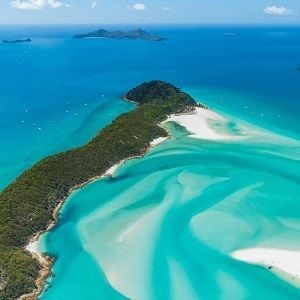
The Whitsundays tourism industry received a boost today after the Queensland Government announced it would support Alliance Airlines to run flights from Brisbane to Proserpine.
In a deal secured in partnership with the Whitsunday Regional Council, Alliance Aviation Services (ASX: AQZ) subsidiary will fly the route four times per week with an option to ramp up to daily flights if demand permits.
Alliance Aviation is 19.8 per cent owned by Qantas (ASX: QAN).
"Tourism supports one in three jobs in the Whitsundays. We know how crucial this industry is to the livelihoods of people in this region," says QLD Premier Annastacia Palaszczuk.
"We've been able to open Queensland to Queenslanders because Queenslanders did so well at dealing with the global coronavirus pandemic."
Tourism Minister Kate Jones says flights will return to the Whitsundays on 22 June for the first time since 28 March, and are expected to generate more than $9.2 million in income for the region with 5,300 tourists expected over the next 12 months.
The Minister also expects the flights will create more than 85 local jobs.
"We know that more tourists means more cash for local businesses," says Jones.
"This will pump millions of dollars into the local economy and support local jobs."
Alliance Airlines CEO Lee Schofield says the company is delighted to be partnering with Whitsunday Coast Airport to make these new flights a reality.
"We understand there are many essential services that are currently unable to access the Whitsundays and Alliance are proud to be able to be the first airline to recommence scheduled services to Whitsunday Coast Airport," says Schofield.
"With current travel restrictions easing we look forward to working with WCA to welcome many visitors to the Whitsunday region on our flights.
"Alliance Airlines are proud to be playing this important role in reawakening tourism in this beautiful part of Queensland."
Whitsunday Regional Council Mayor Andrew Willcox says he is committed to working with the government to support tourism businesses that are doing it tough.
"To attract a new airline partner as we start our recovery from the COVID-19 pandemic is a real boost for the tourism and business sectors in the Whitsundays," he says.
"With the Premier lifting restrictions on travel within Queensland it is important that our airport resume services.
"Over the last decade the tourism stakeholders in the Whitsundays have had to be a resilient mob but with a focus on domestic tourism for the next 12-18 months there is light at the end of the tunnel."
He says the airport was approaching 500,000 passengers annually prior to the pandemic, so it is vital this key gateway to the Whitsundays is up and running as quickly as possible.
Whitsunday Coast Airport chief operating officer aviation and tourism, Craig Turner, says it is important to be proactive with so many regions fighting for flights now restrictions are easing.
"These flights present the opportunity for WCA to develop a partnership with Alliance Airlines through this challenging period and beyond," he says.
"Alliance Airlines launch fares will start at $99 one-way including taxes. All fares are inclusive of 20kg free checked baggage.
"In addition to the "now", WCA and Council are committed to a long-term relationship with Alliance to boost future passenger numbers to the Whitsundays."
On Monday the Premier called on Queenslanders to travel somewhere in the state they have never been before.
"We want to strengthen Queensland's traditional industries like tourism," she said today.
"We want to see more Queenslanders having a holiday in the Whitsundays. That's what today's announcement is all about."
Alliance also has services linking Brisbane with Bundaberg, Gladstone, Cloncurry and Port Macquarie.
Never miss a news update, subscribe here. Follow us on Facebook, LinkedIn, Instagram and Twitter.Business News Australia
Cyrus and Bain make final cut for Virgin Australia shortlist
 "Cyrus and Bain make final cut for Virgin Australia shortlist")
Administrators handling the sale of paralysed airline Virgin Australia (ASX: VAH) have narrowed the shortlist down to two bidders, selecting Bain Capital and Richard Branson-linked investment advisory Cyrus Capital Partners for the process.
The decision means BGH Capital and Indigo Partners have been left on the tarmac.
Cyrus was one of the original backers of Virgin America, while the Sydney Morning Herald reports Bain has drawn concerns from the Transport Workers Union - which holds key votes in the administration process - given its track record with mass firings of workers at Toys R Us in 2017.
Last month Bain Capital completed a majority in Japanese airplane manufacturer Showa Aircraft Industry for around ¥90 billion (AUD$1.23 billion). The Australian previously reported the Boston-based group may link up with Branson if it made the final cut.
Over the weekend and the past two days, Deloitte administrators John Greig, Sal Algeri, Richard Hughes and Vaughan Strawbridge assessed five non-binding indicative proposals received on Friday. The fifth party was Canadian asset management group Brookfield.
Strawbridge says the next stage in this sale process begins today.
"Over the weekend through to today, we assessed the proposals received from shortlisted bidders and discussed their proposals with them to ensure a thorough and comprehensive assessment has been undertaken," he says.
"Both Bain Capital and Cyrus Capital Partners are well-funded, have deep aviation experience, and they see real value in the business and its future.
"We would like to thank all interested parties for the strong interest they have displayed in the business and their commitment to the process over recent weeks."
He says administrators will now spend the coming weeks facilitating in-depth bidder engagement with the stakeholders of the business, working closely with both preferred bidders in the lead-up to binding final offers being received.
"The strong interest coming from all parties has generated the competitive tension we have sought that is important in a process such as this, and we are in a strong place when it comes to delivering the best possible commercial outcome for all creditors, and to see a strong and sustainable Virgin Australia emerge from this process. It is still the intention to have a binding agreement in place by 30 June, which remains unchanged," he says.
"There will also be speculation that entities associated with the parties that have not moved into this next phase, as well as others, could become involved in some capacity with the remaining parties. That will, of course, be a matter for them."
Updated at 4:41pm AEST on 2 June 2020.
Federal Government to inject an extra $66 million into COVID-19 research
 "Federal Government to inject an extra $66 million into COVID-19 research")
Australian universities and medical research institutions will receive $66 million from the Federal Government for COVID-19 research.
The funds will be used by research teams that are looking into finding a vaccines and treatments for COVID-19, as well as being used to better prepare Australia for future pandemics.
The funding forms part of the Federal Government's Medical Research Future Fund (MRFF), extending the $30 million already pledged for the 'Coronavirus Research Response'.
It also comes on top of a previously announced $220 million upgrade of CSIRO's high containment biosecurity research facility in Geelong, the Australian Centre for Disease Preparedness.
"There is currently no vaccine or proven and effective treatments for COVID-19," says the Federal Government.
"Our Government is absolutely committed to protecting the community and this will help ensure Australians are protected from COVID-19 at the earliest possible time."
There are four target areas of research:
- Investing in a vaccine for COVID-19
- Investing in antiviral therapies for COVID-19
- Clinical trials of potential treatments for COVID-19
- Improving the health system's response to COVID-19 and future pandemics
1. Investing in a vaccine for COVID-19
The University of Queensland (UQ) will receive a further $2 million for their "molecular clamp" technology, which speeds up the process of vaccine development. This brings the total Australian Government investment in this to $5 million.
The Government has also announced a further $13.6 million grant to support COVID-19 vaccine development projects that appear promising.
Through an open competitive grant opportunity, an independent panel of experts will assess expressions of interest and invite formal applications from the most promising projects.
The grant opportunity will be open between 15 June 2020 and 15 March 2021, with expressions of interest assessed from 15 July 2020, 15 November 2020 and 15 March 2021.
2. Investing in antiviral therapies for COVID-19
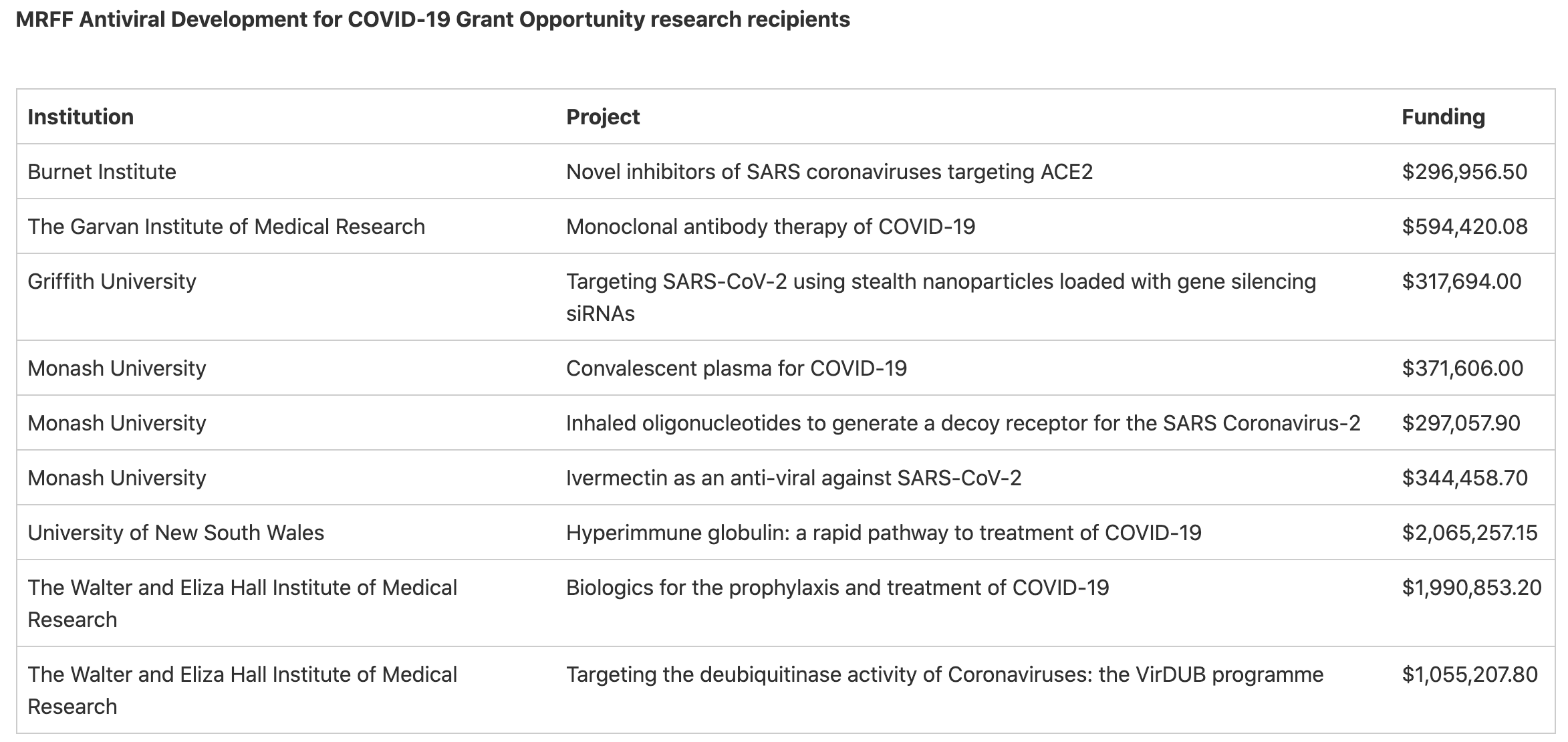
The Government is providing $7.3 million to nine research teams to support the development of promising antiviral therapies for COVID-19.
"There are currently no known antiviral therapies for COVID-19," says the Federal Government.
"Having effective antiviral therapies will be a game changer for COVID-19, providing us with confidence that the disease can be managed."
The Walter and Eliza Hall Institute will receive $1 million for the VirDUB research project, that aims to develop medicines that stop COVID-19 from hijacking human cells and disabling their anti-viral defences.
By targeting a viral system that is found in a range of coronaviruses, VirDUB may lead to new medicines that could be instantly available to tackle potential future coronavirus disease outbreaks.
In addition, $2 million is being provided to an innovative project using stem cell-derived tissues to rapidly test drugs already approved for use in humans for activity against COVID-19.
Two laboratories, the Peter Doherty Institute for Infection and Immunity and the Queensland Institute of Medical Research Berghofer, will commence early stages of this research. Other laboratories will be able to join in coming months.
3. Clinical trials of potential treatments for COVID-19
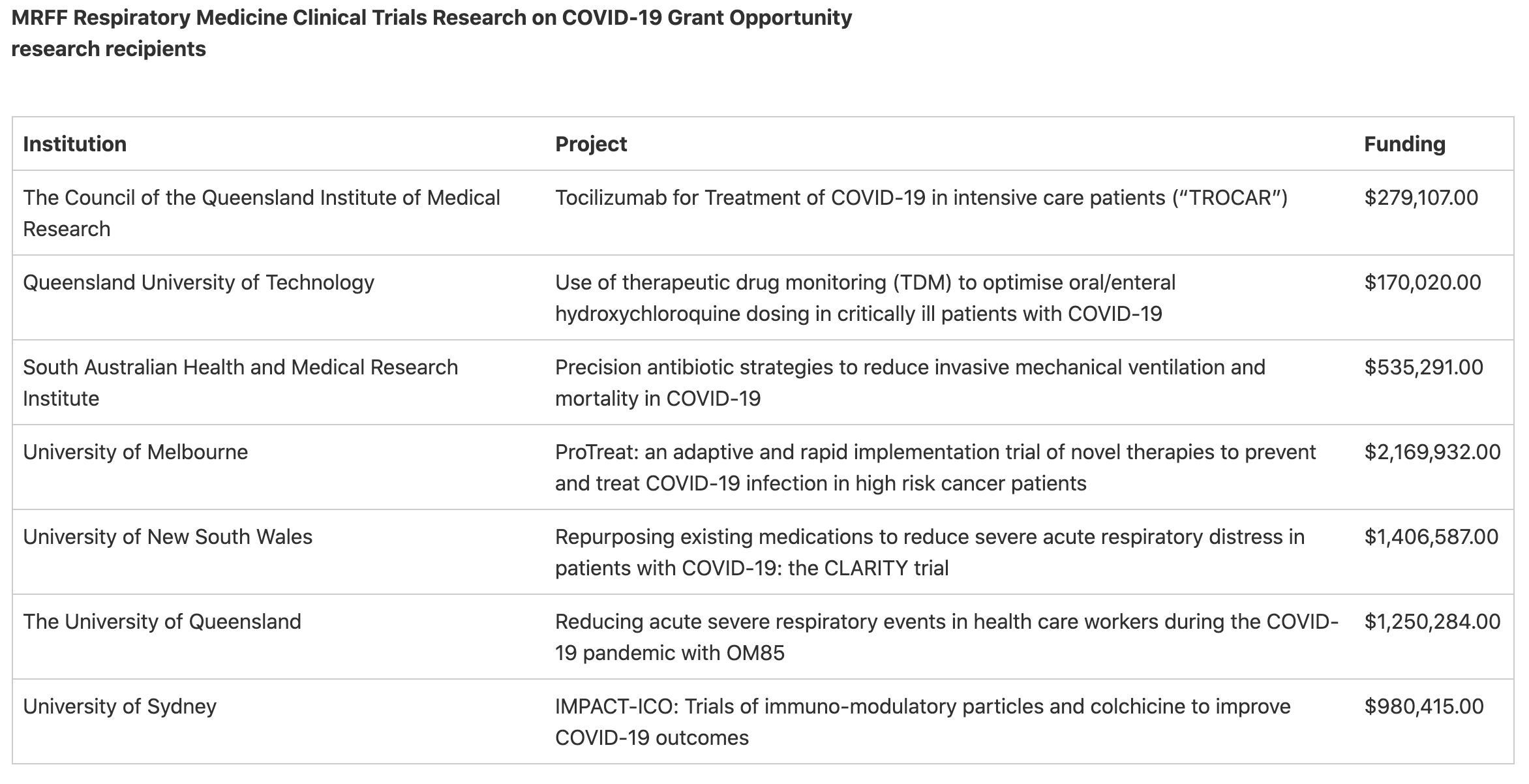
The Government is providing $6.8 million to support seven clinical trials investigating treatments for the severe respiratory symptoms of COVID-19.
The clinical trials supported by this funding will investigate treatments for critically ill patients, health care workers and vulnerable cancer patients.
4. Improving the health system's response to COVID-19 and future pandemics
The University of New South Wales will receive $3.3 million from the Government for genomics research into the behaviour, spread and evolution of the SARS-CoV-2 virus.
"The use of genomics will be critical to our response, as these tools give very robust insights into exposure and clusters, especially in low prevalence settings," says the Federal Government.
"Genomics essentially bar codes every virus so we know who is infected with the same virus as people in a cluster will have an identical bar code.
"This is critical to supporting public health responses to outbreaks as restrictions on gatherings are lifted."
The full breakdown of the funding program is as below:
Never miss a news update, subscribe here. Follow us on Facebook, LinkedIn, Instagram and Twitter.
Business News Australia
Victoria's startup sector to drive post-pandemic economic growth
 "Victoria's startup sector to drive post-pandemic economic growth")
A new report from Deloitte Access Economics has found the Victorian startup sector has the potential to play a major role in the state's post-COVID-19 economic return.
The report, commissioned by Victoria's startup agency LaunchVic, found the State's early-stage startup sector was worth $4.6 billion in 2019, representing almost 19,000 jobs.
Deloitte Access Economics' modelling of the economic impact of increased startup density shows that the industry has the potential to create, on average, an additional 15,000 jobs each year to the broader Victorian economy over the next 20 years.
According to LaunchVic CEO Kate Cornick these findings demonstrate the value Victoria's startup sector has to the State's post-COVID-19 economy
"Our latest research shows the Victorian startup ecosystem has great potential for job creation over the coming years, and we see innovation the startup ecosystem as a key pillar of economic stimulus post-COVID-19," says Cornick.
"The report shows that startups are creating thousands of high skilled jobs year on year. As the startup sector grows, it will only become more valuable to our economy from a revenue and jobs perspective."
"Some of the world's largest tech companies such as Airbnb, Slack, Instagram & LinkedIn were all once startups tiny companies conceived around the time of the last global financial crisis. In approximately ten years, they have created hundreds of thousands of jobs and trillions of dollars of value - this is evidence that startups have a huge role to play in our economic recovery and wealth and job creation."
Deloitte Access Economics found that while startups challenge existing business models, they ultimately create more high skilled jobs through their growth and business lifecycle.
Further, the impact of startups on job creation is a net increase over time as job creation spills over to existing businesses due to innovation and increased competitiveness.
Cornick says the report shows that with the right care and attention to grow the ecosystem, startups could become a very important part of Victoria's future economy.
"The risk is that we become a purchaser of global technologies developed overseas rather than a creator and lose the high-skilled jobs that come with this," says Cornick.
Read the full report here.
Never miss a news update, subscribe here. Follow us on Facebook, LinkedIn, Instagram and Twitter.
Business News Australia
Advertisement
Latest News
From $13,000 to $20 million: how a PCOS diagnosis and a pair of scissors built Xali Organics
Inspired by a medical diagnosis and driven by innovative marketing,...
Cedar Woods secures $63.4m in new land acquisitions as record presales underpin pipeline push
Perth-headquartered residential developer Cedar Woods Properties (A...
Australia's long-term beer decline hits home as Lion plans to close Boag's brewery in Launceston
Australia's decades-long decline in beer consumption has claime...
Downer EDI seals $310m Transurban contract to maintain Sydney motorway network
Infrastructure services group Downer EDI (ASX: DOW) has secured con...
Propel Funeral Partners expands New Zealand footprint with trio of acquisitions worth $9.1m
Sydney-based death care provider Propel Funeral Partners (ASX: PFP)...
Advertisement