Advertisement
Staying informed is more important than ever as the situation unfolds with Covid-19. Stay tuned here for our live updates, and be sure to let us know what your business is doing to face this unprecedented challenge.
Covid-19 News Updates
Job sharing portal BenchOn sees spike in SME sign-ups
 "Job sharing portal BenchOn sees spike in SME sign-ups")
With Australian talent sharing platform BenchOn reporting a 275 per cent increase in remote work opportunities, founder and CEO Tim Walmsley believes portals that reallocate jobs will help the economy bounce back faster, especially in regional areas.
After making its name supporting large corporates and government agencies, this month BenchOn's proprietary technology went live in a national first for the Toowoomba Regional Council in Queensland.
Through an initiative supported by Toowoomba and Surat Basin Enterprise, the platform allows businesses to temporarily 'loan' their excess staff to companies experiencing a temporary increase in demand.
Walmsley hopes the development will be replicated elsewhere, and says he has proposed the model to the Federal Government in a bid to "save as many jobs as possible".
"If we strengthen businesses and provide them more opportunity to keep their people, then it creates a more resilient economy that will bounce back much faster, rather than just moving people wherever the demand is and not having any continuity of employment," he tells Business News Australia.
"Through COVID-19 companies are starting to realise that they can get a lot of work done just through video conferencing and trusting people."
The entrepreneur has observed a large increase in talent sharing for professional services and consultants.
"Companies that are having this unprecedented demand are starting to realise they need these higher-level skill sets to support their work, and they're putting out more contracts to do it," says Walmsley.
"The industries are still nowhere near where they were in terms of demands pre-COVID, but they're starting now to put their feelers out.
"We firmly believe that we should be allocating as much of this work now to small businesses across Australia so that we can keep them going, so that we don't eradicate our entire small business base and are left with a very hollow industry at the end of it."
He notes workers from hospitality and tourism in particular are moving into other industries to improve their stability, and he fears this may make the recovery "that much harder on the other side" for sectors of the economy that have already been badly hit.
"That's why we've got our model which allows the company not only to reallocate that person to a task, potentially in another industry or with another business using a skill they might not have been employed for, but it maintains their employee relationship," he explains.
"The portals are definitely our key driver for growth, because those portals are gateways for large companies to allocate their workload directly to SMEs."
"We've seen massive spikes in signups, particularly in the SME space. We've had days here we've had 50 companies a day signing up."
Can remote work job sharing to boost regional economies?
Walmsley is excited about the new portal in Toowoomba as local companies will be able to sign up and share talent locally first, but the platform will also tap employers in the area into national networks.
"It brings in more work from companies all across the country by linking them through the BenchOn national network," he says.
"We can not only stabilise regional jobs, but we can also bring more work in from the cities in order to grow regional jobs, which is something really important that we're very passionate about."
He says the platform will enable accurate reporting on how many regional jobs can be saved by secondment or sub-contracting.
"My question is how many skilled people are sitting in our regions, and the only reason that they're not being productive in our economy is because they haven't been given the opportunity?
"I think we're now going to see more of a focus on how do we allocate work in a more fair and efficient manner across the whole industry, rather than just allocating it to the larger companies that they've always just gone to."
TSBE CEO Ali Davenport says the economy is facing unprecedented stress due to the COVID-19 pandemic, and in this time of disruption there has never been a greater need for collaboration by sharing staff to manage the unpredictable troughs and spikes in demand.
"BenchOn has the ability to allocate business opportunities swiftly from businesses who are temporarily experiencing increased demand, to businesses who are experiencing a downturn or who have the capacity to support," she said.
"This platform will also benefit local recruitment firms and labour agencies by allowing them to make their talent available for suitable contract roles.
"It will essentially notify them when an opportunity is available that suits their business specialisation, which they can then choose to respond to."
Other partnerships highlighted by Walmsley include a jobs sharing portal with Anywise Consulting to support SME jobs in the defence and professional services sector, as well as for South Korea's Hanwha Defense.
"They [Hanwha] have just entered the Australian market and they're bidding on around $17 billion worth of work over the next five years," he says.
"It's their policy that they want all of their work to go to Australian businesses, so they've created an industry portal with BenchOn so that they can allocate all of the work that they win to Australian companies that have signed up to their portal."
Growth through shifting the business model
BenchOn has only been in existence for just over 3.5 years, and when Business News Australia profiled Walmsley in October 2017 the company had hosted more than $20 million worth of contracts.
Now the group is supporting thousands of businesses and processing more than $100 million worth of contracts.
"In the early days when we built the platform the idea was to create a national network of companies to manage supply and demand. We had a whole bunch of small to medium businesses sign up to try and make that work," said Walmsley.
"But what we realised was that even though every business has peaks and troughs in their workload, if you look at it generally the large enterprises and corporates are where all the demand is at because they have the ability to go and win large programs of work.
"Small to medium businesses are where all the oversupply is because they don't have that ability to go out and win work whenever they need it."
He says this led to a mismatch, so in 2018 BenchOn pivoted towards enterprise software, working with pilot companies including big four banks and big four consulting companies to better understand their sourcing and pain points.
"We built a number of products that suit large companies to manage sourcing support from large pools of companies, and we launched those at the beginning of 2019 - they included internal employee matching," says Walmsley.
"For large companies that have thousands of staff and multiple divisions, we would hear stories about one division was laying off 25 project managers because a program ended, but then another division would be recruiting for 15 project managers.
"They were paying hundreds of thousands of dollars in recruitment fees when they actually had those people there and they were actually firing those people at the same time."
This didn't make any sense in Walmsley's view, so his team created a system whereby if a job is needed within a company, existing employees will be prioritised in order to maximise productivity and job stability while ascertaining where true talent shortages lie before looking externally.
"Once they've done that and looked at their own internal staff, we've then provided another product called supplier panel management," he says.
"Large companies normally have supplier panels of companies maybe 10, 20 or 30 companies - that they normally go to when they need support.
"But those large companies, no matter how much technology and everything they had, they were still managing those supply panels manually with emails and phone calls and Excel spreadsheets. It was just very inefficient."
The solution was to bring in those suppliers on a BenchOn profile, allocate them to a specific supplier panel, and then manage that panel digitally within the one system.
"What we found there was that sped up sourcing time from six to eight weeks, which is what our pilot customers were telling us it takes to fill a position and it dropped it right down to one day," says Walmsley.
This relatively instant matching was well received by companies and government organisations alike, and was the impetus for the kind of branded portals that are now on offer with the Toowoomba Regional Council and Anywise Consulting.
The entrepreneur aims for these platforms to play a key role in the next steps for the economy, which he sees as opening up again slowly.
"But it'll be a longer slower recovery than a lot of people think. Just because they lift the restrictions doesn't mean everything's going to go back to normal," he says.
"Companies are now already looking at new ways of working and how they can be more flexible and agile. We will see a greater proportion of work that's being allocated remotely."
Never miss a news update, subscribe here. Follow us on Facebook, LinkedIn, Instagram and Twitter.Business News Australia
NSW approves $160m facelift for St Leonards
 "NSW approves $160m facelift for St Leonards")
The NSW Government has given the nod to rezoning proposals from the North Sydney Council that will bring a range of residential and commercial developments to the suburb of St Leonards.
The approval forms part of a fast-tracked assessment program from the state government to keep people in jobs and the economy moving through the COVID-19 pandemic.
Proposals include 500 new homes to be built, along with new retail outlets, cafés, restaurants, and new and upgraded public parks.
The rezoning approvals include:
- 575-583 Pacific Highway: the site has been rezoned to allow for an 18-storey residential tower that will retain the local heritage of the existing building façade. The proposal will create 63 jobs and inject $31.4 million in to the economy;
- 100 Christie Street: the rezoning will provide an upgrade to Christie Street Reserve and allow a 36-storey residential and commercial tower to be built, replacing the existing office building. It will create 164 jobs and inject $82.2 million in to the economy; and
- 23-35 Atchison Street: the site can now accommodate a 16-storey building, provided a new park is created along Oxley Street and Hume Street Park is upgraded. It will create 92 jobs and inject $46 million in to the local economy.
"St Leonards already boasts a thriving commercial sector and these approvals will pave the way for more people to live close to where they work in a vibrant community hub," says NSW Planning and Public Spaces Minister Rob Stokes.
"In the past two weeks alone, the Planning System Acceleration Program has injected more than $2.4 billion into the state's economy and created opportunities for more than 17,500 jobs.
"The NSW Government has all hands-on deck to ensure ongoing investment in our state and to help provide as many jobs as possible."
To be considered for an accelerated assessment, the development application (DA) or rezoning must already be progressed within the planning system, deliver a public benefit, demonstrate an ability to create jobs, and be able to commence construction or lodge a DA within six months.
Updated at 12:04pm AEST on 19 May 2020.
Qantas, Jetstar embark on "Fly Well" Covid-safe protocols ahead of relaxed restrictions
 "Qantas, Jetstar embark on \"Fly Well\" Covid-safe protocols ahead of relaxed restrictions")
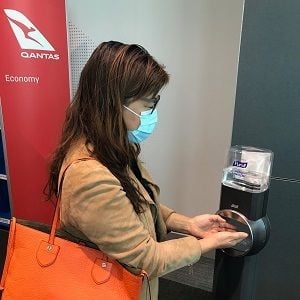
Optional complimentary masks and sanitising wipes are among the new frills passengers can expect from a COVID-safe program to be rolled out by Qantas (ASX: QAN) and its subsidiary Jetstar as they clear the runway for an easing of domestic travel restrictions.
Dubbed the "Fly Well" program and based on the Qantas' Group's temporary measures for repatriation flights from virus hot-spots, the range of measures will be rolled out from 12 June.
The program has been designed to give passengers peace-of-mind with contributions from best-practice medical advice and customer feedback.
"Safety is absolutely core to how we operate and that applies to new challenges like managing the risk of coronavirus so people can fly with confidence," says Qantas Group CEO Alan Joyce.
"From the early rescue flights we operated right into Wuhan and then more recently bringing Australians back from places like the US and Europe, we have a lot of experience at creating a safe cabin environment for passengers and crew.
"We're relying on the cooperation of passengers to help make these changes work for everyone's benefit, and we thank them in advance for that. Given the great job Australians have done at flattening the curve, we're confident they'll respond positively to these temporary changes to how we fly."
He says the company will continue to work with the government and monitor the roll-out of these measures closely, while the group's medical director Dr Ian Hosegood claims the data shows the actual risk of catching coronavirus on an aircraft is already extremely low.
"That's due to a combination of factors, including the cabin air filtration system, the fact people don't sit face-to-face and the high backs of aircraft seats acting as a physical barrier," Dr Hosegood says.
"As far as the virus goes, an aircraft cabin is a very different environment to other forms of public transport.
"Social distancing on an aircraft isn't practical the way it is on the ground, and given the low transmission risk on board, we don't believe it's necessary in order to be safe. The extra measures we're putting place will reduce the risk even further."
The air conditioning systems of all Qantas and Jetstar aircraft are already fitted with hospital-grade HEPA filters, which the group says remove 99.9 per cent of all particles including viruses. Air inside the cabin is refreshed on average every five minutes during flight.
Key measures of Fly Well include:
Pre-flight
- Information sent to all customers before they fly, so they know what to expect;
- Contactless check-in (via online/app) and self-serve bag drop strongly encouraged, including use of Q Bag Tags;
- Hand sanitising stations at departure gates;
- Temporary changes to Qantas Lounges, including increased physical distancing, hand sanitising stations, enhanced disinfection of surfaces and adjustments to food and drink service; and
- Working with airports on other safeguards in the terminal, including regular disinfection of security screening points and installing hygiene screens at airline customer service desks, wherever practical.
On board
- Masks provided to all passengers on each flight while not mandatory from a safety point of view, they are recommended to be worn in the interests of everyone's peace-of-mind;
- Enhanced cleaning of aircraft with a disinfectant effective against Coronaviruses, with a focus on high contact areas seats, seatbelts, overhead lockers, air vents and toilets;
- Sanitising wipes given to all passengers to wipe down seat belts, trays and armrests themselves, if preferred;
- Simplified service and catering to minimise touchpoints for crew and passengers;
- Passengers asked to limit movement around cabin, once seated; and
- Sequenced boarding and disembarkation to minimise crowding.
Updated at 11:37am AEST on 19 May 2020.
Queensland Government launches $100 million small business grant program
 "Queensland Government launches $100 million small business grant program")
Small businesses in Queensland can now apply for grants worth up to $10,000 to help soften the blow from COVID-19.
The $100 million program comes as Queensland announces a raft of stimulus initiatives that will go toward community developments, the tourism industry, community legal services and roadworks.
This new grant follows the lead of New South Wales and Victoria, which announced similar $10,000 schemes in April and May respectively.
Queensland's grants have been developed to assist those small businesses forced into hibernation to restructure or to significantly change their operations, including assistance with moving online.
"Small businesses represent 97 per cent of all businesses and employ over 970,000 people or 45 per cent of the State's private sector workforce," says Queensland Premier Annastacia Palaszczuk.
"We know small businesses have been doing it really tough due to the pandemic.
"With the first stage of our recovery roadmap in place, we want to make sure our thousands of small businesses have the support they need to recover and keep Queenslanders in jobs."
Queensland Minister for Employment and Small Business Shannon Fentiman says the new grants can be used to help pay for financial, legal or other professional advice, marketing and communications activities and digital or technology strategy development.
The grants can also be used to buy specialised digital equipment or business-specific software to move businesses online.
"Many events, workplaces, classes and sales have moved online and small businesses need to make sure they have the tools and resources to be competitive in these challenging times," says Fentiman.
"We also realise that businesses may not currently have the financial resources to co-fund, so we won't require matched funding which will better support our local businesses."
The Chamber of Commerce and Industry Queensland (CCIQ) has welcomed the grant scheme, saying it will provide some much-needed immediate cash support to Queensland's small businesses.
"We have been calling on the Government to provide grants and are very pleased to see their support given to businesses through these funds," CQIC general manager of advocacy and policy Amanda Rohan said.
"There is no denying how hard it is for business at the moment, and these cash grants will be a provide an opportunity for them to invest and look at ways to keep operating.
"Our small business sector is vital to Queensland's economy."
For information on how to apply and eligibility, visit www.business.qld.gov.au.
Queensland economic recovery plan revealed
The new small business grants form the Queensland Government's economic recovery strategy called Unite and Recover for Queensland Jobs.
In addition to the $100 million small business grants, the Queensland Government will deliver assistance to a range of industries including:
- $50 million for the tourism industry
- $200 million for local community projects (including new, upgraded or refurbished public amenities)
- $119 million for community legal services
- $400 million for roadwork projects
- $50 million for essential medical supplies manufacturing
"The way we have united in the face of an immense and unprecedented challenge has been extraordinary, and all Queenslanders have done a mighty job in beating what just 11 weeks ago were daunting odds," the Premier said.
"The patient has been stabilised, so now it's time to start down the road to recovery and recuperation.
"The package of measures I am announcing today focuses on building the infrastructure we need for the future and accelerating construction projects to protect jobs now."
Updated at 11:37am AEST on 19 May 2020.
Queensland border could be closed until September
 "Queensland border could be closed until September")
As COVID-19 restrictions begin to ease nationally many Australians are wondering when they might be able to book a holiday interstate.
If you ask the Prime Minister it seems he is looking for interstate travel to be back on the cards by July, according to the Federal Government's national framework.
But Queensland Premier Annastacia Palaszczuk (pictured) is a bit more reluctant to move that fast, suggesting her state's border may not reopen until September.
Speaking to ABC News Breakfast this morning, Palaszczuk said Queensland is taking a cautious approach when it comes to its borders.
"Look, I have to get the advice of the chief health officer," Palaszczuk said.
"I would say that things would look more positive towards September. Having said that, I don't want to rule anything out. I will give you that advice at the end of May as quickly as possible."
Palaszczuk's stance comes days after NSW Premier Gladys Berejiklian encouraged states to reopen borders.
"I'd probably feel offended if they told me how to do my job," Berejiklian said.
"But I often joke with the Queensland Premier that I'll end up going to Auckland before I go to Brisbane if we continue the way we are going."
Updated at 10:49am AEST on 18 May 2020.
Victoria announces $2.7 billion construction program
 "Victoria announces $2.7 billion construction program")
Victoria will embark on a large-scale construction program worth $2.7 billion to enable businesses and workers to bounce back from the COVID-19 economic crisis.
The investment will fund hundreds of projects across several sectors and result in thousands of jobs for Victorians, according to Premier Daniel Andrews.
None of these projects are anticipated to be major projects, but rather ones that can get off the ground in the next three to six months.
These include maintenance and upgrades of public housing, road maintenance, train stations and education facilities.
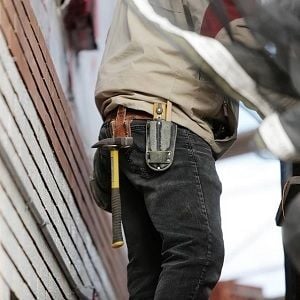
"It's very, very important that we underpin demand that we give to tradies and so many other across the economy that sense of absolute certainty and confidence that this work is here, and it is here right now," Andrews said.
"There's never been a better time for us to invest in these jobs."
The State's Working for Victoria program will be a key element of this investment and will attempt to connect those who have recently lost work with the small construction firms that require labourers to undertake these projects.
"This is about jobs and building infrastructure that we need: small projects, projects that can be delivered quickly that are not going to sit around being designed and planned for years," says Andrews.
"We're ready to go with this and it'll be great."
Of the $2.7 billion investment, $1.18 billion will be specifically targeted at education projects.
This will result in 1,600 new jobs and the creation of 21,000 student places at schools around the State.
The education arm of the investment will result in the biggest school building project Victoria has undertaken.
Ultimately, 10 new schools will be constructed in addition to 57 school upgrades and 250 relocatable buildings.
The announcement comes as Victoria reports 1,567 cases of COVID-19, including six new cases.
Two of those new cases are from the McDonald's cluster, while three are currently in hotel isolation.
As of this morning there are two new cases in Queensland and one in New South Wales bringing the total number of new cases nationally to 11.
There are 7,054 cases of COVID-19 in Australia, 99 total deaths and 6,395 recoveries.
Updated at 10:14am AEST on 18 May 2020.
McDonald's shuts 12 stores after truck driver tests positive
 "McDonald's shuts 12 stores after truck driver tests positive")
McDonald's Australia has temporarily shut 12 stores in Victoria after a delivery truck driver tested positive to COVID-19.
The Department of Health has identified the truck driver as a workplace close contact of the previously announced case at a McDonald's in Craigieburn.
The Age reports the Craigieburn employee was an extended family member of a worker at the McDonald's in Fawkner, where a cluster has extended to 12 reported cases.
"The truck driver made deliveries to 12 restaurants and interacted with a small number of restaurant employees on each occasion while asymptomatic and unaware they had contracted COVID-19," says a McDonald's spokesperson.
"Potential close contacts and employees who have worked specific shifts during and after the truck drivers' [sic] delivery have been instructed not to return to work for 14 days and advised to be tested."
McDonald's Australia has confirmed no other employees have tested positive for COVID-19 at this time.
"However, out of an abundance of caution, we have made the decision to close and conduct a deep clean of 12 restaurants in Victoria, following confirmation a truck driver for an external service provider has tested positive for COVID-19.
"McDonald's Australia has taken this significant action in the best interests of the health and safety of our employees and our customers.
"We will open each of the restaurants following completion of the deep clean and pending the availability of replacement crew."
The restaurant chain advises the following restaurants have been closed:
1. Melton East
2. Laverton North
3. Yallambie
4. Taylors Lakes
5. Campbellfield
6. Sunbury
7. Hoppers Crossing
8. Riverdale Village
9. Sandown
10. Calder Highway Northbound/Outbound
11. Calder Highway Southbound/Inbound
12. BP Rockbank Service Centre Outbound
With regards to the other main cluster in the state, Victorian health authorities yesterday reported 99 cases related to the Cedar Meats outbreak.
The department is also working with Domino's in Fairfield and The Comfort Group in Deer Park, where an infectious case has attended, or a case may have acquired coronavirus.
Updated at 10:12am AEST on 18 May 2020.
Victoria's cafes, restaurants and pubs to reopen with 20-customer limit from 1 June
 "Victoria's cafes, restaurants and pubs to reopen with 20-customer limit from 1 June")
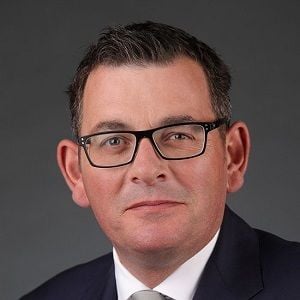
Six days ago when Australians in many states and territories were frothing to soon go back to the pub, have dinner out of home or celebrate being allowed to sit down with a morning coffee, Victorian Premier Daniel Andrews (pictured) had a more sobering message.
He explained the feedback from hospitality venues had been overwhelming - 10 patrons at a time, which is the benchmark for Step 1 of reopening guidelines, just doesn't work.
"If we wait those three weeks when we move to go beyond just takeaway for cafés and restaurants, we might not have to stick with a number of 10. We might be able to go higher than that," Premier Andrews said at the time.
Today, even as the state tries to keep two COVID-19 clusters under control with 89 new cases recorded over the past seven days, the Premier has delivered on his word.
"After smashing through our goal of 50,000 tests in the last week, the results of this data has given us the confidence we need to plan to slowly start lifting some more restrictions," he said in a statement this morning.
"Today, and informed by the advice of the Chief Health Officer, I can announce our cautious and careful next steps.
"The continuing low numbers of community transmission and the high rates of testing give us confidence that cafes, restaurants, pubs and other hospitality businesses can begin planning for a phased re-opening from the beginning of June."
From 1 June cafés, restaurants and pubs will be able to reopen their doors to serve meals to up to 20 customers at a time per enclosed space.
Andrews said from 22 June it is possible the number could increase to up to 50 patrons, and even up to 100 during the second half of July.
"The timelines we're announcing today are reliant on Victorians continuing to get tested when they show even mild symptoms and on those tests continuing to show low numbers of positive cases around the state," he said.
"Before each of these dates, the Chief Health Officer will review the rates of community transmission in Victoria, confirm our ability to test, trace and respond to possible outbreaks and make sure we have an adequate safety net in the health system before we take the steps outlined.
"This industry has told us they need time to plan and prepare to protect the safety of their staff and customers. Making these announcements now will be giving them that time."
Only one person per four square metres will be allowed and tables will need to be spaced at least 1.5 metres apart.
Venues will also be required to take the contact details of every customer to assist in rapid contact tracing.
"And there'll be other safety requirements too, including extra cleaning, staff health screening and temperature checks," Andrews said.
"Once in place, these changes will apply to standalone restaurants and cafes, as well as restaurants and bistros within a pub, hotel, bar, registered and licensed club, RSL or community club.
"Restrictions on other spaces within these kinds of venues - including public bars and gaming areas - will remain in place throughout June, as will restrictions on food courts."
He described hospitality as one of the pillars of the Victorian economy and has been one of the hardest hit by this pandemic.
"Reopening the venues we all love is a critical piece of the puzzle in saving jobs and restoring our local communities," he said.
"If, in the coming weeks, we see a sudden upswing in community exposures from an unknown source - we may have to make the call to delay.
"Similarly, if an initial opening led to a whole series of uncontrolled crowds or breaches - we'd look at that pretty seriously too."
Updated at 11:13am AEST on 17 May 2020.
"Good on you for reopening," PM tells Australian businesses
 "\"Good on you for reopening,\" PM tells Australian businesses")
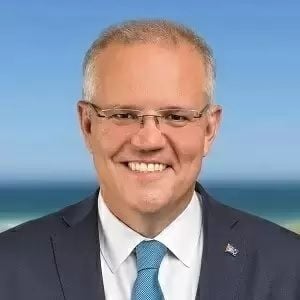
With $220 billion in loans now deferred, banks reportedly going easy on debt covenants and insolvencies well below average, Prime Minister Scott Morrison has offered words of encouragement to the business community today.
As restrictions start to be eased between now and Monday for the majority of the population, the PM acknowledges limits of up to 10 people at a time in hospitality venues "won't necessarily be a profitable patronage" for many businesses.
But in reopening, these cafés and restaurants are "backing their staff".
"They're backing their communities and they're backing their country, and I want to commend them for that brave step that they're taking this weekend," he told a press conference today after the National Cabinet meeting, noting it has now been two months since its first meeting to address the crisis.
"Good on you for reopening, and I'm sure your patrons will come in and support you strongly as well."
He emphasises the banking sector has held up well, and the oversubscribed take-up of bonds show that markets are treating Australia as a country to be relied upon - "a good bet".
"It's essential that as we move forward that we continue to enable the credit to flow through our banking system to support those businesses who are taking decisions to reopen, to rehire, and to move ahead," he says.
"Some $220 billion in loan deferrals have already been put in place in our banking system - about two-thirds of that in mortgages and one-third for small and medium sized enterprises.
"The banks have also not been enforcing, broadly speaking, covenants, and they've been holding off on revaluations and not pursuing recovery actions other than for pre-existing cases."
He notes insolvencies are currently running below average, and that's been backed by significant protections put in place early on in the crisis in relation to preventing creditors from forcing companies into liquidation.
"In addition, the super (superannuation) system - we are advised - is responding very well with some $11.7 billion in claims. It was noted that this was consistent with the Treasury estimate, and this was not presenting liquidity issues, the head of APRA (Australian Prudential Regulation Authority) has advised us," he says.
"Industry estimates of what the claims would be have not been realised."
Could net import gap favour domestic tourism?
While the tourism industry has been one of the hardest hit by the COVID-19 pandemic and related lockdowns. Morrison has pointed out a potential silver lining.
"As the borders fall internally and Australians can hopefully soon return to domestic holidays and to move around the country more widely - and particularly with school holidays coming up again in July - we were reminded that the net tourism imports to Australia is [sic] just over $20 billion a year," he says.
"That means that after you take account of international tourists coming here and Australians going overseas, that there is a net import factor of just over $20 billion.
"Now that's up for grabs for Australian domestic tourism operators - Australians who might otherwise go elsewhere, that is a very large market and that will be targeted."
The Federal Government has been working with state and territory agencies responsible for tourism, and Tourism Australia is set to launch its 'Live from AUS' domestic campaign this evening.
On the topic of travellers, Chief Medical Officer Brendan Murphy says "you can't test your way out of quarantine", noting there had been misinformation circulating that a negative test meant people could avoid these measures.
"We also had a discussion about quarantine periods for returning travellers. I want to make it very clear that there is no no amount of PCR testing or swab testing that can that can obviate the need for quarantine," he says.
"If you are a return traveler from a risk area and a quarantine requirement is in place, having a test done - a swab and a PCR done - just means whether you are positive on that day; it doesn't mean that you're not incubating the virus and it doesn't mean you can get out of quarantine earlier."
With the total number of COVID-19 cases now at 7,017, there are only 50 COVID-19-related patients in hospitals now of whom only 12 people are on ventilators.
"Hospital capacity is around 50 to 60 per cent. We are starting see some increase with the elective surgery relaxations announced a few weeks ago, but there is now pretty good room for further expansion and clearly in those states that are having essentially no cases they want to go fairly quickly back to full elective activity," he says.
"Those states that still have some transmission are probably going to take it a bit more gently, but everybody is now heading towards full elective surgery, which is a really important thing."
An extra $48 million pledged to fill gaps in mental health services
The Federal Government will invest an extra $48 million into mental health services to combat the psychological damage wrought by the COVID-19 pandemic on Australians.
According to Federal Health Minister Greg Hunt the extra funding will seek to plug holes identified by the Government in Australia's mental health system.
The funding will cover three areas:
- $7.3 million will go toward research and data so the Government can identify problems in real time.
- $29.5 million will go toward outreach programs for vulnerable communities like non-English speaking communities, Indigenous Australians and those with pre-existing mental health conditions.
- $11.3 million will form a broader communication campaign, of which $10.4 million will form a national campaign that will tell Australians "It is okay to not be okay".
The program comes as over 957,000 mental health services have been delivered in the last four weeks, bringing the rate back up to pre-COVID-19 levels, with half of these consultations being conducted via telehealth.
Despite the good work done so far, National Mental Health Commission CEO Christine Morgan says the Government can do more.
"We understand the social context in which we exist, and we're also seeing another really encouraging thing, and that is moving into delivering mental health care in community. But there are gaps," says Morgan.
"And the gaps are what we seek to address with this plan. The first gapis data. We absolutely must come together as a country and see what we can actually do to improve that data collection, so that we know not only what is happening, but we can better understand what to expect, and we can better move to services where they are needed. That is critical.
"The second is we have had people disconnect from services. You've heard me say that before. And we have had people really challenged with accessing services. So, the plan says, 'We must reach into community'. That means we need to be where people can access services."
The funds for the program are being invested by both the Federal and state governments. Victoria has already pledged to contribute $19.5 million and other states are also expected to contribute.
The extra $48 million is on top of the $4.2 billion investment already made by the Federal Government made more broadly into the health sector.
Updated at 2:08pm AEST on 15 May 2020.
COVID-19 to hit Victorian GSP by 14 per cent in June quarter
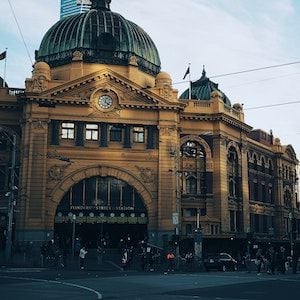 "COVID-19 to hit Victorian GSP by 14 per cent in June quarter")
According to Victorian Treasurer Tim Pallas the state was on track to record its sixth-straight budget surplus this financial year.
But the one-two punch of the bushfires followed by the COVID-19 economic crisis has left the State looking worse for wear.
Pallas says while the bushfires were devastating both economically and socially, the impact of COVID-19 costs is far worse than what the State spent on post-bushfire recovery.
The anticipated cost for the bushfires was expected to be 0.1 per cent of the State's annual Gross State Product (GSP), equating to around $500 million.
In comparison COVID-19 is anticipated to hit GSP for the June Quarter by 14 per cent, relative to previous forecasts.
"Let's be clear that we're operating with anything but normal circumstances," says Pallas.
"I want to be very clear that this is not the time for any government to be chasing surpluses. This is a time for governments to prioritise the welfare, the wellbeing of the community, the workforce and business. And that's exactly what we will be doing."
Today's economic update for the March quarter saw the Treasurer announce that Victoria was on track to recording a surplus of $618 million in FY20, but the unprecedented effect of both the bushfires and COVID-19 means the state's economic forecast now looks very different.
The March financial report shows a deficit for the year to March of $773 million, and that is before the full effects of the coronavirus really make a mark.
If not for these events Pallas says total expenditure for the financial year would have aligned with the Government's strategy of constrained expenditure growth, forecast at 3.1 per cent.
Yesterday's Australian Bureau of Statistics announcement regarding the national employment figures showed Victoria recorded 6 per cent unemployment in April, with 127,000 more Victorians out of work.
"But of course, hidden in that figure of 6 per cent is the fact that we're seeing worsening of participation in the labour market," says Pallas.
"So all of that means that there is not only a rise in unemployment but there is also a profound impact hidden within the community because people cannot get the hours and are giving up on looking for work in the labour market."
Since the COVID-19 pandemic started to hit Australia Victoria has invested more than $5 billion toward health services, students, businesses, tenants and landlords.
The Treasurer says more than 50,000 businesses and up to 1 million workers have benefitted from its support measures.
The State will also defer scheduled capital payments and dividends from the Transport Accident Commission, Worksafe, and the Victorian Managed Insurance Agency because of the uncertainty of the financial environment.
"Right now we're focussed on giving Victorian families, businesses and communities the support they need to get through to the other side of this crisis," says Pallas.
Updated at 10:33am AEST on 15 May 2020.
Advertisement
Latest News
From $13,000 to $20 million: how a PCOS diagnosis and a pair of scissors built Xali Organics
Inspired by a medical diagnosis and driven by innovative marketing,...
Cedar Woods secures $63.4m in new land acquisitions as record presales underpin pipeline push
Perth-headquartered residential developer Cedar Woods Properties (A...
Australia's long-term beer decline hits home as Lion plans to close Boag's brewery in Launceston
Australia's decades-long decline in beer consumption has claime...
Downer EDI seals $310m Transurban contract to maintain Sydney motorway network
Infrastructure services group Downer EDI (ASX: DOW) has secured con...
Propel Funeral Partners expands New Zealand footprint with trio of acquisitions worth $9.1m
Sydney-based death care provider Propel Funeral Partners (ASX: PFP)...
Advertisement