Advertisement
Staying informed is more important than ever as the situation unfolds with Covid-19. Stay tuned here for our live updates, and be sure to let us know what your business is doing to face this unprecedented challenge.
Covid-19 News Updates
Mesoblast emboldened by lung disease treatment results
 "Mesoblast emboldened by lung disease treatment results")
Melbourne-based regenerative medicine company Mesoblast (ASX: MSB) has released positive results for the treatment of chronic lung disease, reinforcing management's hopes around a separate trial with severe COVID-19 patients.
A Phase 2 trial in the US involved intravenous doses of stem cell product remestemcel-L, randomised with placebos, in 60 patients suffering from chronic obstructive pulmonary disease (COPD).
Significant health improvements were seen for patients with elevated levels of the inflammatory biomarker C-reactive protein (CRP) - a factor that tends to indicate a higher chance of hospitalisation or death.
High CRP rates are also seen in acute respiratory distress syndrome (ARDS), the most common life-threatening complication from COVID-19.
The peer reviewed results were released in a virtual presentation to the 2020 International Society for Cell & Gene Therapy (ISCT) annual meeting held May 28-29, 2020.
Key findings were:
- The greater the degree of inflammation, as measured by elevated CRP levels, the greater the signal of efficacy of remestemcel-L treatment in improving moderate to severe lung disease;
- Significant improvements were observed in each of the pre-specified endpoints tested, forced expiratory volume, forced vital capacity, and the distance walked in the six-minute walk test (all p <0.01), with maximal effects on all parameters seen at four months;
- In patients with the highest level of CRP (>4mg/L), those who received remestemcel-L were able to walk 55 meters further than placebo-treated patients in the six-minute walk test at four months (p=0.004). The six-minute walk test is a major independent predictor of mortality in COPD; and
- The dose administered was well tolerated with no infusion-related toxicity and no identified safety concerns.
Mesoblast chief medical officer Dr Fred Grossman says the correlation between the highest CRP levels and the greatest degree of response to remestemcel-L suggest the product's immunomodulatory effects may be triggered by inflammation.
"Since recurrent hospitalisation rates and mortality in COPD are associated with both high levels of CRP and progressive decline in the sixminute walk test, these results suggest that remestemcel-L could provide longer-term benefits for COPD patients with high levels of inflammation," says Grossman.
"They also provide a compelling rationale for the evaluation of remestemcel-L in the current United States Phase 3 randomized controlled trial of 300 patients with moderate to severe COVID-19 ARDS."
Updated at 11:38am AEST on 1 June 2020.
QLD, SA, NSW and VIC ease COVID-19 restrictions further today
 "QLD, SA, NSW and VIC ease COVID-19 restrictions further today")
Queensland has brought forward the easing of COVID-19 restrictions to today as citizens in NSW, VIC and SA also wake up to some more freedoms.
Over the weekend, the Queensland Government announced it would be bringing forward some of its easing plans by two weeks.
From midday today Queenslanders will be able to undertake unlimited travel, including overnight stays throughout the entire state.
Pubs, restaurants and cafes will also be permitted to increase the total number of patrons from 10 to 20, and from Friday this week those venues will be able to have up to 20 people per room as long as they are seated for meals or drinks.
The same gathering restrictions for venues will also apply to gyms, health clubs, parks, museums, art galleries, places of worship and public facilities like libraries.
For community sporting events where clubs have more than one field there will be a limit of 20 spectators per field.
Premier Annastacia Palaszczuk says the state's response to the pandemic has allowed travel restrictions to be lifted ahead of the next school holidays.
"The only reason we are able to move forward with our planned Stage Two ahead of the original June 12 date is because Queenslanders have listened to the advice, acted on that advice and done an outstanding job of helping to smash the Covid-19 curve," Premier Palaszczuk said.
"From the Gold Coast to Brisbane to the Sunshine Coast to Gympie to Maryborough to Bundaberg, from Longreach to Mt Isa, to Rockhampton, Mackay, Townsville and Cairns, Queenslanders will now be able to rediscover their state, travelling for as many nights as they like.
"This will go a long way toward giving our critical tourism industry a welcome boost after adhering to the necessary restrictions we were forced to impose and I encourage Queenslanders to take advantage of the easing of rules around intrastate travel."
As previously announced by the NSW, VIC and SA state governments some COVID-19 restrictions will also be eased from today in those states.
New South Wales
NSW will allow 50 people in pubs, clubs and cafes from today, while beauty salons can reopen with up to 10 clients at a time.
Up to 20 people can now allowed to attend weddings, and up to 50 can attend funerals and places of worship.
Regional travel is also now allowed, with camping grounds and caravan parks reopening today.
Victoria
Indoor and outdoor gatherings in Victoria can now include up to 20 people. This rule will apply to cafes, restaurants, beauty salons, tattoo parlours, museums, public libraries and outdoor gyms.
Up to 20 people will be able to attend a wedding and up to 50 people can attend an outdoor funeral.
Victorians can also now stay in holiday homes and stay in accommodation like caravan parks and camping grounds which are now allowed to operate.
Yesterday the Victorian State Government announced it had extended the State of Emergency for another three weeks to continue to slow the spread of COVID-19.
Under a State of Emergency, officers authorised by the Chief Health Officer can act to eliminate or reduce a serious risk to public health by detaining people, restricting movement, preventing entry to premises, or providing any other direction an officer considers reasonable to protect public health.
Police have strong powers to enforce directions and can issue on the spot fines, including up to $1,652 for individuals and up to $9,913 for businesses. People who don't comply could also be taken to court and receive a fine of up to $20,000. Companies face fines of up to $100,000.
South Australia
In SA COVID-19 restrictions will ease quite dramatically today, with up to 80 people allowed in hospitality venues like pubs, cafes and restaurants.
The 80 person rule is subject to the requirement that only 20 people per room in the venue can be seated at any one time. For example, if a pub had two indoor rooms and outdoor seating it could theoretically have up to 60 people in attendance at any one time.
In SA up to 50 people are now allowed to attend funerals, and up to 20 people in cinemas, theatres, museums, beauty salons, gyms, and indoor fitness centres.
Updated at 9:41am AEST on 1 June 2020.
Vicinity Centres to raise $1.4 billion as asset values downgraded
 "Vicinity Centres to raise $1.4 billion as asset values downgraded")
With shares up 78 per cent on nine-year lows after the COVID-19 pandemic struck, shopping centre owner-operator Vicinity Centres (ASX: VCX) plans to raise up to $1.4 billion to strengthen its balance sheet.
The move follows a 11-13 per cent reduction in Vicinity's asset values, representing a drop of around $1.8-2.1 billion.
The Melbourne-based company will undertake a fully underwritten placement to raise $1.2 billion at $1.48 per share, representing an 8.1 per cent discount to the last closing price.
This placement makes up more than a fifth of the current shares on issue, and will be followed by a share purchase plan (SPP) to raise a further $200 million.
"We are taking decisive action today to strengthen our balance sheet and provide Vicinity with flexibility to respond to the uncertainty caused by COVID-19 and the evolving retail landscape," says CEO and managing director Grant Kelley.
"This Equity Raising also provides support for the continuation of Vicinity's investment-grade credit ratings."
In the group's half-year report released in February it tabled $53 million in cash and cash equivalents, and drawn debt of $4.4 billion.
Vicinity saw around half the stores in its premises reopen by May 6, and the group claims this has now risen to 80 per cent up from a low of 42 per cent in April.
However, the stabilisation of rental income remains uncertain. For the three-month period to the end of May, 49 per cent of billings have been received while negotiations continue with a large number of tenants concerning short-term variations to leases.
The company expects rent receipts to improve as stores continue to reopen foot traffic increases and lease negotiations are completed. Foot traffic is now 74 per cent of what it was this time last year, up from a low of 50 per cent in April 2020.
As a response to the uncertainty created by COVID-19, Vicinity has undertaken a number of measures to enhance liquidity and reduce operating costs:
- Establishing $300 million of new debt facilities and extending $650 million of existing facilities;
- Deferring non-critical capital expenditure;
- Reducing hours for 70 per cent of team members effective 21 April to 30 June 2020;
- Reducing Directors' fees and Executive Committee salaries effective 1 April to 30 June 2020;
- Cancelling the FY20 Short Term Incentive program; and
- Reducing or deferring variable and non-critical operating expenses.
"This equity raising, combined with a range of cost and capital reductions implemented to date, significantly strengthens Vicinity's financial position. It provides capacity to invest in our assets to ensure they continue to deliver on consumer, retailer and community expectations," says Kelley.
VCX shares dropped to $0.905 in March, representing their lowest level since listing on the ASX in 2011, but they have been steadily rebounding since the end of that month.
Updated at 9:47am AEST on 1 June 2020.
WA will be back in business as Phase 3 kicks off in a week
 "WA will be back in business as Phase 3 kicks off in a week")
Western Australia will soon become the first state in the country to reduce the 4sqm rule at venues down to 2sqm, with a wide-reaching Phase 3 relaxation of restrictions to be rolled out at 11.59pm on Friday, 5 June.
The new measures will allow for up to 100 people to gather at a time in one place, while food courts, gyms, beauty salons, wellness centres, galleries and gaming venues and more will be allowed to reopen.
The move comes a day after WA Treasurer Ben Wyatt revealed predictions the state's economy would likely contract by 3.1 per cent in FY21, sending the economy into recession.
Today's announcement also follows a National Cabinet meeting where it was agreed the Council of Australian Governments (COAG) would be scrapped in favour of a permanent National Cabinet set-up with job creation as its top priority.
Western Australia currently has 25 active cases, of which almost half stem from a cluster linked to a Al Kuwait livestock carrier under quarantine in Fremantle Port.
The decision to move to Stage 3 was based on the success in limiting community transmission during Phase 2, and on the advice of the Chief Health Officer and State Emergency Coordinator.
Western Australians must continue to practice physical distancing and good personal hygiene at all times.
Phase 3 will come into effect from Saturday, 6 June (11.59pm Friday, 5 June). It includes:
- non-work indoor and outdoor gatherings of up to 100 people at any one time, per single undivided space, up to 300 people in total per venue (100/300 rule);
- food businesses and licensed premises may operate with seated service;
- alcohol may be served without a meal at licensed premises (patrons must be seated);
- food courts can reopen with a seated service;
- beauty therapy and personal care services to reopen;
- saunas, bath houses, float centres, massage and wellness centres to reopen (100/300 rule);
- galleries, museums, theatres, auditoriums, cinemas and concert venues can reopen (during any performance, the patrons must be seated. (100/300 rule));
- Rottnest Island to reopen to the WA general public;
- Perth Zoo to open with no patron limit for the whole venue (the 100/300 rule applies to indoor spaces and cafés/restaurants);
- wildlife and amusement parks can reopen (100/300 rule);
- arcades (including pool/snooker, ten pin bowling, Timezone), skate rinks and indoor play centres to reopen (100/300 rule);
- auction houses and real estate auctions can reopen;
- TAB and other gaming venues (other than the Casino which is being considered separately) are permitted to reopen;
- full contact sport and training is now permitted;
- playgrounds, skate parks and outdoor gym equipment are permitted to be used;
- parents/guardians will be able to enter school grounds to drop off or pick up their children;
- gyms, health clubs and indoor sports centres will be able to offer the normal range of activities, including the use of all gym equipment (gyms must be staffed at all times and undertake regular cleaning).
Large community sporting facilities or wildlife parks that can accommodate more than 300 patrons, while allowing for two square metres per patron, may be able to apply for an exemption to the 300 patron limit through wa.gov.au for a decision by the Chief Health Officer.
Travel will now be permitted throughout Western Australia, including into the Kimberley region, pending the Commonwealth's approval to remove the Biosecurity Area on 5 June. Access into remote Aboriginal communities will remain prohibited.
WA businesses are reminded that they must submit a COVID Safety Plan, prior to reopening, to ensure they mitigate the risk of COVID-19, in line with health advice. Premises that opened during Phase 2 should update their COVID Safety Plans accordingly.
Phase 4 will be finalised in the coming weeks, based on the advice from the Chief Health Officer and will take into account the impact of Phase 3 in the WA community.
As per the advice from the Chief Health Officer, Western Australia's hard border with the rest of Australia will remain in place.
"This is another significant step in our roadmap to recovery and sees Western Australia continue to lead the way on easing restrictions," says Premier Mark McGowan.
"We've been able to commence Phase 3 earlier than initially planned, due to consistently low numbers of COVID-19 and based on health advice, as has always been the case.
"Western Australia's performance has been world-leading. Each and every Western Australian can feel proud that their hard work and willingness to do the right thing during what has been an incredibly difficult time, has got us to this point."
The Premier says he knows how frustrating the restrictions can be and he wishes he could remove them all at once, but the government needs to follow the health advice.
"It's worked so far," he says.
"Phase 3 is a big step forward for our State. It allows more people to get out and enjoy a meal or a drink with friends and family, supporting local businesses.
"Reducing the four square metre rule down to the two square metre rule is possible thanks to WA's success in minimising the spread of COVID-19, and our hard border with the Eastern States.
"It will also allow Western Australians to enjoy more social and recreational activities and continue to get back to a more normal way of life."
South Australia was originally due to ease a wide range of its restrictions on 5 June as well, but its move to Step 2 has now been brought forward to Monday, June 1.
Pubs, restaurants, cinemas, places of worship, beauty salons and other sites will now be permitted to have 20 people per room, up to a maximum of 80, on their premises, as long as they comply with appropriate safeguards.
"We've been able to ease restrictions earlier due to low case numbers, high testing rates and the continued cooperation of the South Australian public," says SA Premier Steven Marshall.
"This will help fast-track our economic road to recovery and reactivate thousands of local jobs throughout the state.
"Businesses and organisations are required to complete COVID-Safe plans before reopening, ensuring we reboot our economy as safely as possible."
Updated at 4:25pm AEST on 29 May 2020.
Victorian ski slopes to open from 24 June
 "Victorian ski slopes to open from 24 June")
Just yesterday snow bunnies in NSW rejoiced at the news that slopes would reopen from 22 June, but now Victorian slope operators are joining in on the action.
Hotham and Falls Creek will be open from 24 June for skiing and snowboarding following approval from the Victorian Government.
Accommodation operator Vali Resorts says its resorts will be open with COVIDsafe principles enforced including social distancing measures and enhanced cleaning protocols.
Skiers and snowboarders will only be able to access the resorts with a pre-purchased pass or lift tickets; on-the-day lift tickets will not be available.
"We are grateful for the opportunity to open our resorts for the 2020 snow season, especially given the difficult year endured by our mountain communities, and we take seriously the responsibility we have to keep our employees, guests and communities safe in this new environment," says Pete Brulisauer, senior vice president and chief operating officer for Vail Resorts, Perisher and Australia.
"Delaying our traditional opening from the June Long Weekend to 24 June is intentional to ensure our entire team has the time to fully understand and embrace our new COVID-19 Safe Operating Plan so that we can deliver a safe experience for our guests.
"We thank our guests in advance for their patience, understanding and cooperation as we all adapt to the new social distancing measures required to allow us to enjoy skiing and snowboarding this season."
Yesterday the NSW Government announced that its alpine region will be open for business next month, with work underway to ensure COVIDsafe measures are in place at Thredbo, Charlotte Pass and Perisher.
Thredbo says it will be operational from 22 June, while Charlotte Pass Snow Resort says it will have commenced company operated accommodation from Thursday 25 June with an expected commencement of Mountain operations from 26 June.
Perisher will be operational from 24 June.
Updated at 12:24pm AEST on 29 May 2020.
Fashion brands Review, Yarra Trail and more in limbo as PAS Group enters administration
 "Fashion brands Review, Yarra Trail and more in limbo as PAS Group enters administration")
A listed retailer that owns such brands as Review, Yarra Trail, JETS Swimwear Australia, Marco Polo and Black Pepper has entered voluntary administration, just three weeks after announcing the progressive reopening of stores.
The directors of PAS Group (ASX: PGR), whose Designworks division also supplies private labeled products and licensed brands including Everlast, Mooks, Dunlop and Lonsdale, have appointed PwC partners Stephen Longley, David McEvoy and Martin Ford as voluntary administrators.
Leading into the pandemic The PAS Group had performed relatively. EBITDA rose 78 per cent to $10.1 million in the first half of FY20, although after tax it ran at a net loss of $1.2 million.
That result was largely to do with the closure of 42 bricks-and-mortar stores in the prior period, including the exit from 14 David Jones concessions followed by a an exclusive partnership agreement with Myer for PAS' Review brand.
But on 27 April the company announced it was pursuing restructuring options and had appointed a team of advisors to assist. On the same day it was revealed Designworks managing director Brendan Santamaria had resigned, and would be replaced by group CEO Eric Morris who has since taken on both roles.
On 8 May the company announced it had the intention of reopening its Australian stores by the end of the month, some of which would be on a reduced hours basis. Throughout the pandemic the company has still fulfilled online orders from a limited number of physical stores.
In its announcement today, the company emphasised it was in good financial shape but the view had been taken that voluntary administration would be the best course of action.
"While the Board is of the view that the company is solvent, given the issues as a result of unfavourable financial market conditions, the COVID-19 crisis and the challenges of restructuring in that environment, it felt that Administration was the best way to affect change while protecting all stakeholders," the company said.
"The Administrators will undertake a preliminary review and assessment of the Group's operations that have been impacted by difficult trading conditions, including the COVID-19 pandemic.
"PAS Group enters voluntary administration with the strong desire to restructure the Group and allow it to continue operating strongly and sustainably into the future."
The group says stores will continue to trade as normal, in line with current local restrictions across Australia and New Zealand, and all store credits and vouchers will be honoured.
Never miss a news update, subscribe here. Follow us on Facebook, LinkedIn, Instagram and Twitter.Business News Australia
NSW ski fields to reopen from 22 June
 "NSW ski fields to reopen from 22 June")
Skiers and snowboarders will be permitted to hit the slopes in NSW from 22 June as the State Government eases COVID-19 restrictions further.
The NSW Government today announced that its alpine region will be open for business next month, with work underway to ensure COVIDsafe measures are in place at Thredbo, Charlotte Pass and Perisher.
"One of the highlights of the winter tourism season is a trip to our alpine regions, however, while many people are eager to return to the slopes, it is important that visitors can enjoy themselves safely and responsibly," says NSW Deputy Premier John Barilaro.
"The NSW Government, through NSW Health and NSW Police, is working closely with ski field operators, associated businesses, suppliers and industry associations to ensure COVIDsafe measures are in place when the season commences.
"These measures will mean that fewer people will be able to visit and stay at resorts this season, so it is essential that people book and confirm their travel arrangements and accommodation before they travel."
While the slopes and resorts will be open Barilaro says social distancing must be observed, and there will be limits to the number of people on ski areas and in accommodation.
"We are welcoming every visitor to regional NSW with open arms and I will be celebrating by shouting a few beers, but it is more important than ever that we continue to be responsible and maintain good physical distancing while we are enjoying ourselves," says Barilaro.
"No matter where you are visiting, make sure you book, check that places you'd like to visit will be open, confirm your arrangements before you travel and, most importantly, if you do feel unwell, postpone your trip."
The NSW Tourism Industry Council has welcomed the development after fears from businesses in the alpine region that they would lose an entire snow season to COVID-19 restrictions.
"Any small step is welcome news for all of the industry participants, and we thank the NSW Government for this proactive step," says Simon Spellicy, Chair of the NSW Tourism Industry Council.
"We understand it will be a ski season like no other, missing the traditional Queens Birthday Weekend start, as well as a number of safety measures put in place.
"Operators now have the best part of three weeks to work with Government authorities to ensure their practices are compliant and meet the necessary requirements."
Thredbo says it will be operational from 22 June, while Charlotte Pass Snow Resort says it will have commenced company operated accommodation from Thursday 25 June with an expected commencement of Mountain operations from 26 June.
"Charlotte Pass Snow Resort is committed to ensuring that the health and safety of our guests, staff and the community is a top priority," says Charlotte Pass Snow Resort.
"With this in mind and as part of our CovidSafe plans, Charlotte Pass Snow Resort will be rolling out a series of wellbeing measures to help give our guests peace-of-mind for their 2020 snow holiday. These measures will be announced in the coming days and provided to all guests before visiting."
Updated at 2:11pm AEST on 28 May 2020.
Carlton & United Breweries to deliver 2,000 barrels of free beer to Australian pubs and clubs
 "Carlton & United Breweries to deliver 2,000 barrels of free beer to Australian pubs and clubs")
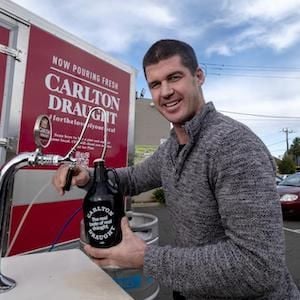
To support Australian pubs and clubs Carlton & United Breweries (CUB) is rolling out 2,000 barrels of free beer.
The brewer has also doubled its fundraising target from $1 million to $2 million in cash through its 'For The Love of your Local' campaign to help the ailing hospitality industry.
The cash injection will go to Aussie venues that are in need of funds to survive, plus more than 100,000 litres (equating to 200,000 pints) of donated CUB beer to pour for their patrons when they reopen.
CUB CEO Peter Filipovic says despite restrictions easing, many pubs and clubs still face enormous challenges.
"The ongoing restrictions will continue to significantly limit trade and, for some venues, re-opening will have to wait until restrictions are further lifted," Filipovic said.
"Australian pubs and clubs have already been shut for two months and the fact is many of these beloved venues won't make it through this crisis without extra help. So, we're calling on Australians to help save their local and get free beer in the process.
"We've had 2,000 pubs and clubs join already and, if you're a venue that needs help, I'd urge you to sign-up too."
People can support their local by visiting loveofyourlocal.com.au and nominating their favourite venue, then buying a pint of CUB beer using their credit card or PayPal account, with the cash going to the venue directly.
When the voucher is redeemed CUB matches the purchase with a free pint, meaning patrons can get 2-for-1 pints once their local reopens.
A fleet of customised Carlton Draught and VB trucks is also hitting the road this week to help quench the financial thirst of some Victorian and Sydney pubs, selling takeaway tap beer in glass bottles known as "Growlers" from pub carparks.
The lockdown has devastated Australia's $20 billion plus pub and club industry, which is made up of more than 10,000 venues and employs many of the nation's 1 million hospitality workers.
Victorian hotelier Annie Hateley, operator of Drums Hotel, said the coronavirus restrictions had reduced their operations to the off-premise bottle shop and take-away menu.
"With the bar and bistro being closed for nine weeks, our food and beverage revenue is down by about 90 per cent. The support of Government and key suppliers such as CUB has been really important to our financial viability," Hateley said.
"It's been tough for the entire pub industry and it's still a long road ahead for many operators. So, CUB raising $2 million for our industry is a real lifeline for many venues.
"Pubs are the heart of many Australian communities. Patrons are supporting them through For Love of Your Local which speaks volumes for the appreciation patrons have for their local hotel."
Updated at 10:07am AEST on 28 May 2020.
JobMaker: PM flags industrial relations review, skills overhaul
 "JobMaker: PM flags industrial relations review, skills overhaul")
A review into Australia's approach to industrial relations (IR) and vocational training is central to Prime Minister Scott Morrison's plan to rebuild Australia's economy in the wake of COVID-19.
Addressing the National Press Club this afternoon, the PM announced the Government's new 'JobMaker' plan under which business will support the revitalisation of Australia's economy.
A review into the country's IR laws will be conducted by the Minister for Industrial Relations Christian Porter, bringing together employee representatives and government to charter a "practical reform agenda".
Five working groups chaired by Porter will develop the government's JobMaker plan, specifically targeting the following areas:
- Award simplification;
- Enterprise agreement making;
- Casuals and fixed term employees;
- Compliance and enforcement; and
- Greenfields agreements for new enterprises.
Membership for each of the five working groups will include employer representatives, union representatives, and individuals chosen based on their demonstrated experience and expertise.
Morrison says the current IR framework in Australia needs to be overhauled to tackle the challenges faced by the economy caused by the COVID-19 pandemic.
"Our industrial relations system has settled into a complacency of unions seeking marginal benefits and employers closing down the system," Morrison said.
"It is a system that has to date retreated to tribalism, conflict, and ideological posturing.
"This will need to change or more Australians will unnecessarily lose their jobs and more Australians will be kept out of jobs."
These processes will be time bound and run through to September.
The simplification of skills training for Australians is also a key tenant of the PM's plan to create jobs.
As it stands today, the PM describes the nation's training programs as "clunky" and "inconsistent" across states.
To resolve the issues the PM sees with training and skills nationally the Government has three areas of focus: faster development of programs, consistent pricing and funding of training programs, and the quality of the programs.
A series of 'skills organisational pilots' have already been established and tested by the Federal Government to address the problems identified by the PM.
These three pilot programs were for human services, digital technologies and mining. The PM says the fast-tracked human services pilot program has been leveraged during the COVID-19 recovery phase already to support an increased demand for these skills.
"It is no wonder that when faced with this complexity many potential students default to the University system, even if their career could be best enhanced through vocational education," the PM said.
"I want those trade and skills jobs to be aspired to, not looked down upon or seen as a second best option, it is a first best option."
The Government will also establish a National Skills Commission which will deliver detailed market analysis of the skills shortages in Australia and publish real time data on the labour market to flag emerging skills shortages.
The PM hopes this Commission will help students with developing careers while studying or choosing where to study and will enable those looking to upskill to best determine where the jobs actually are.
Updated 1:43pm AEST on 26 May 2020.
Coca-Cola Amatil loses fizz on beverage industry plunge
 "Coca-Cola Amatil loses fizz on beverage industry plunge")
The Covid-19 cocktail has been a hard one to swallow for the beverages industry, given that most of the world's watering holes remain out of business.
Venues are suffering, and new data from Alcohol Beverages Australia has also revealed a steep decline in alcohol consumption that would normally take place at home gatherings.
It's little wonder Coca-Cola Amatil (ASX: CCL) has been stirred into the struggle.
In its April trading update, Coca-Cola reveals Covid-19 lockdown measures in April have taken a toll on the peak Easter ANZAC Day and Ramadan trading periods.
Although it outperformed the sector in terms of share growth, the company experienced a ~33 per cent nosedive in the total volume of beverages sold.
Group managing director Alison Watkins says Coca-Cola has experienced an "unprecedented disruption" to its business during the pandemic, but is optimistic in its recovery.
"At the time of our last Covid-19 update we noted significant volatility across channels and markets as the impacts of the pandemic started to take effect," she says.
"This has continued With many customers remaining closed or operating at significantly reduced capacity."
"Despite these challenges, our business has demonstrated resilience As the lockdown restrictions begin to ease and local economies begin a protracted recovery, we are seeing signs of modest improvement in trading conditions."
In its Australian market, Coca-Cola saw a 30 per cent decline in volume of sales across its 'non-alcoholic ready to drink' category versus April 2019.
Coca-Cola customers who buy 'on the go' declined 55 per cent on the prior corresponding period, while grocery shopping fell 10 per cent and the convenience and petroleum segment took a 20 per cent hit.
As lockdown restrictions ease in the coming months, the company expects its financial performance will improve at a similar rate.
Watkins says that the company's FY2020 performance hinges on its fourth quarter.
"Whilst it is encouraging to see lockdown restrictions gradually being eased and some green shoots of improvement in trading conditions emerge, the reality is that economic recovery will take time and uncertainty remains," she says.
"We have a clear path forward to weather the current conditions, noting that the fourth quarter of trading conditions will be imperative to our FY2020 financial performance."
Advertisement
Latest News
From $13,000 to $20 million: how a PCOS diagnosis and a pair of scissors built Xali Organics
Inspired by a medical diagnosis and driven by innovative marketing,...
Cedar Woods secures $63.4m in new land acquisitions as record presales underpin pipeline push
Perth-headquartered residential developer Cedar Woods Properties (A...
Australia's long-term beer decline hits home as Lion plans to close Boag's brewery in Launceston
Australia's decades-long decline in beer consumption has claime...
Downer EDI seals $310m Transurban contract to maintain Sydney motorway network
Infrastructure services group Downer EDI (ASX: DOW) has secured con...
Propel Funeral Partners expands New Zealand footprint with trio of acquisitions worth $9.1m
Sydney-based death care provider Propel Funeral Partners (ASX: PFP)...
Advertisement