Advertisement
Staying informed is more important than ever as the situation unfolds with Covid-19. Stay tuned here for our live updates, and be sure to let us know what your business is doing to face this unprecedented challenge.
Covid-19 News Updates
Qatar Airways restarts Brisbane flights
 "Qatar Airways restarts Brisbane flights")
One of the few airlines still connecting Australia with the Middle East and Europe is about to expand its offering of routes to Brisbane on 20 May.
Qatar Airways will be recommencing three weekly flights from Doha to Brisbane, adding to existing daily services with Sydney and Melbourne as well as four-weekly flights to Perth.
The first flight is set to land at Brisbane Airport (BNE) on 21 May, with services operating under existing bilateral rights until 30 June with the airline carrying both commercial passengers and freight.
Brisbane Airport Corporation (BAC) expects this will provide a critical cargo channel for Australian businesses and producers.
"This announcement is most welcome and the first major sign the industry has commenced recovery phase following COVID-19 restrictions," says BAC CEO Gert-Jan de Graaff.
"Until now, Brisbane was the only major capital city without a Qatar Airways service and Queensland the only major state.
"The demand for Qatar Airways services has always been clear, with Queensland generating more than 19,000 passengers to Doha alone in 2019."
De Graaff says as the world begins to heal, one-stop services into Queensland from key British and European travel markets also offer a real opportunity for Queensland, with visitors arriving in Australia via Brisbane more likely to stay longer in the state.
"While the direct service will bring more choice for passengers, the air access and export opportunities created by the commencement of Qatar services direct to and from Brisbane for the city and state are significant," the executive says.
"These services will provide much needed support Queensland and northern NSW exporters in exporting around 4,000 tonnes of beef and other perishables per annum to Qatar.
"Freight exports that none of the existing airline partners carry, and of course there is significant opportunity for additional exports across Qatar Airway's global network."
The airline is resuming services after previously receiving short-term approval to operate to Brisbane from late-March to early April - a period during which helped reunite over 5,000 stranded travellers with their loved ones and transported over 270 tonnes of cargo, including Australian agriculture exports.
"In these difficult times, customers are looking for an airline they can trust, our commitment and willingness to get people home continues to provide assurance," says Qatar Airways Group chief executive Akbar Al Baker.
"We have built a strong level of confidence with passengers, governments, trade partners, and airports as a reliable partner during this crisis and we intend to continue delivering on this mission.
"Qatar Airways received exceptional approval to operate short term services to Brisbane to repatriate the many tourists, students and diplomats who wanted to go back to their home countries."
The airline continues to operate flights to 16 destinations in Europe, including London, Frankfurt, Paris and Amsterdam, with plans to add an additional seven European destinations by the end of June.
Updated at 9:50am AEST on 15 May 2020.
Michael Hill to gradually reopen stores from Saturday
 "Michael Hill to gradually reopen stores from Saturday")
Jewellery retailer Michael Hill (ASX: MHJ) will open nearly 100 of its stores in Australia this weekend with an aim to progressively open the remainder during May.
But not all Michael Hill employees will be going back to work; the company has decided to permanently close five stores in Australia, three in New Zealand and one in Canada.
The rollout of store openings in Australia is based on how individual states have decided to relax COVID-19 restrictions, but Michael Hill says it expects every store in the country will be reopened by early June.
25 stores in New Zealand will open on Saturday, with the balance planned to follow across the coming two weeks.
The group's Canadian portfolio currently remains closed, but there are plans to commence the progressive reopening of stores in late May.
Michael Hill says during the shutdown it has seen a "significant boost" in online sales, with digital sales in the last three weeks outperforming the prior record digital sales week from Christmas 2019.
This is primarily the result of the company deploying a range of digital initiatives such as virtual appointments, a new online video hub, a fresh online storefront, chat functionality on the website, an improved Instagram feed and a WeChat store.
The group's loyalty program has also seen memberships increase to over 100,000 members. Michael Hill's loyalty revenue now represents 42 per cent of total e-commerce revenue.
"The surge in our digital sales signals a notable shift in consumer behaviour in the jewellery category," says Michael Hill CEO Daniel Bracken.
"We have been quick to respond and harness this opportunity, with the implementation of a number of digital initiatives to continue to attract new customers and maintain the momentum.
"As we reopen stores, we are placing the utmost importance on the safety of our employees and customers. We look forward to enabling our customers to celebrate their love, style their wardrobe and find their memorable gift in a safe store environment as we all navigate through these unprecedented times."
Updated at 9:18am AEST on 15 May 2020.
One in four Australians now on JobKeeper
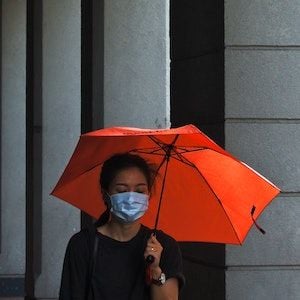 "One in four Australians now on JobKeeper")
Update (22 May 2020): It has since come to light that the Treasury and Australian Tax Office (ATO) have drastically reduced their projected number of JobKeeper recipients by three million. Read more here.
Approximately one in three Australians is being supported by Government assistance programs like JobKeeper, JobSeeker and Youth Allowance as the ongoing effects of the COVID-19 economic crisis take their toll.
These numbers were announced today by a grim Federal Treasurer Josh Frydenberg alongside the release of April's unemployment figures, which saw women and young Australians hit disproportionately.
The Treasurer says there are 6 million Australians - or approximately one in four people - receiving the stimulus package from the approximately 850,000 businesses that have formally enrolled in the program.
There are also 1.6 million Australians on JobSeeker and Youth Allowance.
The JobKeeper program is set to be reviewed in June, when the Government will determine how to move forward with the $130 billion package.
The Government's ultimate plan is to reinvigorate the economy by easing restrictions gradually across the nation.
The Treasurer says some 850,000 people will be back in work as a result of Stage One, Two and Three restrictions being lifted. This should also deliver a $9.4 billion boost to the national economy.
"There is still a long way to go, and the economic numbers will get worse before they get better," Frydenberg said.
Youth unemployment spikes
Youth unemployment has risen during April as a result of the COVID-19 financial crisis, described by Prime Minister Scott Morrison as "terribly shocking".
As part of the release of unemployment figures for April 2020, the Australian Bureau of Statistics (ABS) has revealed that youth unemployment (those aged 15 to 25) rose to 13.8 per cent, up from 11.5 per cent in March.
The figure is more than double that of the national unemployment rate of 6.2 per cent, but both figures in fact do not take into consideration the hundreds of thousands of people who have actually given up on looking for work, and therefore are not included in the unemployment figures.
Speaking to the press today Prime Minister Scott Morrison said the scale of the crisis is unlike anything seen in recent Australian history.
"When I left University, and soon after, we went into the last recession," Morrison said.
"It was hard. This is harder. We haven't seen this before.
"And for many young people who have never experienced that, this is beyond anything they could imagine."
The figures demonstrate how young people have been disproportionately affected by COVID-19 restrictions, with many working in sectors like hospitality and tourism that have been completely shut down by the coronavirus.
Women also represent more than half of the newly unemployed 603,300 Australian workers, with 325,000 women joining the 1.8 million unemployed in the country.
Updated at 1:00PM AEST on 14 May 2020.
Almost three million Australian jobs hit somehow by COVID-19 crisis
 "Almost three million Australian jobs hit somehow by COVID-19 crisis")
The Australian Bureau of Statistics (ABS) has today revealed the unemployment rate rose by one percentage point to 6.2 per cent between March and April.
On face value the number of unemployed people increased by 104,500 for the period, but seasonaly adjusted employment fell by a much larger figure of 594,300.
The reason for this discrepancy is that almost half a million people in Australia simply left the labour force, meaning they weren't actively looking or available for work.
"The large drop in employment did not translate into a similar sized rise in the number of unemployed people because around 489,800 people left the labour force", says ABS head of labour statistics Bjorn Jarvis.
As a result Australia's participation rate, meaning the proportion of people either working or actively looking for work, has dropped by a whopping 2.4 percentage points to 63.5 per cent.
But the situation is worse when you consider cuts to people's hours, which the ABS has described as "extensive" in the wake of COVID-19 shutdowns. Total hours worked fell 9.2 per cent between March and April.
The bureau explains 2.7 million people - or one in five who were employed before the crisis hit - either left employment or had their hours reduced between March and April.
As a result, the number of underemployed people also rose sharply (up 603,300 people, to a total of 1.8 million people), and the underemployment rate rose to a record high 13.7 per cent (up 4.9 percentage points).
The underutilisation rate, which combines the unemployment and underemployment rates, also rose to a record high of 19.9 per cent.
The falls in employment and hours in April were consistent with the fall in payroll jobs for employers reporting through the Single Touch Payroll system published in the recent releases of Weekly Payroll Jobs and Wages in Australia.
That data showed a fall of around 607,000 paid jobs in Single Touch Payroll enabled employers over the same period.
Updated at Noon AEST on 14 May 2020
Myer to reopen eight more stores
 "Myer to reopen eight more stores")
Department store Myer (ASX: MYR) will soon more than double the amount of reopened stores across Australia with bricks-and-mortar operations set to begin in WA and SA, along with further openings in NSW.
After bringing seven outlets on-stream in QLD and NSW in time for Mother's Day, Myer will trial the opening of the following eight stores this Saturday:
- NSW: Albury, Dubbo, Wagga, Erina, Miranda
- WA: Morley, Garden City
- SA: Tea Tree Plaza
"Given the success and positive response from opening seven trial stores this past weekend, Myer has made the decision to open eight additional stores," a Myer spokesperson said.
"We look forward to welcoming more team members back to work, and more customers back to their favourite department store, where we have taken extra precautions to ensure Myer has a safe and hygienic shopping environment for all."
This now means that a quarter of the company's 60-strong store network is back in business, but the online side of the company that has thrived in this climate will continue with Click and Collect services now available at selected stores nationally.
The reopening comes after scenes of busy crowds at shopping centres ignoring social distancing etiquette last weekend, Myer has emphasised its focus on providing a safe working and shopping environment for its team members and customers.
Cleaning services will be increased across the trial stores, sneeze guards at registers will be progressively rolled out, and protective items such as hand sanitiser stations, face masks and gloves will be made available for team members.
Customers will be monitored to ensure social distancing is kept, while hand sanitiser will also be provided to shoppers
Some services at stores will however remain suspended to reduce close contact, such as beauty appointments, intimate apparel fittings, suit fittings and shoe fittings.
The new openings will come hot on the heels of Premier Investments opening doors for all of its remaining stores tomorrow, including Smiggle, Portmans, Just Jeans, Peter Alexander, Jay Jays, Jacqui E, and Dotti.
As of Myer's last Annual Report, Premier Investments held a 10.77 per cent stake in the company, and its chairman Solomon Lew had a fairly antagonistic relationship with the Myer board in 2017 and 2018 over management issues.
Updated at 9:52am AEST on 14 May 2020.
Victoria's sport, tourism and creative industries to receive $150m boost
 "Victoria's sport, tourism and creative industries to receive $150m boost")
The Victorian Government has thrown its support behind some of the sectors hardest hit by COVID-19 restrictions with a $150 million 'Experience Economy Survival Package'.
The fund will assist sporting clubs and competitions across the state, major tourist attractions, galleries and museums, and the racing industry.
Cumulatively these industries contribute nearly $70 billion to the economy according to the Victorian Government.
They were also some of the worst hit sectors when COVID-19 restrictions were put in place; Federal Treasurer Josh Frydenberg restrictions resulted in 33.4 per cent of jobs in the accommodation and food services sector and 27 per cent of jobs in the arts and recreation sector being lost.
The $150 million package includes $40 million for community sport and recreation bodies, including the state sporting associations, leagues and clubs.
National sporting organisations will receive $16 million, $5.3 million will go toward the State Sport Centres Trust and the Kardinia Park Stadium Trust and Victoria's racing industry will receive $44 million.
Under the package $32 million will go toward creative agencies and initiatives, and $6 million will support live music industry workers and other workers in the creative industries.
The package also includes $11 million for Victoria's tourism industry, with funding to be targeted at the Emerald Tourist Railway Board and other not-for-profit and privately-owned visitor attractions.
"Victorians love turning out for big events and while they can't do that currently, this support will go a long way to making sure our tourism, sport and racing bodies can rebound quickly as restrictions are lifted," Victorian Minister for Tourism, Sport and Major Events Martin Pakula said.
Support for the creative industry comes on top of a $16.8 million survival package already announced, bringing the total being delivered into the arts sector to more than $49 million.
"Victoria has the best galleries, museums and performance venues in the country and one of the best live music scenes anywhere in the world," Minister for Creative Industries Martin Foley said.
"They are central to life in this state and this funding is vital to safeguarding jobs in the $31 billion creative industries economy."
The Western Australian Government has also announced a support package for the tourism industry today worth $14.4 million.
The Survival Grants will target businesses located in parts of the State with more restrictive travel bans in place, or whose circumstances otherwise mean they will face a more difficult road to recovery.
Updated at 3:13pm AEST on 13 May 2020.
WA launches $14.4m package for small tourism operators
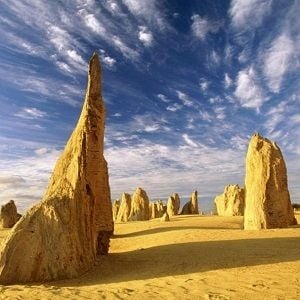 "WA launches $14.4m package for small tourism operators")
The Western Australian Government has today announced a multi-million dollar survival and recovery package to help small tourism businesses adapt to the COVID-19 landscape.
As the state looks set to cautiously ease some regional travel and other restrictions from Monday 18 May, the $14.4 million Tourism Recovery Program will support a staged return to business.
The initiative will start with $10.4 million in one-off cash grants for up to 1,600 individual small businesses around the state.
Worth $6,500 each, these grants will go to eligible sole traders and businesses with four or less employees and annual taxable wages of less than $1 million, covering sub-sectors such as accommodation, attraction, tour and transport.
The second, $4 million Tourism Business Survival Grants package will be available for tourism operators dealing with exceptionally difficult circumstances, with grants of $25,000-$100,000 available.
The Survival Grants will target businesses located in parts of the State with more restrictive travel bans in place, or whose circumstances otherwise mean they will face a more difficult road to recovery.
As of next Monday the number of borders within the state is set to drop from 13 to only four, allowing:
- Travel between the South-West, Great Southern, Wheatbelt, Perth and Peel regions;
- Travel between the Mid-West, Gascoyne and Pilbara regions (excluding Biosecurity zone);
- Travel within the Goldfields-Esperance region (excluding the Biosecurity zone); and
- Travel permitted within the Kimberley local government areas (the Commonwealth's Biosecurity zone remains in place).
Businesses that deliver iconic experiences are also eligible to apply for the survival payments. A probity auditor would review the robust and transparent criteria-led application and panel assessment.
As part of the application process, businesses are required to submit a recovery and marketing plan to outline how the funding will be used and indicate how their product, service or experience could be adapted. 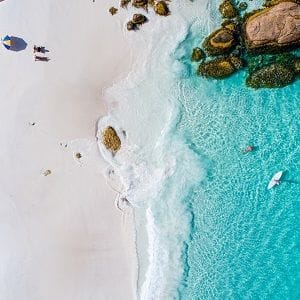
Businesses must have a valid Australian Business Number and be an active part of the WA tourism industry through membership of one of the State's eligible tourism organisations, or tourism accreditation programs.
"COVID-19 has been devastating for WA tourism - with thousands of small businesses impacted all around the State," says Premier Mark McGowan.
"Our hearts go out to everyone that has been impacted by this pandemic.
"This new funding package will help small tourism operators adjust and adapt their businesses away from targeting the international and interstate market and towards Western Australians."
The Premier says with the relaxation of restrictions it is expected thousands of Western Australians will be looking to travel around the state this year, and the plan is to have as many local businesses as possible benefit from these opportunities.
"I want to acknowledge every Western Australian for their patience during this COVID-19 pandemic. It's been trying and nothing like any of us have ever experienced before," he says.
"The broadened boundaries still impact areas including the regions north of our State and the Goldfields-Esperance region along with biosecurity regions and remote communities. The restrictions are in place to protect more vulnerable communities north of our State. Where we can alter these, we will.
"While it's starting to look more encouraging we're not out of the woods yet and every move and adjustment is made based on the best of health advice."
Tourism Minister Paul Papalia says in only a few short months WA tourism has gone from enjoying record international and interstate visitor numbers to a complete industry shutdown.
"The impact on the thousands of Western Australians who make their living in the sector has been severe," he says.
"With international and interstate border restrictions expected to remain for some time, we are now focused on helping tourism operators to adjust their businesses to appeal to the intrastate market.
"The Tourism Recovery Fund will provide cash grants direct to these small businesses to help them reorganise and refocus to the new environment."
Updated at 1:07pm AEST on 13 May 2020.
QLD Premier calls on Federal Government to settle its beef with China
 "QLD Premier calls on Federal Government to settle its beef with China")
Queensland Premier Annastacia Palaszczuk has called upon the Federal Government to resolve escalating tensions with China that have impacted Australian beef exports.
The Premier's concerns arise from a growing trade dispute between China and Australia which has seen the former blacklist three Queensland red meat abattoirs.
The Queensland abattoirs in question are Kilcoy Pastoral Company (owned by Chinese company New Hope Investment), JBS-owned Beef City and Dinmore. JBS is one of the largest meat processing companies in the world and is based in Brazil.
The Australian-owned Northern Cooperative Meat Company in Casino, New South Wales, has also been blacklisted.
Speaking to the press this morning Palaszczuk said she has concerns that a trade war could result in 3,200 workers being impacted.
"China is an incredibly important trading partner to Queensland," Palaszczuk said.
"Most of our trade goes to China.
"What I'm really concerned about is this potential for a trade war to erupt and to damage Queensland's exports, to damage Queensland's reputation and to damage Queensland's jobs and livelihoods."
Palaszczuk says beef is a cornerstone element of the Queensland economy, generating $4.89 billion in exports and generating over 18,000 jobs.
The Queensland Minister for Agricultural Industry Development and Fisheries Mark Furner put it quite simply: "We don't need another beef with China".
"It was only around about this time last year I was in Hong Kong and Chongqing with a trade delegation, delivering the beautiful beef that Queensland is able to provide. In that territory of Chongqing there's an insatiable appetite for our beef, so that's why this issue is so important to Queensland," said Furner.
"I call on the Federal Government to resolve this as soon as possible, because it is such an important trade matter for Queensland and for our Queensland farmers as well."
As reported by the ABC yesterday Federal Trade Minister Simon Birmingham said the emerging trade dispute was a technical issue and not did not relate to the pressure Australia is placing on China to approve an independent investigation into the origins of COVID-19.
Queensland reports just one new case of COVID-19
Just one new confirmed case of COVID-19 has been recorded in Queensland today, bringing the state's total to 1,052 cases including 18 active cases.
Premier Palaszczuk said the one new case was an "old" case.
Elsewhere in Australia New South Wales has reported six new cases today, and Victoria has reported seven.
In total there have been 6,980 confirmed cases of COVID-19 of which 6,273 have recovered.
Updated at 11:27am AEST on 13 May 2020.
Mesoblast raises $138m to bolster manufacturing for potential COVID-19 medicine
 "Mesoblast raises $138m to bolster manufacturing for potential COVID-19 medicine")
Investors are betting big on Mesoblast's (ASX: MSB, NASDAQ: MESO) yet to be proven treatment for critically ill COVID-19 patients, with the announcement today it has successfully raised US$90 million (AUD$138 million).
Following "remarkable results" from a small sample of ventilator-dependent COVID-19 patients in New York, the Melbourne-based company recently embarked on a Phase 2/3 trial across more than 20 medical centres in the US; a target that has since risen to 30.
Based on bone marrow aspirate, Mesoblast's candidate product remestemcel-L is intravenously infused in patients suffering from acute respiratory distress syndrome (ARDS) - the most common cause of death from COVID-19 infections.
Around 300 patients are expected to participate in the trial over three to four months.
In an institutional placement led by Bell Potter Securities with 43 million new shares on issue, new funds were raised at AUD$3.20 per share, representing a 7 per cent discount to the last MSB trading price.
The sum itself is worth around 20 per cent of its market capitalisation before 20 March, but share values have more or less tripled since then.
Interest in Mesoblast started to build from that date when it was announced to the market that director Donal O'Dwyer had bought more than $100,000 worth of shares, just 10 days after the company had announced its pivot to using its stem cell treatment in COVID-19 lung infections.
Now the group plans to spend a significant portion of net proceeds on scaling up manufacturing of remestemcel-L, with the remainder to go towards working capital and general corporate purposes.
The use of remestemcel-L drastically improved survival rates in the initial trial at Mt Sinai Hospital in New York, at a rate of 83 per cent (10) compared to the average rate of 12 per cent for ventilator-dependent COVID-19 patients in the city.
Three in four patients were able to come off ventilator support within a median of 10 days, compared to a 9 per cent rate for patients treated with standard of care during March and April.
Led by founder and chief executive Silviu Itescu (pictured), Mesoblast previously had a predominant focus on applying its proprietary technology mostly to treat a condition called acute graft versus host disease (aGVHD), which many suffer after receiving a bone marrow transplant (BMT).
But on 10 March the company hypothesised Remestemcel-L would be able to treat what is known as a cytokine storm - a kind of hyperinflammatory syndrome - in the lungs that often occurs with serious Covid-19 cases. This prompted plans for trials across four continents.
"We greatly appreciate the support shown by both our existing investors and new institutional investors, with demand for the placement far exceeding the funds raised," says Itescu.
"We look forward to updating the market as this important COVID-19 ARDS trial progresses and to its completion in the coming months."
Updated at 11:31am AEST on 13 May 2020.
Treasurer: Private sector to drive economic rebound, not government
 "Treasurer: Private sector to drive economic rebound, not government")
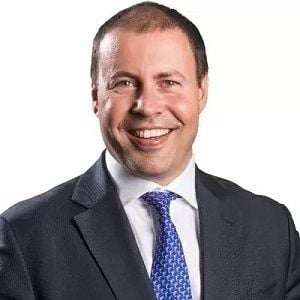
Speaking in Parliament today for the first time since 8 April, Federal Treasurer Josh Frydenberg (pictured) made his intentions clear for Australia's economic future.
At the centre of his plan are free market economic principles, small government and temporary assistance for those who are struggling.
The Government's ultimate aim is to reopen Australia to the point that businesses can recommence in a COVIDSafe economy, delivering billions to the national GDP.
"While there'll be a significant increase in government debt, which will take many years to repay, our measures have been designed in a way that protects the structural integrity of the budget," Frydenberg said.
"The proven path for paying back debt is not through higher taxes, which curtails aspiration and investment, but by growing the economy through productivity enhancing reforms.
"The values and the principals that have guided coalition reforms in the past must guide us again in the future... Unleashing the power of dynamic, innovative and open markets must be central to the recovery with the private sector leading job creation; not government."
According to Frydenberg, the national GDP is about to witness the results of a reopened Australia.
Once all restrictions are lifted the Treasury expects to see $9.4 billion returning to the economy.
But Frydenberg has warned that if restrictions need to be reimposed the GDP would be hit by more than $4 billion per week.
Under the three separate stages of the Federal Government's roadmap to recovery more than 850,000 people will be able to return to work.
More than half of these workers will come from three industries: the arts and recreation sector, the transport sector and the construction sector.
"Treasury estimates that as a result of easing the restrictions in line with stages One, Two, and Three, the GDP will increase by $9.4 billion each month," Frydenberg said.
This $9.4 billion will come directly from the reanimation of the retail sector, the opening of hospitality venues, and the opening of schools and local government buildings.
The relaxation of travel restrictions is also expected to contribute around $700 million.
Just lifting restrictions at Stage One will result in more than 250,000 people going back to work, and more than $3 billion additional GDP.
State by state, the Treasury estimates lifting Stage One restrictions will lead to:
- 83,000 jobs and $1 billion in NSW;
- 64,000 jobs and more than $715 million in VIC;
- 51,000 jobs and $610 million in QLD;
- 25,000 jobs and $435 million in WA;
- 17,000 jobs and $178 million in SA;
- 5,000 jobs and $50 million in TAS;
- 4,000 jobs and $60 million in the ACT;
- And 3,000 jobs and $40 million in the NT.
"These improvements in the economy depend on us continuing to follow their health advice," says Frydenberg.
"Failing to do so could see restrictions imposed at a loss of more than $4 billion a week to the economy."
His Statement to Parliament today was replete with some sobering figures about the current state of Australia's economy.
Unemployment is set to hit 10 per cent in the June quarter, household consumption is expected to be around 16 per cent lower, and business investment will be down 18 per cent.
The Treasurer will provide another update on Australia's economic situation in June and will detail the Federal Budget in October this year.
Updated at 1:36PM AEST on 12 May 2020.
Advertisement
Latest News
From $13,000 to $20 million: how a PCOS diagnosis and a pair of scissors built Xali Organics
Inspired by a medical diagnosis and driven by innovative marketing,...
Cedar Woods secures $63.4m in new land acquisitions as record presales underpin pipeline push
Perth-headquartered residential developer Cedar Woods Properties (A...
Australia's long-term beer decline hits home as Lion plans to close Boag's brewery in Launceston
Australia's decades-long decline in beer consumption has claime...
Downer EDI seals $310m Transurban contract to maintain Sydney motorway network
Infrastructure services group Downer EDI (ASX: DOW) has secured con...
Propel Funeral Partners expands New Zealand footprint with trio of acquisitions worth $9.1m
Sydney-based death care provider Propel Funeral Partners (ASX: PFP)...
Advertisement