Advertisement
Staying informed is more important than ever as the situation unfolds with Covid-19. Stay tuned here for our live updates, and be sure to let us know what your business is doing to face this unprecedented challenge.
Covid-19 News Updates
Berejiklian encourages NSW retailers to reopen with precaution
 "Berejiklian encourages NSW retailers to reopen with precaution")
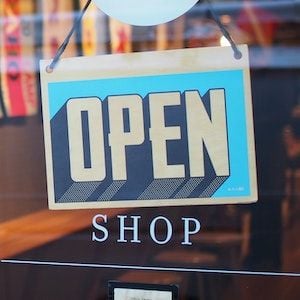
Premier Gladys Berejiklian has encouraged retailers in New South Wales to "have a go" at reopening within COVID-19 gathering and health guidelines where possible.
The tentative green light to retailers comes as the state has noticed increased activity in NSW with the population begining to feel comfortable to get out and about yet again.
While Berejiklian says it is okay for retailers to begin reopening her blessing comes with the caveat that social distancing and good hygiene practices are observed.
"I say to any business, if there's a restriction in place and you feel you can operate around that please have a go," Berejiklian said.
"We do want to see more business activity but we also want it to be safe and I'm confident that retail activity will increase substantially during the month of May."
"But I also want to make clear that I don't want to go through the process of, if we can avoid it, opening and shutting things down because that doesn't give anybody certainty and if you're a business operator once you reopen you want to stay open."
The Premier's statement comes as New South Wales has reported three new confirmed cases of COVID-19, bringing the state's total to 3,035.
Updated at 11:04am AEST on 5 May 2020.
Victorian businesses to receive $491m in tax relief
 "Victorian businesses to receive $491m in tax relief")
The Victorian Government is adding to its $1.7 billion stimulus package with a further $491 million tax relief program, including exemptions from payroll tax and the WorkCover levy on JobKeeper payments to employees who aren't working.
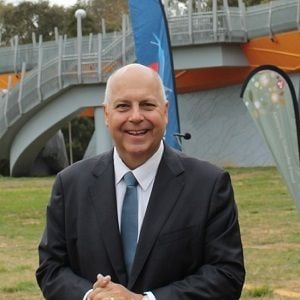
State Treasurer Tim Pallas announced this morning that his government would pick up the bill for foregone premiums under WorkCover, to the tune of around $200, while businesses would be saved around $225 million in payroll tax.
The remaining $66 million of today's announced funding will come through freezing a host of fees and fines for businesses and households.
"That'll include things like driver's licenses and vehicle registration fees," Pallas said.
"We're also going to freeze the Fire Services Property Levy at the revenue levels of 1920."
The Treasurer noted the freeze would take effect from July, so a progressive improvement should start to be seen.
"I've said to you previously, I think that this recovery will more look like a tick than a 'V'. It's been quite dramatic - we've seen our hospitality sector seeing revenue fall to the tune of about 60 per cent, we've seen retail expenditure drop by about 17 per cent, and we expect that the recovery will be a longer-run thing than the movement to the bottom of the economic cycle," he said.
"So there will be value for the community as economic recovery picks up, and that's why we've taken the view that a freeze would probably be the fairest way of managing this."
He added around 80,000 Victorian businesses have so far applied for the JobKeeper program.
There have been 17 new cases of COVID-19 in Victoria since yesterday, 11 of which are linked to the Cedar Meats processing facility cluster. This takes the state total to 1,423, while the number of people in hospital has gone down by one to 11.
Yesterday the state's Department of Health and Human Services (DHHS) announced Cedar Meats had agreed to close its facility for 14 days as a precaution while all staff have been tested or are in the process of being tested.
At the time of that announcement there had been 19 new cases from the cluster over the previous 24 hours, taking the total to 34.
Victoria has also now done almost 152,000 tests.
"There have been 804 overseas acquired cases, 421 locally transmitted cases with known contacts, and 143 locally acquired cases with unknown contact; 42 of these are under investigation," Pallas said.
Victoria's death toll from the virus remains at 18.
Updated at 10:12am AEST on 5 May 2020.
Qantas claims it could endure current conditions until December 2021
 "Qantas claims it could endure current conditions until December 2021")
Australia's leading airline Qantas (ASX: QAN) has extended flight cancellations and offered three more Boeing 787-9 aircraft as collateral to build up enough funding for 19 months of turbulence.
With dramatically reduced capacity and the costs of employee stand downs, the company expects to reach a net cash burn rate of $40 million per week by the end of next month.
But the company now has an extra $550 million in funding available, in addition to the $1.05 billion raised in March against seven of the same aircraft.
With short-term liquidity of $3.5 billion and $2.7 billion in unencumbered aircraft assets which could be used to raise more funds, the company claims it has enough liquidity to respond to a range of recovery scenarios, including one where the current trading conditions persist until at least December 2021.
Due to the situation with COVID-19, domestic and Trans-Tasman flight cancellations have been extended by a month to the end of June while international flight cancellations will be extended through to the end of July.
The difference between the two comes from expectations some domestic travel may start to return before the end of July, although Qantas admits initial demand levels are hard to predict.
Domestic passenger flights are currently running at five per cent of pre-crisis levels, and rates are one per cent of the normal for international flights. The reduction is not as pronounced in charters for the resources sector, which are at 75 per cent of pre-coronavirus levels.
Qantas Group CEO Alan Joyce says the airline's ability to withstand this crisis and its aftermath is only possible because it is tapping into a balance sheet that has taken years to build.
"Our cash balance shows that we're in a very strong position, which under the circumstances we absolutely have to be. We don't know how long domestic and international travel restrictions will last or what demand will look like as they're gradually lifted," he says.
"Australia has done an amazing job of flattening the curve and we're optimistic that domestic travel will start returning earlier than first thought, but we clearly won't be back to pre-coronavirus levels anytime soon.
"With the possible exception of New Zealand, international travel demand could take years to return to what it was."
As demand recovery is expected to be gradual and it is still unknown how long it will take to get back to normal, a review will be needed for Qantas' fleet, network and capital expenditure.
"But our commitment to serve communities across Australia will not change," he says.
"The Government's support of the aviation industry by underwriting some essential flying, and the support to the broader economy through JobKeeper, have been greatly appreciated. Public health initiatives like the COVIDSafe app are one of the ways we'll be able to start travelling sooner, so we strongly encourage all Australians to download it.
"The Qantas Group has literally thousands of suppliers and we've put the smaller ones at the front of the queue. We're grateful to many of our major suppliers, including almost all the capital city airports, who have given us a lot of flexibility."
Updated at 9:32am AEST on 5 May 2020.
Slater & Gordon takes aim at airlines over disadvantageous travel voucher schemes
 "Slater & Gordon takes aim at airlines over disadvantageous travel voucher schemes")
A class action is on the table for customers who have been strong-armed into accepting travel vouchers instead of refunds for travel plans disrupted by COVID-19.
According to class action law firm Slater & Gordon there are thousands of Australians that have been short-changed by major airlines, travel agents and tour companies that implemented a voucher scheme.
According to Slater & Gordon group leader Andrew Paull affected customers may be able to participate in a class action against travel companies that put in place travel voucher schemes that the law firm believes are anti-consumer.
Paull says the firm has spoken with holidaymakers who have been left thousands of dollars out of pocket and holding vouchers that they may never be able to use.
Other respondents said that they did manage get back a portion of their fares, only to be hit with hefty cancellation fees.
"We understand that everyone is doing it tough at present, including the major airlines and travel companies, but that doesn't give them an excuse to take advantage of their customers," says Paull.
"Nor is it acceptable for Qantas shareholders to treat the money it owes to ordinary Australians like its own.
"We believe cash refunds should be returned to customers, who almost certainly need that money right now, rather than in bank accounts gathering interest for airline shareholders. We call on businesses like Qantas and Jetstar to do the right thing and honour their obligations to their customers. If they won't do so, then it's only reasonable for those customers to look at recovering their money through a class action."
Slater & Gordon's proposed class action will allege that issuing travel vouchers instead of cash refunds might be a breach of the airlines' conditions.
Further, Slater & Gordon says airlines have been relying on blanked 'no refund' clauses despite having been warned by the Australian Competition and Consumer Commission (ACCC) that the clauses will not always be binding.
The firm also says airlines may have misled customers by convincing customers to exchange tickets for travel vouchers.
"The airlines have presented this as an act of generosity, however many customers will have had greater rights if they had held on their ticket, than if they exchanged it for a restricted travel voucher," says Slater & Gordon.
The proposal from Slater & Gordon comes after travel agent group Flight Centre announced it would be refunding customers that were slogged with expensive cancellation fees.
The travel operator will refund thousands of customers who, from 13 March, were charged $300 per person to get a refund for a cancelled international flight or $50 for a domestic flight.
Never miss a news update, subscribe here. Follow us on Facebook, LinkedIn, Instagram and Twitter.
Business News Australia
Flight Centre sales drop by 95 per cent in April
 "Flight Centre sales drop by 95 per cent in April")
Sales at travel agency group Flight Centre (ASX: FLT) dropped to just five to 10 per cent of normal levels during April due to COVID-19 travel restrictions.
The small amount of sales the company is processing are coming from China according to managing director Graham Turner.
"There has been some ongoing activity in most countries and we are seeing a slight uptick in bookings in countries like China as travel and trading restrictions ease," says Turner.
"The timeframe for this recovery remains unclear, but we anticipate an increase in activity in countries like Australia as soon as interstate borders reopen, which we expect will happen in the coming months.
"Given that domestic travel represents roughly half of the leisure tickets that we normally issue in Australia and the overwhelming majority of our corporate volume, we are well placed to play a positive role in the recovery and are keen to work closely with local tourism bodies, airlines and other suppliers in the coming months."
The announcement comes as the group announces its cost reduction plan will be cheaper than expected.
Flight Centre says it is making significant progress in reducing its global cost base towards a $65 million per month target by the end of July 2020 and it now expects the plan can be executed with less than the $210 million in one-off costs that it originally anticipated.
The company anticipates a net positive cash impact from developments since April 6 which include the likely sale of its Melbourne head office property and government support initiatives in Australia and other countries.
Over the weekend Flight Centre announced it had changed its refund and cancellation policy for travel cancelled due to the COVID-19 pandemic.
The travel operator will refund thousands of customers who, from 13 March, were charged $300 per person to get a refund for a cancelled international flight or $50 for a domestic flight.
This policy will also apply to cancellations fees charged by Aunt Betty, Travel Associates, Student Universe, Universal Traveller and Jetescape Travel (trading as Byojet Travel), which are part of the Flight Centre group.
Chair of the Australian Competition and Consumer Commission Rod Sims has welcomed Flight Centre's change of heart.
"This is a very welcome move made by Flight Centre for thousands of customers impacted by COVID-19 travel cancellations," Sims said.
"We are continuing to discuss issues in relation to refunds and cancellations with the travel sector, and encourage travel providers to treat consumers fairly in these exceptional circumstances."
"While we know some consumers are very concerned about getting a refund or credit for their cancelled travel plans, we do ask people to be mindful of the significant impact that this pandemic has had on the travel industry."
Never miss a news update, subscribe here. Follow us on Facebook, LinkedIn, Instagram and Twitter.
Business News Australia
Three things to consider before accessing your super
 "Three things to consider before accessing your super")
There have so far been more than 950,000 applications from people who want to access their superannuation due to COVID-19 pandemic hardship.
Australians can access up to $10,000 of their superannuation this financial year under the Federal Government's coronavirus assistance scheme.
But there are drawbacks. Associate Professor Paul Lajbcygier from Monash Business School's Department of Banking and Finance says people should consider three key things:
1. Are you experiencing financial hardship?
The Australian Taxation Office (ATO) will only allow early access for those struggling to pay rent, meet mortgage repayments or buy food. You cannot withdraw the funds to set up your own self-managed super fund, buy a house or other investments.
"The government has put together a stimulus package that covers around six million workers with a fortnightly payment of $1,500. If people are experiencing hardship it is better to consider applying for this first before thinking of touching your superannuation," Associate Professor Lajbcygier says.
2. If you're close to retirement, it's harder to build it back
Australians on average retire with $200,000. According to the Association of Superannuation Funds of Australia, a 40-year-old male who loses his job now will have roughly $100,000 in superannuation.
"Withdrawing $20,000 represents a loss of 20 per cent. And if you add to that the downturn in equity markets of around 20 per cent at the moment, this man would need to make back 40 per cent of his superannuation," Associate Professor Lajbcygier says.
The situation is worse for women as they tend to retire with less superannuation as a result of early gender pay gaps, and for people nearing retirement.
"The problem arises if you are going to cash in and convert your equities into cash. Crystallising your losses now would be a big mistake."
3. Beware of scammers attempting to grab your cash
The ATO has warned about scammers trying to gain personal identifying information to steal funds, or charging for services that are free like gaining early access to your superannuation.
Their advice? Contact the ATO directly to confirm if any interaction is genuine.
If you receive a phone call, text message or email offering to help you release your super early, do not:
- provide your personal information
- click on any links.
Another element to consider is the insurance cover of your super fund. If your account is fully withdrawn or has a balance below $6,000, the insurance may not be available.
"Withdrawing your superannuation may affect your income protection insurance and your Life-Total Permanent Disability insurance cover," Associate Professor Lajbcygier says.
Paul Lajbcygier holds a joint appointment as Associate Professor in the Department of Banking and Finance and the Department of Econometrics and Business Statistics. His work focuses on computational finance, investments, asset pricing and market microstructure.
This article was published in partnership with Monash Business School.
Never miss a news update, subscribe here. Follow us on Facebook, LinkedIn, Instagram and Twitter.Business News Australia
Queensland NRL teams to resume training
 "Queensland NRL teams to resume training")
Queensland Premier Annastacia Palaszczuk has given teams in the state the green light to resume training ahead of a pencilled in season reopener on 28 May.
The Premier has told NRL chairman Peter V'Landys and the CEOs of the Broncos, Cowboys and Titans that they can get back onto the training ground.
"I said I was as keen as anyone else to see the NRL return and I meant it," the Premier said.
"The only condition was that it did not put our excellent work containing the spread of COVID-19 at risk and the Chief Health Officer advises that the NRL plan is workable."
Training can resume on the condition that further assurances about enforcing home-quarantine measures are given by the NRL.
Palaszczuk's decision means clubs will be given permission to travel across the Queensland border to play because they are working, so long as they are quarantined.
"First round games will be played in Queensland and of course I put in a bid for a local grand final and we all look forward to hosting the State of Origin," the Premier said.
Updated at 4:26pm AEST on 1 May 2020.
Victorian business support grants expanded to companies below payroll tax threshold
 "Victorian business support grants expanded to companies below payroll tax threshold")
The Victorian Government has today announced its $10,000 Business Support Fund grants will be expanded to smaller companies than before, although sole traders covered by JobKeeper still won't be eligible.
The $500 million fund was announced on 23 March as part of a $1.7 billion stimulus package, and to date more than $150 million has been paid out to businesses across the state.
The second phase of support will be expanded to businesses with a wages bill less than the payroll tax threshold of $650,000 who are participating in the Commonwealth JobKeeper program, regardless of the sector they operate in.
Businesses who applied for Business Support Fund payments but were initially not eligible based on their sector classification will be contacted by the Department of Jobs, Precincts and Regions and do not have to submit a new application.
Businesses that have not previously applied for a grant due to their sector classification are encouraged to make an application for a grant at business.vic.gov.au when applications for the expanded group open in coming days.
The government has provided further support for small and medium businesses through the Commercial Tenancy Relief Scheme which provides a six-month moratorium on evictions and allows businesses to negotiate rental waivers or deferrals with their landlords relative to their lost income.
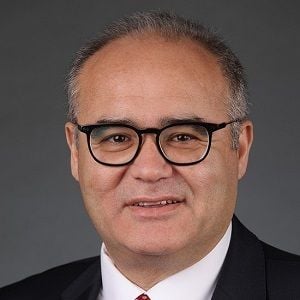
"The sectors hit hardest and fastest by the coronavirus pandemic received important support through the fund, and now we're moving to the second phase to help others doing it tough," says Minister for Jobs, Innovation and Trade Martin Pakula.
"These expanded grants and our support through the Commercial Tenancy Relief Scheme are all about helping businesses survive through to the other side of the crisis and keeping as many people as possible in work," says Minister for Small Business Adem Somyurek (pictured).
Updated at 4:30pm AEST on 1 May 2020.
Government to make early decision on relaxing restrictions
 "Government to make early decision on relaxing restrictions")
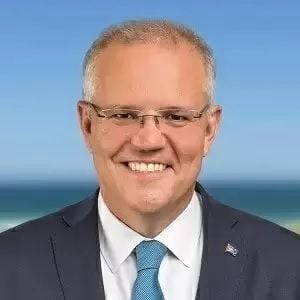
Australians have "earned an early mark" in the battle to contain COVID-19 according to Prime Minister Scott Morrison, with plans to make a decision on 8 May about easing restrictions.
"Today the National cabinet agreed to bring forward our consideration of the decision on relaxing decisions to next Friday," the PM said.
"Australians have earned an early mark through the work that they have done...our plan has been to get the virus under control and to ensure that we can contain it."
He said 11 of the 15 conditions needed for relaxing social distancing restrictions have been met, but one of the key outstanding issues was the matter of COVIDSafe app downloads.
"There are currently over 3.5 million downloads and registrations of the COVIDSafe app, and there needs to be millions more," he said.
"As I explained it the other day, it's like not putting on sunscreen to go out into the blazing sun."
"We need that tool so we can open up the economy, and that's why it's so important. So if you haven't downloaded the app yet, download it."
Morrison was reluctant to highlight any specific industries where easings might take place.
"We're also through my cabinet, working directly with industry sectors about what mitigations can be put in place in workplaces. So it's not just about whether an activity can be reopened. It's how it can be reopened," he said.
"People will be very familiar with the full range of restrictions that were put in place some weeks ago, and they're all obviously being reviewed and they're being reviewed both in terms of the health mitigations that would need to be put in place if they were to be opened, but looking at the economic opportunities that extend to those particular activities as well."
NT to relax gathering restrictions from Friday, sets date for restaurant reopenings
The Prime Minister also announced an additional $205 million would be going to the aged care sector through one-off payments to facilities all over the country.
The funds will be aimed at helping centres deal with the extra costs incurred through dealing with the coronavirus crisis, taking the total funds dedicated to the sector up to $850 million.
Providers in metropolitan areas will get a $900 support payment per occupied bed, while in regional areas providers will get a 50 per cent lift on that to $1,350 in recognition of the higher costs they tend to have.
Chief Medical Officer Brendan Murphy added New South Wales and Tasmania were now the only states or territories where the numbers of new cases were significant enough to model an effective reproduction rate (ERR) for the virus.
"Our case numbers are so low now that we can analyse each case, each cluster, and get really detailed epidemiological information on what's happening," he said.
"We needed eeded a well prepared health system with good surge capacity, with enough ventilators and an ICU expansion capacity. All of those are in place.
"Personal protective equipment (PPE) was a big issue - very pleasing to say that we now are very clear that we have enough masks. That's a great thing after all the issues we've had with masks and making sure we can bring in sufficient supplies."
"We're still doing some work to be absolutely confident about other elements of PPE but we've got good confidence and those supply lines are now being restored."
There have been 12 new cases (9 NSW, 3 VIC) reported in Australia today, but 25 recoveries have been recorded meaning there are now 931 known active cases nationwide.
ACT became the first territory or state in Australia to declare no active cases yesterday, and has again reported no new cases today as has Queensland.
The Northern Territory now only has three active cases and hasn't reported a new case since 6 April. As a result, the territory has the most aggressive restriction relaxation plan in Australia.
If South Australia reports no new cases later this afternoon, it will be the ninth consecutive day without a new positive COVID-19 test in the state.
Updated at 2:19pm AEST on 1 May 2020
More than 1,800 NSW businesses step up to fill medical supply chain
 "More than 1,800 NSW businesses step up to fill medical supply chain")
The New South Wales Government's call for assistance from local businesses to fill the medical supply chain and build a personal protective equipment (PPE) stockpile has received a resounding response.
More than 1,800 businesses from across NSW have put their hands up to help protect vulnerable workers and produce critical PPE items during the COVID-19 pandemic.
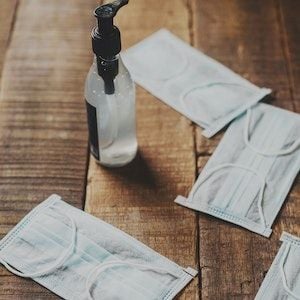
To date the NSW Government has engaged with more than 1,600 businesses so far, and ordered items including face masks, shields, hand sanitiser, disinfectants, gloves, surgical gowns and paper products through the Emergency Supplies portal.
"We've received an overwhelming response to our call for assistance to meet demand for these key protective products, which prevent the spread of COVID-19," NSW Premier Gladys Berejiklian said.
"I'm proud so many local suppliers and manufacturers have acted quickly to source or produce equipment that protects our emergency and frontline medical workers serving our community in this time of urgent need."
More than 20 per cent of the 1,800 businesses listed on the Emergency Supplies portal are from regional NSW.
"We know businesses in regional NSW are struggling, having dealt with drought, bushfires and now COVID-19," NSW Deputy Premier and Minister for NSW Industry and Trade John Barilaro said.
"However, people in the bush are resilient and resourceful and that's never been more evident than now as companies re-purpose their product line to provide medical and cleaning products, to help during the COVID-19 crisis."
The NSW Government has now launched a new Emergency Supplies portal for industries requiring emergency PPE that will connect suppliers with those in need.
Local governments and industry can access local PPE suppliers by visiting buy.nsw and businesses can still register their interest to supply.
Updated at 2:06pm AEST on 1 May 2020.
Advertisement
Latest News
From $13,000 to $20 million: how a PCOS diagnosis and a pair of scissors built Xali Organics
Inspired by a medical diagnosis and driven by innovative marketing,...
Cedar Woods secures $63.4m in new land acquisitions as record presales underpin pipeline push
Perth-headquartered residential developer Cedar Woods Properties (A...
Australia's long-term beer decline hits home as Lion plans to close Boag's brewery in Launceston
Australia's decades-long decline in beer consumption has claime...
Downer EDI seals $310m Transurban contract to maintain Sydney motorway network
Infrastructure services group Downer EDI (ASX: DOW) has secured con...
Propel Funeral Partners expands New Zealand footprint with trio of acquisitions worth $9.1m
Sydney-based death care provider Propel Funeral Partners (ASX: PFP)...
Advertisement