Advertisement
Staying informed is more important than ever as the situation unfolds with Covid-19. Stay tuned here for our live updates, and be sure to let us know what your business is doing to face this unprecedented challenge.
Covid-19 News Updates
UQ COVID-19 vaccine shows "potent protective response" in early tests
 "UQ COVID-19 vaccine shows \"potent protective response\" in early tests")
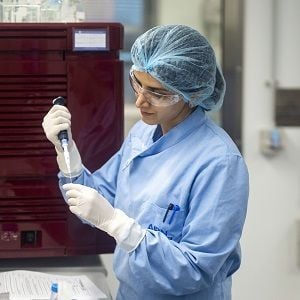
Early pre-clinical testing has shown the University of Queensland's (UQ) COVID-19 vaccine candidate has been able to raise high levels of antibodies that can neutralise the virus.
UQ has been tasked by the Coalition for Epidemic Preparedness Innovations (CEPI) to develop a vaccine against the novel coronavirus, and is collaborating with the Peter Doherty Institute to demonstrate and understand its immune response.
UQ project co-leader Professor Paul Young says the results are an excellent indication the vaccine has worked as expected.
"This is what we were hoping for, and it's a great relief for the team given the tremendous faith placed in our technology by CEPI, Federal and Queensland Governments and our philanthropic partners," says Professor Young.
"We were particularly pleased that the strength of the antibody response was even better than those observed in samples from COVID-19 recovered patients."
University of Melbourne Professor Kanta Subbarao, from the Doherty Institute, tested samples provided by the UQ team and found high levels of antibodies capable of neutralising infection by the live virus in cell culture.
"This is a very important finding because similar immune responses with SARS vaccines in animal models were shown to lead to protection from infection," Professor Subbarao.
These results, along with the collaboration with Viroclinics Xplore in the Netherlands, keeps the UQ vaccine's accelerated timeframe on track.
Joint UQ project leader Dr Keith Chappell says the team had decided early on that ensuring a robust package of pre-clinical and safety data was critical before initiating a clinical trial, and they hope to have those results in early June.
"Viroclinics Xplore is investigating in more detail the vaccine's ability to protect from direct challenge by the live virus in multiple animal models, and without this partnership this just wouldn't have been possible in this time frame with the capabilities we have here in Australia," says Dr Chappell.
The group recently announced a collaboration with Cytiva to enable key manufacturing activities and discussions are ongoing with other commercial entities.
Program director Professor Trent Munro says every day matters in the race to bring this science forward, and while there were no guarantees of success, the support received to date is letting the team move at an unprecedented speed.
"When you start combining clinical readiness with scale-up manufacturing, the costs quickly escalate and our primary goal here was to try and break down the financial constraints as much as we could," says Professor Munro.
Other commercial partners include Lonza, Thermo Fisher Scientific and Syneos Health, and the team has also been given access to key adjuvant technology from CSL/Seqirus, Dynavax and GSK.
Updated at 9:34am AEST on 29 April 2020.
JobKeeper payment extension granted
 "JobKeeper payment extension granted")
The Federal Government has extended both the time to enrol for the JobKeeper program and the payment date for the first two fortnights.
Businesses can now enrol in the program until 31 May 2020, extended from an initial cut-off date of 30 April.
If you enrol by 31 May you will still be able to claim for the fortnights in April and May, provided you meet all the eligibility requirements for each of those fortnights. This includes having paid your employees by the appropriate date for each fortnight.
Further, for the first two fortnights of the program (30 March to 12 April and 13 April to 26 April) the Government will accept the minimum $1,500 payment for each fortnight has been paid even if it has been paid late, provided it is paid by 8 May.
If you do not pay your staff by this date, you will not be able to claim JobKeeper for the first two fortnights.
Businesses can enrol and claim for JobKeeper earlier if they choose. For example, businesses can enrol by the end of April to claim JobKeeper payments for the two fortnights in April.
The Australian Small Business and Family Enterprise Ombudsman Kate Carnell has welcomed this development, saying it will be welcome relief for struggling business owners.
"Small businesses now have extra time to deal with cash flow pressures as a result of any delays with their financial arrangements," says Carnell.
"It is especially critical now that those small businesses that had chosen not to apply for JobKeeper because they were worried they couldn't pay their staff by April 30, do so now."
Updated at 12:27pm AEST on 28 April 2020.
Home upgrades a boon for Temple & Webster, Bunnings, Officeworks
 "Home upgrades a boon for Temple & Webster, Bunnings, Officeworks")
Today's working from home (WFH) reality has driven a surge of activity for online furniture retailer Temple & Webster (ASX: TPW), as well as bricks-and-mortar icons such as Bunnings Warehouse and Officeworks.
TPW shares surged 16 per cent this morning to $3.98 each after the company reported year-to-date revenue (1 January to 24 April) was up a whopping 74 per cent.
The e-commerce group has played a role in helping people set up their homes as multi-purpose spaces, including spaces for work and exercise.
"Being an online-only business, we can scale quickly and are responding to the increased demand by expanding our customer service team," says Temple & Webster CEO and co-founder Mark Coulter.
"The team has done an amazing job in meeting the needs of our customers during this period, while maintaining our high levels of customer satisfaction, all while working from home.
"While the current global situation makes it hard to predict what will happen in the short term, we remain bullish about the longer-term shift from offline to online driven by changing customer preferences and demographics."
TPW emphasises it is profitable and cash flow positive, with a capital light business model and a debt-free balance sheet with a current cash level of $20 million.
Home upgrades were also a key driver for growth for certain subsidiaries of Wesfarmers (ASX: WES), which provided an encouraging market update today for Bunnings and Officeworks.
The two traditionally offline retail chains have enhanced their digital offerings while responding to the substantial increase in online sales. This includes implementation of Drive & Collect to enable contactless carpark collection.
Some Bunnings stores in New Zealand remain closed in line with the country's stricter measures against Covid-19, but in Australia the business along with Officeworks has experienced significant demand growth.
This has been sparked by customers and their families spending more time working, learning and relaxing at home.
However, given the disruption to usual customer shopping patterns and potential future changes to government measures, Wesfarmers has expressed uncertainty about whether these higher levels of sales growth will continue for the rest of FY20.
Unlike Temple & Webster, WES shares only rose 1.36 per cent this morning to $38.13, which may have to do with a more sobering reality at the company's Kmart and Target stores.
Three Kmart locations have been turned into 'dark' stores to support a growing online business, and sales growth at both Kmart and Target was broadly in line with with the levels achieved in the first half of the financial year, supported by strong growth in online sales.
Wesfarmers also notes pleasing progress continues in its e-commerce player Catch, with very strong growth in gross transaction value in both the marketplace and in-stock offering.
But in recent weeks a decline in customer footfall in shopping centres and ongoing weakness in discretionary categories - particularly in apparel - have led to a moderation of in-store sales momentum at Kmart while it has declined significantly at Target.
The parent company believes these trends are expected to persist while social distancing and isolation measures remain in place, and while many tenants and activities within major shopping centres are not operating. This is set to lead to a material impact on sales and margins for both divisions.
Updated at 10:55am AEST on 28 April 2020.
NSW to relax social distancing restrictions, building projects to be fast-tracked
 "NSW to relax social distancing restrictions, building projects to be fast-tracked")
Social distancing measures in New South Wales will be relaxed this Friday as the state continues with its Covid-19 testing blitz.
From Friday two adults will be able to visit anybody else in their homes on the basis of care or reducing social isolation.
Premier Gladys Berejiklian says this measure is intended to improve mental health conditions for individuals across the state.
"We know that for many people they've been cooped up in their homes for a number of weeks, and with the exception of exercising, medical needs or buying what they need to or going to work, many people have been isolated in their home," says Berejiklian.
"Obviously if you've got young children it's OK to take them with you, but a maximum of two adults will be able to visit anybody."
Good social distancing (staying 1.5 metres apart from one another) will still apply, especially if visiting someone over the age of 70 with comorbidity.
The relaxation of the social distancing measures comes as NSW has been embarking on a major testing regime.
The State is conducting at least 8,000 tests per day every day of the week, and Berejiklian has encouraged anyone with the mildest of symptoms to go and get tested.
The Premier has stressed that the month of May will look different for NSW residents; students are set to resume face-to-face teaching on 11 May and retail activity is expected to recommence at the same time.
"We encourage people to buy what they need to buy but please make sure that when you're in those shops you follow all the hygiene requirements and of course the retail outlets themselves have to follow these requirements in terms of making sure they have social distancing in their stores and they also have hand sanitiser available," says Berejiklian.
As of this morning NSW has reported five new cases of Covid-19, bringing the state's total to 3,009 . Those new cases have been linked to a cluster, meaning there has been no 'community transmission' occurring.
Two new cases were also reported in Victoria this morning.
Nationally there have been 6,728 confirmed cases of Covid-19, with 1,351 in Victoria, 1,033 in Queensland, 549 in Western Australia, 438 in South Australia, 214 in Tasmania, 106 in the Australian Capital Territory, and 28 in the Northern Territory.
There are currently 1,040 active cases reported across the country.
NSW to fast-track key construction projects
As part of New South Wale's economic recovery, the State Government will fast-track key construction projects.
Minister for Planning and Public Spaces Rob Stokes says fast-tracking builds is one of the main levers the state can pull to stimulate economic growth.
"We know that almost 400,000 people employed across New South Wales are employed directly in the building and construction industries," says Stokes.
"And more broadly almost one in four workers in New South Wales is indirectly linked to jobs in construction, in planning and development processes.
"Today Government is announcing criteria for fast-tracking projects through the planning system, those projects identified as having the greatest jobs benefit, the greatest investment benefit, and the greatest public benefit for the people of New South Wales."
There are 24 new projects that have been identified to go through this fast-tracked process which will create almost 9,500 new jobs, attract $7.54 billion in capital investment, generate more than 4,400 new homes and more than 32 hectares of new parkland and public open spaces.
Related story: WA pledges funds for land tax relief and construction
Updated at 9:50am AEST on 28 April 2020.
Lendlease to raise $1.15 billion
 "Lendlease to raise $1.15 billion")
Property project developer Lendlease (ASX: LLC) has today joined the wave of Australian companies raising enormous amounts of capital to ride out the Covid-19 crisis, with plans to dilute its shareholdings by up to a fifth to secure more cash.
This morning the company announced plans for a $950 million fully underwritten institutional placement at $9.80 per share, representing an 8.2 per cent discount to the last trading price.
The placement is set to be issued on 4 May, and will be followed by a share purchase plan (SPP) that closes on 26 May with more than 20.4 million shares on offer.
If the SPP is successful it would add an extra $200 million to the raising, taking the total to $1.15 billion.
Lendlease says the capital raising will position the company well for its $100 billion urbanisation pipeline as well as a pipeline of around 48,500 land lots for its Communities projects.
"This equity raising, coupled with the actions we have already taken, will strengthen the Group's balance sheet position during this uncertain economic environment with available liquidity increased to $3.95 billion, support the delivery of the Group's $112 billion global development pipeline and provide additional flexibility and capacity to pursue further investment opportunities," says Lendlease CEO Steve McCann.
The company has either deferred or reduced non-essential capital expenditure and project expenditure, while senior executives' fixed remuneration has been cut by 20 per cent with some of the savings to go into an employee hardship and wellbeing fund.
That fund will also be topped up by non-executive directors reducing their base fees by up to 20 per cent.
Lendlease is yet to decide whether a final dividend for FY20 will be paid from Lendlease Corporation Limited.
The group says it will continue to explore capital partnerships to deliver its extensive urbanisation portfolio of 21 major projects safely, sustainably and profitably. Recent developments on its projects include:
- Conditional framework agreement reached to form a 50/50 investment partnership with a capital partner for Milan's Milano Santa Giulia project to develop the $4 billion project over 15 years including the Group selling the first two office buildings to the investment partnership;
- An additional residential for rent building at London's Elephant Park anticipated to enter delivery in H2 FY20 with capital partner and planning approval having been obtained;
- One Sydney Harbour presales currently total $1.5 billion representing over 75 per cent of the first tower, and PLLACes together with capital partnership options continue to progress well; and
- Tower One at TRX Residences, Kuala Lumpur pre-sales currently exceed 50 per cent.
Capital raising activity has been in overdrive since the Covid-19 pandemic began, with motives ranging from sheer survival to precautionary raisings to bolster balance sheets for the year ahead. Here are some of the leading raisings to date:
- NAB to raise $3.5 billion as earnings dive
- Ramsay Health Care to raise $1.4 billion
- QBE launches $1.3 billion raise to shore up capital
- Cochlear announces $800 million capital raise to ride out market uncertainty
- Flight Centre founders see shareholding drastically diluted
- NEXTDC to raise $672m as data centre demand rises
- Reece to raise $600m despite strong sales
- Webjet raises too much money
- Metcash embarks on $330 million equity raise
- SCA Property to raise $300m for buying assets on the cheap
- G8 Education to raise $301 million
- Charter Hall REIT to bolster balance sheet with $300 million equity raise
- Bapcor launches $210 million capital raise
- Southern Cross Austereo to raise $169 million at massive discount
Updated at 9:40am AEST on 28 April 2020.
Fella Hamilton gets green light to make sustainable PPE gear
 "Fella Hamilton gets green light to make sustainable PPE gear")
Melbourne-based fashion house Fella Hamilton has achieved a breakthrough in its pivot to simultaneously provide health clothing and tackle the environmental problem of disposable gowns ending up in landfill.
The company's reusable clothes, gowns and scrubs for frontline health care workers have received Therapeutic Goods Australia (TGA) Class 1 non-sterile approval, and orders have been rolling in.
The company shifted into health in early April and has been working with Cabrini Health, Victoria, to perfect the design of the isolation gowns and ensure they provide adequate protection.
The gowns, which have a water-resistant coating, are also more sustainable than traditional disposable offerings as they have been specially designed to be washed and dried at high temperatures to kill pathogens and can withstand up to at least 20 washes.
"Since we began this project, we've been in contact with so many health care workers who are desperate for protective wear to keep them safe as they do their jobs," says Fella Hamilton CEO Sharon Hamilton.
"But the feedback that we have received is that they want their protective wear to be as sustainable as possible, and to support local Australian industry and to become less reliant on the offshore supply of PPE (personal protective equipment)."
As the Covid-19 crisis continues, front line workers are facing a significant shortage of PPE, usually obtained from China.
"Many of the products coming from China are being redeployed to the US and Europe as circumstances escalate and Australia is now facing delays of up to nine weeks. The demand for these items simply can't be met from the usual suppliers when it's needed most," says Hamilton.
"Because we have retained a significant proportion of our manufacturing in Australia, and have taken this project on, we have been able to bring back our staff to full capacity."
The company, which has been in existence since 1969, is now providing 2,530 gowns to Cabrini, and 1,000 gowns to WA aged care provider Juniper as well as several small private hospitals.
Fella Hamilton has the capacity to produce 5,000-10,000 gowns a week once more orders start to come in, and has has also responded to requests by several state Health Departments for expressions of interest to supply PPE.
The expansion into health clothing is expected to continue for the company after the Covid-19 crisis is over as well.
"As an Australian manufacturer, it has been good to feel useful during this time and it has highlighted to us the need for Australia to be self-sufficient through local manufacturing," says Hamilton.
"We can see how we can meet this need ongoing as we develop more essential health items moving forward."
Never miss a news update, subscribe here. Follow us on Facebook, LinkedIn, Instagram and Twitter.Business News Australia
Monash IVF to raise $80 million as elective surgery ban is lifted
 "Monash IVF to raise $80 million as elective surgery ban is lifted")
Debt repayment and growth opportunities will be the focus for fertility specialists Monash IVF Group (ASX: MVF) following an $80 million equity raise.
The raise should leave the company in a position to restart its business after the Australian Federal Government placed restrictions on non-urgent elective surgeries, which included IVF treatments, on 25 March.
Today those restrictions lift, meaning Monash can recommence its IVF procedures.
Monash says $77 million of the raise will go toward reducing debt, enabling the company to pursue organic and inorganic growth opportunities already identified in Australia and South East Asia.
As at 24 April Monash has a net debt position of approximately $94 million, including access to $20 million after drawing down on its $115 million syndicated debt facility.
Following the raise Monash IVF will have total liquidity of approximately $97 million.
The equity raise will come in two parts: a $39.8 million institutional placement and a $40.2 million 1-for-3.05 accelerated pro rata non-renounceable entitlement offer.
Institutional investors will be able to get in on the raise at $0.52 per share, representing a 26.8 per cent discount.
Monash's FY20 trading through to February and volumes through to 25 March were largely in line with previous guidance, but the company says its trading performance was materially impacted by restrictions on non-urgent elective surgeries.
From today the company is planning for a gradual return of patients, but the month without business will likely cause a significant dent considering the only part of the business that continued to operate during the shutdown was its ultrasound clinics. Overall Monash IVF says restrictions resulted in volumes for April 2020 down 70 per cent year on year.
Approximately $7 million of the equity raise will be deployed into specific growth initiatives including the opening of a new Sydney CBD flagship fertility clinic and joint venture, partnership and acquisition opportunities across South East Asia.
Monash IVF also plans to pursue longer term growth initiatives including transforming its Melbourne footprint and upgrading clinics.
"Monash IVF believes the support from the Equity Raising in addition to the cash preservation measures will provide the business with the balance sheet flexibility that is appropriate for the current uncertain macroeconomic environment and will assist the company to continue to execute a number of exciting growth initiatives," says Monash IVF CEO Michael Knaap.
"Monash IVF is poised to resume IVF treatment while prioritising the health and safety of our patients, doctors and employees."
Updated at 3:20pm AEST on 27 April 2020.
Victoria embarks on testing blitz in order to ease restrictions
 "Victoria embarks on testing blitz in order to ease restrictions")
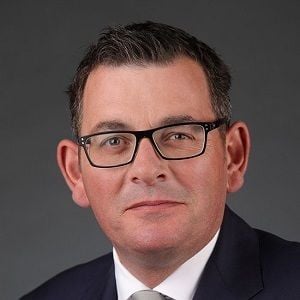
Covid-19 restrictions could be eased over the next two weeks if Victorians take part in a major testing blitz across the state.
Over the next fortnight Premier Daniel Andrews hopes up to 10,000 Victorians will be tested to better understand how the virus is spreading through the community.
This testing regime will better inform the government as they look to ease gathering restrictions on 11 May.
The mass-testing will be carried out through a combination of drive-through and walk-up clinics, as well as new mobile screening clinics to visit homes and workplaces.
Virtually anyone displaying any of the many symptoms of Covid-19 including fever, breathing difficulties, a cough, a sore throat, fatigue, tiredness, or loss of smell should go and get tested.
"We've asked a lot of Victorians, but the plan we put in place to slow the spread of this virus is working," says Andrews.
"And if we keep working together and keep doing the right thing, we will get to the other side of this crisis."
"By increasing the testing for coronavirus and widening the testing criteria, it gives us more evidence and therefore more options when it comes to slowly lifting restrictions."
The State Government will first target industries that are still operating at full capacity including healthcare workers, aged care workers, construction workers, supermarket staff and those in the agriculture industry.
Workers without symptoms in hospitals and other facilities with vulnerable residents will also be asked to partake in the voluntary program as part of new research in line with pre-requisites set out by the National Cabinet.
The widespread testing of individuals will be used alongside wastewater testing, where the levels of coronavirus in sewage will be tracked to help anticipate or rapidly respond to local outbreaks.
More than 104,000 Victorians have been tested to date.
The testing bonanza comes as Victoria reports 1,349 confirmed cases of Covid-19.
There are 6,719 confirmed cases of the coronavirus in Australia in total, with 3,004 in NSW, 1,033 in QLD, 549 in WA, 438 in SA, 212 in TAS, 106 in the ACT, and 28 in the NT.
Restrictions to be eased in WA and QLD
Over the weekend the Premiers of Western Australia and Queensland announced they would be easing back on restrictions in the coming weeks.
WA Premier Mark McGowan yesterday announced gathering restrictions in the state would be relaxed, including allowing indoor and outdoor gatherings of up to 10 people.
Further, in good news for the WA housing sector, open homes and display villages will be allowed from today under strict health controls.
Playgrounds, skateparks and outdoor gym equipment will continue to be restricted in WA, but the state is moving public transport back to normal timetables this week.
Yesterday Queensland Premier Annastacia Palaszczuk also announced some restrictions will be eased this coming weekend, though on a smaller scale to those announced in WA.
From midnight on Friday Queenslanders will be allowed to go for a drive within 50 kilometres of their home.
Some national parks will reopen, families will be able to go on picnics together if they are members of the same household, and shopping for non-essential items like clothes and shoes will be allowed.
They are small changes but represent a little win in Queensland in the fight against Covid-19.
COVIDSafe app launched
 The Federal Government launched its Covid-19 tracking app COVIDSafe last night as part of its 'third wave' response to the coronavirus public health crisis.
The app will speed up the process of identifying people who have been in close contact with someone diagnosed with coronavirus, stopping further spread of the virus in the community.
The app uses Bluetooth to connect with other phones that have the COVIDSafe app installed.
To be effective users should have the app running in the background when coming into contact with others and Bluetooth must be turned on.
"It then securely makes a 'digital handshake', which notes the date and time, distance and duration of the contact," Minister for Government Services Stuart Robert said.
"All information collected by the app is securely encrypted and stored in the app on the user's phone. No one, not even the user, can access it.
"Unless and until a person is diagnosed with COVID-19, no contact information collected in the app is disclosed or able to be accessed. Then, once the person agrees and uploads the data, only the relevant state or territory public health officials will have access to information. The only information they are allowed to access is that of close contacts when a person has come within approximately 1.5 metres of another app user for 15 minutes or more in their jurisdiction."
Updated at 12:06pm AEST on 27 April 2020.
Domain pays staff salaries in shares to overcome cost troubles
 "Domain pays staff salaries in shares to overcome cost troubles")
While businesses all over the country are standing down staff to keep costs at bay during the Covid-19 crisis, real estate listings company Domain (ASX: DHG) is taking a different approach.
The Nine Entertainment-owned group is offering staff the option to either cut back their working hours or receive part of their salary in share rights over the next six months.
Domain CEO Jason Pellegrino (pictured) says the plan has been overwhelmingly supported by employees, with more than 90 per cent of staff opting into the program known as 'Project Zipline'.
The project has the potential to cut Domain's total costs by around 9 per cent, given the majority of staff are shifting 20 per cent of their salaries to the share plan and salaries tend to make up almost half of the company's cost base.
The group's leadership team has elected to take a higher percentage of payment in share rights, with 30 per cent for executive leaders and 50 per cent for Pellegrino and the board.
"There are many unknowns with COVID-19, however, as a leadership team it is our responsibility to set Domain up to deal with the widest range of scenarios possible, while protecting our most important assets - our people and capacity to deliver innovative product solutions at pace," says Pellegrino.
"With this in mind, we believe Project Zipline not only sets Domain up to deal with what lies ahead, but also positions the business well to capitalise on increasing demand for digital transformation across our industry, and to accelerate as listings return.
"It also provides our employees with the opportunity to invest in Domain and participate as "owners" as listings return. Our shareholders and customers also benefit from this approach, as it strengthens Domain's key assets and our ability to retain and attract talent and deliver."
The company has also negotiated a new debt facility of $80 million, adding to $225 million in facilities announced last year.
"In a time of rapid digital transformation, the employee program and additional debt facility provide Domain with flexibility to maintain the pace of our business model evolution, while remaining well positioned to trade through the wide range of potential market scenarios that lie ahead," he says.
With adjustments for divestments, trading was up 1 per cent for Domain in the March quarter, and 10 per cent in March itself with a recovery of new listings in key markets.
Residential depth yield increased 17 per cent for the month, benefiting from the positive impact of Domain's new flexible pricing model, and increased depth penetration across all states.
However, the company notes April listing volumes are reflecting impacts from Covid-19.
Updated at 11:50am AEST on 27 April 2020.
Aristocrat cut back thousands of staff as pokie playing plummets
 "Aristocrat cut back thousands of staff as pokie playing plummets")
Poker machine giant Aristocrat Leisure (ASX: ALL) expects to save $100 million from cost reductions including a massive scaling back of staff, salary cuts and reduced executive remuneration.
The Sydney-based manufacturer is a leading pokie manufacturer and its shares have dropped 43 per cent since 21 February, impacted by social distancing rules and travel limitations worldwide.
To tighten its belt Aristocrat has today announced a series of cost-cutting measures relating to its workforce, which accounts for around 70 per cent of its operating expenses.
Around 1,000 staff will be stood down until the end of June, 200 roles will be permanently removed from the business, and until September a further 1,500 staff will have their wages cut by 10-20 per cent and 200 people will move into part-time roles.
The company has also announced the elimination of discretionary, consultant and contractor spend.
The cutbacks relate to the land-based business which historically has accounted for around 60 per cent of revenue, with the remainder coming from Aristocrat's digital business which remains strong.
CEO Trevor Croker's US$1.6 million base salary will be reduced by 30 per cent, while board fees will be cut by 20 per cent.
"We are very sensitive to the impact of necessary cost reduction measures on our people, and will work hard to support them through this difficult time consistent with our 'people first' approach," says Croker.
"We believe that these changes will help maximise opportunities for Aristocrat's dedicated and talented people over the longer term.
"We will continue to do everything we can to restore momentum in our land-based business as quickly as possible recognising the importance of continuing to develop and deliver game content during this period."
He says the steps announced today, as well as other prudent steps we are taking as part of Aristocrat's Covid-19 response, will deliver important operational and financial flexibility, focus and efficiency through this period of uncertainty.
"We are highly focused on protecting and leveraging our strategic advantages, including industryleading Design & Development and effective User Acquisition investment, which Aristocrat will continue to prioritise.
"In land-based, we will ensure the business is ideally poised to partner our customers and grow as conditions improve, while in digital we remain fully focused on executing our growth plans and maximising opportunities at this time."
Aristocrat anticipates that venue reopenings will take place on a phased basis, with a gradual ramping up of gaming floors in line with improvements in consumer confidence and the winding back of social distancing and travel limitations over time.
The company has around $1 billion of liquidity, comprising cash from operations and the drawdown of the Group's $150 million revolving credit facility together with an additional $136 million headroom available from a successful upsizing of the facility on 24 April.
A recent IBISWorld report in conjunction with the Advanced Manufacturing Expo slotted Aristocrat into its Top 20 list of Australian manufacturers, and is within the Top 10 on the list that are Australian owned.
The Alliance for Gambling Reform estimates more than $1 billion has been saved in pokie machine losses from the public since restrictions began, with the figure approaching $1.5 billion if gambling losses in casinos are also counted.
"That's more than $1 billion that can instead be spent putting food on tables, paying for medical bills and utilities, rent and mortgages," says the alliance's chief advocate, the Rev Tim Costello.
"That's not just making a difference to the lives of people and their families, it will also be helping our economy during these difficult times.
"And beyond the personal financial benefits and those for our economy, this current poker machine shut down will be significantly reducing gambling harm. The impacts of gambling harm takes many forms, not just the loss of money -- these can include mental ill-health, homelessness, family violence and even deaths by suicide in some cases."
He says these issues inevitably escalating through this crisis, but "minimising gambling harm as a contributor to these issues is a good thing".
"That's why I am completely behind a move by the ACT Government to support community clubs in surrendering poker machines in exchange for $15,000 per machine that must go towards retaining and supporting staff," he says.
"What a visionary policy! Imagine if all the other states and territories made similar moves. In South Australia crossbench MPs are supporting a similar move already.
"Football, RSL and other clubs that are meant to serve our communities should be doing just that -- serving communities, not draining them of money via poker machines.
"Imagine if we come out of this crisis with a return to community entertainment and a move away from poker machines. All of those musicians and comedians and other artists currently out of work would have stages on which to perform and help our communities heal as we come together again."
Updated at 11:10am on 27 April 2020.
Advertisement
Latest News
From $13,000 to $20 million: how a PCOS diagnosis and a pair of scissors built Xali Organics
Inspired by a medical diagnosis and driven by innovative marketing,...
Cedar Woods secures $63.4m in new land acquisitions as record presales underpin pipeline push
Perth-headquartered residential developer Cedar Woods Properties (A...
Australia's long-term beer decline hits home as Lion plans to close Boag's brewery in Launceston
Australia's decades-long decline in beer consumption has claime...
Downer EDI seals $310m Transurban contract to maintain Sydney motorway network
Infrastructure services group Downer EDI (ASX: DOW) has secured con...
Propel Funeral Partners expands New Zealand footprint with trio of acquisitions worth $9.1m
Sydney-based death care provider Propel Funeral Partners (ASX: PFP)...
Advertisement