Advertisement
Staying informed is more important than ever as the situation unfolds with Covid-19. Stay tuned here for our live updates, and be sure to let us know what your business is doing to face this unprecedented challenge.
Covid-19 News Updates
Victorian restrictions to stay in place as Cedar Meats cluster grows
 "Victorian restrictions to stay in place as Cedar Meats cluster grows")
Restrictions on gathering in Victoria are unlikely to ease before Mother's Day as a cluster of confirmed COVID-19 cases from a meat processing facility continues to grow.
The state confirmed 14 new cases of COVID-19 this morning, with 13 of the 14 tracing back to a growing cluster at Cedar Meats Australia.
The new cases from Cedar Meats brings the facility's total to 62 cases, representing the majority of active cases in the State and close to one in ten active cases across the country.
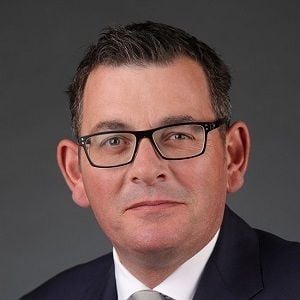
According to Victorian Premier Daniel Andrews (pictured) the State has 105 active cases of COVID-19. Eight of these cases are hospitalised and six are in intensive care.
The latest figures come as the state continues its expansive testing regime that has so far seen 106,000 people tested in the last week and a half, with 18,200 of those tests conducted just yesterday.
Despite the State's good work in testing more and more people Premier Andrews says it is still too early to look at easing restrictions on the rest of the population.
"The last thing we want to do is ease off any of those restrictions without a sense of confidence that we are truly on top of this," says Andrews.
"This is a very infectious disease, it spreads rapidly, and it can get away from you very, very quickly, and that's why we've taken such a cautious approach.
"The last thing I think business wants is the notion that they reopen quickly only then to have to close again. That would make a very difficult situation almost unbearable as businesses burnt that cash that they had perhaps put away for them to restart only then to have to then close again."
Updated at 12:16pm AEST on 7 May 2020.
Queensland businesses exempt from payroll tax on JobKeeper payments
 "Queensland businesses exempt from payroll tax on JobKeeper payments")
Businesses in Queensland will not have to pay payroll tax on Federal Government JobKeeper Payments as part of the State Government's latest fiscal relief initiative.
The fast-tracked arrangements will ensure payroll tax assessments do not include JobKeeper payments and will provide Queensland businesses with effective relief of $360 million over the next six months.
"We know businesses and workers have been doing it tough through the necessary restrictions we have put in place to come down hard on the spread of coronavirus," says Queensland Premier Annastacia Palaszszuk (pictured).
"Life will be tough for many businesses for months to come, so we will ensure they don't have to foot the bill for payroll tax on the Federal Government's JobKeeper payments which are now starting to flow."
Queensland Deputy Premier and Treasurer Jackie Trad says this latest measure will assist businesses to keep employees on and allow them to survive during the COVID-19 pandemic.
"Measures to relive payroll tax have been at the heart of the Palaszczuk Government's response, including tax holidays, tax deferrals, and payroll tax refunds that have put more than $345 million back into the accounts of Queensland businesses," says Trad.
"Exempting JobKeeper from payroll tax assessments at this time helps protect Queensland businesses and Queensland jobs.
"Now it's up to the Federal Government to help Queensland workers by exempting JobKeeper payments from income tax assessment."
The JobKeeper payment scheme commenced on 30 March and is available for eligible businesses to cover the costs of their employees' wages through payments of $1,500 per fortnight to eligible employees.
Queensland Treasury's Office of State Revenue will be adjusting its payroll tax information to ensure there is a smooth transition when the next payroll tax returns are due to be lodged next week.
Nationally States have been implementing a range of payroll tax waiver and deferment initiatives to assist businesses through the COVID-19 crisis.
In Victoria the State Government will pick up the bill for payroll taxes, saving businesses around $225 million, as part of the State's $1.7 billion stimulus package.
Businesses in New South Wales with payrolls over $10 million will have payroll tax deferred for six months, while businesses with payrolls under $10 million will receive an additional three-month deferment of payroll tax on top of the three-month waiver previously announced.
Down in South Australia the State Government will be delivering $60 million of payroll tax relief to businesses, including a six-month waiver for all businesses with annual payroll of up to $4 million from April to September.
SA employers with grouped annual wages above $4 million will be able to defer payroll tax payments for six months on demonstration of significant impacts on cash flow from COVID-19.
In Western Australia any business affected by COVID-19 will be able to defer payroll tax payments until July 21, 2020.
QLD to ease gathering restrictions further on Mother's Day
Up to five people from the same household will be able to visit another household from this Sunday in Queensland as the state continues to ease COVID-19 restrictions.
Premier Palaszczuk said the easing of restrictions was made possible because QLD residents had managed to keep the rate of new cases down.
The five visiting people must be from the same household and can visit another household of any size, thus allowing more than 10 people to be inside a house at any one time.
Queenslanders will still be restricted to not being able to travel more than 50km from their household.
This latest easing of restrictions comes as Queensland reports only two new cases of COVID-19 overnight.
Both of these new cases are on the Gold Coast, with one originating from a cruise ship and the other still being investigated.
There are only 50 active cases of COVID-19 in Queensland now, with eight in hospital and three in intensive care.
The two new cases brings Queensland's total number of confirmed COVID-19 cases to 1,045.
NSW keeps restrictions in place
Meanwhile in New South Wales gathering restrictions will remain in place for Mother's Day as the state continues its testing blitz.
Premier Gladys Berejiklian says social distancing measures will stay as they are even if the National Cabinet announces changes to national guidelines on Friday.
"As we proceed through May and through June there will be an easing of restrictions and that is something all of us can look forward to, and so I suspect that by the end of June life will feel much more normal," Berejiklian said.
"I can say that whilst National Cabinet is considering easing some restrictions I doubt very much that New South Wales will be in a position to implement anything before Mother's Day."
This means the same restrictions will stay in place in NSW, those being two adults and their children from the same household can visit another household.
Today Berejiklian announced that over the last 24 hours 10,900 tests were conducted which is a record for NSW.
Three new cases of COVID-19 were confirmed overnight, all from known sources, bringing the state's total to 3,044.
Updated at 9:32am AEST on 7 May 2020.
From Rockmans to Katies, Mosaic Brands puts store reopenings on the table
 "From Rockmans to Katies, Mosaic Brands puts store reopenings on the table")
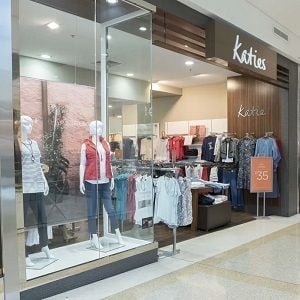
After trial openings over the past week and an 80 per cent jump in online sales, a group that owns some of the biggest names in Australian fashion retail will start progressively reopening stores on Monday, 11 May.
As the owner of Rockmans, Noni B, Millers, Rivers, Katies, Autograph, W.Lane, Crossroads and Beme, Mosaic Brands (ASX: MOZ) shut almost 1,400 stores in March as a response to social distancing recommendations.
Despite recording a positive EBITDA of $32 million in the first half, Mosaic is forecasting an overall EBITDA loss for FY20, as reopenings and an anticipated gradual recovery in customer demand will be unlikely to offset the impacts of the coronavirus-induced decline in foot traffic and store closures.
"However, management anticipates the pandemic's impact on its performance to be short-term and expects a return to profit in FY2021," Mosaic said.
"The Board will not declare an interim dividend for the half year to 29 December 2019 following its earlier deferral, which was pending clarification of the impact of COVID-19.
"The Company is very supportive of the Government's JobKeeper program, which has allowed it to retain its store and support office team members, and recognises the support of ANZ in facilitating Mosaic's access to the program and assisting it to navigate through this period."
The company notes valuable insights into changing customer shopping habits have been gained from the trial openings, although it did not state which fashion stores specifically had ben trialled.
Mosaic is providing these insights to landlords in a bid to renegotiate rental terms in keeping with the Government's mandatory code of conduct for commercial leasing arrangements.
The group emphasises stores will only be reopened where satisfactory commercial terms are agreed with the landlord.
"Mosaic is committed to working with its landlords to resume normal trading as soon as it is viable to do so and to provide a safe and improved shopping experience for customers," the company said.
An 80 per cent year-on-year jump for online sales for the past six weeks has been attributed to the strength of Mosaic's nine brands and increased investment in its digital strategy.
"This performance reflects substantial work during this challenging time to accelerate the company's strategy to expand the range of products offered and grow customer acquisition," Mosaic Brands said.
"Twenty categories and over 100,000 SKUs, reflecting each brand's unique customer proposition, have been added during this period to the company's websites."
Updated at 9:37am AEST on 7 May 2020.
Myer to reopen some stores in QLD, NSW in time for Mother's Day
 "Myer to reopen some stores in QLD, NSW in time for Mother's Day")
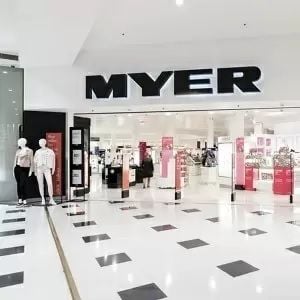
Department store Myer (ASX: MYR) has announced seven stores in Queensland and New South Wales will reopen in time for Mother's Day this Sunday.
In line with an easing of stay-at-home measures in Queensland, stores in Chermside, Carindale, North Lakes, Townsville and Toowoomba will be reopened as a trial from tomorrow.
This will be followed up by two Sydney store openings in Bankstown and Liverpool on Saturday.
"Myer has made the further decision today to open two New South Wales stores, and we look forward to welcoming local customers back to these stores, with great brands, at great value, in a safe shopping environment," a Myer spokesperson said yesterday.
"In line with the easing of restrictions in Queensland, we look forward to trialling the opening of five Queensland stores, providing our customers with great brands at great value, in a safe shopping environment," the spokesperson said earlier in the week.
"Our priority continues to be the health and wellbeing of our customers and team members and to assist and support governments in limiting the spread of COVID-19."
The reopenings represent close to 12 per cent of Myer's 60-strong store network.
The move follows an announcement on 22 April that Myer would aim to reopen stores as soon as possible, and that a surge in online sales had prompted the group to reinstate 2,000 staff.
As part of the reopening of physical stores, Myer has highlighted the following enhanced safety and cleaning measures to be implemented across stores:
- Increased frequency of cleaning services across trial stores;
- Protective items such as hand sanitiser stations, face masks and gloves available to team members;
- Hand sanitiser available for our customers;
- Sneeze guards at registers to be progressively rolled out across the stores;
- Social distancing measures of 1.5 metres between customers and team members, with clear signage across the stores;
- Contactless payments; and
- Informing our team members on social distancing and hygiene measures.
In addition, some services will remain suspended to reduce close contact, including:
- Beauty appointments;
- Intimate apparel fittings
- Suit fittings;
- Shoe fittings; and
- Change rooms.
Updated at 9:03am AEST on 7 May 2020.
WA records a week of no new COVID-19 cases
 "WA records a week of no new COVID-19 cases")
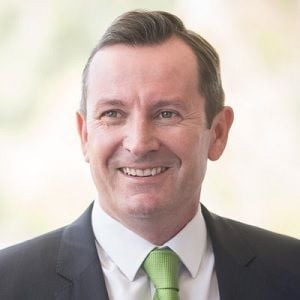
Western Australian Premier Mark McGowan (pictured) has warned the state is "not out of the woods yet" after recording a week of no new recorded COVID-19 infections.
"I'm pleased to say we've had zero new cases of COVID-19 overnight. That's now seven full days of cases which is amazing and incredible and terrific for our state, especially when we hear the news of the case numbers from New South Wales and Victoria," the Premier said.
Following 428 recoveries, WA now has just 14 active cases of which seven are in hospital.
NSW recorded nine new cases overnight while VIC reported 17, four of which were from the Cedar Meats processing facility cluster whose total cases now stand at 49.
South Australia is the only othe state or territory that has not seen any new cases in the past week; in fact SA has not had any new cases since 22 April.
Last week the ACT reported its number of active cases fell to zero for the first time since the pandemic began, but its run was cut short on Monday with one reported case from a return traveller.
"This individual was symptomatic while overseas and then spent 14-days in self-quarantine after returning home. They were not tested during their self-quarantine period because their symptoms had resolved prior to their return to Australia," ACT Deputy Chief Health Officer Dr Vanessa Johnston said at the time.
The Northern Territory's long run of no new cases since 6 April was interrupted on Saturday, 2 May with two new positive tests.
WA partners with resources companies to test FIFO workers
The WA State Government also announced today it is partnering with major resources companies and the state's leading researchers to roll out COVID-19 testing among fly-in fly-out (FIFO) mining and resources workers who do not have symptoms.
The testing among FIFO workers is the second pillar of the DETECT program, a joint initiative of the Department of Health and the WA research community.
Led by Curtin University and the Harry Perkins Institute of Medical Research, the DETECT FIFO project will engage with mining companies who are supporting the screening of workers for COVID-19.
It is expected that nearly 30,000 tests will be conducted during the life of the project.
The DETECT FIFO project will be funded by industry and has been endorsed by the Chamber of Minerals and Energy.
While there is no evidence of community spread of COVID-19, it is hoped the DETECT program will further assist in developing an even stronger evidence base on which to make policy decisions and ease restrictions.
"With our State COVID-19 numbers continuing to be very encouraging, we are pleased to announce that testing of asymptomatic groups in the community is expanding," says McGowan.
"Last week we announced our DETECT research program would commence with the testing of students and staff at 80 public schools, and now this study is being expanded to FIFO workers from some of our major mining companies.
"The research being undertaken through Curtin University has been carefully considered by the Chief Health Officer and it is hoped that the findings will benefit others in the mining and broader community."
Updated at 3:57pm AEST on 6 May 2020.
30 tonnes of South Australian produce en route to Asia
 "30 tonnes of South Australian produce en route to Asia")
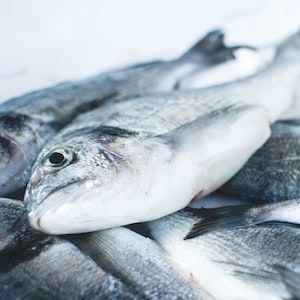
Producers in South Australia once again have a direct connection to Asian markets after the Federal Government re-established a pivotal trade route.
More than 30 tonnes of SA produce, seafood, and meat are currently being transported to Asia under a new agreement with Singapore Airlines.
The trade flight, established through the Federal Government's International Freight Assistance Mechanism, will enable a mix of chilled seafood, tuna, lamb, chicken meat and eggs distributed across markets including Hong Kong, Thailand and China.
Federal Trade Minister Simon Birmingham says the agreement is great news for struggling exporters and producers in South Australia.
"We're backing South Australia's farmers and fishers through this agreement that will restore this critical freight route and give exporters a direct line back into key export markets across Asia," Birmingham said.
"Our exporters fight so hard to win contracts in export markets and we want to make sure they can continue to get their products to their customers on time.
"The more South Australian produce, meat, and seafood we can onto these flights and headed overseas, the more local jobs we can secure and the more export dollars we can bring back into South Australia."
The International Freight Assistance Mechanism is part of the Morrison Government's $1 billion Relief and Recovery Fund designed to assist communities and industry sectors that have been hit hard by the COVID-19 pandemic.
Premier of South Australia Steven Marshall says the new route will provide a significant boost for local exporters and those employed in the sector.
"Today marks a real turning point for South Australia's exporters who have been struggling with the impacts of coronavirus," says Marshall.
"It's fantastic that our local producers now have a clear pathway to supply their fresh premium produce to markets around the world.
"This is a great result for local jobs, and I'd like to extend my gratitude to the Morrison Government and Singapore Airlines for supporting South Australian businesses."
Related story: WA resumes air freight to Singapore
Updated at 3:10pm AEST on 6 May 2020.
CSL to use COVID-19 survivor blood donations in new treatment
 "CSL to use COVID-19 survivor blood donations in new treatment")
Australian biotech giant CSL (ASX: CSL) has commenced development of an anti-SARS-CoV-2 plasma product that will use the antibodies of recovered COVID-19 patients to treat future cases of the coronavirus.
The product will be developed at CSL's manufacturing facility in Broadmeadows, Victoria, and has a working name of COVID-19 Immunoglobulin.
CSL's potential treatment will be developed using donations of plasma made in Australia by people who have recovered from COVID-19, chosen because of the high levels of antibodies (proteins that fight COVID-19) that exist in their plasma.
These antibodies will be pooled, purified and concentrated to make COVID-19 Immunoglobulin.
CSL estimates up to 800 plasma donations will be required to produce sufficient COVID-19 Immunoglobulin to treat 50 to 100 seriously ill people under the clinical trial.
Chief executive of the Australian Red Cross Shelly Park has encouraged those who have recovered from COVID-19 to volunteer their plasma for the project.
"Developing this new treatment requires plasma donations from people who have fully recovered from COVID-19, and whose plasma contains high levels of antibodies that can fight the SARS-CoV-2 virus that causes COVID-19," says Park.
"We are very proud to be part of this initiative which may ultimately help treat patients suffering from this terrible disease. I would encourage anyone who has recovered from a confirmed case of COVID-19 who thinks they may be eligible to donate to contact us."
CLS says its research into the potential treatment will be completed in two phases.
First, a small batch of COVID-19 Immunoglobulin will be produced and used to develop tests to detect the presence of the antibodies that fight the SARS-CoV-2 virus that causes COVID-19.
The second phase will see CSL, Australia's largest ASX-listed company, produce a larger batch of the product to be used in clinical trials in Australian hospitals.
Once the clinical trial is complete CSL will seek to register COVID-19 Immunoglobulin with the Therapeutic Goods Association to ensure ongoing supply in Australia.
The need for a treatment like COVID-19 Immunoglobulin is becoming more important than ever as Australia begins to consider relaxing some of the more restrictive gathering rules and prepares for the economy to reopen.
When that happens the Government hopes to be ready for a wave of community transmission of COVID-19, meaning a treatment for the virus will be a necessary tool to fight back an expected spike in cases.
While a vaccine is our best bet for the majority of the population to avoid the numerous complications that can arise from contracting COVID-19, a proven treatment will go a long way in giving governments globally confidence to relax restrictions.
This coronavirus has proven in recent days how easily it can get out of control; the 49 confirmed cases from the Cedar Meats facility in Victoria are just the latest emblem for how contagious this virus can be.
It also comes as Australia's effective rate of reproduction rate (ERR) goes back above one to 1.04.
Australia's Chief Medical Officer Brendan Murphy has previously outlined how, in order to relax restrictions, the country must conistently keep the ERR below one, meaning every person with COVID-19 infects no more than one other person.
Globally a treatment for COVID-19 will be welcome, especially in countries that are struggling to contain the coronavirus.
Overnight the UK surpassed Italy's death toll, with 29,427 deaths compared to Italy's 29,315.
The United States also continues to struggle with COVID-19, with 1.2 million confirmed cases and 71,670 deaths (up 2,748 from yesterday).
Never miss a news update, subscribe here. Follow us on Facebook, LinkedIn, Instagram and Twitter.
Business News Australia
Uptick in store reopenings at Vicinity Centres
 "Uptick in store reopenings at Vicinity Centres")
One of the country's leading shopping centre owner-operators has seen more than 500 stores reopen nationwide over the past week as visitor numbers improve.
Vicinity Centres (ASX: VCX) CEO Grant Kelley says the retail environment remains unstable and management expects challenging conditions to persist for at least the next 12 months.
"However, we have been buoyed by Australia's resilience and the speed with which the pandemic has been contained," he says.
"Our teams are highly focused on ongoing recovery, and providing customers and retailers with the opportunity to return and reconnect to our centres in a safe manner.
"Over the past week, we have seen early signs of a recovery in centre visitation, as restrictions have begun to ease. Retailers who closed their stores voluntarily in prior months are beginning to reopen for trade, with 530 stores reopening in the past seven days."
A Vicinity spokesperson says this means 50 per cent of the 7,000 stores within its direct portfolio of centres are open, or 65 per cent of the portfolio gross lettable area (GLA).
The news comes as several major retailers have announced reopening plans, including Myer (ASX: MYR), footwear brand retailer Accent Group (ASX: AX1) and Adairs (ASX: ADH).
To cope with the challenging situation Vicinity has reduced working hours for 70 per cent of its employees effective 21 April to 30 June, has cut directors' fees and executive committee salaries for the same period, and has either reduced or deferred variable and non-critical operating expenses.
"Vicinity entered this crisis in good shape. However, given the impact of government-mandated restrictions, and a heightened level of voluntary store closures, cost reductions across our business have become necessary," says Kelley.
"We have deferred all non-critical capital expenditure, including the proposed redevelopment of Chatswood Chase in Sydney, NSW."
He notes Vicinity is working with retailers to support them during this challenging period, with a particular focus on smaller retailers.
"Vicinity welcomed and supports the Federal Government's SME Commercial Code of Conduct and Leasing Principles During COVID-19 (the Code) and will continue to work with state governments as the Code takes legislative effect," he says.
"Our team adopted the principles of the Code immediately, in order to complement the measures already underway to support our retailers based on their individual circumstances."
He says good faith negotiations are taking place with retailers whose businesses have experienced a downturn as a result of COVID-19, and temporary arrangements will be accelerated to assist.
"Inevitably, our income at this time is being impacted negatively, however we agree with the Federal Government's sentiment that landlords and tenants have a shared responsibility to tackle the challenges brought about by these unprecedented times," says Kelley.
"We are working hard to balance the needs and responsibilities of all of our stakeholders, including our team members, our securityholders, our customers and the thousands of retailers in our centres, particularly our SME retailers.
"Our goal is to ensure the viability of our industry through to the other side of the pandemic. This relies upon both the continued sustainability of retailers, combined with the critical infrastructure of shopping centres, which collectively employ a significant number of Australians, and provide a broad range of essential and discretionary goods and services for our communities."
In a press conference this morning, NSW Premier Gladys Berejiklian emphasised she didn't want to see a situation where the economy opens only to shut again.
"We've seen in other countries around the world what they've done which hasn't worked, is have very severe restrictions, then have very open freedom and then they've had to go back to restrictions again - I don't want to see that happen in New South Wales," she said, noting the experiences of Singapore, Italy, Spain and parts of the United States.
"It's easier to shut things down. It's much harder to reopen and have normality because we need to make sure everything we do is COVID-safe, and I'm confident so long as every business follows the basic requirements of a COVID-safe environment, that retail will reopen.
"I just want to make sure all the hard work we've done doesn't evaporate because we took one hasty decision, just one hasty decision, which then allows all this hard work to go backwards."
Updated at 10:11am AEST on 6 May 2020.
PM places Trans-Tasman travel on level footing with long-haul interstate routes
 "PM places Trans-Tasman travel on level footing with long-haul interstate routes")
Trans-Tasman travel "is something that will sit alongside when we're seeing Australians travel from Melbourne to Cairns," according to Prime Minister Scott Morrison.
This statement identifies both Morrison's and New Zealand PM's Jacinda Ardern's eagerness to reconnect our two economies.
Plus, it could mean that Australians looking to head overseas may be able to do so as soon as widespread interstate movement is reinstated.
Speaking this afternoon in Canberra following a meeting of the National Cabinet Morrison said travel between Australia and New Zealand is a particularly important element for both countries' economic rebound.
While travel between the two nations is "still some time away" Morrison says reopening borders is a part of the ride back to normality.
"Both Australia and New Zealand will start connecting with the rest of the world again and the most obvious place for that to start is between Australia and New Zealand," Morrison said.
Morrison stressed that reinstating these flights paths will be a huge relief to the tourism and airline industries, considering the two way travel between the two countries totals to around 1.4 million people a year both ways.
"Almost as many Kiwis come here as Australians go there, and particularly for states like Queensland there is a much greater share of that," Morrison said.
"As we're building up our economies again, and particularly for the Trans-Tasman travel and what that means for the airlines as well, that will be important to support jobs in those sectors so we're working cooperatively together.
"New Zealand has stronger biosecurity and border arrangements as do we, so it's the obvious place to start."
As for interstate travel the PM says we could be leaving our home state by July for a holiday.
"Hopefully by the end of term school holidays if they're able to go and have a holiday on the Gold Coast or in South Australia or wherever it happens to be out of one's home state well then let's hope that that's possible," Morrison said.
"That will be great for those places in terms of the tourism impact.
"That is all part of getting back to that COVID-safe economy, but what is really important is people need to still hold to those principles that are around the COVID-safe environment."
Updated 4:19pm AEST on 5 May 2020.
National Cabinet devises toolkit for reopening as 'compounding effect' bites
 "National Cabinet devises toolkit for reopening as 'compounding effect' bites")
Prime Minister Scott Morrison has today highlighted the disproportionate impact of COVID-19 on jobs in some sectors, as the National Cabinet rapidly prepares a COVID-19 toolkit that could guide safe business reopenings.
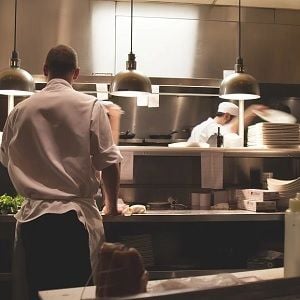
The PM pointed to the fact that out of the 11 per cent drop in economic activity, the hospitality sector (accommodation and food services) only accounted for 1.7 per cent.
But of the one million jobs lost since the crisis began, 441,000 have been in hospitality, which goes to show GDP cannot alone demonstrate the wide-reaching impacts of the current downturn.
"That's [hospitality] the sector most affected by all of this. When you look at retail services you're at just 1 per cent - that's the retail and wholesale trade - but 146,000 jobs," he said.
Other sectors that have borne the brunt on the job loss front include construction at close to 120,000 jobs lost, and arts and recreation services with 108,000 newly unemployed.
The Prime Minister added it's not just the first-round effects that we need to consider, but the compound effects on other industries.
"We have in the agricultural sector at the moment welcome news in some places - the drought's starting to break and rain's getting to areas it hasn't been, but when restaurants and cafés are closed, they're not buying from those producers like they were before," he said.
"There is the compounding of the effect, so keeping those types of places closed, and there are obviously good reasons for having them closed......it is the food producer, it is the supply chain that actually goes into those sectors that we need to take that into account.
"We are not seeking to delay any time at all in terms of trying to get things moving again, but we must be able to move them forward safely."
While reopening decisions will ultimately made by states and territories, the National Cabinet has been at full tilt on the COVID-19 planning toolkit so that businesses are ready when the time comes for restrictions to be relaxed.
"I look forward to outlining a framework later this week once we have our next meeting," the PM said.
Attorney-General and Minister for Industrial Relations Christian Porter noted the COVIDSafe app - expected to surpass five million downloads today - is an important part of this health and safety approach, but businesses will also need the right protocols in place.
"As we went into the constraining phase in April with COVID-19, there were almost a million visits to the Safe Work Australia website, which was massively an increase on the number of visits that you usually get," Porter said.
"What was clear is that as the constraints were necessarily placed as a health response on the Australian economy, businesses had a great hunger for information in what was a very dynamic and fluid environment so that they could actually be doing the right thing."
In response to this need, parts of the Safe Work Australia website have been rebuilt so that employers and employees in very specific industries can ascertain what's needed at a granular level.
"What we've done is create 1300 different web pages which will apply to 23 different industry sectors," Porter said.
"Using the content filter and tailored drop down menus, they can navigate fairly simply to get precise answers to the questions that will apply to their particular business, whether they are a manufacturer, an abattoir or a café, whether they want to know how cleaning should work, what are the standards that are appropriate, what products should be used, so down to a very granular level of detail.
"That is something that we think will be a very important tool for all businesses large and small in Australia as they reanimate."
National COVID-19 Commission chair Neville Power said meetings have taken place with hundreds of individual businesses and over 100 peak bodies, associations and unions about getting businesses COVID-safe.
He highlighted four key elements of what the toolkit aims to achieve:
- Reconfiguring worksites to make them safe;
- How to respond if there is an incident in workplace, for example how people communicate, how tracking and tracing is conducted and how people are supported;
- How a work site can be returned to being as safe as possible; and
- The communication process with employees to make sure everyone understands what's required, what's going to happen, and how their families will be supported.
"Some businesses are doing quite well and ready and continuing to operate with reconfiguring workplaces, some businesses are in the preparation stage, and some need a little more help to get there and that's where we're working at the moment," Power said.
"It'd be fair to say that the level of ingenuity and innovation that we've seen has been fantastic. Businesses are looking at this as just another business problem, and saying, how do we get as many people back to work as we possibly can, while having those protections in place to reduce the transmission of the virus.
"A key part of that has been the IR task force which has been set up with the attorney general's office and being led by Greg Combet.
"I think we're all looking forward to Having a more relaxed set of restrictions, but we need to make sure that we're continuing to do the right thing."
Updated at 4:36pm AEST on 5 May 2020.
Advertisement
Latest News
From $13,000 to $20 million: how a PCOS diagnosis and a pair of scissors built Xali Organics
Inspired by a medical diagnosis and driven by innovative marketing,...
Cedar Woods secures $63.4m in new land acquisitions as record presales underpin pipeline push
Perth-headquartered residential developer Cedar Woods Properties (A...
Australia's long-term beer decline hits home as Lion plans to close Boag's brewery in Launceston
Australia's decades-long decline in beer consumption has claime...
Downer EDI seals $310m Transurban contract to maintain Sydney motorway network
Infrastructure services group Downer EDI (ASX: DOW) has secured con...
Propel Funeral Partners expands New Zealand footprint with trio of acquisitions worth $9.1m
Sydney-based death care provider Propel Funeral Partners (ASX: PFP)...
Advertisement