Advertisement
Staying informed is more important than ever as the situation unfolds with Covid-19. Stay tuned here for our live updates, and be sure to let us know what your business is doing to face this unprecedented challenge.
Covid-19 News Updates
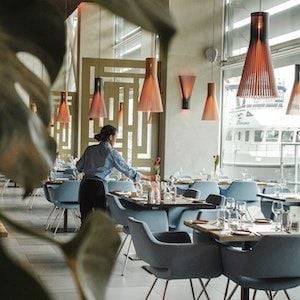
Tasmanian restaurants, cafes and pubs to reopen next Monday as roadmap revealed
 "Tasmanian restaurants, cafes and pubs to reopen next Monday as roadmap revealed")
Tasmanian's roadmap to recovery will see restaurants and cafes open for up to 10 people from Monday 18 May, putting the state on a path to rejuvenating its economy by mid-July.
A staged approach to lifting restrictions has been announced, guiding Tasmania back to a semblance of normality over the next two months.
Some restrictions on funerals and national parks were lifted yesterday, but the major changes will start next Monday.
"The changes are gradual, with careful monitoring of each stage to ensure our safeguards are working in reducing the risk of outbreaks and enabling health authorities to respond if needed," says the Tasmanian Government.
"The timeframe for the implementation of each stage is based on people following the rules and the ongoing success of the measures in protecting the community.
"For the staged approach to work, it needs your support to reduce the risk of outbreaks, ensuring cases can be identified and managed and keep us on track for the easing of restrictions."
Stage One
Stage One of Tasmania's roadmap commences on 18 May and will include allowing:
- Gatherings of 10 people (except visitors to households, which is capped at five people) for indoor and outdoor including real estate, small religious gatherings and weddings;
- Funerals can extend to 30 people outdoor;
- Restaurants and cafes in all settings to open and seat patrons of up to 10 people at a time;
- Community and local government facilities to open for up to 10 people;
- Park exercise equipment and playgrounds, pools and boot camps open for up to 10 people.
Stage One will see changes implemented in tranches. The second tranche of Stage One will commence on 25 May and will allow:
- Kindergarten to Year 6 students return to learning at school;
- Year 11 and 12 students at extension schools and colleges return to learning at school;
- Aged care visits will move to national restrictions of two visitors, once per day.
The third tranche of Stage One will commence on 9 June and will see high school students from years 7 to 10 going back to learning at school.
Racing will resume on 13 June 2020 subject to a review and risk-assessment by Public Health Tasmania.
Stage Two
Stage Two of the roadmap to recovery will commence on 15 June (subject to public health advice) and will allow:
- Gatherings of 20 people for indoor and outdoor including restaurants/cafes, cinemas, museums, galleries, theatres, performance venues, historic sites, religious gatherings and weddings;
- Funerals up to 50 people;
- Accommodation services to recommence;
- Camping, overnight boating and shacks to open with up to 20 people;
- Gyms and boot camps for up to 20 people;
- Beauty services for up to 20 people;
- Park exercise equipment and playgrounds open for up to 20 people;
- Outdoor community sport to resume, with up to 20 athletes/personnel;
- Indoor sport and recreation, including pools with up to 20 people;
Visitors to households will be reviewed at this time and border controls will remain in place.
Stage 3
Stage 3 is expected to commence on 13 July 2020 (subject to public health advice) and will allow:
- Gatherings of 50 to 100 people;
- Aged care homes allowed five visitors and multiple visits;
- Potentially reopening clubs, bars, nightclubs and casinos;
- Markets to reopen;
- Food courts and food vans at markets to recommence;
- Spas and bathhouses to reopen;
- Day trips and camping for school groups allowed;
- Outdoor community sport to resume (with numbers to be determined later);
- Indoor sport and recreation including pools (with numbers to be determined later).
Today's COVID-19 Australian case numbers
There have been 17 confirmed cases of COVID-19 today, all from Victoria, bringing the national total to 6961.
Eight people have recovered today, bringing the total recovered to 6190, with 670 cases still active.
Globally there have been 4.17 million cases of COVID-19 confirmed, with 1.34 million in the USA, and 285,945 confirmed deaths from COVID-19.
Updated at 10:49am AEST on 12 May 2020.
Deloitte Access Economics calls for "JobTweaker"
 "Deloitte Access Economics calls for \"JobTweaker\"")
Deloitte Access Economics has applauded the Federal Government's $130 billion JobKeeper package, describing it as an economic lifeline that chose speed over elegance but "got the balance right for most people".
After the package was announced the consultancy reduced its forecast FY21 unemployment rate from 12 per cent to a peak of 8.5 per cent, implying the saving of more than half a million jobs.
However, Deloitte does not expect unemployment to return to pre-coronavirus levels of around 5 per cent until 2024. Bringing down the number of jobless while phasing out the wage subsidy will be a key policy challenge for the government.
"While Treasury is no doubt working up options to put on the table, we recommend that the federal government should opt for what we call 'JobTweaker' - tweaking JobKeeper to shore up a strong recovery," the group said.
"The aim is to save more jobs that can be saved, while recognising that there will be some we cannot save. Australians cannot keep a job that won't earn its keep, but we can keep more if we tweak JobKeeper.
"For JobKeeper to stop abruptly, all it would have done is have kicked the unemployment can down the road."
Deloitte notes there is a good chance the original $130 billion cost of JobKeeper won't be fully spent, as its costing was put together at a time when the outlook was at its bleakest.
"The more successful the measure has been the cheaper it has become, and many businesses - and people - thought that they qualified for JobKeeper when they didn't," the group said.
"This means a JobTweaker approach could potentially have a minimal impact on the budget bottom line. Every taxpayer dollar is vital. And so, it is vital that we make sure the $130 billion this nation is spending gets maximum bang for buck."
The consultancy proposes making JobKeeper "smaller, but for longer".
"JobKeeper eventually needs to go - it costs a lot, it may cause competitive problems between firms, and its relationship with JobSeeker with respect to incentives to work is complicated," Deloitte Access Economics said.
In designing the phase-out, the group considers that:
- The dignity of work will reign: Lots of good things will happen regardless of how JobKeeper is phased out. People want to work, and businesses want to reopen. We all want to get back to 'normal'. So, the incentives generated by JobKeeper and JobSeeker are important, but the dignity and purpose of work and individual aspirations are even more important.
- Timing is everything: Different types of businesses will be opening in different states at different times, but JobKeeper is due to expire all at once on 27 September 2020. That means a complex problem will be addressed with a one-size-fits-all response. We can do better than that. We need to ensure there isn't a mass shift from JobKeeper to JobSeeker because some businesses simply can't sustain reopening or afford to keep their employees.
- So, complexity is key: Where a one-size-fits-all approach on the way into hibernation worked, one size will not fit all on the way out. Different businesses and different occupations will open up at different times and at different speeds.
- No zombies: One pandemic is enough for a lifetime and there is a risk that JobKeeper, as a measure designed to preserve jobs, could eventually create 'zombie firms' that neither fully recover, but don't go bankrupt. This would slow the broader recovery. But so too would a sudden stop to all support.
Deloitte Access Economics proposes the following ideas for considerations in the government's review in mid-June:
- Phase JobKeeper out in line with a turnover measure over the short-term and in line with reopening steps. As turnover increases with economic activity, the JobKeeper payment steps down from $1,500 per fortnight to $0 until turnover begins to return to the pre-COVID levels. Just like the turnover drop made them eligible for JobKeeper in the first place, a turnover recovery could make them ineligible.
- Or more simply, the payments could be withdrawn slowly from $1,500 a fortnight to lower amounts on succeeding fortnights: to $1,200, then $900, $600 and finally $300 adding eight weeks and a further $20 billion to its cost or potentially just using up the already 'unsubscribed' amount.
- Even more narrowly, the government could take a targeted and more sectoral approach. For instance, it replaced JobKeeper with a $600 a fortnight supplement for just over three months (beyond September) for businesses that fit narrower criteria and have been hit the hardest: 20 workers or fewer, and working in industries such as air transport, food and accommodation and arts and recreation. Such a measure is estimated to cost around $1.5 billion a much smaller share of the unsubscribed JobKeeper pie, but equally sustaining a much smaller share of the economy.
Prime Minister Scott Morrison has today dismissed any speculation JobKeeper would be wound back before its September end date as "very premature".
"We are six weeks into a six-month program. And the impact of the virus, how it will impact on Australia in the months ahead with a reopening economy is very much a work in progress," he said.
"In early March, I said we had to have programs that were targeted. We had to have programs that used existing distribution mechanisms within the government.
"Now, how that program can be adjusted to better support over that period or if there are sectors that come under greater strain over a longer period of time, these are all things that the government is fully aware of."
Updated at 4:21pm AEST on 11 May 2020.
NZ to ease restrictions further on Thursday
 "NZ to ease restrictions further on Thursday")
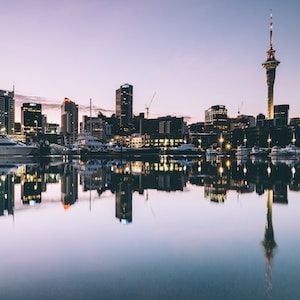
New Zealand Prime Minister Jacinda Ardern has announced the country will be moving to Alert Level 2 on Thursday, thus relaxing COVID-19 restrictions further.
Ardern says the NZ Government will approach the easing of restrictions gradually in order to manage the risks of moving too fast.
"At the moment, what we're being guided by is how do we open up the economy but in the safest way possible," says Ardern.
New Zealanders will then be able gather in groups of up to 10 people, including at home, for weddings, funerals, cultural gatherings, religious ceremonies, and within a restaurant or venue.
Bars will have to wait until 21 May to reopen; a "pragmatic" decision according to the PM based on evidence and data gathered by the government.
"It does give us time to look at that extra data...to make sure we are moving safely," says Ardern.
"We will be looking to provide more support to business and that it something we will be announcing soon. But that of course is reflective of the fact that there will be some businesses who will take a while to gear up even when we start to move into Level 2."
Under this next stage, schools will resume next Monday.
New Zealand will remain in Alert Level 2 for two weeks, after which the Government will conduct a review and determine whether to stay at the same level of restrictions or not.
"The goal has always been as safely as possible to move back to some form of normality as soon as possible," says Ardern.
"We haven't put a final number on Level 2, but if we are able to sustain longer and no cases then that will mean that we are further and further towards our ongoing goal of elimination and we will be able to further open up.
"Regardless...even if we have low and low numbers we'll still be looking at border restrictions and we will still be encouraging everyone to practice those hygiene measures that will keep all of us safe."
Updated at 3:24pm AEST on 11 May 2020.
Victoria to take "cautious" approach to relaxing COVID-19 restrictions until June
 "Victoria to take \"cautious\" approach to relaxing COVID-19 restrictions until June")
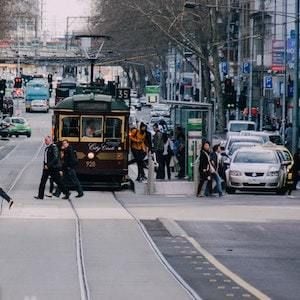
Victorian Premier Daniel Andrews is cautiously relaxing COVID-19 restrictions, emphasising complacency could result in the virus getting out of control.
The State will relax gathering restrictions from 11:59pm on Tuesday night, enabling five guests to visit a household.
Unlike in other states, cafés, restaurants and bars will remain closed.
"At just 10 patrons the feedback has been pretty overwhelming, that that's not a model that is viable," says Andrews.
"If we wait those three weeks when we move to go beyond just takeaway for cafés and restaurants, we might not have to stick with a number of 10. We might be able to go higher than that," he says.
For those working arrangements the message is the same: if you can work from home, keep doing so.
Other new rules include:
- for outdoor activities like hiking, fishing, playing golf etc, groups must be restricted to no more than 10 people;
- weddings will now be able to have 10 guests;
- and up to 20 people will be able to attend funerals held indoors and up to 30 if they're outdoors.
These latest measures will remain in place until the end of May at the earliest and demonstrates Victoria's reluctance to follow in the footsteps of other States.
"There is a real need to be cautious," says Andrews.
"There is a need for us to take a small first step and be vigilant in following a new set of rules. This is not over. I wish it was, but it is not over.
"You only get one chance to do this right, unless of course you're prepared to settle for this stop start, rules changing, restrictions on and off, lockdowns, coming out of lockdowns, going back into lockdown. That hasn't worked in other countries and it certainly would not work here."
Andrews says restrictions on cafés, restaurants and pubs need to stay in place for now, to both stop the spread of COVID-19 and to ensure the future viability of businesses in the State.
"There will be a gradual opening up of the economy, a gradual relaxation of these rules, but each step, and particularly the first step, has got to be cautious, safe, and appropriate to the circumstances that we are dealing with," says Andrews.
The Premier cited the recent outbreak in Korea, where a single individual with COVID-19 attended a number of bars resulting in the re-closure of hundreds of bars across the country and the forced quarantine of more than 1,000 Koreans.
"We have to be very careful to not do too much too soon, because the problem then is it gets away from you," says Andrews.
"We've seen just how rapidly it spreads, not just in our state, in our nation."
For those Victorians still working from home today's announcement from the Premier has not changed much; the message to those who can work from home is that they should continue to do so.
"There are many Victorians, their employers and workers, who have, because of the work they do, been able to work from home, and I don't want to see that change," says Andrews.
"The fact that we're going to have literally hundreds of thousands of people visiting family and friends, that's a big step, that's a lot of movement that wasn't happening previously."
The announcement from Andrews comes as the State reports seven new cases of COVID-19, including one from the Cedar Meats processing facility, four from returning overseas travellers, and two under investigation.
The seven new cases take Victoria's total confirmed cases of COVID-19 to 1,494.
To date, 161,000 people have been tested in the largest testing regime ever implemented in Victoria. Of the 141,000 tests that have been processed Andrews says 30 cases were discovered that would've otherwise gone undetected.
This testing program will remain a feature of the rest of 2020 according to Andrews, though likely not at the immense scale the State has been undertaking to date.
Victoria's new rules are extremely cautious in comparison to how other states and territories in Australia have approached relaxing COVID-19 restrictions.
Today in South Australia the State is moving into Stage One of its COVID-19 roadmap to normality, which will allow outdoor dining, regional travel, and auctions.
Queensland will begin relaxing restrictions on 16 May, opening up restaurants, pubs and bars to 10 people indoors and a range of other relaxations including the opening of beauty therapy and nail salons with bookings, retail shopping, personal training, outdoor gyms, open homes and auctions, libraries and more.
Yesterday New South Wales announced it would be rolling back restrictions on 15 May, broadly in line with the policies of South Australia and Queensland, allowing restaurants and cafés to reopen with up to 10 patrons at a time.
And Western Australia, thanks to its hard border, will be more liberal with its easing of restrictions from 18 May, allowing the opening up of hospitality venues, indoor or outdoor fitness classes, and non-work gatherings, all with a maximum limit of 20 people.
Andrews says his cautious approach will ensure Victoria is the "envy" of the rest of the world in terms of how it handled the COVID-19 pandemic.
"The last thing we want to do is follow the example that so many other countries have given us," says Andrews.
"If you relax too many rules too quickly, then we will find ourselves back here and indeed worse. We will find ourselves in a lockdown even harder than the one that we are now coming out of.
"Our performance is the envy of the world. We need to make sure that we jealously guard that."
Updated at 11:51am AEST on 11 May 2020.
Scentre Group poised for retail return as COVID-19 restrictions ease
 "Scentre Group poised for retail return as COVID-19 restrictions ease")
Around the country states are planning to ease COVID-19 restrictions, giving Australian retailers the confidence to reopen.
This is good news for the operator of Westfield centres, Scentre Group (ASX: SCG), as it remerges from the slowdown.
All 42 Westfield Living Centres remained open and trading during the quarter, but new life is set to be injected over the coming weeks.
As of today 57 per cent of retailers in Scentre's portfolio are now open and trading, with "significantly more" expected to reopen over the coming weeks.
Scentre says it has seen an increase in customer visitation as more retailers have reopened.
Significantly, over this last weekend, there was double the visitation of just five weekends ago.
"All Westfield Living Centres have remained open throughout the pandemic. I am proud of the Group's focus on the health and wellbeing of our customers, retail partners and employees whilst maintaining business continuity and economy activity to the extent we possibly can," says Scentre Group CEO Peter Allen.
"Balancing these priorities remains our objective."
During the extended retail shutdown Scentre Group was slammed by retail giant Premier Investments (ASX: PMV) for its handling of the pandemic.
Premier Investments CEO Mark McInnes' was particularly critical of Scentre's hygiene standards.
"This issue is very real for Premier Retail - we have had two incidents in Scentre Group's Carindale mall where our team members were exposed to COVID-19-positive customers, and in both instances, when Scentre was notified, they took no action," McInnes alleged.
"We were made aware of these incidents by the affected customers themselves and the Queensland Health Department.
"We then notified Scentre, who to our knowledge took no steps to notify the other tenants, customers or the community of Carindale that positive COVID-19 cases had been shopping in the mall."
In a response, a Scentre Group spokesperson said its retail partners and centre management followed the correct Queensland Health protocols at Westfield Carindale.
"The Queensland Health advice was these individuals posed no risk to any customers, retailers or employees," the spokesperson said.
"As a precaution, the relevant retailers closed their stores temporarily for deep cleaning. Centre management also conducted additional cleaning."
The company increased its liquidity to $3.1 billion in April in response to the financial crisis. As a result of additional refinancing of bank facilities the amount of debt maturing through to December 20201 has been further reduced to $1.9 billion.
To mitigate the damage of COVID-19 Scentre implemented a range of initiatives targeting more than a 25 per cent reduction in centre operating expenses during the pandemic period.
These initiatives included a 20 per cent reduction in base Board fees, while the Senior Leadership team also agreed to a 20 per cent pay cut.
Across the group more than 80 per cent of employee's roles were adjusted, including moving to reduced remuneration of reduced hours. These arrangements will be reviewed in August 2020.
Scentre still doesn't expect to pay an interim distribution to shareholders for the half year period ending 30 June 2020, and the company's FY20 guidance remains suspended.
"The Group believes that retaining this capital will further strengthen its financial position and ability to continue to deliver long term returns to its securityholders," says Scentre.
Shares in Scentre Group are up 3.64 per cent to $2.28 per share at 10:20am AEST.
Never miss a news update, subscribe here. Follow us on Facebook, LinkedIn, Instagram and Twitter.
Business News Australia
Suncorp reveals COVID-19 hit and up to $70 million in staff underpayments
 "Suncorp reveals COVID-19 hit and up to $70 million in staff underpayments")
Queensland-based financial institution Suncorp (ASX: SUN) has detailed the full impact of COVID-19 on its business, as well as major staff underpayments across the group today.
In a company update Suncorp says it is well capitalised to ride out the COVID-19 pandemic, despite expecting a $133 million impact due to the coronavirus crisis.
The announcement coincides with an update on Suncorp's pay and leave entitlements review, with Suncorp expecting costs to remediate underpaid staff to land in the range of $40 to $70 million.
Unlike other major financial institutions Suncorp will not be embarking on a capital raise to increase its cash buffer, as it claims it entered the pandemic in a sound financial position.
Group Excess Common Equity Tier 1 at 31 March 2020 was $682 million, and the company will rely on its conservative investment portfolio with more than 94 per cent of investments in cash and fixed income securities.
According to Suncorp the impact of COVID-19 will materialise in reduced consumer motor claims volumes, increased landlord loss of rent claims and negative market-to-market movements on its investment portfolio.
Costs during FY20 are now going to be slightly above $2.7 billion including the pay and leave entitlements remediation program.
According to Suncorp Group CEO Steve Johnston the company was quick to respond to the COVID-19 crisis by realigning its business, supporting its customers, and protecting its stakeholders to prepare for the post-COVID-19 environment.
Johnston says the company has already received thousands of requests for financial hardship relief from both Suncorp's bank and insurance customers and has provided discounts and premium waivers to 12,300 insurance customers in Australia and New Zealand and approved $4.05 billion in loan deferrals.
"A key priority for us is to ensure our customers are protected and prioritising those most in need," says Johnston.
"We have launched several support packages and financial hardship options, and we have been working closely with industry bodies, government and regulators to ensure a coordinated response."
The bushfire crisis at the beginning of 2020 forced Suncorp to mobilise on an extraordinary scale; the company set up customer support teams in bushfire affected areas to assist impacted customers with claims lodgements, access to emergency funds and temporary accommodation.
So far Suncorp has delivered a claims response to the 12 declared events with over 72,000 claims lodged across its company.
For bushfire customers, 70 per cent of property claims and 80 per cent of motor claims have been finalised, while for storm, hail & flood customers over 30 per cent of the 35,000 consumer home claims and almost 60 per cent of the 28,000 consumer motor claims have been finalised.
As for the underpayments issue, Johnston says he is disappointed to have let team members down, and the company is implementing processes to ensure a problem of this scale does not occur again.
"As a Suncorp employee of long standing I am incredibly disappointed that we have let our people down there is no excuse and we need to get this right," says Johnston.
"I want to offer my sincere apologies to those who may have been affected."
Suncorp says it is still too early to determine individual impacts, but the group will recognise $40 to $70 million in remediation payments in its FY20 results.
Never miss a news update, subscribe here. Follow us on Facebook, LinkedIn, Instagram and Twitter.
Business News Australia
WA sets generous reopening roadmap with restaurants and fitness classes fast-tracked
 "WA sets generous reopening roadmap with restaurants and fitness classes fast-tracked")
Western Australia will enter the next phase of easing COVID-19 restrictions later than South Australia and Queensland, but the scope of many reopenings will be much more liberal for the "hard border" state.
Premier Mark McGowan and Health Minister Roger Cook today announced the next phase of relaxing restrictions would start on 18 May, including opening up hospitality venues, indoor or outdoor fitness classes, and non-work gatherings, all with a maximum limit of 20 people.
This compares to a 10-person limit when South Australia and Queensland enter their next stages of easing on 10 May and 16 May respectively.
Meanwhile, the Northern Territory has been at the forefront of recovery and will also lift more restrictions on 15 May, including on food courts which are slated for much later in the piece within the national guidelines.
The WA Government has announced the state is already in the first part of a four-phase plan after the cautious relaxing of some restrictions on 27 April to allow families and friends to stay connected.
Phase 2 will focus on encouraging Western Australians to return to work, unless they are unwell or vulnerable, so the WA economy can further rebuild in a safe and measured way.
A later date than some other parts of the country was chosen to give businesses and families time to prepare, and includes the following:
- Indoor and outdoor non-work gatherings lifted to 20 people;
- People are encouraged to return to work, unless they are unwell or vulnerable;
- Cafés and restaurants can reopen with meal service (including within pubs, bars, clubs, hotels and casino), limited to 20 patrons and the four square metre rule applied;
- Weddings and funerals, limited to up to 20 attendees (30 for outdoor);
- Places of worship, community facilities and libraries to re-open, limited to 20 patrons;
- Community sports (non-contact) limited to 20 people;
- Outdoor or indoor fitness classes (minimal shared equipment) limited to 20 participants; and
- Public swimming pools can open under strict rules (one indoor pool and one outdoor pool), limited to 20 patrons per pool.
If businesses or premises want to reopen they will be required to complete an official COVID Safety Plan, which the government plans to release soon in consultation with industry.
"Western Australia is ready to take the next step in our COVID-19 recovery," says McGowan.
"The WA roadmap is our plan to start getting Western Australians back to work within a 'COVID safe economy.
"We have been able to get to this point thanks to the efforts of all Western Australians, who have gone above and beyond to do the right thing to help stop the spread of COVID-19."
He says the state's hard borders and its isolation have been an advantage, and urged people to "keep it that way".
"This phased approach allows us to carefully monitor COVID-19 in WA, and ease restrictions in a way that supports our economy, with the smallest risk to the community's health," he says.
"It might not meet everyone's expectation, but we are doing what we can to carefully get businesses up and going that have been devastated by the impacts of COVID-19.
"The resumption of dine-in services at cafés and restaurants is an important step forward in our State's recovery. These are some of the hardest hit local businesses, and I feel deeply for those who have been forced to close and staff who have lost their job."
Phase 2 will also open up more regional travel, with the number of borders within the state set to drop from 13 to only four, allowing:
- Travel between the South-West, Great Southern, Wheatbelt, Perth and Peel regions;
- Travel between the Mid-West, Gascoyne and Pilbara regions (excluding Biosecurity zone);
- Travel within the Goldfields-Esperance region (excluding the Biosecurity zone); and
- Travel permitted within the Kimberley local government areas (the Commonwealth's Biosecurity zone remains in place).
"We understand they have been inconvenient and challenging, and by removing most of the boundaries, I expect many Western Australians will now be able to reconnect with loved ones, and some tourism operations can resume," says McGowan.
"Let me be clear - we will continue to take a cautious approach to the easing of restrictions, based on the best of health advice. This approach has served us well so far, and has seen WA lead the nation in its response to the COVID-19 pandemic.
"We will closely monitor the situation over the coming week and if needed, due to a COVID-19 outbreak, we will reassess the commencement of Phase 2."
Phase 3 is set to be finalised in the coming weeks, based on the advice from the Chief Health Officer and will take into account the infection rates across WA. It is expected Phase 3 will be implemented around four weeks from the commencement of Phase 2.
Phase 3 will focus on continuing to build stronger links within the community and include further resumption of commercial and recreational activities, including:
- Further increases in the number of people allowed at indoor and outdoor non-work gatherings, including patrons at cafés and restaurants, weddings and funerals;
- Possible further relaxation of regional travel restrictions;
- Restrictions further relaxed for gyms, health clubs and indoor sport centres;
- Contact community sport (indoor and outdoor) permitted, with gathering limits;
- Beauty therapy and personal care services permitted;
- Auction houses and real estate auctions (not just online as it is currently); and
- Public playgrounds, outdoor gym equipment, skate parks, zoos, cinemas, galleries, museums and concert venues permitted to open, with gathering limits.
The Government announced Phase 4 would be assessed and finalised in due course, with WA's hard border set to be the final restriction lifted.
"Our roadmap has been developed specifically to help get some businesses going, while maintaining strict health guidelines to ensure Western Australians are kept safe," says Cook.
"It takes into account the Western Australian community's world-leading response to COVID-19, that has seen WA maintain consistently low numbers of new COVID-19 cases and success in reducing the spread of the virus.
"It allows for health experts to review the impact of the changes, before we move to the next phase of restrictions being lifted.
"Implementing these phases relies on each and every Western Australian to continue to practice good social distancing and good personal hygiene."
Updated at 6:11pm AEST on 10 May 2020.
NSW to start rolling back restrictions on 15 May
 "NSW to start rolling back restrictions on 15 May")
NSW Premier Gladys Berejiklian has announced an easing restrictions that is broadly in line with the policies of South Australia and Queensland, allowing restaurants and cafés to reopen with up to 10 patrons at a time.
Unlike in these two states however, NSW's next stage does not explicitly include pubs.
Following the National Cabinet's three-part reopening plan that serves as a roadmap for states and territories depending on their different circumstances, NSW will start winding back restrictions from Friday, 15 May.
"The changes will allow NSW to fire up the economy, while allowing more personal freedoms," says Berejiklian.
"Our community has demonstrated that by working together we can achieve positive results.
"We will continue to closely monitor COVID-19 rates, especially community transmissions, to guide us towards easing further restrictions."
In addition to measures already announced, including the Premier's call for retailers to reopen with caution, the following will be allowed in NSW as of Friday:
- Outdoor gatherings of up to 10 people;
- Cafes and restaurants can seat 10 patrons at any one time;
- Up to 5 visitors to a household at any one time;
- Weddings up to 10 guests;
- Indoor funerals up to 20 mourners, outdoor funerals up to 30;
- Religious gatherings/places of worship up to 10 worshippers;
- Use of outdoor equipment with caution; and
- Outdoor pools open with restrictions.
It is too soon to allow for regional holidays and ease further restrictions but NSW will continue to work with business and communities during the path forward.
NSW Chief Health Officer Dr Kerry Chant says it is safe for NSW to ease further restrictions as the community as the community is vigilant with social distancing and hygiene.
"The chief health officers of the Commonwealth and States supported by experts have prepared advice on the way forward," says Chant.
"As we take this next step we need to continue to work together - governments, community, business and NGOs - with high rates of testing, social distancing and adherence to other public health measures like handwashing and staying at home if you show even slight symptoms."
Health Minister Brad Hazzard warns the COVID-19 fight is far from over.
"Without a vaccine we need to be vigilant, especially when restrictions lift," he says.
"There will inevitably be more cases, so social distancing will become even more crucial."
Berejiklian thanks the community as the State embarks on this important step that will allow more businesses to open up and more people to stay in work.
"NSW can only do this following the hard work and sacrifice of our communities," she says.
"NSW can only do this following the hard work and sacrifice of our communities."
Photo courtesy of 'Shot at Byron', via Wikimedia Commons.
Queensland to start relaxing restrictions on 16 May
 "Queensland to start relaxing restrictions on 16 May")
Queenslanders will only have to wait until Saturday week before they can dine in at restaurants or have a beer at the pub, although only 10 people will be allowed in any venue at a time unless you're in an outback area where the limit is 20.
Following the Prime Minister's announcement of a three-part plan that aims for the vast majority of restrictions to be eased by the end of July, albeit with strict hygiene and tracing protocols, Queensland has released its "Roadmap to Easing Restrictions".
Starting Saturday week, or technically next Friday at 11:59pm, Queensland's Stage 1 will come into force allowing for a range of relaxations including the opening of beauty therapy and nail salons with bookings, retail shopping, personal training, outdoor gyms, open homes and auctions, libraries and more.
Most Queenslanders will only be allowed to travel up to 150km within their region for recreational daytrips, while residents in outback Queensland will be able to travel up to 500km from home.
"We know how important our industries are to our state - our tourism industry's over $12 billion, the retail industry's over $15 billion, and of course our hospitality - café, restaurant, accommodation is also a multi-billion dollar industry," says Premier Annastacia Palaszczuk.
"There's a gradual return to some form of normality in our post-COVID world.
"It's going to look a bit different but we're going to back each other, and we're going to get through this."
Click here to see the full plan.
The Premier hopes to get more tourism going in time for the school holidays, with the goal of implementing Stage 2 on 12 June; a stage that also contemplates reopening gyms, health clubs and yoga studios, as well as expanding the number of people allowed in hospitality venues to 20.
"You will be able to travel in your region up to 250km to go to local destinations for a drive holiday, and then in July we are absolutely hoping - fingers crossed if our numbers remain low and everything is going well we will be able to open up travel for right across Queensland," she says.
By mid-June the aim is also to have indoor cinemas, outdoor amusement parks, concert venues, arenas and stadiums reopened.
If all goes to plan, by 10 July it is possible that gatherings of up to 100 people will be allowed.
Photo courtesy of Visit Bundaberg.
Updated at 3pm AEST on 8 May 2020.
Outdoor dining, regional travel, and auctions allowed in SA from Monday
 "Outdoor dining, regional travel, and auctions allowed in SA from Monday")
South Australia will embark on its own roadmap for easing COVID-19 restrictions from Monday, allowing residents to return to a sense of normality in the State.
Restrictions will be lifted in three tranches in-line with the National Cabinet's guidelines announced today.
Premier Steven Marshall (pictured) says SA will return to a COVID-safe economy by July.
The roadmap takes into account South Australia's low case numbers to date and the State's already relaxed restrictions compared to other Australian states.
As of today 10 people are able to gather indoor and outdoor, retail is not restricted, social gatherings are allowed, and outdoor playgrounds are still open.
But from 11 May restrictions will be lifted including:
- Regional travel
- Uni and TAFE face-to-face tutorials
- Outdoor dining for restaurants and cafes
- Community, youth and RSL halls opened
- Auctions and inspections
- Local government libraries
- Sport training (outdoor only)
- Funerals
- Worship, weddings and ceremonies
- Pools (limits apply)
- Campgrounds and caravan parks
Step 2 comes into play on 8 June, meaning 20 people max can gather indoor and outdoor and further restrictions will be lifted including:
- Cinemas and theatres
- Seated dining
- Galleries and museums
- Beauty, nails, tattoo, massage (non-therapeutic)
- Driving instruction lessons
- Gyms and indoor fitness
- Funerals (50 max)
- Sports transition to competition without spectators, including indoor sports
The State says it is considering further restrictions to be lifted including:
- Larger gatherings
- Licensed pubs and bars
- Nightclubs
- Shisha/hookah bars
- International students returning
- Casino and gaming venues
- Stadiums and larger entertainment venues
- Food courts
- Spas and saunas
- State border restrictions
- Travel into protected communities
South Australia broke a two-week streak of no confirmed cases of COVID-19 yesterday with one new case, bringing the State's total to 439.
Updated at 2:57pm AEST on 8 May 2020.
Advertisement
Latest News
From $13,000 to $20 million: how a PCOS diagnosis and a pair of scissors built Xali Organics
Inspired by a medical diagnosis and driven by innovative marketing,...
Cedar Woods secures $63.4m in new land acquisitions as record presales underpin pipeline push
Perth-headquartered residential developer Cedar Woods Properties (A...
Australia's long-term beer decline hits home as Lion plans to close Boag's brewery in Launceston
Australia's decades-long decline in beer consumption has claime...
Downer EDI seals $310m Transurban contract to maintain Sydney motorway network
Infrastructure services group Downer EDI (ASX: DOW) has secured con...
Propel Funeral Partners expands New Zealand footprint with trio of acquisitions worth $9.1m
Sydney-based death care provider Propel Funeral Partners (ASX: PFP)...
Advertisement