Advertisement
Staying informed is more important than ever as the situation unfolds with Covid-19. Stay tuned here for our live updates, and be sure to let us know what your business is doing to face this unprecedented challenge.
Covid-19 News Updates
Skechers help quadruple online sales for Accent Group, stores to re-open
 "Skechers help quadruple online sales for Accent Group, stores to re-open")
The company that owns the Australia-New Zealand distribution rights to footwear brands like The Athlete's Foot, Stylerunner, Skechers, Vans and Dr. Martens believes the Covid-19 pandemic has sparked a "seismic" shift in consumer habits, following a massive spike in online spending.
In late March around 4,200 employees at Accent Group (ASX: AX1) were affected by the temporary closure of more than 470 stores in response to the pandemic, but positive digital sales have prompted the company to progressively re-open all physical outlets by 11 May.
Accent has struck successful rent renegotiations for more than 100 stores so far, but an inability to reach a deal with one major landlord will likely lead to the shutdown of almost 30 stores by October.
The company highlights a significant acceleration in digital sales from $250,000 per day prior to March closures up to between $800,000 and $1.1 million per day over the past fortnight.
This surge has been supported by the opening of some shops as 'dark stores', using Accent's endless aisle technology to access the entire inventory base and to enable click-and-dispatch of product to customers. All group stores and a number of Accent's NZ-owned stores now fit this model.
Major drivers have been increased demand for the Skechers range for health professionals, while there has been strong demand for active footwear and apparel as more people are taking part in physical activities with The Athlete's Foot and Stylerunner websites benefiting greatly.
"After years of investment by Accent Group in our digital team and technology, I am delighted with the growth in our digital sales," says Accent Group CEO Daniel Agostinelli.
"It is clear that there has been a seismic and most likely enduring shift in consumer behaviour away from traditional shopping centres to shopping online.
"With 18 websites and our leading digital capability, Accent Group is capitalising on this trend. We will continue to drive digital growth as the number one priority in our company."
Accent's management notes its store network and surging online business give the company a fundamental competitive advantage, but unsustainable or uneconomic rental deals just won't work. Therefore, the group will be re-evaluating locations, sizes and formats of its store network to strike the right balance between digital and bricks-and-mortar sales.
Despite the re-opening announced today, Accent Group still expects a significant ongoing impact on the revenue and profitability due to the ubstantial decrease in foot-traffic, reduced tourism, increased levels of unemployment and related economic impacts
Management expects these conditions to continue for some time.
"We are committed to maintaining our position as the largest multi-channel retailer in our market," says Agostinelli.
"The mix of Accent's superior digital capability and the magic of our stores gives us a key competitive advantage, but it is important that we reach agreement with our landlords for sustainable and fair rental deals.
"With landlords where this cannot be achieved, we will close stores. Unfortunately, that has already occurred with one of our major landlords and we have given notice to exit 28 store leases at expiry over the next six months. We may also be forced to take similar action for more stores in the future."
The group notes good support and understanding from major suppliers and global brand partners, including Skechers, Dr Martens, Vans, Nike, adidas, New Balance, ASICS, Toll and many others who have worked with Accent to help ensure the inventory pipeline is right-sized and payment terms are aligned to reflect the current sales environment.
The company has also secured additional banking facilities, bringing the total facilities to $207 million with current net debt standing at $112 million.
"Accent Group's greatest asset is its people and I am incredibly proud of the resilience, tenacity and performance of our team through this difficult period," concludes Agostinelli.
Updated at 9:52am AEST on 27 April 2020.
SA hands out more than $50 million in land tax and rent relief
 "SA hands out more than $50 million in land tax and rent relief")
South Australian businesses are set to benefit from over $50 million worth of land tax and rent relief measures announced by the state government today.
Commercial and residential landlords suffering from Covid-19 restrictions will be offered a 25 per cent reduction on their 2019-2020 land tax liability on affected properties.
The only catch is that landlords taking advantage of the measure will be required to pass on the full benefit to their tenants impacted by Covid-19.
"This will be a powerful shot in the arm for local businesses and residential tenants who have been suffering a significant downturn in trade and income as a result of COVID-19 and the necessary restrictions imposed to help limit its spread," says SA Treasurer Rob Lucas (picutured).
"By helping landlords, we help their tenants and, in turn, ensure our economy is best placed to bounce back more rapidly from this once-in-a-century crisis.
"So, by saving hardworking South Australians rent we can provide them greater certainty and help ease their cash flow burden at a time when they need it most, ensuring more local businesses can stay afloat during this pandemic."
The scheme will apply to non-residential tenants with an annual turnover of less than $50 million that have experienced a 30 per cent or more reduction in income as a result of the Covid-19 pandemic.
In conjunction with the land tax relief measures are further measures to assist business tenants with paying rent.
State Government agencies will provide full rent relief for tenants of commercial, retail, industrial and other non-residential sites that have been forced to close or are significantly impacted as a result of COVID-19.
The rent relief will apply to impacted tenants from the date they were forced to close their business or were significantly impacted to 30 June 2020.
"Providing rent relief to tenants renting commercial, retail and industrial premises is another part of our strong plan to tackle the impacts of COVID-19 and keep South Australians in work," says Minster for Transport, Infrastructure and Local Government Stephan Knoll.
"This is estimated to save businesses around $4.5 million and is part of our $1 billion economic stimulus package to support local businesses and keep as many people in a job as possible.
"For some businesses this means they could be saving tens of thousands of dollars which they can use to help pay the bills, employ staff and help keep their doors open."
The relief measures come as over 19,000 employers have registered for the $10,000 cash grants from the state.
Updated at 4:55pm AEST on 24 April 2020.
PM prepares the nation for 'third wave' of Covid-19
 "PM prepares the nation for 'third wave' of Covid-19")
A concerted national effort to ramp up testing and tracing of Covid-19 will prepare Australia for a 'third wave' of the virus, according to the Prime Minister.
The National Cabinet expects to witness another spike in cases caused by community transmission, which will require new tools for containment.
Testing and tracing capabilities will be fortified, and rapid response teams will be prepared to snuff out clusters of the virus during phase three.
It comes as states and territories today relax the eligibility requirements for testing with Chief Medical Officer (CMO) Brendan Murphy aiming to test 40,000 to 50,000 people per day if necessary before restrictions are eased.
"We've done some really exciting work in the supplier line and test kits," says Murphy.
"We are much more confident that we've diversified the supply line and we feel that we will be able to secure enough tests to meet whatever surveillance plan we put in place."
Murphy says as returning travellers were quarantined, they each infected very few people and their effective reproduction rate (ERR) of the virus was very close to zero. As a result, it was much easier for Australia to have an ERR overall that was below 1.
But now, as we are moving into the community transmission phase, that number is actually moving closer to 1 and the PM says it is important we are well prepared in order to keep the level under that threshold.
"[The third phase] requires particularly different tools building on the ones we already have in place and that is the testing, that is the tracing, and that is the rapid response," says Morrison.
"We can't become complacent because of the fall in the number of internationally acquired cases which has been the predominant drop in the number of cases we've had in Australia, and now we have to be wary against community transmission."
"We'll also be then working towards decisions that we have to make over the next few weeks and getting the key data metrics in place as to how we'll make decisions on further easing restrictions."
Murphy adds the ACT and NT were not included in today's ERR modelling as case numbers are so low that there's no statistical purpose in showing them, which should be a "mark of pride" for those territories.
Community transmission in Australia has already been occurring; the outbreak in the Northwest of Tasmania and today a small cluster in Victoria are just two examples of what could become widespread if the country does ease restrictions.
"We have to be incredibly vigilant about [these clusters] as we focus our efforts on suppression containment over the next few months," says Murphy.
"We presented to the national cabinet today advanced versions of what we're calling our pandemic intelligence plan and our surveillance plan to test extensively and make sure that we can detect any of these clusters that might appear over the comings weeks.
As states and territories expand their testing regimes, and the finishing touches are placed on a Covid-19 tracking smartphone app, Murphy says the Federal Government is even considering testing asymptomatic people.
"We're also looking at a range of active surveillance mechanisms to test even people without symptoms in a range of frontline occupations and around what we call 'sentinel situations' where we sample a population," says Murphy.
"National Cabinet is very clear that they want to be absolutely confident before relaxing any measures that we are in a position in this country to detect any community transmission of any significance."
Murphy says quarantine measures imposed upon Australians returning home from overseas have been working, resulting in an effective reproduction rate (ERR) of zero.
"The opportunity for a return traveller to infect locals is essentially zero," says Murphy.
"We are so grateful to the states and territories for organising this quarantine and for those Australian citizens who have put up with two weeks of quarantine to protect their fellow members of the community and most of them have done so very graciously."
Taking out return travellers Australia has been able to get the ERR close to one, which is nearing the benchmark the PM hopes to hit in around three weeks' time before considering easing restrictions further.
"We are still in a good place and need to keep up a very, very strong vigilance over what we're doing," says Murphy.
PM Morrison has also confirmed that Parliament will resume for three days from 12-14 May.
Updated at 1:43PM AEST on 24 April 2020.
Mesoblast treatment achieves "remarkable" results for critical Covid-19 patients
 "Mesoblast treatment achieves \"remarkable\" results for critical Covid-19 patients")
An Australian-developed stem cell treatment has drastically increased survival rates in trials for ventilator-dependent patients suffering from acute respiratory distress syndrome (ARDS) due to Covid-19.
Melbourne-based regenerative medicine company Mesoblast (ASX: MSB, NASDAQ: MESO) has been engaged in trials with New York City's Mt Sinai hospital to intravenously infuse its product remestemcel-L in patients, and the early signs are promising.
The sample size of 12 patients may be small, but 83 per cent (10) of them have survived after the stem cell treatment compared to a 12 per cent survival rate for ventilator-dependent Covid-19 patients with the condition at a major referral hospital network in the city.
Mesoblast reports 75 per cent of the patients (nine) were able to come off ventilator support within a median of 10 days, compared to a 9 per cent rate for patients treated with standard of care during March and April.
Seven of the patients, who were given remestemcel-L within five days under emergency compassionate use, have been discharged from the hospital.
Using bone marrow aspirate from healthy donors, Mesoblast's proprietary technology is currently used to treat a condition called acute graft versus host disease (aGVHD), which many suffer after receiving a bone marrow transplant (BMT).
But as the Covid-19 pandemic took centre stage, the company hypothesised Remestemcel-L would be able to treat what is known as a cytokine storm - a kind of hyperinflammatory syndrome - in the lungs that often occurs with serious Covid-19 cases.
The company then quickly mobilised plans for trials in the US, Australia, China and Europe.
"The remarkable clinical outcomes in these critically ill patients continue to underscore the potential benefits of remestemcel-L as an anti-inflammatory agent in cytokine release syndromes associated with high mortality, including acute graft versus host disease and Covid-19 ARDS," says Mesoblast chief executive Dr Silviu Itescu.
"We intend to rapidly complete the randomized, placebo-controlled Phase 2/3 trial in COVID-19 ARDS patients to rigorously confirm that remestemcel-L improves survival in these critically ill patients.
The company's chief medical officer Dr Fred Grossman emphasises a significant need to improve the "dismal survival outcomes in COVID-19 patients who progress to ARDS and require ventilators".
"We have implemented robust statistical analyses in our Phase 2/3 trial as recommended by the US Food and Drug Administration (FDA) in order to maximise our ability to evaluate whether remestemcel-L provides a survival benefit in moderate/severe COVID19 ARDS," he says.
MSB shares in the company rose by more than 22 per cent this morning to $2.40 each.
Updated at 11:14am AEST on 24 April 2020.
NSW SMEs flock to grants at $10m per day
 "NSW SMEs flock to grants at $10m per day")
Fast cash grants worth $10,000 each have seen a rapid take-up in NSW with more than 15,000 applications received by the State Government in 10 days since the program opened.
The NSW Government has already approved more than $100 million in Small Business Support Fund grants out of a budgeted $750 million.
Approvals have been made for 10,000 applications with the money already hitting some bank accounts.
State Treasurer Dominic Perrottet (pictured) says it is vital small businesses severely impacted by Covid-19 shutdowns can access the grants quickly.
"We wanted to provide rapid relief, and that's certainly happening right now for thousands of struggling businesses in our communities," he says.
"Money is starting to flow in to bank accounts, often within a handful of days of application, and that's relieving pressure with ongoing bills and cash flow, to keep businesses in business and people in jobs.
"Every business we help save means more people in jobs leading to a faster recovery."
NSW Government announces $10,000 fast relief for small businesses
So far, cafes, bars and restaurants account for the most applications (22 per cent), followed by personal services like beauticians and hairdressers (18 per cent), store-based retailing (8 per cent) and sport and recreation businesses (6 per cent).
Minister for Customer Service Victor Dominello said Service NSW was working around the clock to support businesses.
"We're putting business and workers first by simplifying the application process. The response has been overwhelming, with 99 per cent giving it the thumbs up," says Dominello.
"This is another example of Service NSW using a digital platform to make life easier for customers. Applying for a grant is simple and easy, with money transferred within days."
Finance and Small Business Minister Damien Tudehope describes small business as the heart and soul of the NSW economy, noting the grants will help save thousands of jobs.
"Every business we help save means more jobs and a faster recovery on the other side of this," he says.
"We're supporting small business owners through this difficult time, with the grants helping to bridge the gap between the Commonwealth Government's support measures such as JobKeeper.
"By alleviating some of the pressures on these businesses, we know we can help them reopen their doors as soon as possible and get people back into work."
Updated at 10:31am AEST on 24 April 2020.
NSW extends Covid-19 testing to everybody in the state
 "NSW extends Covid-19 testing to everybody in the state")
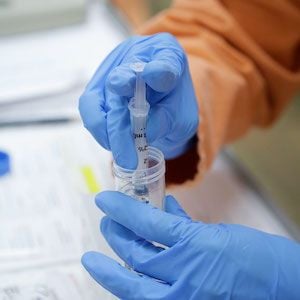
Everybody in New South Wales will now reportedly have access to testing for Covid-19 as Premier Gladys Berejiklian hopes to start lifting restrictions.
"We're now saying to everybody across the state, if you have symptoms, if you're worried you have Covid-19, please come forward and get tested," says Berejiklian.
"We're increasing the testing to include everybody across the state, not just those who work with vulnerable people, not just those who live in those high risk areas where we've had clusters, but anybody across the state."
"We want to see the number of tests go up above 8,000 every day. As we consider lifting restrictions we have to have more tests, we have to have more come forward and we really want that to happen."
The announcement comes as New South Wales reports seven new cases of the virus for the last 24 hours.
In total there are 6,672 confirmed cases of the coronavirus in Australia, with 1,343 in Victoria, 1,026 in Queensland, 546 in Western Australia, 438 in South Australia, 205 in Tasmania, 104 in the Australian Capital Territory and 28 in the Northern Territory.
Updated at 10:22am AEST on 24 April 2020.
UK starts Covid-19 vaccine trials
 "UK starts Covid-19 vaccine trials")
Around 1,100 volunteers are expected to take part in a Covid-19 vaccine trial that kicked off in the UK yesterday, but the organisers have warned a significant proportion of vaccines tested in clinical trials don't work.
University of Oxford researchers started screening healthy volunteers last month for ChAdOx1 nCoV-19, a weakened version of a common cold virus found in chimpanzees that has been genetically altered not to grow in humans.
A protein found on the surface of the Covid-19 virus, which plays an essential role in the infection pathway, has been added to the vaccine's construct.
"By vaccinating with ChAdOx1 nCoV-19, we are hoping to make the body recognise and develop an immune response to the Spike protein that will help stop the SARS-CoV-2 virus from entering human cells and therefore prevent infection," the researchers said.
"Vaccines made from the ChAdOx1 virus have been given to more than 320 people to date and have been shown to be safe and well tolerated, although they can cause temporary side effects, such as a temperature, headache or sore arm."
Half of the volunteers will be given the potential vaccine, while the other control half will receive a widely available meningitis vaccine. Healthy participants aged 18-55 will be recruited across multiple study sites in Oxford, Southampton, London and Bristol
At the start of the trial the researchers will also recruit a separate small group of 10 volunteers who will receive two doses of ChAdOx1 nCoV-19 four weeks apart.
"Participants will be given an E-diary to record any symptoms experienced for 7 days after receiving the vaccine. They will also record if they feel unwell for the following three weeks," the researchers said.
"Following vaccination, participants will attend a series of follow-up visits. During these visits, the team will check participants' observations, take a blood sample and review the competed E-diary. These blood samples will be used to assess the immune response to the vaccine."
Related stories: CSIRO starts pre-clinical trials for potential Covid-19 vaccines
Johnson & Johnson sets ambitious Covid-19 vaccine target
Trials advancing for Covid-19 drug and vaccine research
Covid-19 vaccine trial kicks off in Seattle
Updated at 10:09am AEST on 24 April 2020.
The ABC launches $5 million arts industry fund
 "The ABC launches $5 million arts industry fund")
The Australian Broadcasting Corporation (ABC) has launched a $5 million development fund to provide much needed support for Australia's creative industries
Through the 'Fresh Start Fund' the ABC will invest in Australian content across multiple genres including drama, comedy, children's, factual, music and the arts.
The arts industry has been particularly hard hit by gathering restrictions and orders to work from home as galleries shut down, production on film & television programmes put on pause, and music festivals cancelled or postponed nationally.
According to I Lost My Gig Australia, as of 7 April creatives in Australia have reported lost income of around $330 million, and this figure is likely just the tip of the iceberg.
According to the ABC, in addition to the $5 million fund the media organisation has been working closely with local production companies on current projects that have been suspended or postponed due to Covid-19 to find solutions where possible.
Further, the network is acquiring additional Australian content for broadcast on ABC TV and iview to keep the country entertained during the pandemic.
"As Australia's biggest backer of local content, the ABC will provide whatever help possible within our means to shore up the viability of independent producers, who are struggling during this incredibly disruptive time," says ABC director of Entertainment & Specialist content Michael Carrington.
"The Fresh Start Fund will ramp up the development of original and outstanding Australian content to keep our production sector afloat during the COVID-19 restrictions. In times like this we all need to pull together and the ABC remains open for business in supporting Australian talent and stories."
ABC Fresh Start Fund streams:
1. Enhanced Development & Production Fund
Supports Australian production companies that have worked with the ABC or gained some industry recognition, across two areas:
- Existing productions: Supercharging development assistance to kickstart productions impacted by COVID-19 after the lifting of restrictions.
- New concepts: Supporting new stories in any genre about Australian culture and communities, particularly in new formats.
2. Innovation Fund
Supports individual Australian creatives who may not have worked with the ABC previously. The Innovation Fund backs Australian talent with bold and innovative content ideas across multiple genres aimed at audiences under 55.
3. Arts Digital Fund
Supports Australian creatives and production companies with innovative ideas for new arts content, particularly documentary storytelling.
4. Children's Content Fund
Supports excellence in children's content across two areas:
- Scripted/Factual: Supporting production companies with current animation or live-action development or productions.
- Music: Commissioning new pieces of children's music from talented and prolific Australian musicians for ABC Kids listen.
5. Australian Music Fund
Support for independent Australian artists and musicians across all ABC music networks, including:
- New music: Commissioning new works for ABC Classic and ABC Jazz.
- Music scholarships: Supporting diverse emerging artists across multiple genres and themes, driven by triple j and triple j Unearthed.
Funding applications open on 4 May and close on 12 June.
Updated at 9:42am AEST on 24 April 2020.
Aviation expert: Virgin's demise an opportunity for innovation
 "Aviation expert: Virgin's demise an opportunity for innovation")
The fate of Virgin Australia (ASX: VAH) may be in the hands of administrators, but an aviation expert from the University of South Australia believes strong interest from investors like Wesfarmers (ASX: WES) and the Macquarie Group (ASX: MGQ) means the story is not all doom and gloom.
UniSA aviation industry expert, Associate Professor Kate Quigley (pictured), suggests the outcome of the Virgin Australia scenario may provide a glimpse into the future for the global airline sector, as the impact of the Covid-19 crisis forces operators to develop new, more resilient business models.
"The aviation industry has always been challenging, as there are large costs involved in keeping a fleet of planes in the air, and that often requires a very high level of debt," she says.
"So, I wouldn't be surprised to see some other airlines around the world go the same way as Virgin Australia, because the only way those companies can make debt repayments is to have their planes flying, and that is impossible at the moment.
"However, where one operator drops out, there becomes more space for other operators to work in, and for those companies with clever, innovative ideas, there is a really exciting opportunity to reshape the aviation industry for the better going forward."
Voluntary administration isn't a death sentence for Virgin Australia or for competition
Although Sir Richard Branson has hit out at the Australian government for not bailing Virgin Australia out of its financial woes, Quigley suggests that doing so may have prevented the local aviation industry from adapting to the post-coronavirus environment, which may have sent the wrong message to other businesses.
"A bailout might have saved jobs in the short term, but Virgin Australia was already struggling before this pandemic, so if the Government were to prop up a problematic business model, many other struggling businesses might then expect the same type of support, rather than addressing their operational issues," says Associate Professor Quigley.
"Instead, there is now a space in the Australian airline industry for an innovative new operator to establish a viable business model that responds to the current situation.
"Whether that is a reborn version of Virgin, or a move into the market by one of the many international operators who already had a stake in Virgin, or a new operator entirely, they will be able to structure that business differently than the old Virgin model, adapting to the new marketplace, and ensuring competition remains in the Australian industry."
While Quigley acknowledges Australia's domestic airline market is a challenging one, she highlights the benefits of competition in that environment and stresses there will be new opportunities as the nation moves out of lockdown.
"Without a second airline to compete against Qantas, the risk is obviously that they might start to price gouge, and then the public carries the burden," she says.
"Even before this pandemic, many people felt domestic prices were too high, so they would fly to Bali or Fiji instead of Cairns, and we don't want to see that worsen.
"But, significantly for whoever fills the Virgin void, Australia may well come out of lockdown before international travel resumes, so more Australians could be exploring Australia than ever before, and the domestic market might see a post-pandemic boom."
Updated at 4:39pm AEST on 23 April 2020.
WA pledges funds for land tax relief and construction
 "WA pledges funds for land tax relief and construction")
Commercial landlords in Western Australia will have access to $100 million in land tax relief grants if they reduce rent for small business tenants affected by Covid-19, thanks to initiatives announced by the State Government today.
The government has also released a $24.5 million support package to assist the building and construction industry, along with $30 million worth of grants of up to $2,000 for residential tenants facing hardship due to the pandemic.
The new packages complement $1.7 billion in relief measures already announced by the McGowan Government, and follow a six-month moratorium on evictions both for commercial and residential tenants.
To be eligible for land tax relief, commercial landlords must provide rent relief that equates to a minimum of three months' rent and freeze outgoings to small businesses that have suffered at least a 30 per cent reduction in turnover due to Covid-19.
The grants will be equivalent to 25 per cent of a landlord's land tax bill for 2019-20, and will be administered through the Small Business Development Corporation with applications opening on 1 May.
"Grants will be available on a first come, first served basis to encourage landlords to negotiate early with tenants who are doing it tough as a result of Covid-19," says WA Treasurer Ben Wyatt.
"We've opted to provide targeted assistance that supports both tenants and landlords of commercial and residential properties."
Small Business Minister Paul Papalia says the package will provide targeted financial assistance to encourage landlords to negotiate reductions in rent for small businesses that are doing it tough.
"The initiative will provide a potential minimum three months' rent relief and freeze outgoings at an exceptionally difficult time for thousands of small business owners around the State," says Papalia.
"I commend the Small Business Development Corporation for providing yet another service to the sector at this difficult time, on top of their important ongoing work helping WA businesses to navigate the current environment through the Covid-19 Small Business Assistance Centre."
Related story: State governments pump billions into land tax and rent relief
The government's $24.5 million package for construction includes $10 million to provide an immediate, one-off payment of $2,000 to employers of existing apprentices and trainees currently receiving Construction Training Fund (CTF) grant payments.
This will be supplemented by $9.5 million to help employers to retain their existing apprentices, with payments beginning from 1 June, backdated to 1 April.
The payments will range from $250 per month to $500 per month, per apprentice or trainee, depending on the trades facing the most critical skills shortages in the industry.
This will supplement CTF's existing grants scheme for a period of six months, with a review after three months to gauge the effectiveness of the temporary model.
Employers currently receiving CTF grants for apprentices and trainees in employment will be eligible for the new grant scheme and will need to provide evidence of the apprentice's employment, such as a current payslip.
Apprentices and trainees employed in the industry can claim up to $1,000 to support the costs of undertaking short courses to assist them in upskilling.
"The construction industry plays an important role in Western Australia and employs thousands of people across a range of trades," says Premier Mark McGowan.
"It's important we look after our local businesses, apprentices and trainees - this funding will go towards making sure jobs are maintained and our construction workforce is ready to assist with the post Covid-19 economic recovery."
Training Minister Sue Ellery says the package will help keep apprentices and trainees in jobs and support the local construction industry.
"If you're an apprentice in the construction industry looking to upskill - now is the time to take the opportunity to claim back up to $1,000 when you undertake a short course," she says.
"Building and construction is an essential service to the Western Australian economy and community, and this new support package will ensure industry is well positioned with a skilled workforce to meet the demands of a post Covid-19 recovery," adds Building and Construction Industry Training Board chair Reg Howard-Smith.
Updated at 4:19pm AEST on 23 April 2020.
Advertisement
Latest News
From $13,000 to $20 million: how a PCOS diagnosis and a pair of scissors built Xali Organics
Inspired by a medical diagnosis and driven by innovative marketing,...
Cedar Woods secures $63.4m in new land acquisitions as record presales underpin pipeline push
Perth-headquartered residential developer Cedar Woods Properties (A...
Australia's long-term beer decline hits home as Lion plans to close Boag's brewery in Launceston
Australia's decades-long decline in beer consumption has claime...
Downer EDI seals $310m Transurban contract to maintain Sydney motorway network
Infrastructure services group Downer EDI (ASX: DOW) has secured con...
Propel Funeral Partners expands New Zealand footprint with trio of acquisitions worth $9.1m
Sydney-based death care provider Propel Funeral Partners (ASX: PFP)...
Advertisement