Advertisement
Staying informed is more important than ever as the situation unfolds with Covid-19. Stay tuned here for our live updates, and be sure to let us know what your business is doing to face this unprecedented challenge.
Covid-19 News Updates
National Cabinet sets July end date for three-part full opening plan
 "National Cabinet sets July end date for three-part full opening plan")
Australian Prime Minister Scott Morrison says we will "walk before we run" as part of a three-part plan to fully reopen the economy in July.
Speaking this afternoon, the PM said the National Cabinet had agreed to the plan and a national framework to achieve a COVID-safe economy and society.
Under the first step small cafés and restaurants can be reopened along with some recreational sport facilities, while people will have travel freedom within their state or territory.
The plan acts as a guideline for State and Territory Governments who will ultimately make their own decisions about when to start each step of the reopening scheme.
Eventually, Step 3 contemplates the reopening of Trans-Tasman and Pacific Island travel, along with the consideration of letting international students back into the country and reopening nightclubs.
"We know we need to be careful to preserve our gains, but we also know that if we wish to reclaim the ground that we have lost we cannot be too timid," Morrison said.
"There will be risks, there will be challenges, there will be outbreaks, there will be more cases, there will be setbacks. Not everything will go to plan, there will be inconsistencies.
"States will and must move at their own pace, and will cut and paste out of this plan to suit their local circumstances."
He said that according to Treasury, the reopening plan would see some 850,000 jobs restored in the months ahead with the following three stages:
Step 1: COVID safe reopening commences with physical distancing & hygiene
- Greater connection with friends and family allowing gatherings of up to 10 people, including up to five guests in your own home;
- Working from home if it suits the employee and employer;
- Children allowed back in classrooms and playgrounds;
- Golf courses, parks, swimming pools, libraries and community centres reopened;
- Retail, small cafés and restaurants reopened;
- Home sales and auctions allowed
- Boot camps reopened
- Intrastate recreational travel allowed; and
- Easier restrictions for funerals of up to 30 attendees outdoors and 10 at weddings.
Step 2: Most businesses reopen with physical distancing & hygiene
- Larger gatherings allowed for up to 20 people;
- Cinemas, theatres and amusement parks reopened;
- Beauty parlours reopened;
- Gyms reopened;
- Some caravan parks and campgrounds reopened
- More retail openings on sector-based COVID-safe plans;
- Organised community sport; and
- Some interstate travel.
Step 3: All Australians return to work with physical distancing & hygiene
- Allowing gatherings of up to 100 people;
- Food courts reopened;
- Saunas and bathhouses reopened;
- Nightclubs reopened;
- All interstate travel allowed; and
- Cross-Tasman, Pacific Island and international student travel to be considered.
The PM said Step 3 would become clearer as we work through Steps 1 and 2, but "by then most workers will be back in the workplace".
"It is our aspiration, it is agreed amongst Premiers and Chief Ministers and myself, that in July we will have moved through these three steps across the country," he said.
"Premiers and Chief Ministers have asked me to stress that there should be no expectation of Step 1 starting on Day 1, unless they are indeed already there. Moving on these steps will take some preparation.
"We're open to everything pretty much to get the economy back and firing as much as possible."
He said moving from one step to the next would need to be in keeping with the following three criteria:
- That further easing would not present an undue risk;
- That widespread testing is adequately identifying community transmission;
- Public health actions are able to trace cases and track local outbreaks.
"Testing, tracing, tracking, as they were saying in the Northern Territory recently," Morrison said.
"Downloading the COVIDSafe app, which is now over 5.3 million, is the best way you can help us do this job to keep you and your families safe."
The PM added a review into JobKeeper would be taking place next month.
"That was a temporary lifeline put in place to help Australians through the worst of this crisis," he said.
There are currently 737 active cases of COVID-19 in Australia, including 19 new cases in the last 24 hours from Victoria (14), NSW (4), WA (1).
Nationwide there have been 41 recoveries reported today, while there have been no new deaths, meaning the death toll remains at 97.
Updated at 1:01pm AEST on 8 May 2020.
Victoria to consider easing restrictions on Monday
 "Victoria to consider easing restrictions on Monday")
Victorian Premier Daniel Andrews says he will consider easing COVID-19 restrictions in the state on Monday as per a three-part roadmap announced today by the Prime Minister.
Andrews says he will be cautious and has likened the National Cabinet-approved roadmap as a "menu" from which he will pick and choose from for restrictions to relax.
"Now, whilst I welcome the overall pathway, I also welcome the commentary from the Prime Minister and the decision of National Cabinet that what is done and when, that is the timeline, the staggered nature of easing off the rules we've put in place, is fundamentally a matter for individual states and territories," Andrews said.
"On Monday, and indeed throughout next week, I will have a series of announcements to make about changes to the rules. Those rules that will not be all the rules going, and it won't necessarily be that the moment I announce something a change happens right then.
"If you think about the top line in that framework document that the Prime Minister has put out today, and the National Cabinet agreed to, that's a kind of menu, if you like. And we will choose elements of that and the respective timing for the rollout of each of those elements that best suit Victoria, that best suit the unique circumstances that we face."
The announcement comes as Victoria has announced 13 new cases of COVID-19 today.
Eight of those new cases trace back to the cluster of COVID-19 cases at the Cedar Meats Australia processing facility, while the other five are believed to be cases of community transmission.
The state's total now stands at 1,467 cases.
Updated at 2:07pm AEST on 8 May 2020.
Events industry calls for conferences to be exempt from gathering restrictions
 "Events industry calls for conferences to be exempt from gathering restrictions")
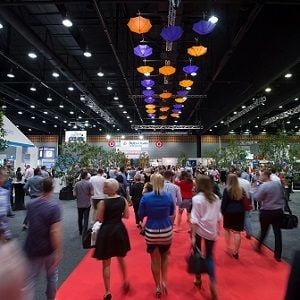
The Exhibition and Event Association of Australasia (EEAA) has called upon Federal and state governments to exempt business conferences and events from mass gathering restrictions.
The industry body has also asked for clarification on an anticipated restart date for domestic events in the Australian market to get things back on schedule.
The EEAA says business conferences and events can operate under a controlled set of 'bio-safe' principles and therefore should not be subject to the same restrictions as other mass gatherings and large scale public events like professional sporting events and music festivals.
"The business events industry run highly organised events where we can trace every one of our visitors, delegates, speakers and exhibitors as well as monitor, track and put in place a range of measures that can ensure these events comply with Government measures on hygiene and physical distancing," says EEAA chief executive Claudia Sagripanti.
"The business events industry, which includes exhibitions, conferences and business meetings contributes $35 billion to the national economy, with another $17.2 billion in value add and employs over 229,000 people across a range of sectors and trades.
"The re-opening of this important sector will support the Government's objective to implement work safe guidelines to get Australian's back to work. It is of vital importance to ensure that Governments understand the role business events plays in restarting the economy."
The EEAA, in collaboration with the Business Events Council of Australia and the Venue Management Association is developing safety and hygiene principles for the business events community.
To get events and conferences back up and running the EEAA has requested governments provide a clear timetable on when business events can restart as considerable lead-time is required to plan and implement events of scale.
"The sector needs support now with a clear timetable on when we can run events August/September and the last quarter of 2020 is vital to recovery, but the industry needs a confirmed date to commence planning," Sagripanti said.
"An August restart allows government and the health authorities further time to ensure the state's COVID numbers continue to decrease and stabilise and to enable an agreed Bio-Safe environment for our controlled and organised events where the business community comes to do business."
The EEAA's plea to state and federal governments comes as the Queensland Tourism Industry Council (QTIC) today announced it would be cancelling the 2020 Queensland Tourism Awards for the first time in the event's history.
"Like so many other aspects of our industry, 'normal' no longer applies this year and the awards program was not viable under the current circumstances," says QTIC chief executive Daniel Gschwind.
"This is a huge disappointment to us and to many operators, but the reality is that the industry has an overwhelming challenge on their hands to get through this crisis. It is the sole focus for everyone. We will be back with the program next year, bigger and better and remain fully committed to supporting excellence in business."
Updated at 11:46am AEST on 8 May 2020.
An extra 100,000 loans deferred by Australian banks this week
 "An extra 100,000 loans deferred by Australian banks this week")
Australian banks have deferred an extra 100,000 loans over the last week, bringing the total value of loans deferred to $200 billion.
According to new figures released by the Australia Banking Association (ABA) half of the new deferrals were home loans.
To date, Australian Banks have deferred 643,000 loans for customers, including 392,000 home loans.
"These new figures, released today, shows banks working overtime to ensure assistance is given where needed to customers who are affected by this crisis," says ABA CEO Anna Bligh.
"The surge in demand for assistance from banks shows that the economic impacts continue to be felt, and by no means is the nation through this crisis."
These deferments are coming at a serious cost to Australian banks.
Commonwealth Bank's (ASX: CBA) loan deferral arrangements are expected to cost the giant around $10 billion.
"These are unprecedented times, and we will continue to take decisive actions to support households and the small business community," CBA chief executive officer Matt Comyn said in March.
"We stand shoulder to shoulder with the Government, the Reserve Bank, our regulators and the banking industry to support the economy at this time."
ANZ (ASX: ANZ) says its deferral program has been provided on $7.5 billion of lending to Australian customers, with assistance given to approximately 15 per cent of commercial lending customers.
Further, it has pre-approved more than $4 billion in lending to 35,000 small business customers with existing transactional accounts and provided temporary overdraft increases for approximately 5,500 commercial accounts.
Updated at 10:58am AEST on 8 May 2020.
Active cases fall to single digits as WA readies relaxation roadmap
 "Active cases fall to single digits as WA readies relaxation roadmap")
More recoveries from COVID-19 in Western Australia means the state has just nine active cases of the virus, bringing the total down to single digits for the first time since the pandemic took hold.
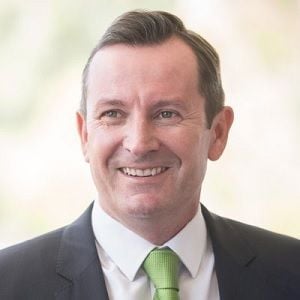
WA Premier Mark McGowan (pictured) told a press conference this morning a 29 year-old who recently returned from overseas has tested positive, but the number of active cases was reduced by three new recoveries.
"Obviously, it's disappointing that our sreak of zero cases has come to an end, however we always knew we would get more cases as people returned from overseas or interstate," he said.
It was a similar story yesterday for South Australia, whose two-week run of no new daily cases was also cut short by a returned traveller testing positive.
McGowan said the good news was that the systems were in place to ensure the spread of the virus was limited, and there have now been 534 recoveries in the state.
"As a result we now have just nine active cases here in Western Australia - the first time we've hit single digits," he said.
"Only four people are in hospital in total, with one in ICU. The number of people in our hospitals with the virus continues to fall."
McGowan said after today's National Cabinet meeting, a State Disaster Council meeting will be held including the Police Commissioner and the Chief Health Officer to plan out Western Australia's roadmap forward.
"I want to provide the people of Western Australia with a way forward with a plan to get Western Australia moving in a safe and sensible way. I expect our roadmap to be finalised and ready for release on Sunday," he said.
"Clearly Western Australia has the opportunity to be more economically progressive perhaps than other states. The eastern seabord I expect will be more conservative as they have been along this road, but frankly they've had a much bigger problem than we have.
"Our hard borders allow us to do more than the eastern states can, so that initiative has meant that we can potentially loosen restrictions to a greater degree than the eastern states, but that's a decision the State Disaster Council will make later on today."
Updated at 10:01am AEST on 8 May 2020.
NZ gears up for major easing of restrictions
 "NZ gears up for major easing of restrictions")
After setting a global example with its strategy of "going hard and going early" to win the battle against COVID-19, New Zealand will soon make a big call on whether to ease a wide range of restrictions.
NZ Prime Minister Jacinda Ardern has today outlined what an Alert Level 2 situation might look like, including a restart for businesses, gatherings indoors or outdoors for up to 100 people, the recommencement of amateur and professional sport, and domestic travel freedom.
If the NZ Cabinet decides to go ahead with the alert downgrade on Monday, hospitality venues (except nightclubs and dance venues) may also be able to reopen with a "three S's" policy - seated, separated, single-server.
The move comes now that New Zealand's total active case numbers are at 136, or slightly more than Victoria and Queensland combined; both states with larger populations than NZ.
"In a nutshell, Level 2 is a safer normal designed to get as many people back to work as possible and the economy back up and running in a safe way, made possible only by our collective actions at Levels 4 and 3 to beat the virus and break the chain of transmission," the PM said today.
After hunkering down through a full lockdown experience at Level 4, New Zealanders are currently living with Level 3 - Restrict measures.
"On Monday, May 11, we will make a decision on whether to move, taking into consideration the best data and advice we can, recognising the impact of restrictions, and ensuring we don't put at risk all of the gains we have made," Ardern said, noting the view of the Director-General of Health would also need to be taken into account.
"There is a much higher level of individual responsibly required at Level 2 to prevent the spread of the virus.
"We will continue to act with caution and not move before it is safe to do, so entry into Level 2 could be phased, with higher risk activity occurring when there is stronger evidence it is safe to do so.
While the amount of people who can gather indoors would increase to 100, the maximum level for outdoor gatherings would actually go down from 500 to 100.
"For managed events like weddings, music events, religious services, funerals, these can be held at Level 2 when we get there, but with all the same public health guidance as with the 100-person limit," she said.
"You no longer need to stick to your bubble. You can begin seeing family and friends, but we do want you to hang onto the same principles that we are using generally in hospitality; issues around the space and hygiene and contact tracing.
"If we have large scale events held in people's home, all of that becomes harder. That is why at Level 2 we are saying that you can have friends and family over to your home but keep the numbers small."
At Level 2 playgrounds, gyms, pools, public courts, museums and markets are also permitted to reopen.
The Level 2 scenario has been summarised by the NZ Government as follows:
- Businesses can restart for staff and customers
- Bubbles can cease
- Domestic travel recommences
- Schools and early learning centres can open
- Gatherings both indoors and outdoors are limited to 100 people
- Public places reopen
- Sport and recreation comes back on-stream, including professional sports competitions
- Home gatherings must be kept small
- Hospitality must follow the three S's seated, separated, single-server
Updated at 3:56pm AEST on 7 May 2020.
CBA approves $555 million in SME loans
 "CBA approves $555 million in SME loans")
More than 6,500 business customers hit by COVID-19 shutdowns have made the most of a government-backed SME loan scheme through the Commonwealth Bank of Australia (ASX: CBA).
The bank has so far approved more than $555 million in new loans - which are 50 per cent guaranteed by the Federal Government - for small and medium businesses.
The bank says its customers were able to apply for the loans from Monday, 23 March.
"We want to help as many of our customers as we can through this challenging time we know for many, these loans could be the make or break of a business," says CBA group executive business banking, Mike Vacy-Lyle.
"Getting funds quickly to our customers means they have the cash flow they need to pay for critical expenses like wages, supplier payments and other overheads.
"We are doing all we can to help. The sheer demand we are seeing means our teams are working around the clock to help as many customers as possible and our priority right now is to get funds into accounts as quickly as we can."
Shortly before the SME Guarantee Loan Scheme was announced on 22 March, CBA pledged $10 billion towards six-month loan deferral arrangements including an auto-enrolment feature for businesses.
Updated at 12:10pm AEST on 7 May 2020.
Pop-up hospital may be answer to future pandemic needs
 "Pop-up hospital may be answer to future pandemic needs")
A South Australian company has launched a portable isolation hospital for widespread medical emergency hotspots to treat patients with respiratory illnesses in the wake of the COVID-19 pandemic.
Based in Adelaide, South Australia, Humanihut's 'Florey' isolation hospital has received expressions of interest from government clients in the United States, Europe, Middle East and Australia to better prepare for future epidemics or health crises.
The deployable medical facility was adapted in partnership with French-based business Utilis International from Humanihut designs for disaster accommodation.
Humanihut Co-Founder and Managing Director Neale Sutton said the new Florey model was created for the COVID-19 outbreak in New York and serves as an efficient market-ready alternative to tents, which are the current industry standard for field hospitals.
"In the initial stages, the [coronavirus] epidemic had governments around the globe looking for very quick solutions to assist the pressure that was being placed on their medical facilities," Sutton said.
"We're now focusing our product into the longer term, it's about what comes next after COVID-19 and after all of the equipment has been used on this outbreak; is there enough to be used for the next outbreak?"
Sutton said the Florey costs A$200,000 per bed in comparison to approximately $1.5 million per bed for a hospital.
"The Humanihut Florey system is a far more robust and rapidly deployable system than just about anything else that's around," he said.
"We're talking to a number of prospective clients around the world about what they're going to do next and the part we can play in their operations going forward looking over their horizon to 2021 and beyond."
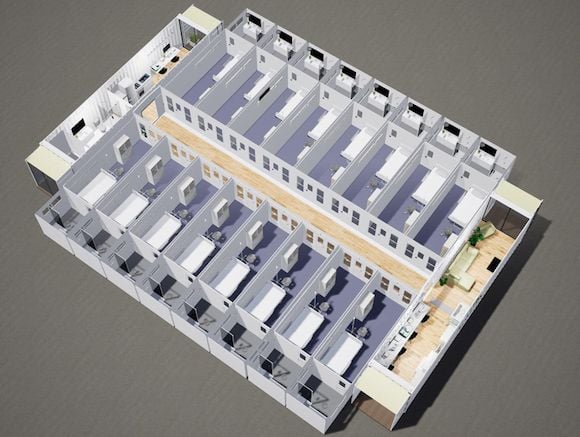
An artist's render of the Humanihut Florey Isolation Hospital.
Sutton said he was in talks with a local government in the US for the purchase of a Florey unit within the next 12 months.
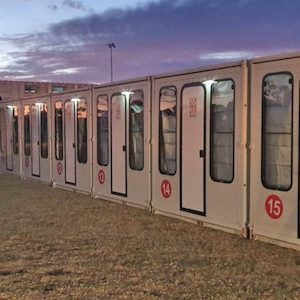
In its basic configuration, the Florey isolation hospital comprises of 16 flatpack huts each measuring 6m x 2.3m (19f x 7.5f) that are set up as single-bed patient rooms attached with ensuites, which stand between two 40ft containers housing a nurse's station, staffroom, kitchen, bathroom and laundry.
A fully enclosed weatherproof internal corridor made from a soft polymer canvas is then placed in the centre of the facility to connect the containers and patient rooms.
The huts are steel skinned and have insulated walls, enabling them to maintain a suitable temperature for patients and doctors.
The Florey isolation hospital includes utilities for water, power and wastewater treatment, Wi-Fi connectivity, and medical grade equipment supplied by G3 Systems through Humanihut's partnership with Utilis.
Sutton said two South Australian companies provided the important airflow controls. The negative pressure air filtration system to prevent cross-contamination throughout the site is from Airepure Australia and the air conditioning is by globally renowned Seeley International.
"Isolation wards require negative pressure systems, combined with specialist HEPA filters, to ensure the containment of airborne contaminants within a room, whilst reducing the risk of transfer of airborne particles to medical staff." Sutton said.
An animation of the Humanihut design.
The Florey is deliverable by land, air or sea inside the two 40ft containers and can be established within 24 hours. The facility is also scalable for increased capacity to meet required demand.
Sutton said the rapidly deployable nature of the product was crucial for assisting medical workers at the beginning of a health crisis.
"[Clients] need things set up quickly, they don't want them to be permanent, but they want to be able to call on them time and time again and once the field infrastructure system has done its job it can be packed up and reused again over the life of the product," Sutton said.
More than half of the manufacturing process for the huts is done in South Australia, including work from South Australian companies Enviroclad and Kadego. Sutton plans to shift the remainder of the operations to the state later this year.
Humanihut have sold other variations of their field infrastructure systems to the South Australian State Emergency Service as well as to clients in Saudi Arabia and France.
Never miss a news update, subscribe here. Follow us on Facebook, LinkedIn, Instagram and Twitter.
Business News Australia
AusCann CEO resigns after 12 months on the job
 "AusCann CEO resigns after 12 months on the job")
The head of one of Australia's leading medicinal cannabis companies AusCann Group Holdings (ASX: AC8) has announced his resignation today, citing personal reasons for the exit.
Ido Kanyon joined the Perth-based company a year ago after previously working with Teva Pharmaceuticals in the United States, and has helped AusCann achieve several milestones since then including the kick-off of clinical evaluations just last week.
But as is the case for most medicinal cannabis companies at the moment, these efforts are not necessarily reflected in the AC8 share price which is down almost 55 per cent on when Kanyon took the reins.
Kanyon will still remain with the company for six months to assist in the leadership transition, with non-executive director Dr Marcel Bonn-Miller to share responsibilities in the interim.
"On behalf of our Board, our staff and our shareholders, I would like to thank Ido for his leadership in refocussing the company's strategy to becoming a leading research and development company in the medical cannabis industry, bringing our first product to market and commencing our first clinical evaluation programme," says chairman Max Johnston.
"Ido has strengthened and streamlined the operating model positioning the Company well for future commercial success."
Australia's top 20 cannabis companies
Johnston highlights Bonn-Miller is an internationally renowned cannabinoid expert, and he will assume executive responsibilities alongside Ido to provide continuity during the transition.
"At the same time, we have started the search for a new outstanding candidate and leader that can spearhead our existing products growth and continued development of a robust pipeline of future products," he says.
Kanyon has expressed his gratitude for the opportunity to lead a talented team at AusCann.
"We have achieved a lot in a short space of time, given the focused growth strategy put in place," he says.
"I am proud of the results we have been able to deliver to shareholders, healthcare professionals and patients, bringing an innovative product to market and continuing to generate clinical evidence for the benefit of patients."
Never miss a news update, subscribe here. Follow us on Facebook, LinkedIn, Instagram and Twitter.Business News Australia
Consumers expand online horizons and turn to Aussie brands
 "Consumers expand online horizons and turn to Aussie brands")
A recent survey from the Boston Consulting Group (BCG) has found one in five Australians purchased at least one new category online over the past month, while the appetite for domestic brands is on the rise.
BCG's 'Australian Consumer Sentiment Snapshot: Confidence, Nostalgia and Shifting Trust' shows the average number of new categories purchased by Gen Z and Millennials was nearly four, compared with nearly two new categories purchased by the Baby Boomer and Silver segment combined.
The top 12 categories purchased online for the first time include education, preventative health care, takeaway food and medical procedures, and this is the case across all age groups.
Gen Z and Millennials increasingly turned to e-commerce for insurance, home renovation products, personal care products and pet care products, while many Baby Boomers and Silvers bought shoes and footwear, women's clothing, plants and gardening supplies, and fresh fruit and vegetables online for the very first time.
"The BCG report has revealed seismic shifts in how Australians are spending their time and money, and importantly, who they trust in the COVID-19 environment," says BCG managing director & partner Monica Wegner.
"That's why in these rapidly changing times, creating and maintaining consumer trust should be a key focus for organisations to ensure they maintain their relationship with customers into the future."
The findings are consistent with reports of e-commerce upticks for a wide range of Australian retailers, including homeware specialist Adairs (ASX: ADH), online furniture retailer Temple & Webster (ASX: TPW), e-commerce giant Kogan (ASX: KGN), Booktopia, footwear purveyor Accent Group (ASX: AX1) and department store Myer (ASX: MYR), as well as supermarket majors Woolworths Group (ASX: WOW) and Coles Group (ASX: COL).
The BCG report also reveals 84 per cent of Australian consumers believe that there will be an economic recession post-COVID-19, however only 40 per cent feel financially insecure at this stage.
"In this time, 47 per cent of surveyed consumers are abandoning luxury products, and 64 per cent say that basic and simple products that do the job are all they need, placing greater emphasis on purchases that promote self-reliance and provide comfort and assurance," says Wegner.
Organisations that invest well in digital services will be pleased to know that consumers are likely to continue using those online platforms when COVID-19 is over.
One third of Australian consumers surveyed for the BCG report said they will increase spend on digital purchases post COVID-19; 34 per cent for Gen Z and Millennials and 31 per cent for Baby Boomers and Silvers.
Consumers said they will increase online spending on travel, preventative healthcare, insurance, appliances, education and home essentials.
"Companies that can leverage technologies by meeting changing consumer demands online complemented by human interaction where it is needed most have the opportunity to earn consumer loyalty well after their concerns subside," says Wegner.
The report also demonstrates an increased desire and appetite to buy Australian brands, with 37 per cent of consumers saying they would purchase Australian brands - a 56 per cent increase from 2016.
This is despite the premium price perception of domestic goods, with the trade-up for Australian brands largely seen in fresh food, personal care, packaged food and first aid/medicines.
The BCG report found consumer trust in health service providers, supermarket chains and Australian State and Federal Governments had increased significantly over the last month.
Net trust in health service providers has risen 25 per cent, national supermarket chains 18 per cent, the Federal Government 18 percent, State and Territory Governments 17 per cent, telecom providers three per cent and banks net neutral.
For supermarkets, this is in part owed to a strong investment in services that ensure the basic needs of Australians are met, such as measures to ensure older Australians can access supermarkets and a strong suite of online and offline services to get groceries to peoples' doors.
"The BCG report shows consumers are carefully watching how Australian institutions are responding to the crisis and the initiatives they're providing, to determine how much they trust them," says Wegner.
Never miss a news update, subscribe here. Follow us on Facebook, LinkedIn, Instagram and Twitter.Business News Australia
Advertisement
Latest News
From $13,000 to $20 million: how a PCOS diagnosis and a pair of scissors built Xali Organics
Inspired by a medical diagnosis and driven by innovative marketing,...
Cedar Woods secures $63.4m in new land acquisitions as record presales underpin pipeline push
Perth-headquartered residential developer Cedar Woods Properties (A...
Australia's long-term beer decline hits home as Lion plans to close Boag's brewery in Launceston
Australia's decades-long decline in beer consumption has claime...
Downer EDI seals $310m Transurban contract to maintain Sydney motorway network
Infrastructure services group Downer EDI (ASX: DOW) has secured con...
Propel Funeral Partners expands New Zealand footprint with trio of acquisitions worth $9.1m
Sydney-based death care provider Propel Funeral Partners (ASX: PFP)...
Advertisement